



Toned Green Oil Painting
When you search for toned green oil painting, you find works driven by verdant palettes spanning the nineteenth and twentieth centuries.
Toned Green Oil Painting
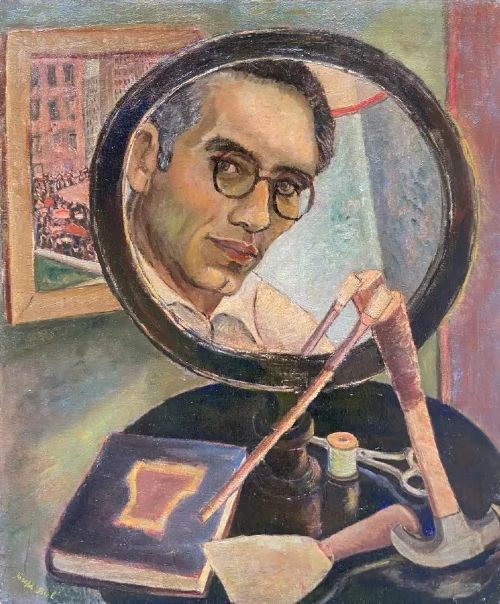
A toned green oil painting is a fine art piece executed primarily in green pigments, capturing landscapes, rural scenes, and pastoral life. These works emerge from periods such as the nineteenth century, the 1900s, 1910s, 1920s, 1930s, 1940s, 1950s, and 1960s.
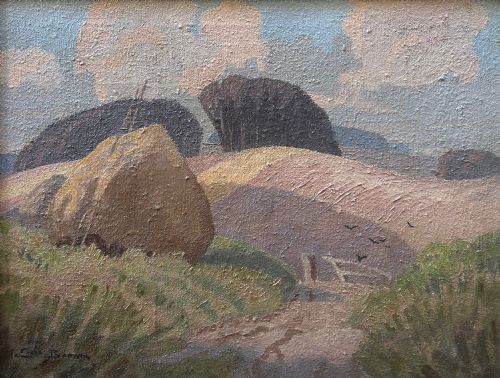
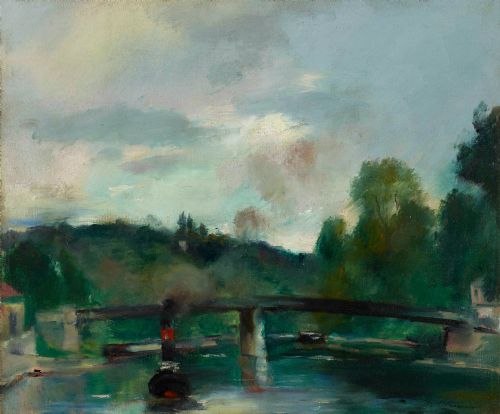
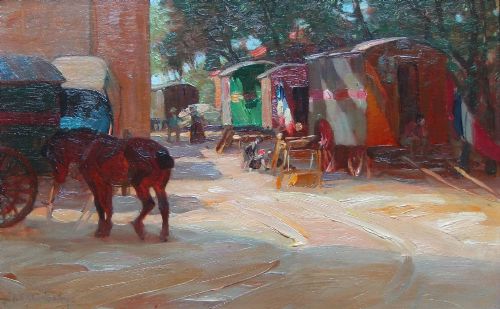
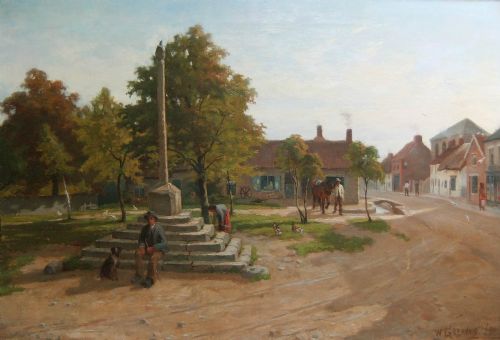
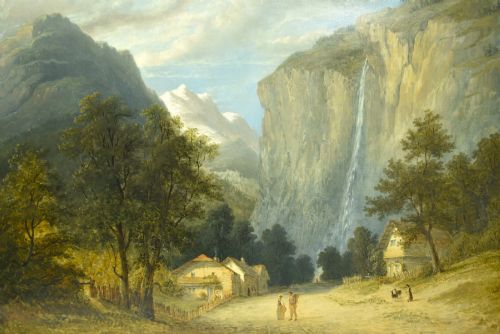
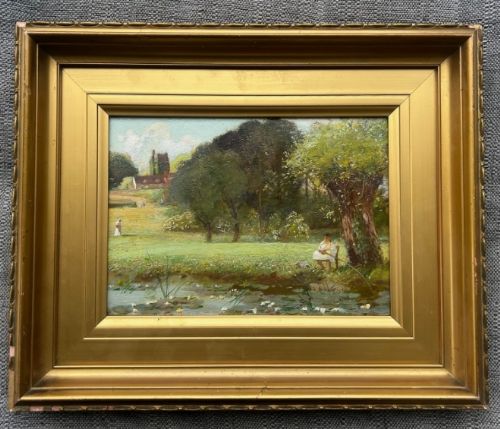
The most common examples on this page are British and European landscapes, capturing subjects like Yorkshire farmyards, Scottish highlands, and river views. Artists work within movements including British Impressionism, Post-Impressionism, and the Barbizon School to render these verdant compositions.
Subjects range from tranquil streams and moorland to quiet courtyards and village views. Canvas, wood panels, and boards serve as the primary supports for these oil paint applications.
How they were made
Artists apply oil paint directly onto stretched canvas, prepared wooden panels, or rigid boards using brushes and sometimes palette knives. The medium allows for rich layering, blending, and visible brushstrokes characteristic of impressionist and realist techniques.
Preparation of the support involves applying a ground layer to accept the oil paint, ensuring longevity. Pigments are mixed with drying oils, such as linseed oil, to achieve the specific green tonalities seen across the landscapes and genre scenes.
Several canvases capture the quiet charm of farmyards, riversides, and sheep quietly grazing under early twentieth-century skies.
What varies in quality
Quality rests in the handling of light, brushwork confidence, and compositional depth rather than the subject matter alone. Skilled artists manipulate pigment to create atmospheric depth within a restrained green palette, whereas lesser works remain flat.
The integration of the support and the stability of the oil paint layer also differentiate the pieces. Works demonstrating confident execution by established painters reflect stronger artistic command.
Tom Campbell·Joseph Biel·Eric Brown·Henri Ottmann·Paul Ehrenberg·William Greaves·Sir David Murray·William JB Jenkins·Ernest Higgins Rigg·Reginald Grange Brundrit·George Armfield·Florence Hess·Kershaw Schofield·Bernd Funke·Fred Stead·Ralph Hedley·William Manners·Thomas Creswick·Owen Bowen·Charles Henry Harrison Burleigh·Frederick J Knowles·John Percy Cooke·Herbert Royle·George F Wetherbee·Jack R Mould
The Toned Green Oil Painting Glossary
- Canvas
- A heavy woven fabric stretched across a wooden frame to serve as a painting surface. It provides a flexible yet durable support for oil paint.
- Wood Panel
- A rigid wooden board utilised as a primary base for oil paintings. Panels offer a firm resistance against the brush during application.
- Impressionism
- An art movement characterised by relatively small, thin, yet visible brush strokes and an emphasis on accurate depiction of light. Painters often capture everyday subjects in outdoor settings.
- Barbizon School
- A French art movement toward realism in landscape painting, closely associated with the mid-nineteenth century. Artists focus on direct observation of nature and tonal harmony.
Toned Green Oil Painting: Frequently Asked Questions
What is a toned green oil painting?
A toned green oil painting is a fine art work created with oil paints where green hues dominate the composition. These pieces primarily depict natural landscapes, rivers, and rural farmyards.
Created across various decades, these artworks utilise canvas, wood panel, or board as supports. They reflect the stylistic approaches of movements like impressionism and realism.
How do I care for an oil painting on wood panel?
Keep the painting away from direct sunlight and areas prone to significant temperature and humidity fluctuations. Wood panels expand and contract with environmental changes, which can affect the paint layer.
Dust the surface gently with a soft, dry brush and avoid using water or chemical cleaners. Professional framing helps protect the edges of the panel.
How can I tell the period of a landscape painting?
Examine the materials used, the style of the brushwork, and the framing or signatures where present. Nineteenth-century works often feature traditional realism or Barbizon influences, while twentieth-century pieces lean towards impressionist techniques.
Artist biographies and recorded exhibition dates provide further context for dating specific works. Comparing the subject matter to known regional styles also helps narrow the timeframe.
Where were these landscape scenes usually painted?
Artists often painted outdoors directly from nature, capturing specific rural locations such as Yorkshire, the Scottish Highlands, or French provincial courtyards. Plein air painting allowed them to observe natural light and verdant tones firsthand.
Others completed their works in an artist studio using earlier sketches and studies. The resulting paintings document specific countryside views and rural life from past eras.