
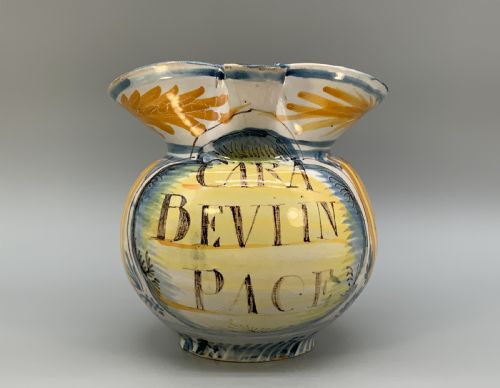


Tin Glazed Ceramic Jugs
Tin glazed ceramic jugs combine opaque tin-glaze earthenware with hand-painted blue-and-white or polychrome decoration, spanning seventeenth-century Dutch Delftware to nineteenth-century Italian majolica and English pieces.
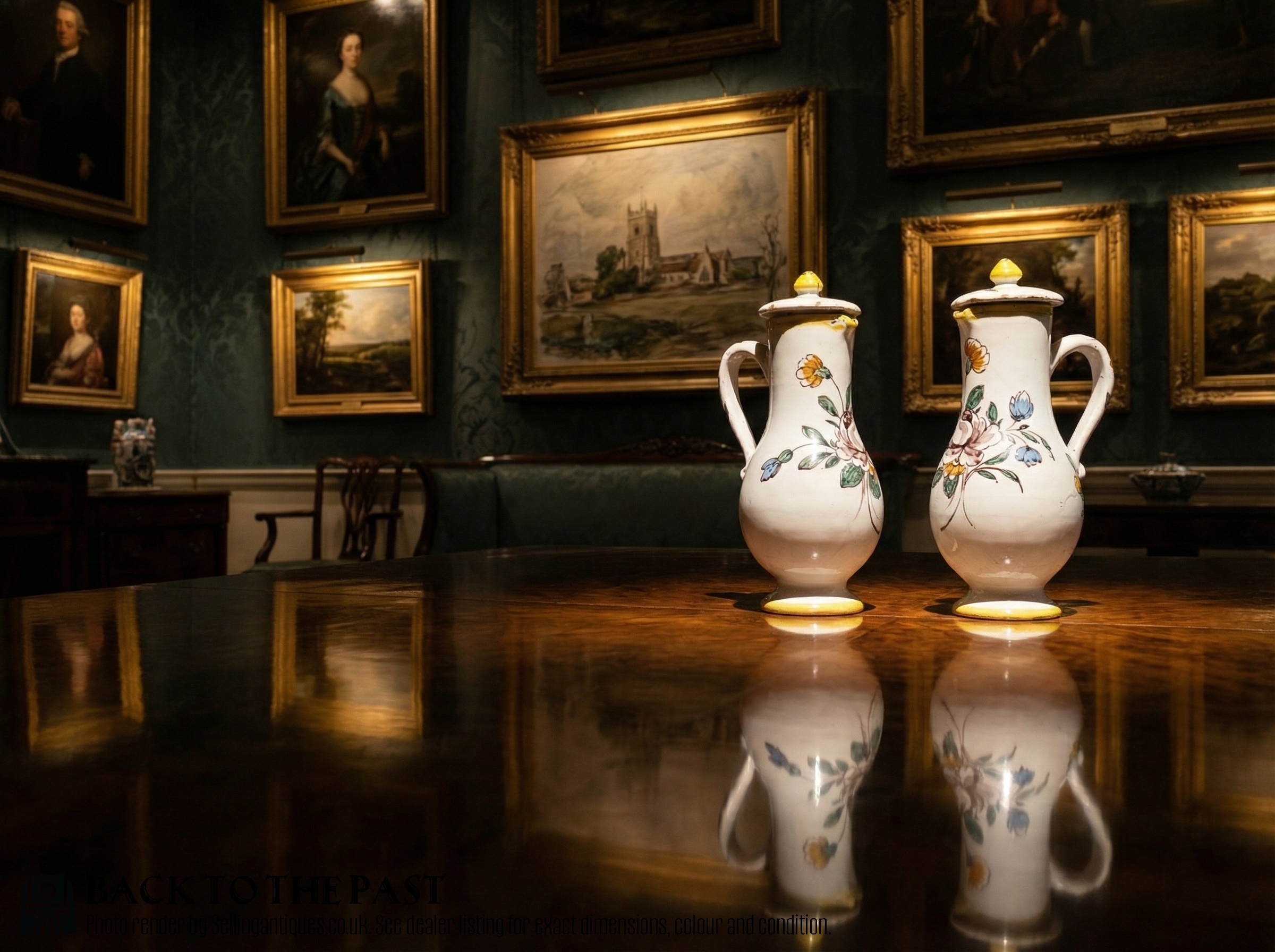
Tin Glazed Ceramic Jugs
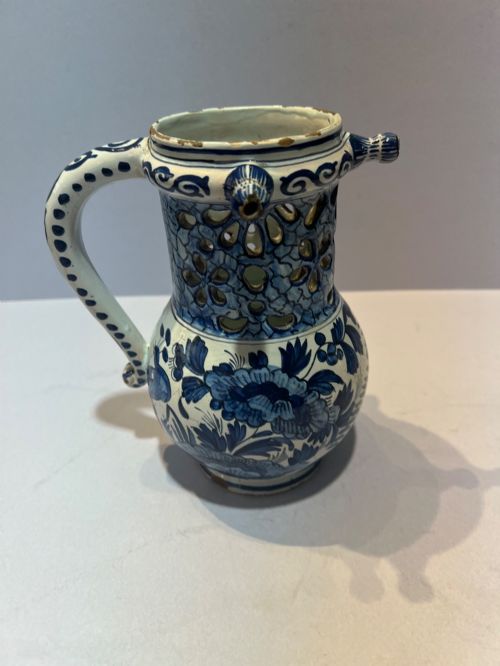
Tin glazed ceramic jugs comprise a diverse group of earthenware vessels finished with an opaque white or coloured glaze that accepts pigments for painting. When searching for tin glazed ceramic jugs, buyers encounter forms ranging from apothecary drug jars and pharmacy jugs to puzzle jugs, ewers, and Toby jugs.
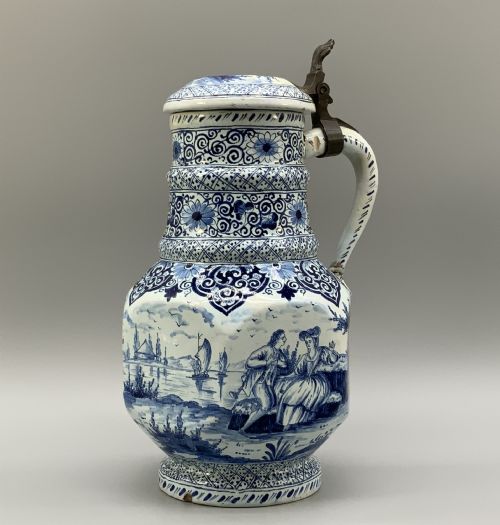
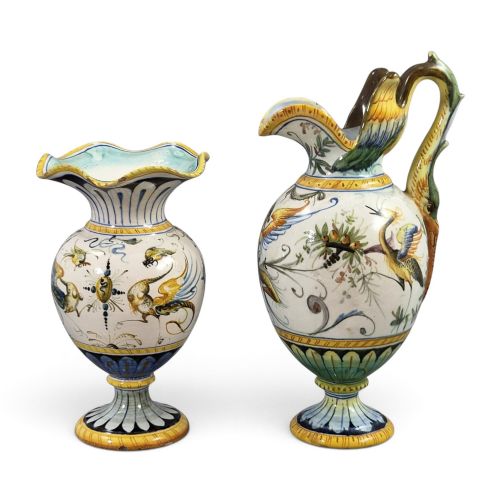
The pieces on this page originate primarily from the seventeenth, eighteenth, and nineteenth centuries, with strong representation from Dutch Delftware, Italian majolica, and French Gien faience. Buyers are most likely to meet eighteenth-century Dutch blue-and-white jugs and nineteenth-century polychrome examples featuring floral, heraldic, or figural decoration.
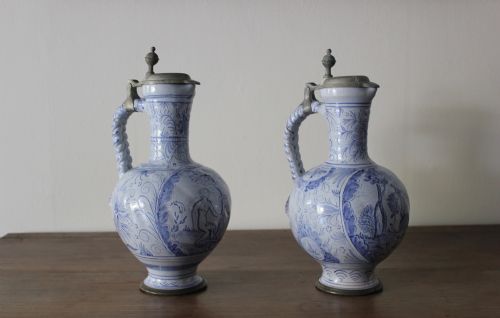
Vessels span utilitarian drinking and pouring jugs to decorative pharmacy containers fitted with spouts, handles, and occasionally pewter lids. Regional variations include Chinoiserie motifs on early Dutch pieces and Renaissance Revival styling on later Italian ceramics.
Materials and Technique
Potters formed these jugs from earthenware clay, shaping them on the wheel or moulding them into specific vessel types such as pilgrim flasks, tankards, and Toby jugs. Once dried and bisque-fired, the body received an opaque tin glaze containing tin oxide, which provided a smooth, white canvas for subsequent painting.
Painters applied mineral pigments directly onto the unfired or raw glaze before the final glost firing, allowing cobalt blue, manganese purple, yellow, and polychrome enamels to fuse into the surface. Some nineteenth-century iterations incorporate moulded relief details, mask spouts, or fitted pewter mountings to secure lids and handles.
Some 18th-century Dutch potters hid secret holes in puzzle jugs, ensuring an unsuspecting drinker spilled beer down their front.
Assessing Quality
Quality in these ceramics rests on the crispness of the painted brushwork, the opacity and depth of the tin glaze, and the proportional harmony of handles, spouts, and bodies. Early pieces with finely detailed Chinoiserie or complex polychrome palettes demonstrate superior painting skill compared to simpler mass-produced wares.
The integrity of the glaze surface, the subtlety of pigment blending in cobalt and manganese, and the authenticity of period forms distinguish standard utility vessels from exceptional workshop productions such as Italian majolica ewers or signed Dutch Toby jugs.
Cantagalli Florence·Pieter Verburg
The Tin Glazed Ceramic Jugs Glossary
- Tin Glaze
- A lead glaze rendered opaque by the addition of tin oxide, providing a white background for painted ceramic decoration.
- Majolica
- A type of Italian tin-glazed earthenware decorated with colourful metallic oxide pigments over an opaque white glaze.
- Delftware
- Tin-glazed earthenware made in England or the Netherlands, traditionally known for blue-and-white designs inspired by imported Chinese porcelain.
- Faience
- European tin-glazed pottery, particularly associated with French and German production centres imitating Chinese and Italian styles.
- Toby Jug
- A pottery jug modelled in the form of a seated person, often depicted drinking or holding a mug, popular in eighteenth and nineteenth-century ceramics.
Tin Glazed Ceramic Jugs: Frequently Asked Questions
What is an apothecary jug used for?
Apothecary jugs and pharmacy wet drug jars served as storage containers for syrups, herbal extracts, and medicinal liquids in historic dispensaries and apothecary shops. They usually feature painted Latin inscriptions or abbreviated drug names on the front to identify the contents.
These vessels often include pouring spouts and sturdy handles to facilitate the dispensing of contents by practitioners.
How do I distinguish majolica from Delftware?
Majolica generally refers to Italian tin-glazed earthenware utilising vibrant polychrome palettes including manganese, yellow, and green, often with Renaissance Revival or figural ornamentation. Delftware primarily denotes Dutch or English tin-glazed ceramics strongly associated with blue-and-white palettes.
Clay bodies and regional painting styles also differentiate Italian workshop production from Northern European traditions.
Are tin glazed jugs safe for daily use?
Historic tin glazed ceramic jugs are collected primarily as decorative works of art and historical artefacts rather than for modern culinary use. The porous earthenware bodies and historic glaze formulations can be sensitive to modern detergents, frequent washing, and acidic liquids.
Displaying them away from direct heat and moisture preserves the stability of the glaze and painted decoration.