


Timuri Baluch Rug
Choosing a timuri baluch rug brings tribal textile heritage into a room through distinctive nineteenth-century nomadic weaving traditions.
Timuri Baluch Rug
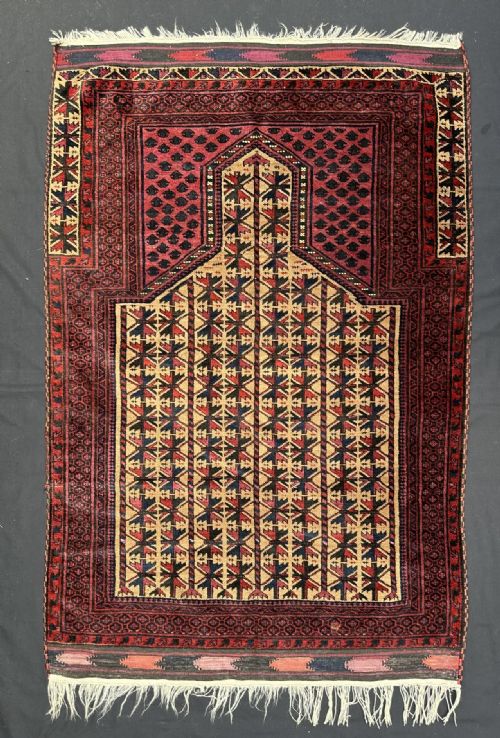
A timuri baluch rug originates from the borderlands of north-east Persia and north-west Afghanistan, woven by tribal groups such as the Timuri and the Baluch. These nomadic and semi-nomadic textiles include prayer rugs, main carpets, small rugs, and utilitarian objects like salt bags.
The pieces seen most frequently on this page date from the late nineteenth century and the early twentieth century, spanning periods from eighteen seventy to nineteen ten. Examples often feature specific tribal attributions such as Dokhtar-e-Qazi or Yaqoub Khani.
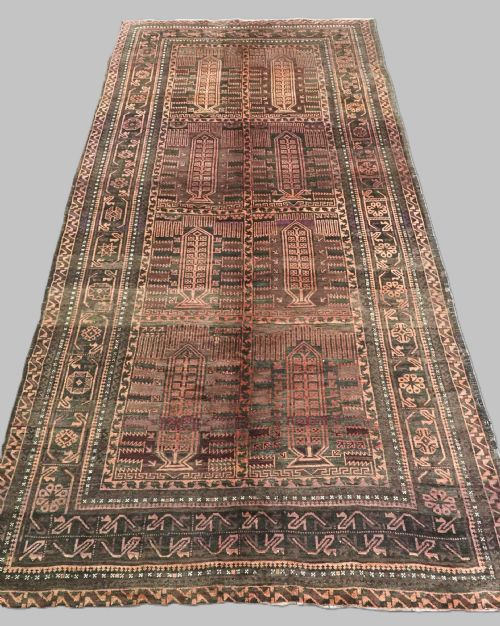
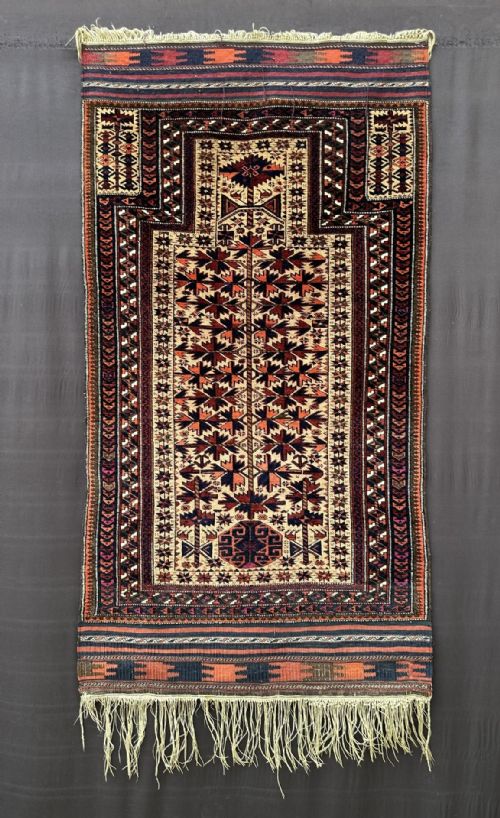
Makers utilised traditional formats including prayer rugs with mihrabs, format main carpets, and small hearth rugs. The designs encompass classic pencil box patterns, shrub motifs, and tree of life compositions.
How They Were Made
Weavers constructed these textiles using hand-spun wool foundations and pile, supplemented by materials such as cotton, goat hair, and camel hair for structural contrast or natural ground colours. Natural dyes provided deep rich tones including blue, ivory, and aubergine.
Nomadic workshops employed traditional knotting techniques on portable horizontal looms set up across the western Afghan borderlands. Selected examples incorporate supplementary materials like silk highlights to accentuate specific design details within the field.
Timuri Baluch Rug Retail Price Guide 2026
Typical asking prices for timuri baluch rug among the pieces listed under this phrase on Sellingantiques today, from the lower quarter to the upper quarter. They describe what is for sale here now, not the wider market.
Nomads occasionally tucked silk scraps into the wool pile to catch the firelight.
What Varies in Quality
Quality rests upon the crispness of the tribal design execution, such as the geometric precision of a pencil box pattern or a tree of life motif. Finer examples display saturated natural dyes that retain depth across blue, camel, and aubergine grounds.
The handle and density of the hand-spun wool pile distinguish the output of different nomadic groups. Condition and the retention of original woven borders also influence the character of surviving nineteenth-century pieces.
The Timuri Baluch Rug Glossary
- Mihrab
- The arched niche design found on prayer rugs, directing the placement of the worshipper. It forms the focal point of many nomadic prayer formats.
- Pencil box design
- A repeating geometric compartment pattern, also known as kalam donneh, frequently structured across main carpets. Each stacked cell encloses stylized botanical motifs.
- Tree of life
- A vertical symbolic motif rising from a base, often depicted on camel ground prayer rugs. It represents spiritual growth and eternal life in tribal iconography.
- Dokhtar-e-Qazi
- A specific sub-group attribution and design style associated with Timuri weavers in the borderlands. These rugs often feature characteristic shrub or leaf repeats.
- Ru korssi
- A specialised square rug used to drape over a low table covering a heating source in traditional dwellings. These utilitarian textiles served domestic warmth in cold regions.
Timuri Baluch Rug: Frequently Asked Questions
What is a timuri baluch rug?
A timuri baluch rug is a tribal textile woven by nomadic groups inhabiting the borderlands of north-east Persia and western Afghanistan during the nineteenth and early twentieth centuries.
These pieces reflect distinct regional identities through traditional patterns, wool materials, and vegetable dyes.
How were prayer rugs used?
Prayer rugs functioned primarily as portable mats for daily Islamic prayers, featuring a defined mihrab arch to orient the user.
Nomads also used them within tents as decorative furnishings or sitting places during gatherings.
How do I identify a prayer rug?
A prayer rug is recognised by its distinctive architectural arch or mihrab design at one end, which often encloses a tree of life or shrub motif.
The format tends to be smaller and narrower than a main carpet, designed for individual use.
How do I care for an antique rug?
Antique wool rugs require gentle care, including regular vacuuming without a rotating brush and professional cleaning when necessary.
Keeping them out of direct sunlight preserves the natural dyes used by nineteenth-century weavers.