

Tilting Round Table
A tilting round table offers practical folding tops and sturdy pedestals from Georgian, Regency, and Victorian periods.
Tilting Round Table
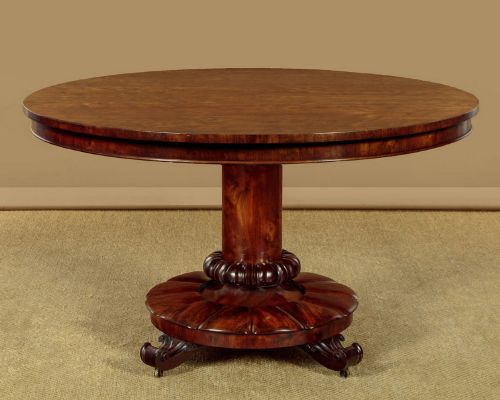
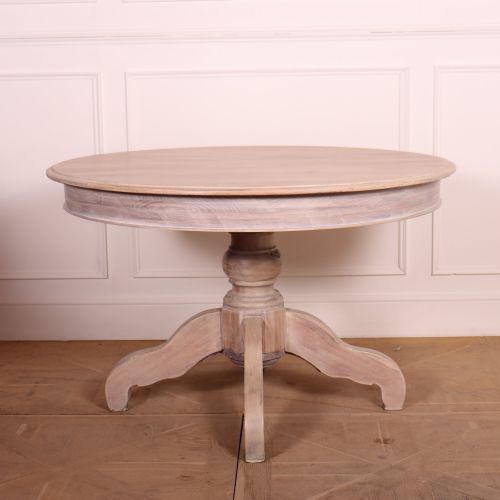
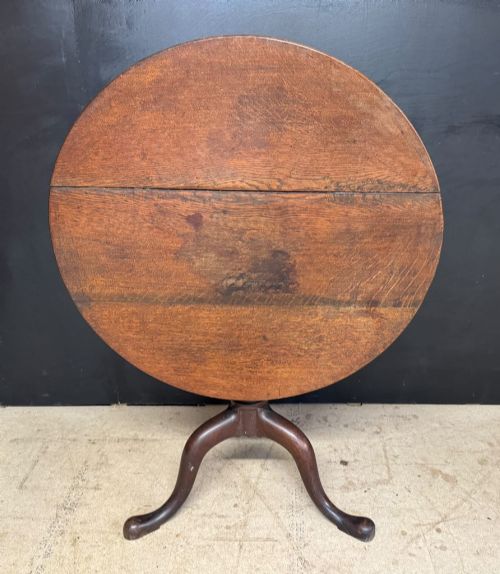
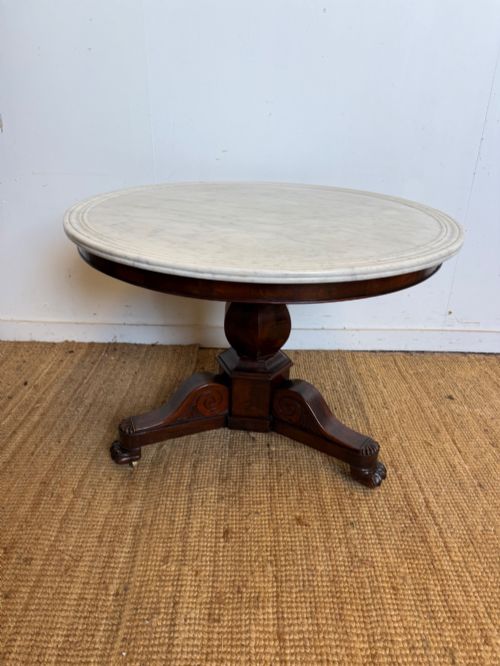
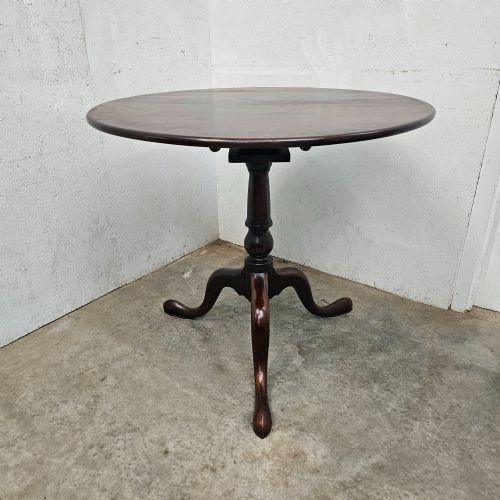
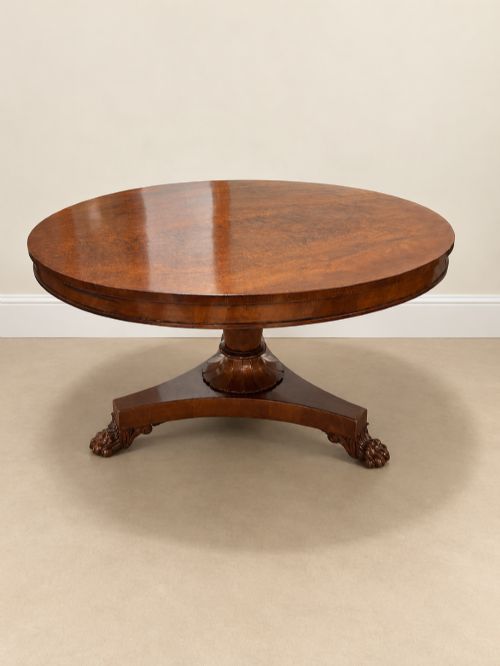
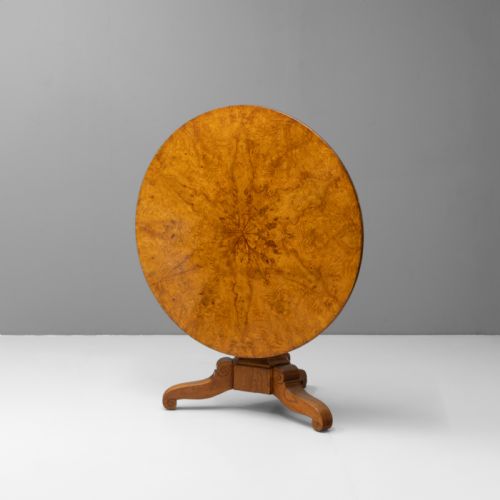
A tilting round table provides a flexible circular surface supported by a central pillar and tripod or pedestal base, designed to save space when not in use. These pieces span the Georgian, Regency, and Victorian eras, alongside specific regional forms such as French wine tasting tables and Anglo-Indian occasional tables.
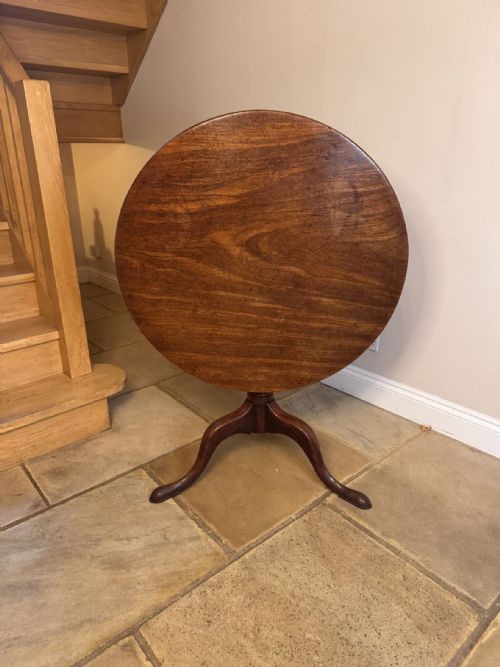
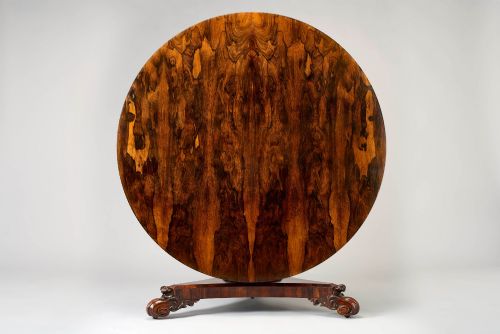
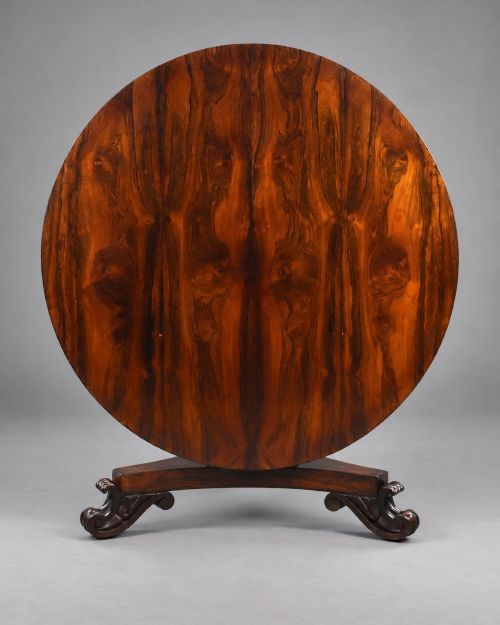
Mahogany and rosewood dominate the larger breakfast and centre tables, while oak and fruitwood appear frequently in smaller wine and lamp tables. Buyers frequently encounter tilt-top mechanisms allowing the surface to fold vertically against the pedestal.
Materials and construction
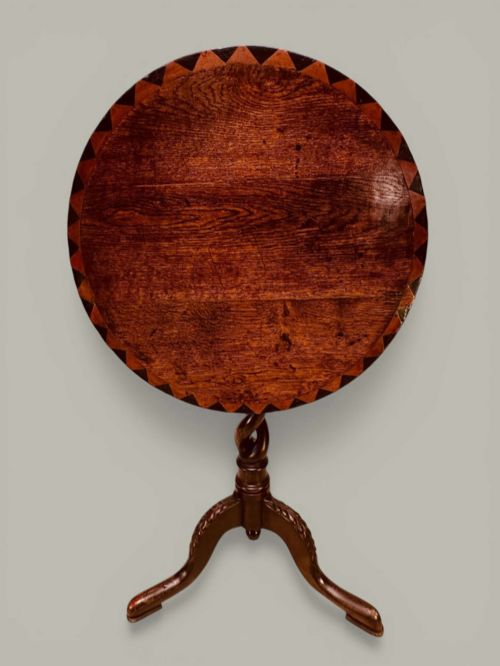
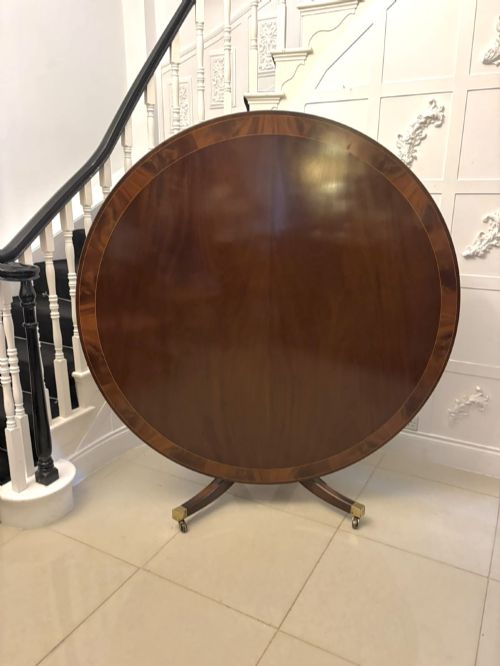
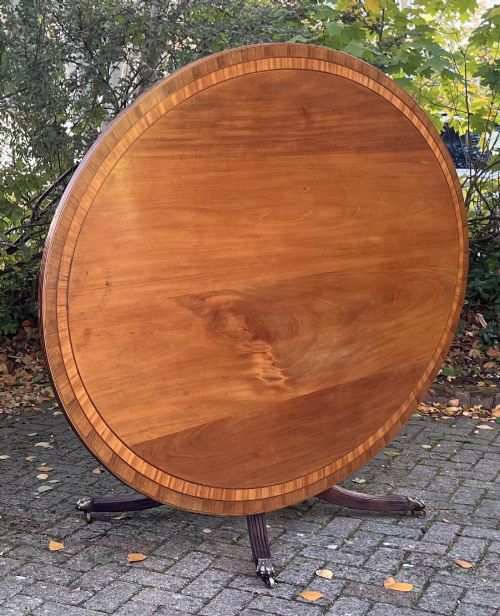
Cabinet makers utilised dense hardwoods like mahogany, rosewood, and burr walnut, often applying crossbanding or marquetry inlay to enhance the circular top. Brass fittings frequently secure the tilting mechanism and castors on the pedestal base.
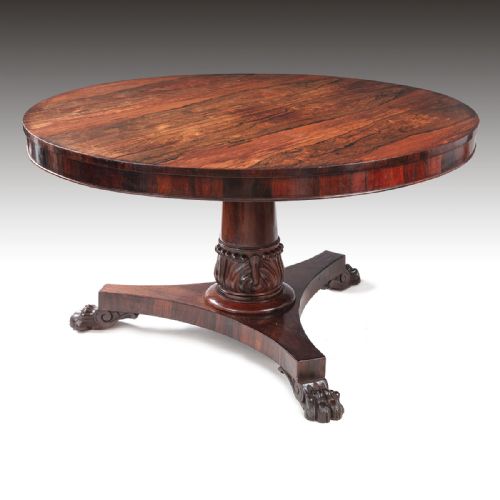
The central pillar connects a heavy multi-legged tripod or platform base to the tabletop via a tilting block and catch. Turning timber on a lathe formed the central pedestals and vase-shaped columns.
Tilting Round Table Retail Price Guide 2026
Typical asking prices for tilting round table among the pieces listed under this phrase on Sellingantiques today, from the lower quarter to the upper quarter. They describe what is for sale here now, not the wider market.
Some French wine tables spent decades tilting quietly in damp cellars before finding their way into modern sitting rooms.
Judging quality in circular tables
Quality rests upon the choice of timber figure, such as highly grained burr walnut or figured mahogany, and the precision of any crossbanding or brass inlay. The stability of the tilt mechanism and the seamless movement of the folding catch indicate skilled cabinet making.
Proportion between the diameter of the circular top and the strength of the pedestal dictates structural integrity and visual balance. Finely carved tripod legs and original brass castors elevate the construction standard.
Gillows·Peters of Genoa
The Tilting Round Table Glossary
- Tilt top
- A tabletop mounted on a pivot mechanism allowing it to rotate and fold flat against the vertical pedestal for storage.
- Tripod table
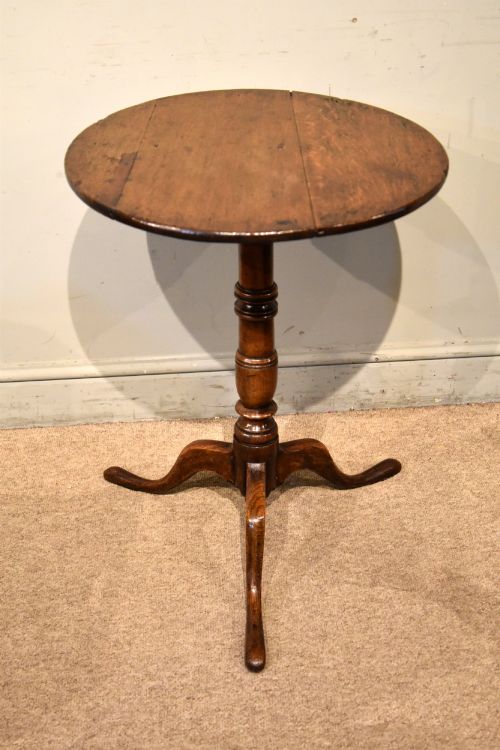
- A small occasional table supported by a central pillar resting on three spreading legs.
- Crossbanding
- A border of veneer laid around the edge of a tabletop with the grain running perpendicular to the centre.
- Gueridon
- A small French occasional or centre table, frequently featuring a circular top.
- Breakfast table
- A large circular dining table designed during the Georgian and Regency periods for morning meals.
Tilting Round Table: Frequently Asked Questions
What is a tilting round table used for?
These pieces served multiple domestic functions ranging from dining and breakfast to holding lamps or wine glasses in formal reception rooms. The folding top allowed servants to clear space quickly when the table was not in active service.
Today, they function well as central display surfaces in hallways or as flexible dining options in smaller rooms where permanent large furniture dominates.
How do I identify a Regency period table?
Regency examples frequently employ dark rosewood timber, brass inlay work, and robust circular pedestals standing on platform bases with paw feet. The proportions tend to be heavy and architectural, reflecting classical design influences of the early nineteenth century.
Look for crisp brass mounts and finely turned vase columns beneath the circular top to confirm the period characteristics.
What distinguishes a wine tasting table?
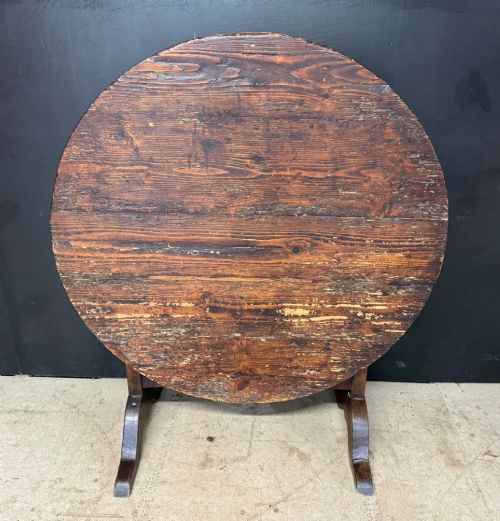
Wine tasting tables, sometimes referred to as vendange tables, originate from French regions and typically feature simpler fruitwood or oak construction built for agricultural utility. Their circular tops tilt easily to facilitate compact storage in cellars or tasting rooms.
They carry a rustic charm with patinated wooden surfaces rather than the polished mahogany finishes found in formal British dining rooms.
How do I care for a polished wood surface?
Maintain polished mahogany and rosewood surfaces by dusting regularly with a soft, dry cloth and avoiding direct exposure to strong sunlight or heat sources. Traditional wax finishes benefit from occasional feeding with quality beeswax to preserve the depth of the timber.
Protect the circular top from moisture by using coasters under glasses and placing lamps on heat-resistant mats.