

Tilted Floor Mirror
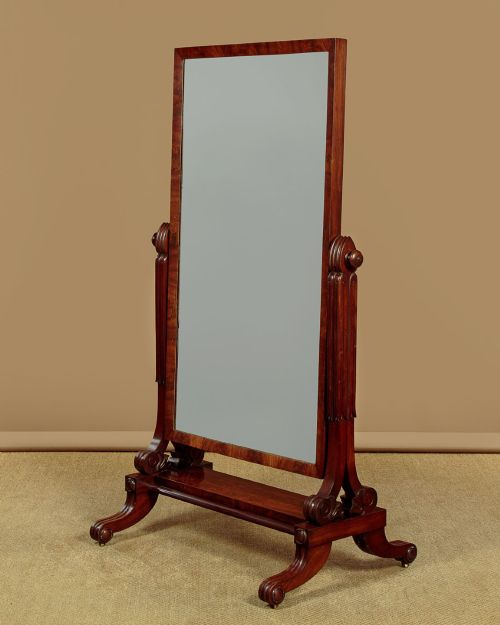
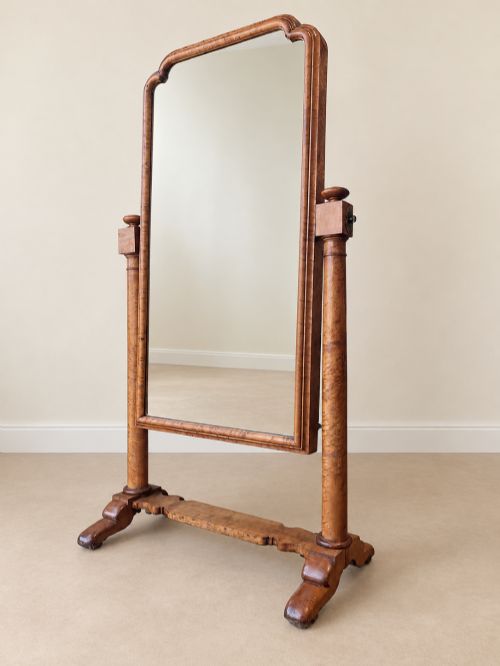
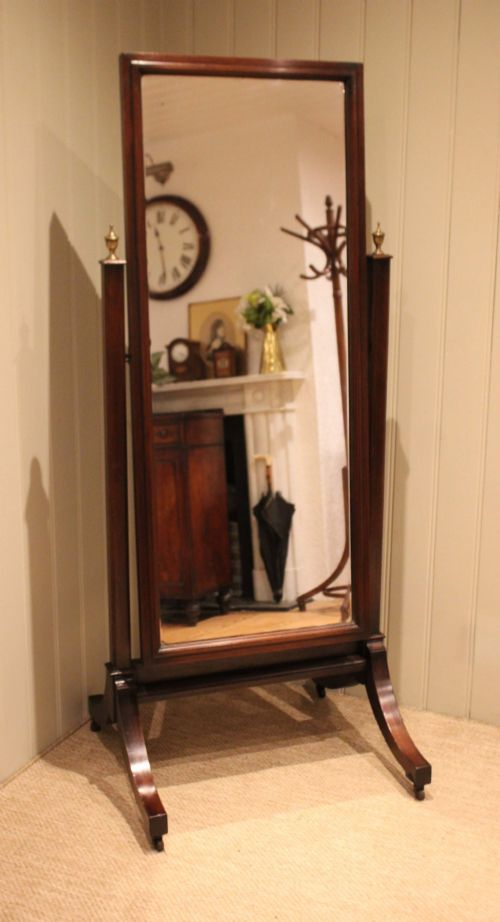
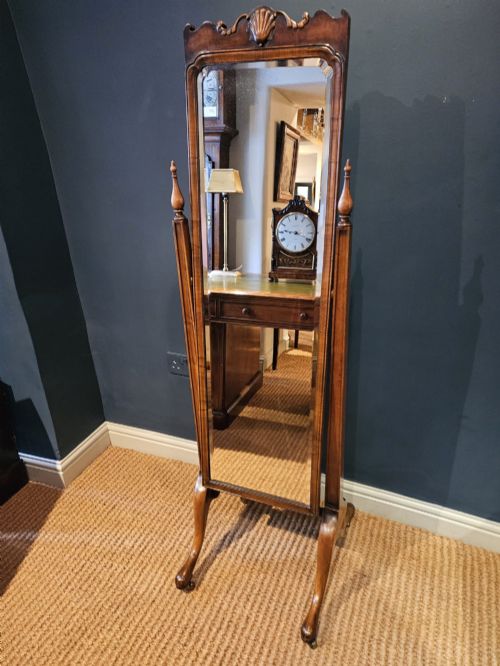
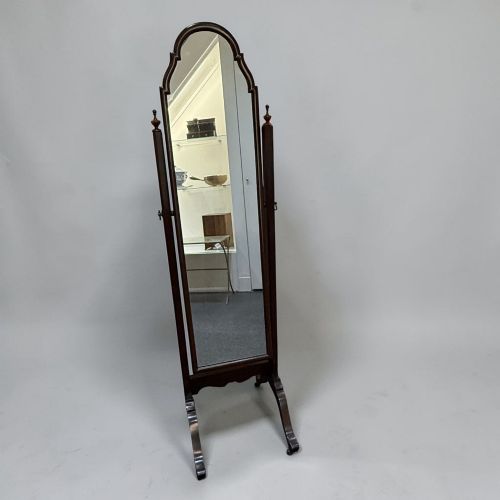
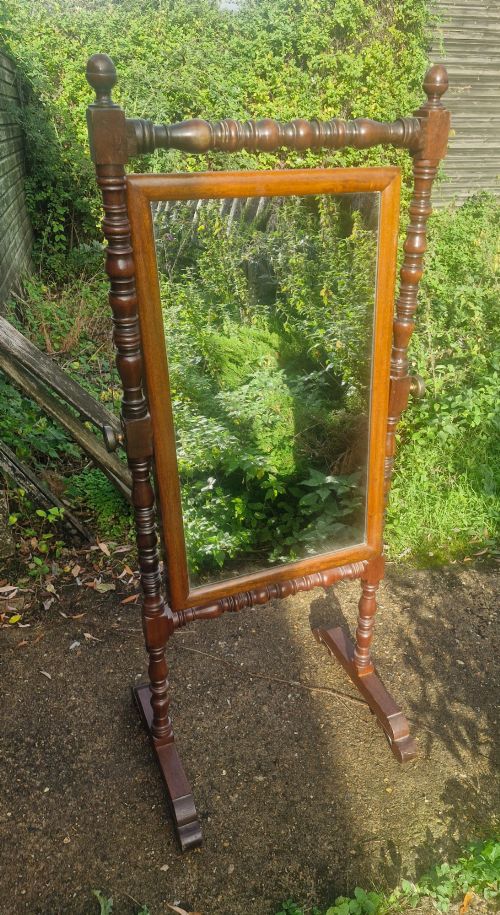
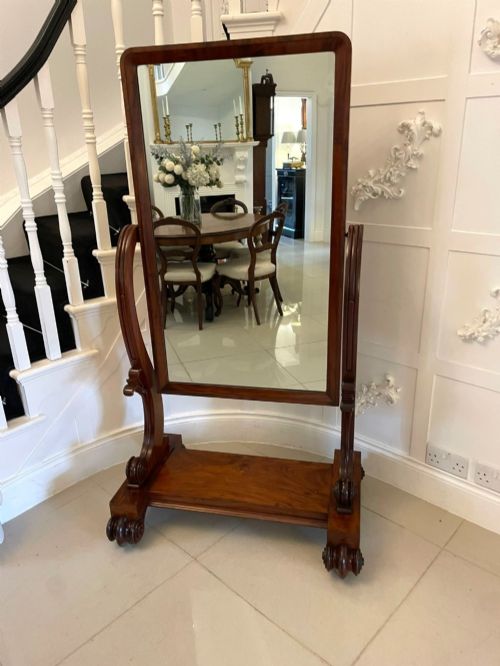
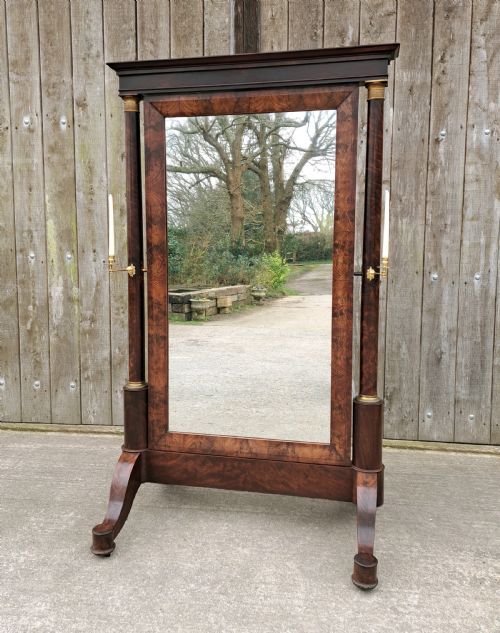
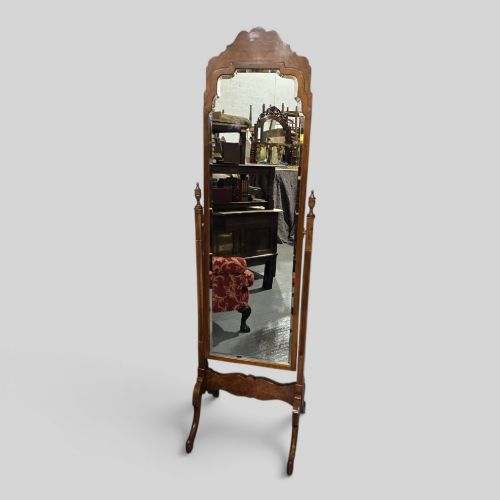
A tilted floor mirror offers a full-length reflection framed in mahogany, walnut, or oak, designed to pivot on a sturdy freestanding frame.
Tilted Floor Mirror
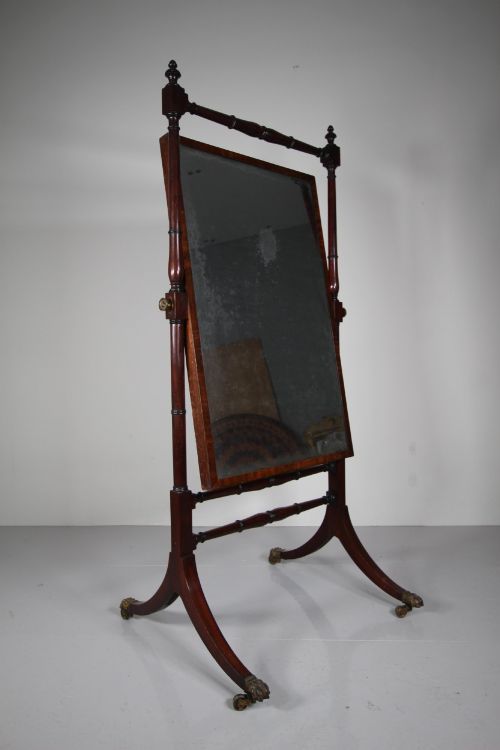
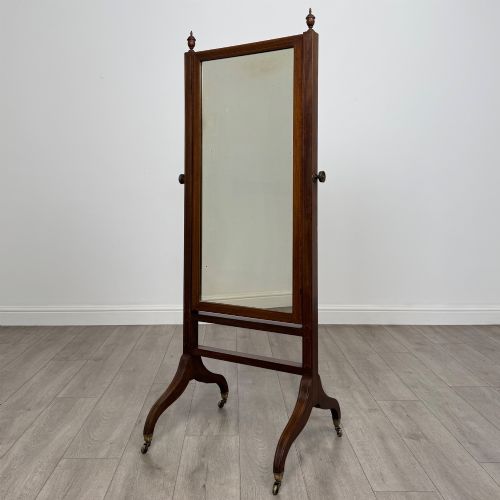
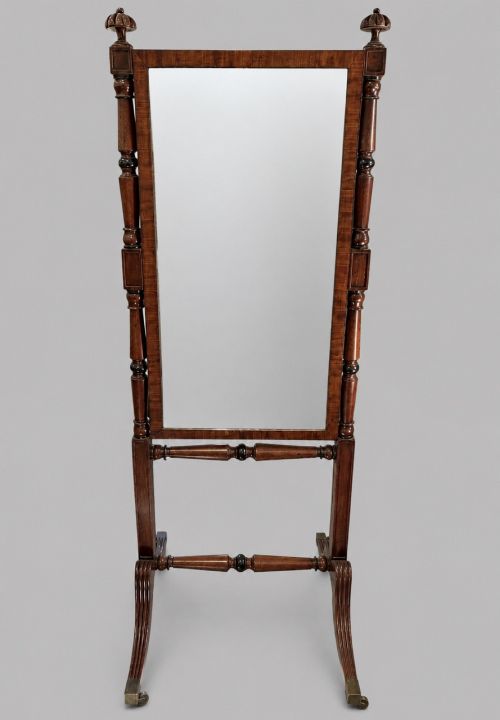
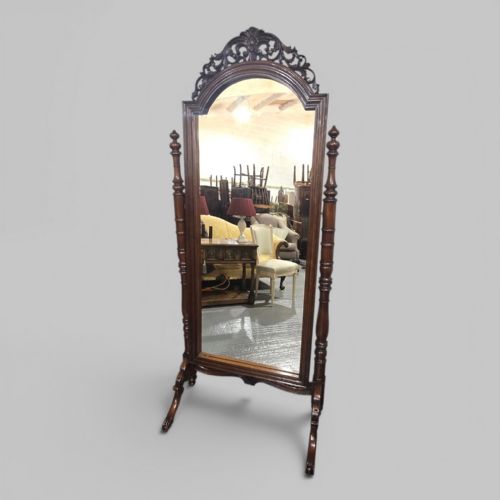
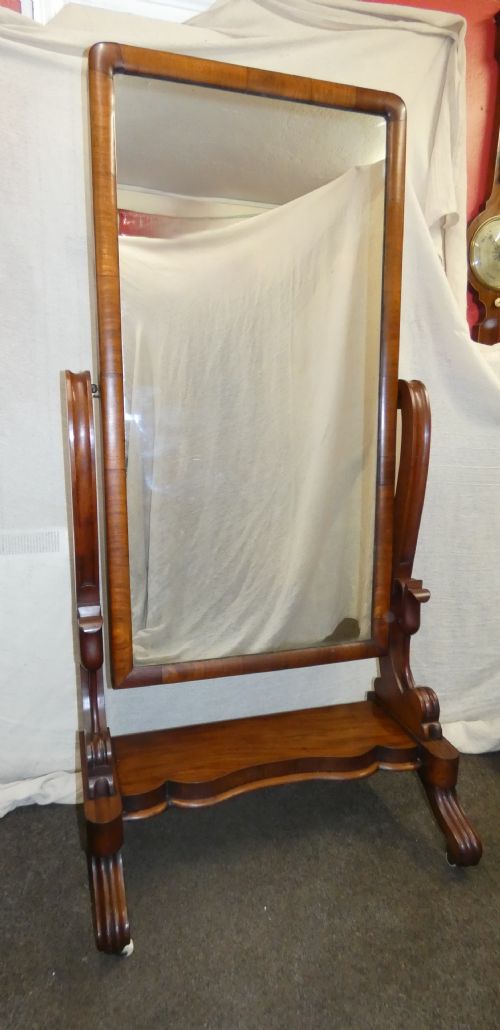
When you search for a tilted floor mirror, you are looking at cheval mirrors that swing on pivot pins between vertical uprights. The form emerged strongly in the Georgian and Regency periods and continued through Victorian and Edwardian workshops.
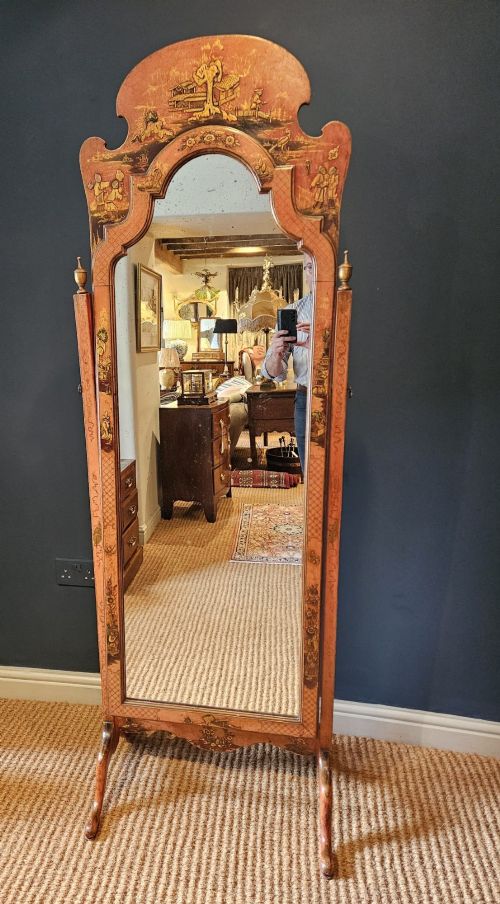
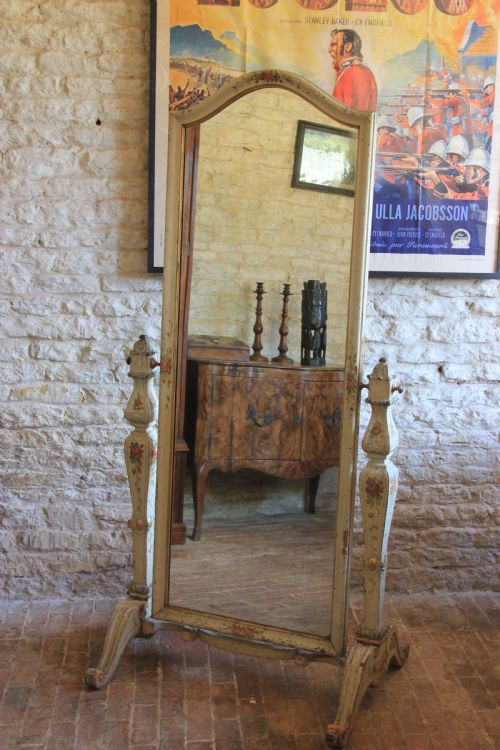
Mahogany remains the dominant wood across these eras, alongside burr walnut, pitch pine, and lacquered wood finished with chinoiserie or gilt details. Most examples stand on supportive legs equipped with brass sabots and castors for easy repositioning in a dressing room or bedroom.
How they were made
Cabinet makers constructed the primary frames from solid timber and rich veneers, utilising mahogany, walnut, and oak to support the heavy plate glass. Brass hardware, including pivot screws, sabots, and castors, provided both structural reinforcement and movement.
Surfaces received hand-polished finishes such as French polish to highlight the grain of the wood, while specialised examples incorporated inlaid details or hand-painted chinoiserie motifs.
Tilted Floor Mirror Retail Price Guide 2026
Typical asking prices for tilted floor mirror among the pieces listed under this phrase on Sellingantiques today, from the lower quarter to the upper quarter. They describe what is for sale here now, not the wider market.
The documented examples span from the Georgian period through the Victorian, Edwardian, and 1920 eras.
What varies in quality
The sophistication of the timber selection and the crispness of the carving distinguish finer examples from standard production pieces. Figured mahogany or burr walnut veneers demonstrate superior workshop attention.
Hardware integrity and the weight of the original mirror glass indicate grade. Substantial brass castors, secure pivot mechanisms, and well-proportioned sabots denote higher construction standards.
Waring and Gillow
The Tilted Floor Mirror Glossary
- Cheval mirror
- A freestanding full-length mirror mounted on a frame that allows it to swing or tilt. The term derives from the French word for horse, referring to the four-legged frame.
- Sabot
- A metal sleeve fitted to the foot of a furniture leg. They frequently appear in brass on Regency and Victorian upright supports.
- Chinoiserie
- European imitation of Chinese artistic motifs and styles. This decorative technique appears on select lacquered wood frames.
- Burr walnut
- Wood taken from a walnut tree growth featuring swirling grain patterns. It creates a highly decorative veneer on period frames.
Tilted Floor Mirror: Frequently Asked Questions
How do I tilt the mirror safely?
Most cheval mirrors use side pivot screws that can be adjusted by hand or with a proper tool to control the tension. Support the glass with one hand while loosening or tightening the fixings to prevent sudden slipping.
Ensure the frame rests on a level surface so the weight distributes evenly across the castors and legs before making any adjustments.
Where should I place a floor mirror?
Position the piece in a bedroom or dressing area where natural light from a nearby window can reflect into the space. Placing it opposite a light source maximises illumination.
Keep the frame away from direct heat sources and damp walls to protect the timber veneer and the backing of the mirror glass over time.
How do I identify a Regency mirror?
Regency frames often display clean architectural lines, sabre legs, and brass details such as castors and sabots. The timber choice typically leans towards rich mahogany with restrained ornamentation.
Proportions tend to be elegant and vertical, reflecting the classical design influences of the early nineteenth century.
Can I clean the original glass?
Clean the mirror surface gently with a soft cloth and a mild glass cleaner sprayed onto the cloth rather than directly onto the glass. This prevents moisture from seeping behind the edges.
Inspect the silvering on older plates carefully and avoid harsh chemical abrasives that might damage the historic reflective backing.