
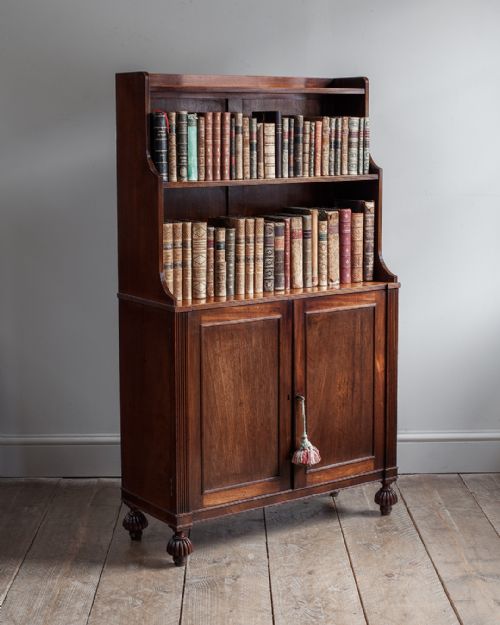
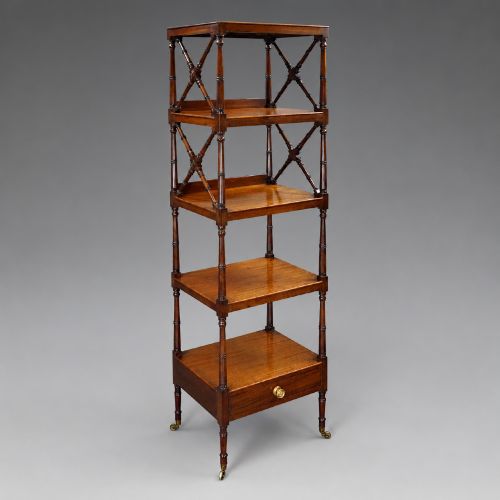
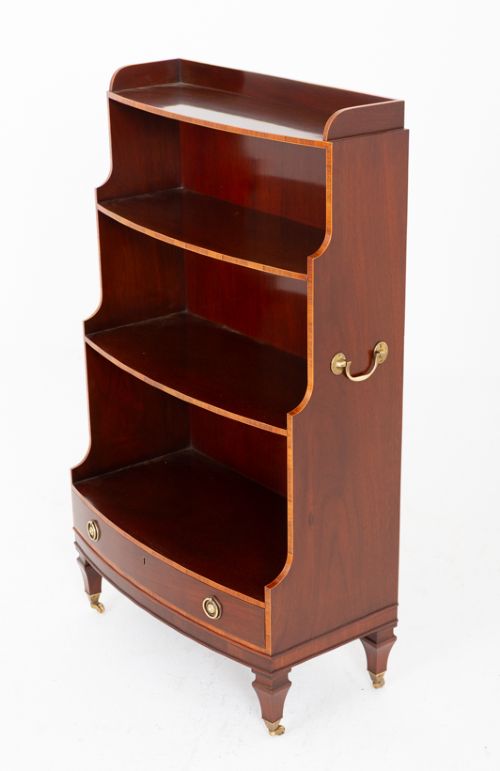
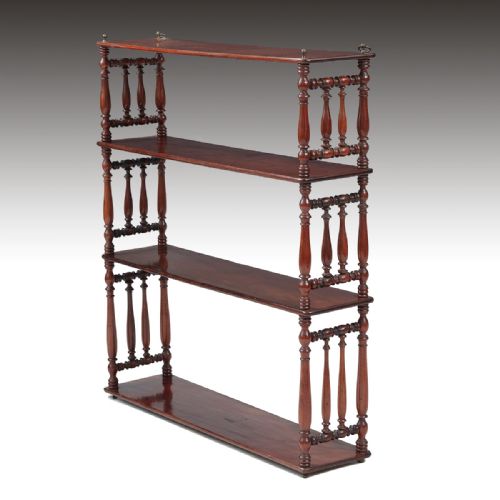
Tiered Mahogany Display Unit
A tiered mahogany display unit offers open shelving and compartment storage, spanning Georgian, Regency and Victorian periods.
Tiered Mahogany Display Unit
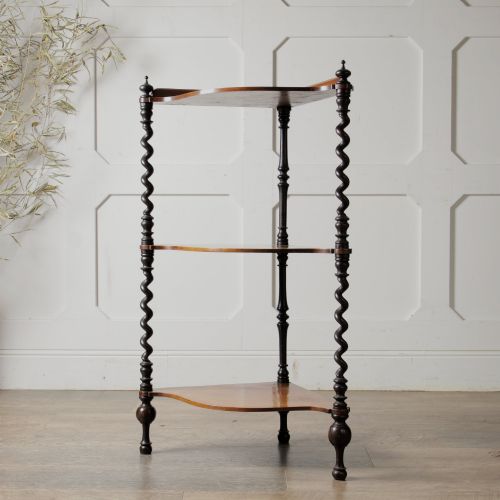
A tiered mahogany display unit brings vertical storage and surface display into domestic spaces through forms such as whatnots, etageres, hanging shelves and corner cabinets. These multi-tiered pieces originate primarily across the Georgian, Regency and Victorian eras, alongside later revivals.
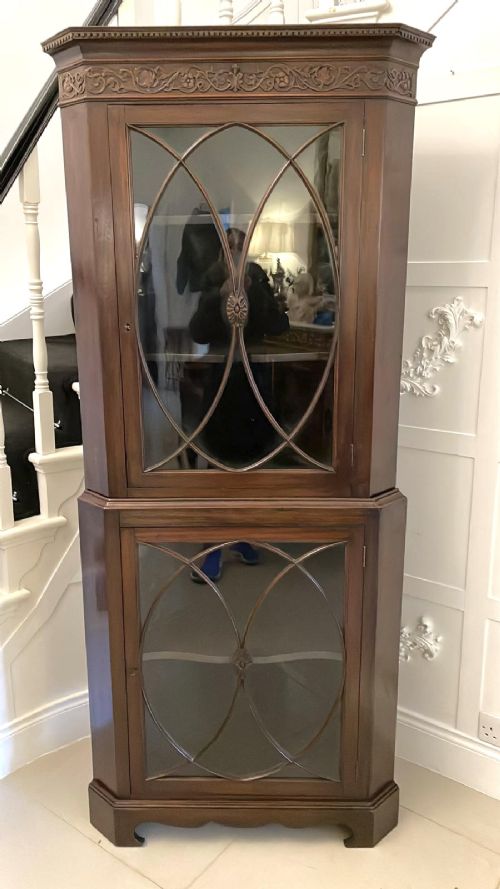
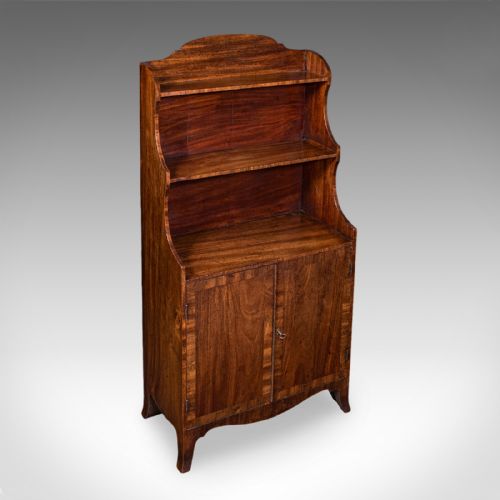
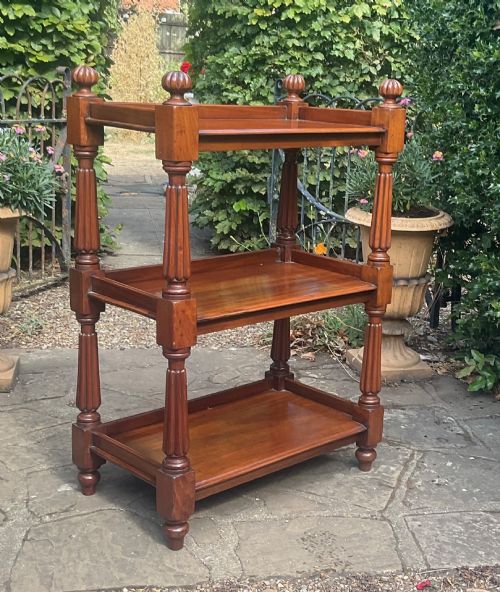
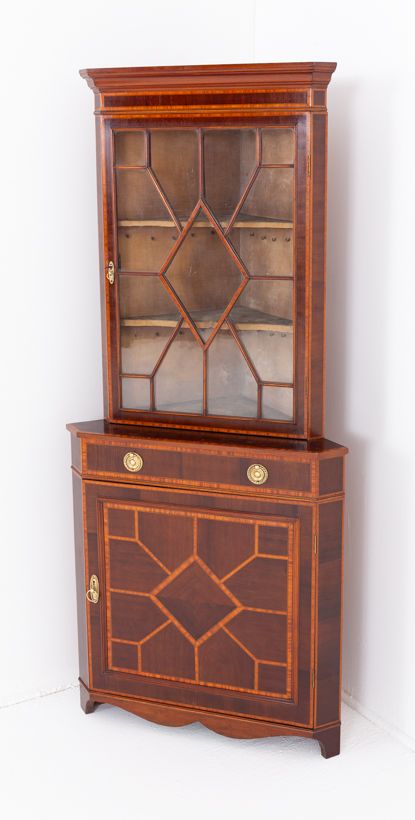
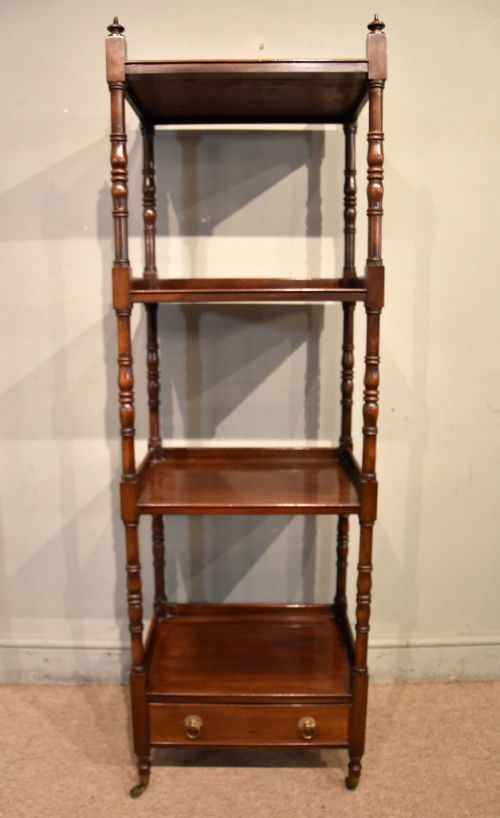
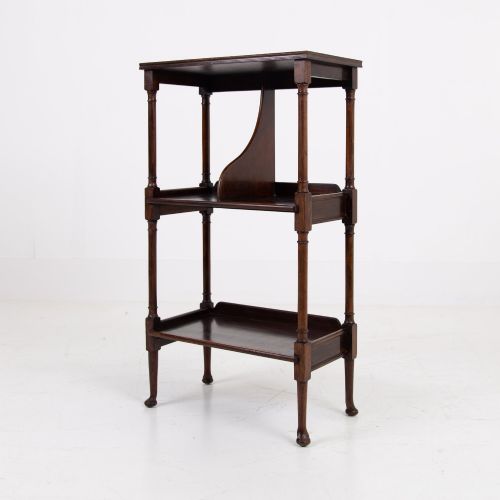
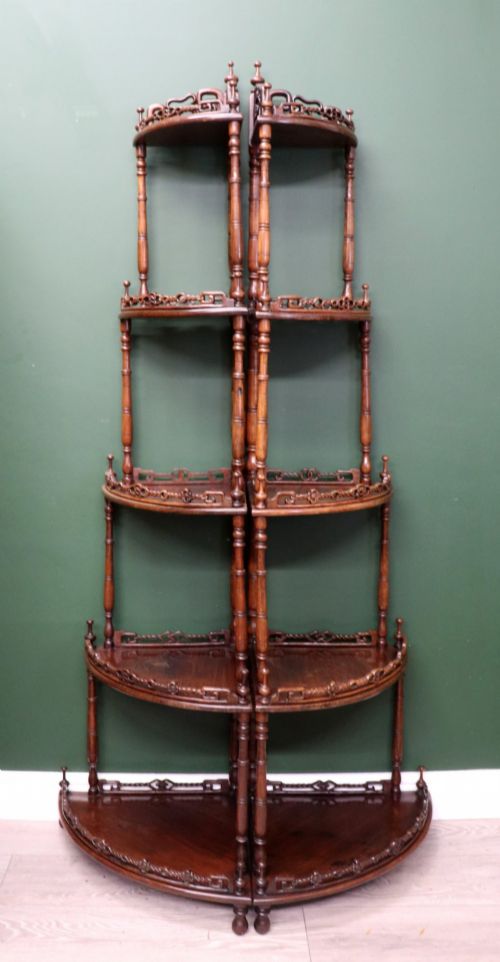
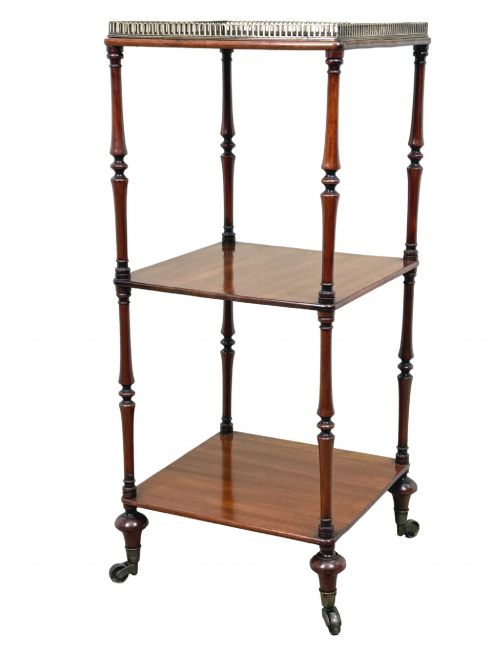
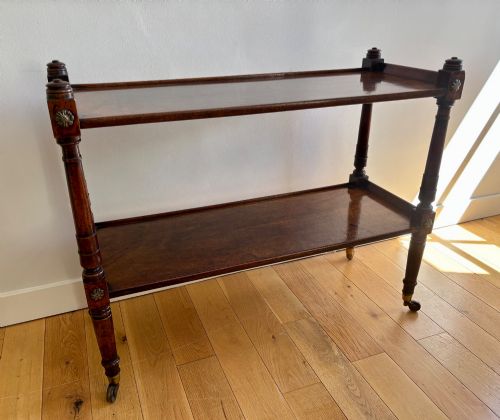
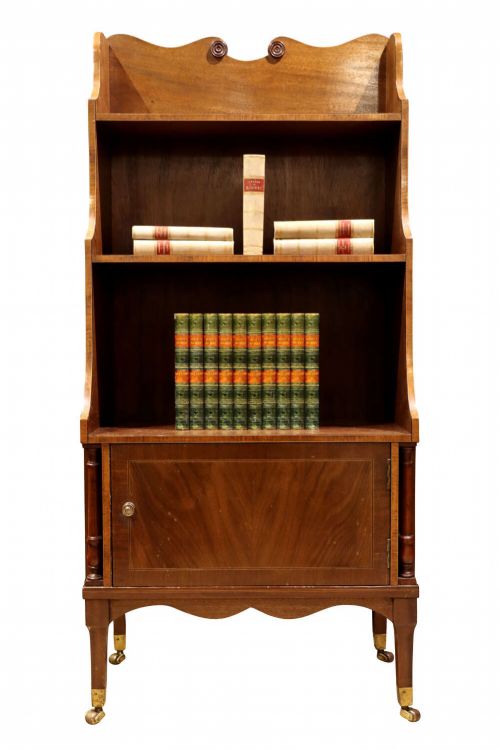
The selections available here lean heavily toward freestanding whatnots and tiered etageres, alongside wall-mounted hanging shelves and corner cabinets. Buyers encounter varying tier counts, often ranging from three to four shelves, occasionally accompanied by small lower cupboards or drawers.
How they were made
Construction relies heavily on solid mahogany and flame mahogany veneer, supported by secondary timbers such as oak and accented with satinwood or walnut inlays. Joinery combines traditional cabinet-making techniques with turned supports, barley twist columns and occasional brass fixtures or castors.
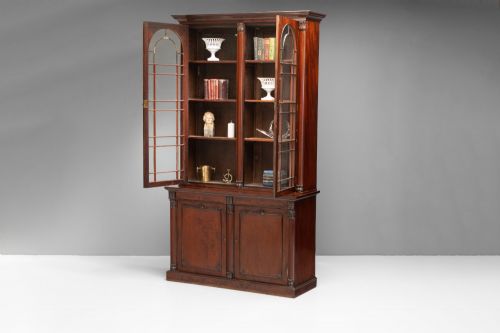
Glazing appears on enclosed cabinet variations using astragal bars, while open display units utilise graduated shelf tiers fixed to upright supports. Surfaces receive polished finishes that highlight the natural grain patterns of the primary hardwoods.
Listings span the Georgian, Regency, Victorian and Edwardian eras, predominantly featuring mahogany, flame mahogany veneer and brass details.
What varies in quality
Quality separates pieces through the selection of timber figure, such as richly grained flame mahogany veneer, and the crispness of turned or carved details like barley twist columns. Superior examples maintain structural integrity across multiple tiers without wobble, while lesser pieces show simpler construction and plainer timber selection.
Proportion and design ambition also divide the range, distinguishing standard utility furniture from sophisticated examples featuring inlaid satinwood or integrated mirrors and cellarettes.
The Tiered Mahogany Display Unit Glossary
- Whatnot
- A piece of furniture with multiple open shelves for displaying ornaments or books. This form emerged in the late eighteenth century and gained popularity throughout the nineteenth.
- Etagere
- A set of tiered open shelves used for display. The term originates from French furniture terminology.
- Flame mahogany veneer
- A decorative wood slicing chosen for its fiery, swirling grain pattern. Cabinet-makers applied this veneer to prominent exterior surfaces.
- Astragal glazed
- A glass door divided into small panes by narrow wooden mouldings. These bars form geometric patterns across cabinet fronts.
- Cellarette
- A lockable compartment or container built into furniture for storing bottles. These fittings occasionally appear in lower sections of nineteenth-century display pieces.
Tiered Mahogany Display Unit: Frequently Asked Questions
What is a tiered mahogany display unit?
A tiered mahogany display unit is a multi-shelved piece of furniture designed for holding books, ceramics or ornaments. These items encompass open etageres, whatnots, hanging shelves and corner cabinets.
Most examples date from the Georgian, Regency and Victorian periods, constructed primarily from mahogany with occasional veneer or inlay work.
How were whatnots used historically?
Historically, whatnots served as versatile display and storage furniture in drawing rooms, parlours and libraries. They held decorative objects, tea wares or portable book collections.
Tiered designs allowed owners to organise items by size, while versions with drawers or cupboards provided concealed storage for smaller household belongings.
How do I identify a Regency piece?
Regency pieces typically date from the early nineteenth century and feature classical restraint, clean architectural lines and dark mahogany timbers. They often incorporate delicate turnings and brass accents.
By contrast, later Victorian examples frequently introduce heavier proportions, mirrored backs or turned elements like barley twists.
Where should I place a corner cabinet?
Corner cabinets are designed to fit snugly into room angles, making efficient use of unutilised wall space. Hanging versions attach directly to walls above other furniture.
Freestanding corner cupboards anchor a room corner while providing shelved display space behind glazed or panelled doors.