



Graduated Shelving Unit
A graduated shelving unit brings layered tiers and ordered depth to a room, offering practical display space with distinctive period charm.
Graduated Shelving Unit
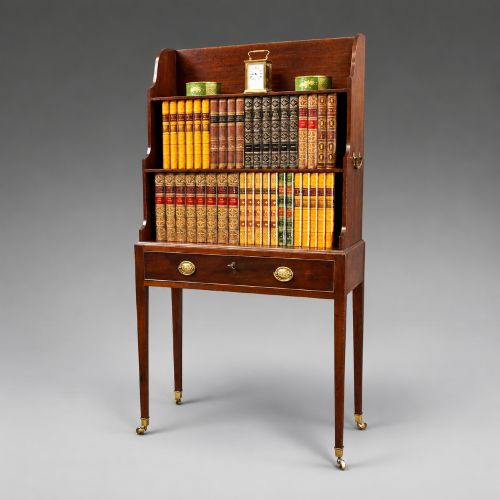
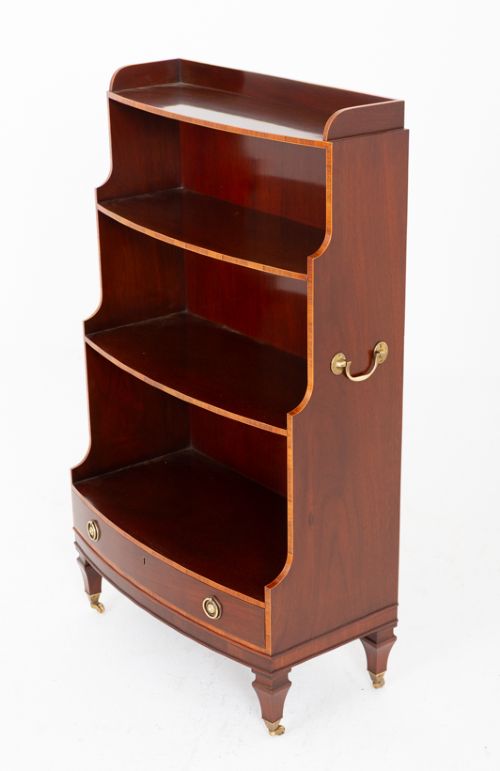
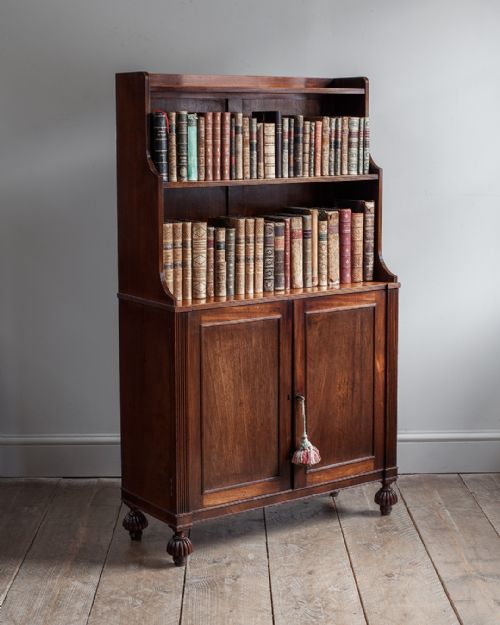
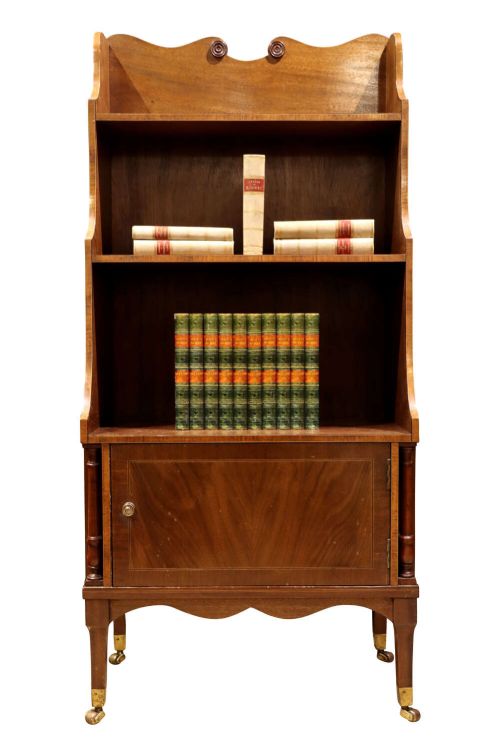
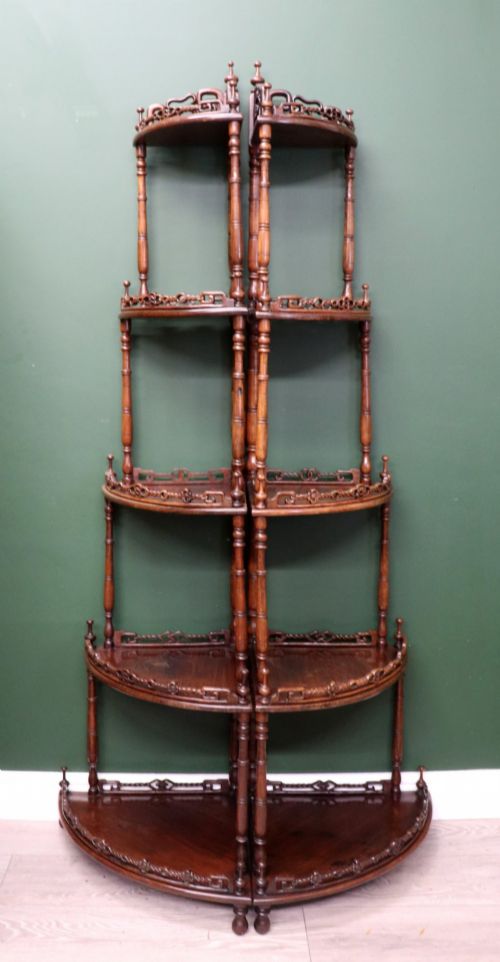
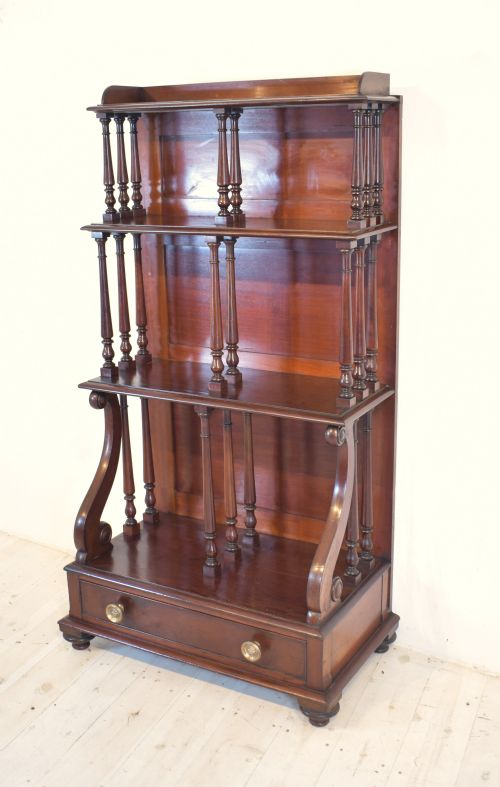
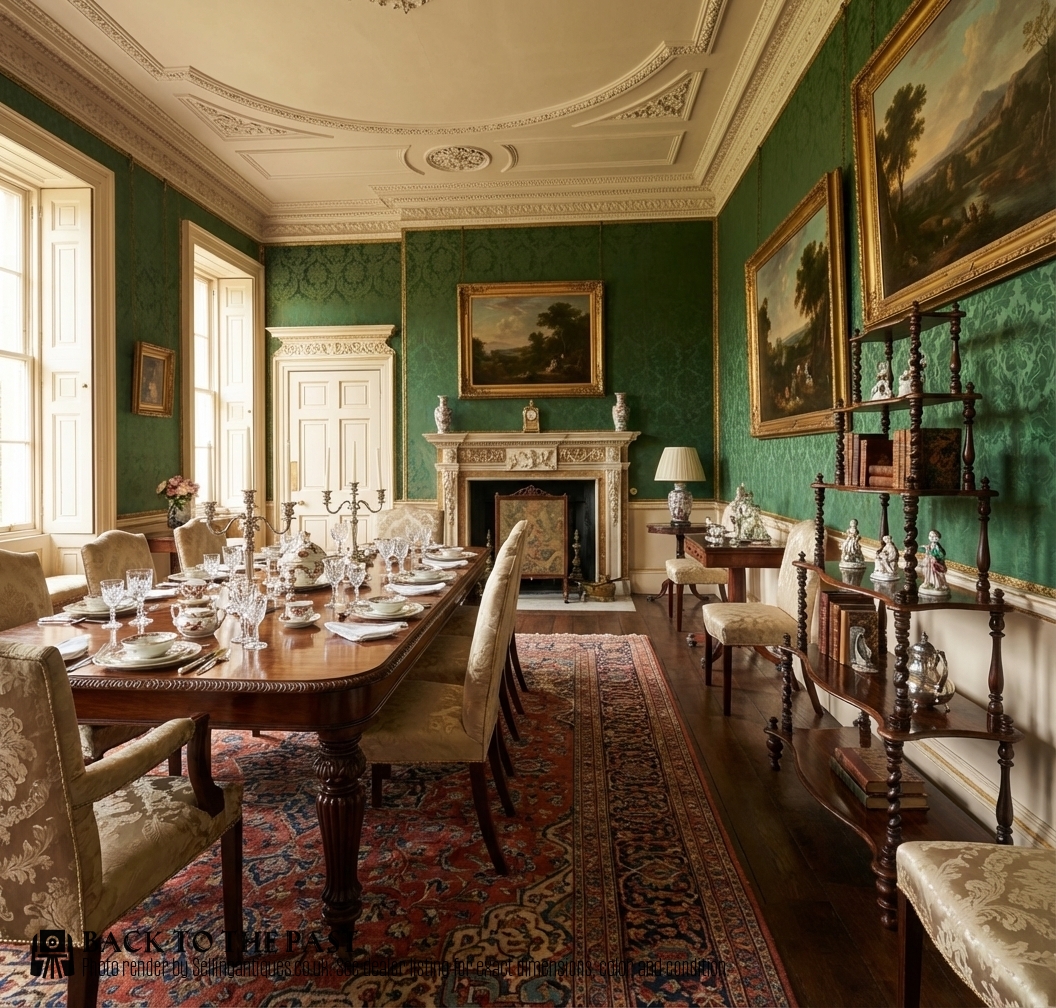
A graduated shelving unit, frequently encountered here as a waterfall bookcase or whatnot stand, steps back tier by tier from base to top. These pieces appear across several centuries, with Regency, Victorian, and Edwardian examples forming the core of the selection.
The layout typically involves open shelves decreasing in depth toward the top, though some variations incorporate cupboards or lower cabinet sections. Forms range from freestanding corner units to dwarf bookcases and multi-tiered display stands.
Origins stretch from Georgian workshops to early twentieth-century production, incorporating styles such as William IV and Late Victorian alongside regional interpretations like Anglo-Indian teak.
Materials and Construction
Cabinetmakers utilised a range of dense hardwoods, predominantly mahogany, rosewood, oak, and walnut, often enhanced with contrasting cross banding and delicate stringing. Finer pieces incorporate satinwood, burr walnut, and yew wood.
Structural elements frequently include brass castors for mobility, open galleries for security, and barley twist supports on tiered whatnot stands. Timber selection dictated the structural integrity required to support graduating tiers without warping.
Listings feature mahogany, rosewood, oak, walnut, and satinwood across Regency, Victorian, and Edwardian periods.
Craftsmanship and Proportion
Quality rests in the harmony of the graduating tiers and the crispness of any inlay or turned woodwork. Superior examples maintain balanced proportions where each shelf steps back in deliberate, graceful increments rather than awkward drops.
Selection of timber grain and the neatness of joinery separate standard workshop pieces from high-end cabinetmaking. Details such as fine boxwood stringing, matched veneers, and original brass hardware elevate a piece within its period.
Gillows
The Graduated Shelving Unit Glossary
- Waterfall bookcase
- A tiered open bookcase where each successive shelf is shallower than the one below it, creating a cascading profile. This form gained popularity during the Regency period.
- Whatnot stand
- A multi-tiered piece of freestanding furniture designed for displaying ornaments or books, supported by slender pillars or uprights. These often feature three to six tiers.
- Cross banding
- A narrow strip of veneer laid across the grain of the primary timber around the perimeter of a shelf or top. It provides a neat, decorative border.
- Stringing
- A thin inlay of contrasting wood used to trace lines along shelves and panels. This technique highlights the geometry of the piece.
- Open gallery
- A low raised rail or spindle fence around the edge of a shelf designed to keep items from sliding off. This feature is common on upper tiers of nineteenth-century pieces.
Graduated Shelving Unit: Frequently Asked Questions
What is a waterfall bookcase?
A waterfall bookcase is a stepped shelving unit where each tier is shallower than the one beneath it. This design creates a cascading effect that reduces visual weight.
These pieces were built to hold books and display objects while occupying minimal floor space in domestic interiors.
How do I style a graduated shelf?
Arrange heavier books and larger items on the deeper lower shelves and smaller objects on the upper tiers. This maintains visual stability and mirrors the physical structure of the unit.
Keep decorative objects well-spaced to let the timber grain and tier proportions remain visible.
What is a whatnot stand?
A whatnot stand is a multi-tiered shelving unit designed for holding ornaments, collections, and books. They emerged in the nineteenth century as versatile display furniture.
Unlike standard bookcases, whatnots often feature slender turned columns and open sides accessible from all angles.
How do I date a mahogany bookcase?
Dating relies on observing timber characteristics, construction methods, and stylistic details such as brass castors and inlay work. Regency and Georgian pieces typically display solid mahogany and hand-cut dovetails.
Later Victorian and Edwardian examples often employ machine-sawn elements and different veneer application techniques.