
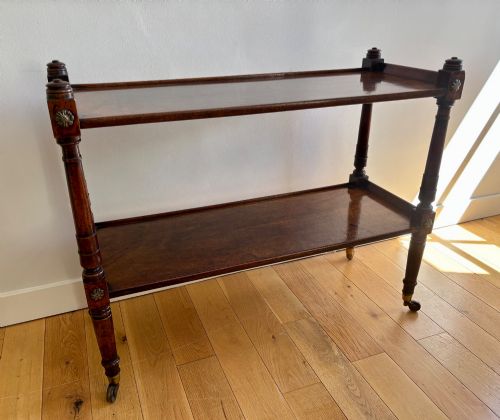


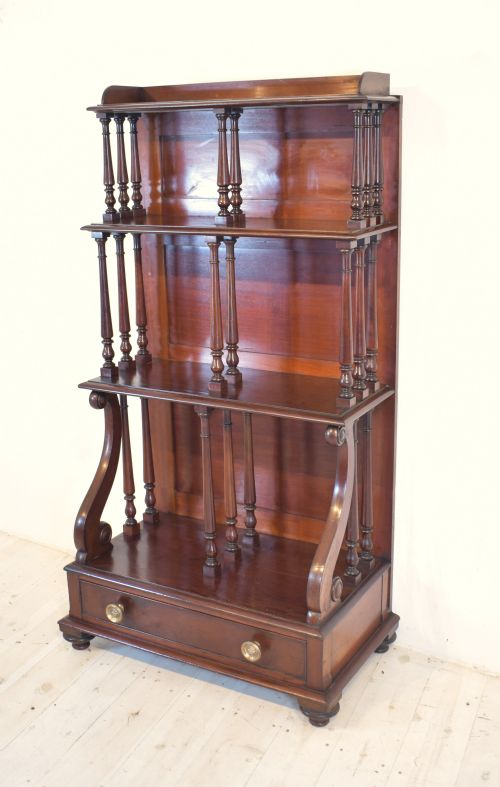
Period Display Shelves
Period display shelves provide open and enclosed storage, uniting practical utility with decorative display across Georgian, Regency and Victorian eras.
Period Display Shelves
When searching for period display shelves, buyers encounter a diverse selection of furniture designed to exhibit prized objects and books. These pieces originate from distinct historical eras, spanning Georgian, Regency, Victorian, and Edwardian periods.
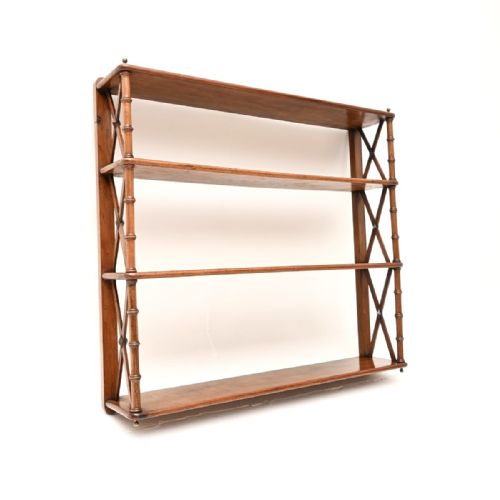
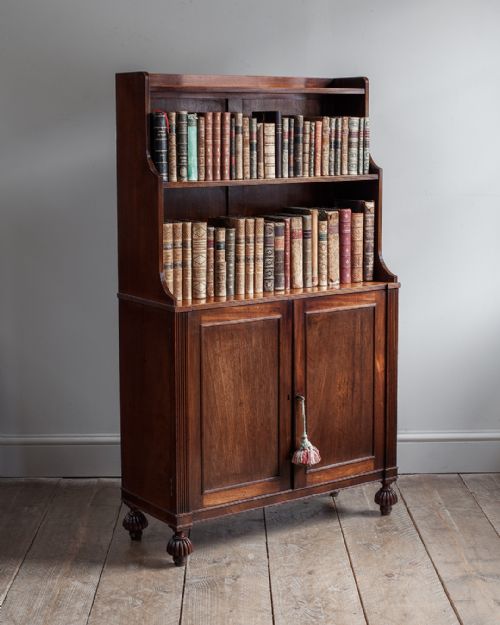
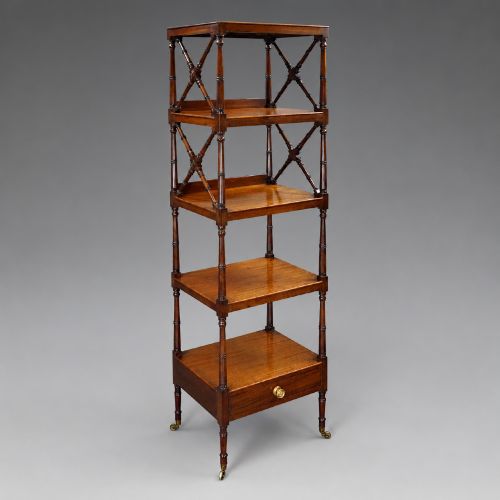
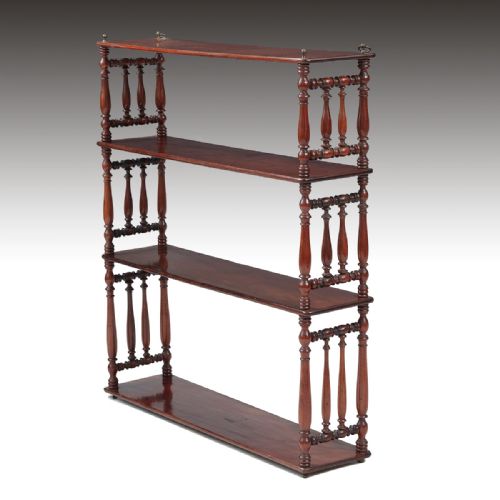
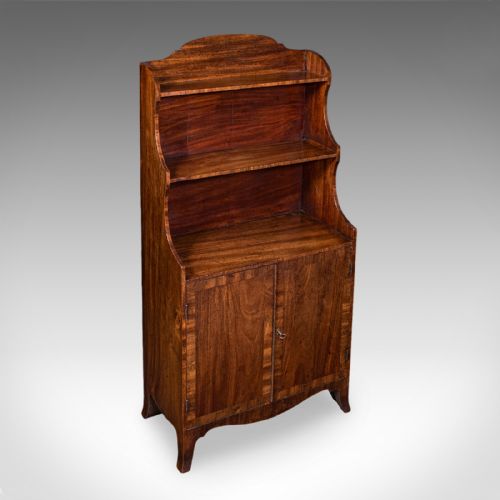
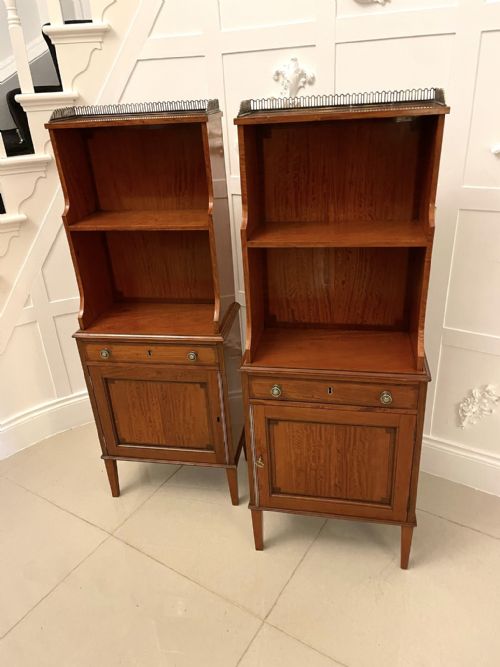
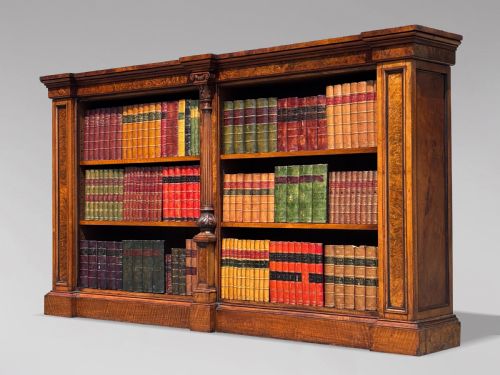
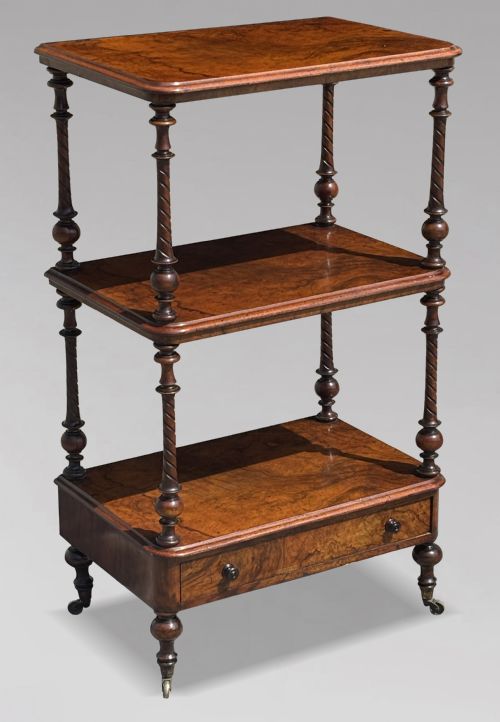
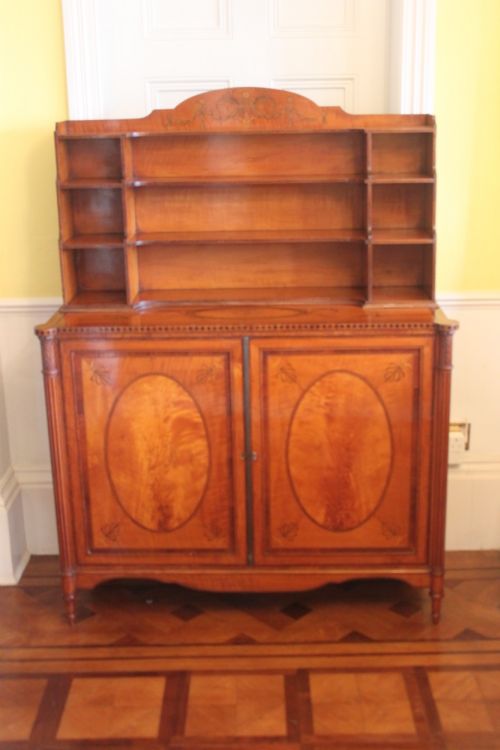
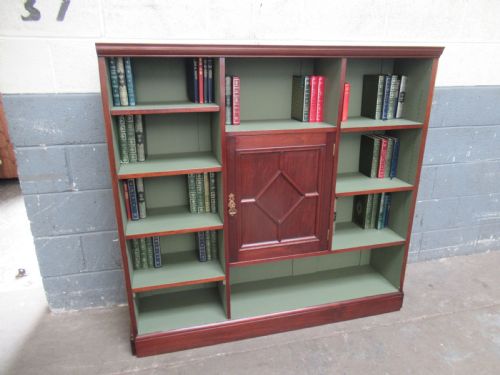
The most common forms on this page include whatnots, etageres, waterfall bookcases, and open bookcases. These items range from wall mounting units to substantial floor-standing cabinets.
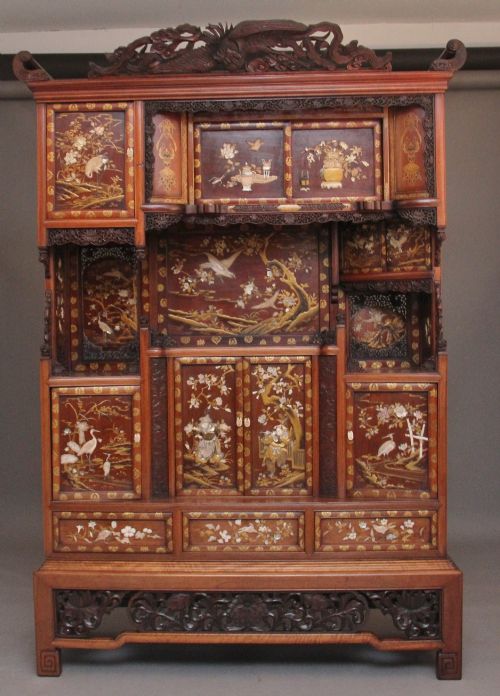
Materials vary widely, reflecting the preferences of each era from traditional British hardwoods to imported exotic woods and Japanese lacquer work. Buyers select these items to bring functional surface area and period character into domestic interiors.
Construction and Materials
Cabinet makers utilised dense timbers such as mahogany, walnut, rosewood, and satinwood to build these display pieces. Grain selection played a major role in the visual impact of the finished item, particularly with burr walnut and figured mahogany.
Joining techniques combined traditional cabinet-making methods with decorative elements like boxwood stringing, brass fittings, and ebonised detailing. Pieces often featured tiered tiers supported by turned columns or delicate uprights, balancing structural stability with a light silhouette.
Several pieces incorporate bamboo and ebonised frames, proving that Victorian households loved a bit of botanical theatricality.
Judging Quality
Quality in these items rests on the selection of timber and the precision of the construction. Superior examples display carefully matched grain patterns across prominent surfaces and refined execution of turned supports or brass accents.
Proportion and scale distinguish finer pieces from standard workshop output. Well-resolved designs maintain stability and visual balance even when carrying multiple tiers of heavy books or porcelain.
Gillows
The Period Display Shelves Glossary
- Whatnot
- An open set of tiered shelves used for displaying ornaments or holding books. These pieces typically feature three or four levels supported by slender uprights.
- Etagere
- A piece of furniture consisting of a series of open shelves for displaying small objects. The term derives from the French for stage or shelf.
- Waterfall Bookcase
- A freestanding or wall-mounted bookcase where each successive shelf recedes from the one below it. This stepped design creates a cascading profile.
- Shodana
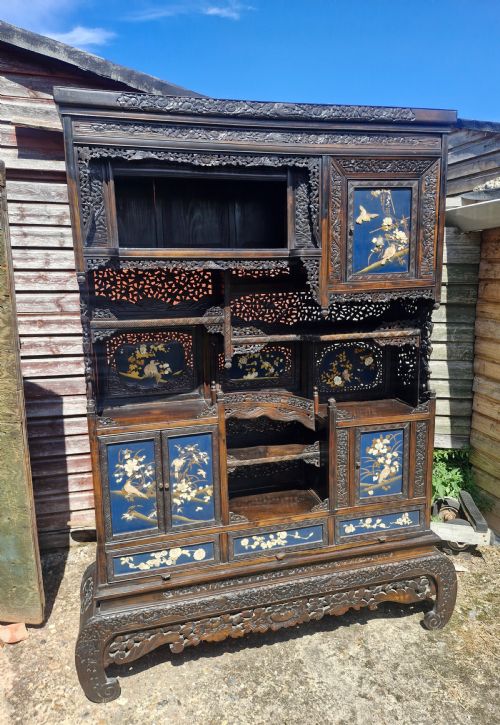
- A Japanese display cabinet featuring asymmetrical shelving and small cupboards. These items arrived in Western interiors during the late nineteenth century via the Aesthetic Movement.
- Breakfront
- A piece of furniture with a central section that projects forward from the side sections. This architectural arrangement adds depth and shadow to bookcases and cabinets.
Period Display Shelves: Frequently Asked Questions
What is a whatnot shelf?
A whatnot is a piece of furniture made with multiple open tiers designed for holding ornaments, small books, or curiosities.
These versatile stands appeared in various rooms of the house during the Regency and Victorian periods, serving both practical storage and display functions.
How do I identify a Regency bookcase?
Regency bookcases typically display clean architectural lines, dark mahogany or rosewood timbers, and sometimes brass inlay or gallery rails.
Peculiarities of the era include tiered waterfall configurations, breakfront profiles, and refined proportions suited to early nineteenth-century drawing rooms.
Where should I place an etagere?
An etagere suits corners or wall spaces in sitting rooms where its open shelving can catch the light without blocking sightlines.
Because these pieces feature shelves on all sides, they work well as freestanding items away from solid walls.
What woods were used in Victorian cabinets?
Victorian cabinet makers worked extensively with walnut, ebonised hardwoods, and bamboo, frequently incorporating glass panels and parcel gilt.
These materials accommodated diverse stylistic revivals as well as the later nineteenth-century interest in Japanese design.