
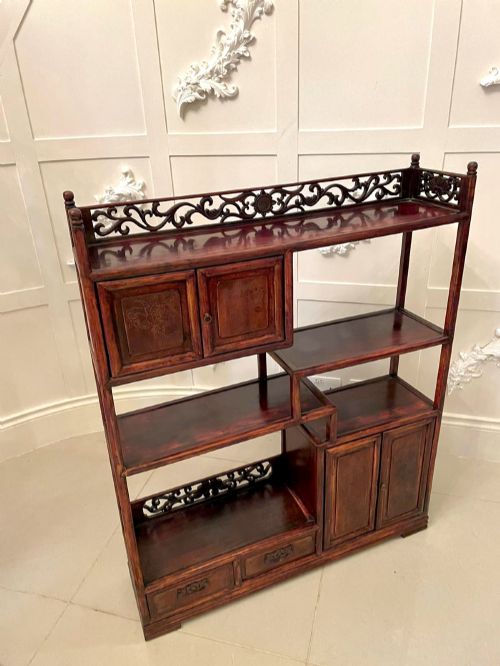
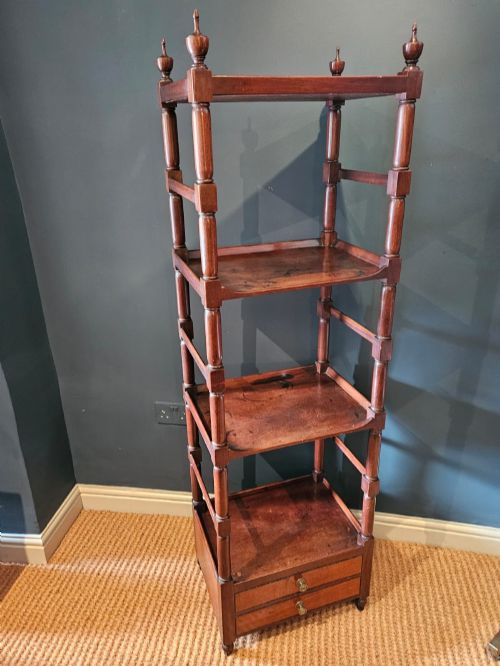
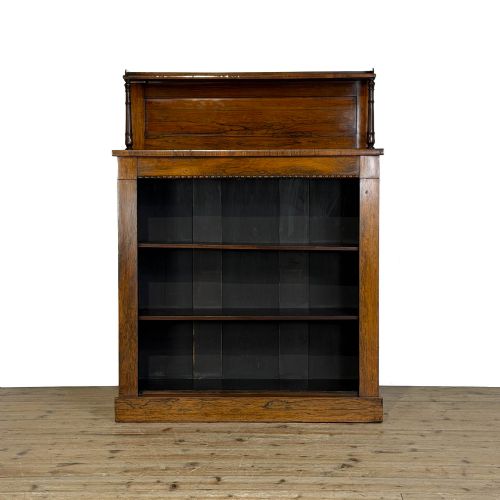
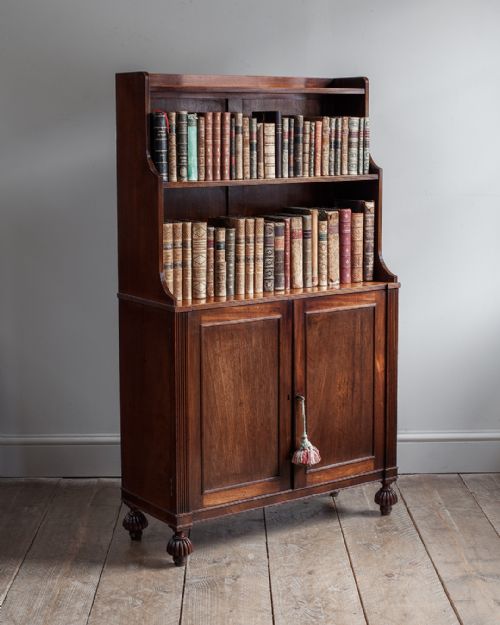
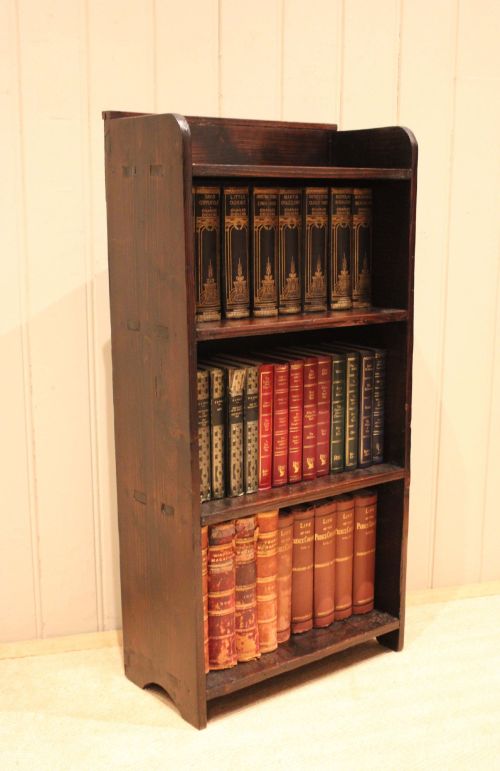
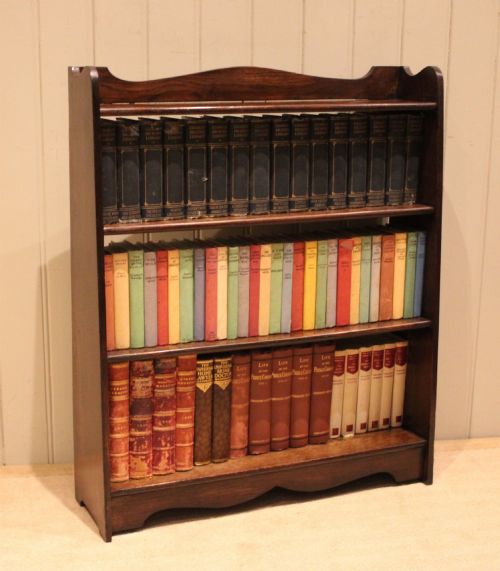
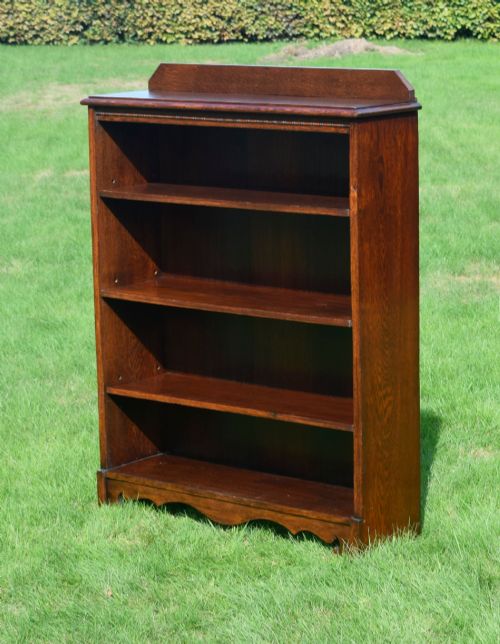
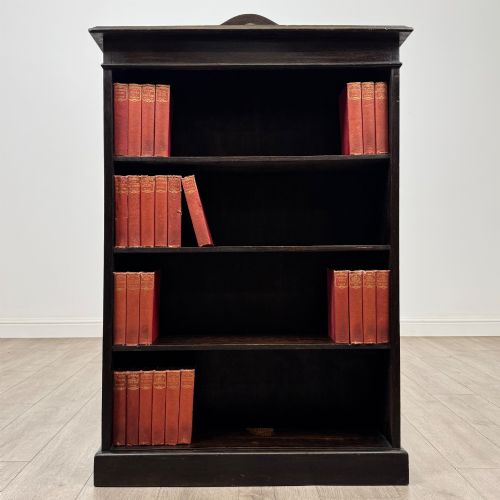
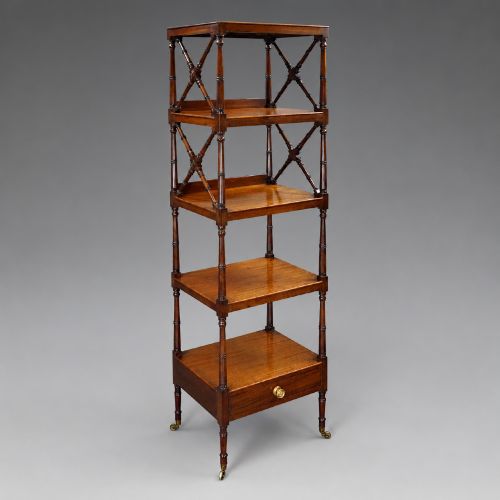


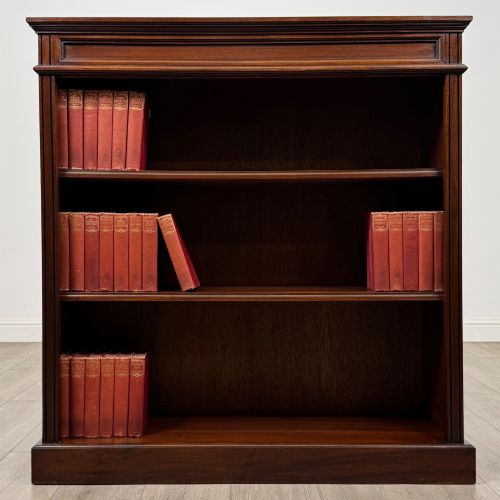
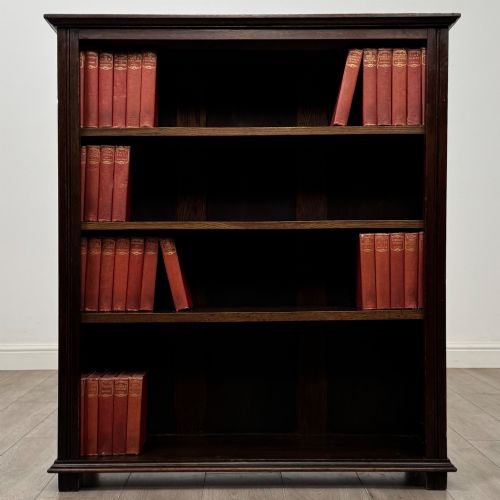
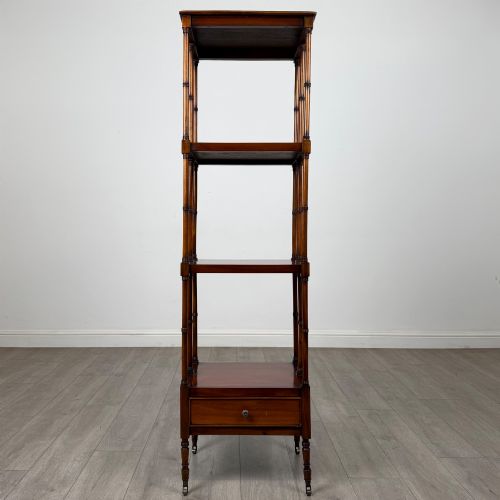
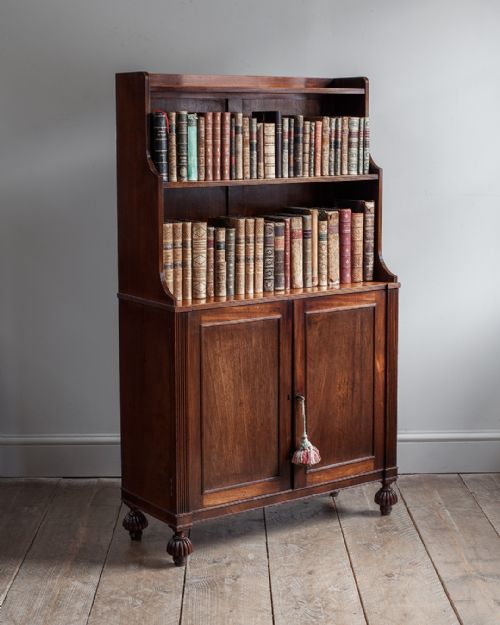
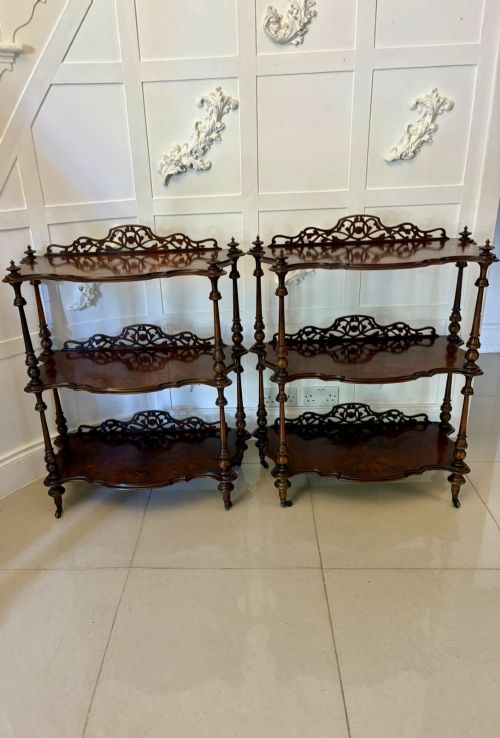
Standing Open Shelving
Standing open shelving organises a room with accessible tiers, bringing timeless timber craft to your books and display pieces.
Materials and construction methods
Cabinet makers utilised dense hardwoods like mahogany, oak, walnut, rosewood, and satinwood, occasionally turning to pine for rustic country pieces or padauk for exotic imports. These timbers were selected for grain pattern and structural durability.
Construction techniques involve straightforward joinery, precise tier assembly, and occasionally carved ornamentation, brass castors, or inlaid details. Shelves are fixed or structured to hold substantial weight across multiple tiers.
Distinguishing quality in timber shelving
The choice of primary timber and secondary wood dictates the baseline excellence of the piece, with figured burr walnut and satinwood sitting at a different level from utility pine. Grain matching and timber selection reveal the maker's initial intent.
Refinement in carving, the presence of brass castors, adjustable shelf mechanisms, and balanced proportions separate standard domestic furniture from exceptional workshop productions.
Some Victorian whatnots feature such undulating serpentine shelves that they appear ready to cascade across your floorboards.
Gillows·Heals
The Standing Open Shelving Glossary
- Whatnot
- A piece of furniture with multiple open shelves for displaying small objects or books. These tiers typically graduate in size from top to bottom.
- Etagere
- A set of ornamental open shelves for displaying bric-a-brac or china. The term originates from French furniture design.
- Waterfall bookcase
- A standing bookcase where the shelves recede stepwise from the bottom to the top. This profile creates a distinctive stepped silhouette.
- Serpentine
- A furniture edge or front curving convexly at the centre and concavely at the sides. This contour appears on higher quality Victorian and Georgian pieces.
Standing Open Shelving: Frequently Asked Questions
How do I date an open bookcase?
Examine the timber species, construction joints, and decorative styling such as Victorian carving or Regency curves.
Secondary woods and hardware like brass castors also help narrow down the manufacturing decade.
Are shelves usually adjustable on these?
Many Edwardian and later oak bookcases feature adjustable shelving for practical versatility.
Earlier Georgian and Regency pieces typically have fixed tiers integrated into the primary frame structure.
What is a whatnot used for?
Whatnots serve as open display stands for books, ceramics, and decorative ornaments in a principal room.
Their multiple tiers maximise vertical display space without blocking light or views.
How do I care for antique timber?
Maintain stable room humidity and apply appropriate beeswax polish sparingly to nourish the grain.
Avoid placing shelving units near direct heat sources or strong sunlight to prevent warping.