
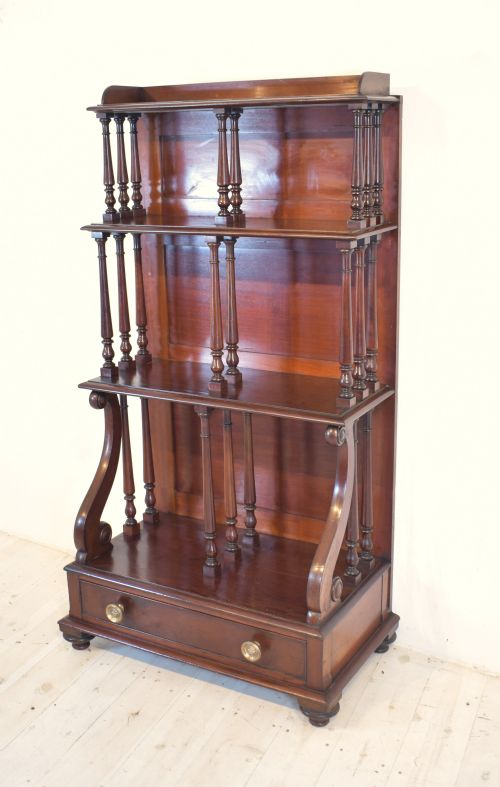


Open Tier Book Rack
An open tier book rack gives you accessible shelf space with simple lines, bringing character and order to a room.
Open Tier Book Rack
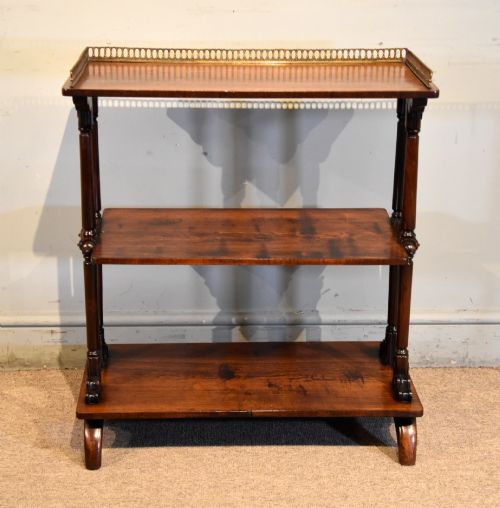
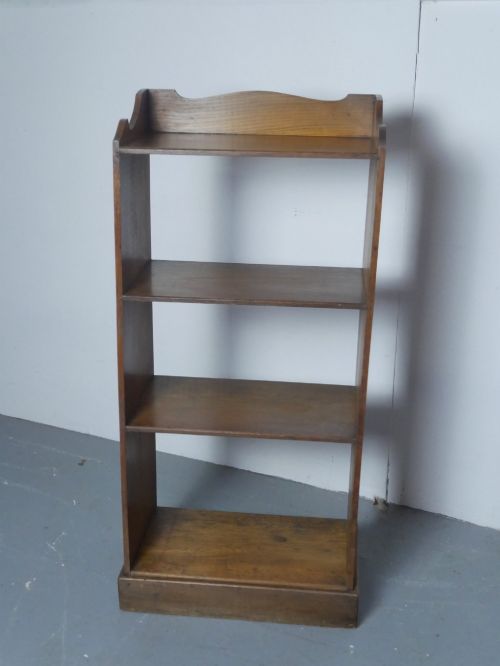
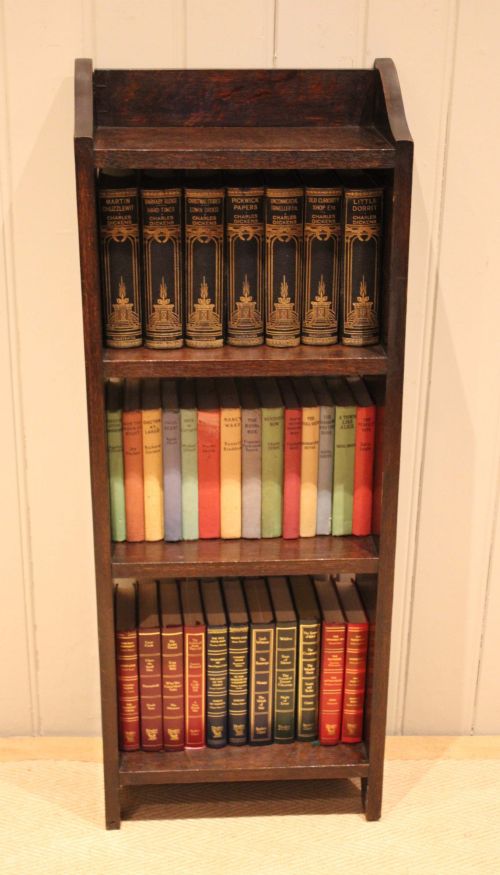
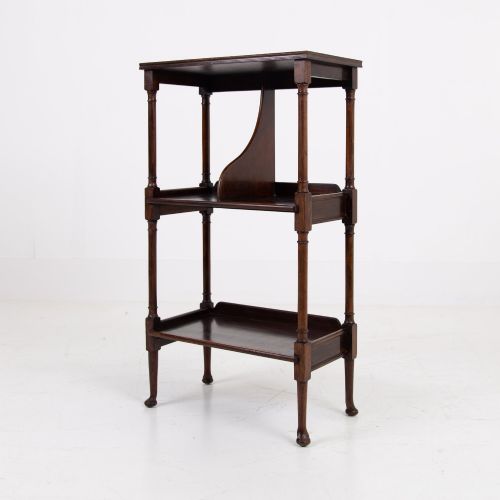
An open tier book rack is a practical piece of furniture designed to hold books and display small objects within easy reach. These items take several forms across the listings, including bookcases, whatnots, wall shelves, and book troughs.
The versions you are most likely to meet span the nineteenth century, the Edwardian period, and the 1920s, constructed in wood forms like mahogany, oak, and walnut. Styles range from plain English country to Regency Revival, Arts and Crafts, and Edwardian designs.
Makers and craftsmen utilised various layouts, from multi-tiered whatnots and wall-hanging shelves to waterfall bookcases and slope-shelf fireside book troughs. Each piece offers an open, accessible format suited for everyday use in living spaces or studies.
How they were made
Makers constructed these open tier pieces primarily using timbers such as mahogany, oak, walnut, and satinwood, alongside pine and paint finishes. Brass details appear on select items, adding functional accents to the wooden frames.
Construction methods focused on tiered shelving, wall-hanging brackets, and floor-standing supports tailored to the specific form, whether a tall whatnot or a low fireside book trough. Inlaid decoration and painted surfaces also feature on specific Edwardian and nineteenth-century examples.
Materials recorded across the inventory include mahogany, oak, walnut, satinwood, pine, paint, and brass.
What varies in quality
The choice of timber and the fineness of the grain distinguish standard utility items from more refined examples. Pieces utilising figured mahogany, quarter-sawn oak, or walnut display greater depth and tactile warmth.
Construction detail and decorative restraint define the upper tier of quality. Subtle inlay work, well-proportioned tiers, and clean joinery separate ambitious workshops from basic regional production.
The Open Tier Book Rack Glossary
- Waterfall bookcase
- A set of open bookshelves where each tier recedes from the one below it, creating a stepped profile. This form gained popularity during the Regency period and remained favoured through the nineteenth century.
- Whatnot
- A piece of furniture consisting of a set of open shelves for displaying small objects or books. Victorian and Edwardian examples often feature multiple tiers supported by slender uprights.
- Book trough
- A small, often portable wooden trough designed to hold a selection of books upright on a table or beside a chair. Arts and Crafts makers produced distinctive low slope-shelf versions.
- Etagere
- A French term for a piece of furniture with a series of open shelves for display, functionally similar to a whatnot. These pieces often date from the early nineteenth century onwards.
- Arts and Crafts
- A design movement spanning the late nineteenth and early twentieth centuries that emphasised honest construction and simple materials. Golden oak and unpretentious joinery characterise pieces from this tradition.
Open Tier Book Rack: Frequently Asked Questions
What is an open tier book rack?
An open tier book rack is a shelving unit without doors designed for holding books and small items.
They appear in formats ranging from wall-hanging shelves to floor-standing whatnots and waterfall bookcases.
How were these pieces used?
People used them to keep everyday reading material close at hand in studies, living rooms, and beside firesides.
They also served to display ornaments, ceramics, and treasured volumes in domestic interiors.
How do I date an open tier rack?
Dating relies on identifying timber choices, construction techniques, and stylistic markers associated with specific eras.
For example, satinwood inlay points to the Edwardian period, while stepped waterfall profiles often indicate Regency or nineteenth-century origins.
Where should I place one at home?
These racks suit narrow hallways, beside armchairs for fireside reading, or against study walls.
Their open structure keeps rooms feeling spacious while offering accessible storage.