


Rosewood Corner Shelves
These rosewood corner shelves utilise rich timber and clever tiers to turn empty wall angles into useful display space.
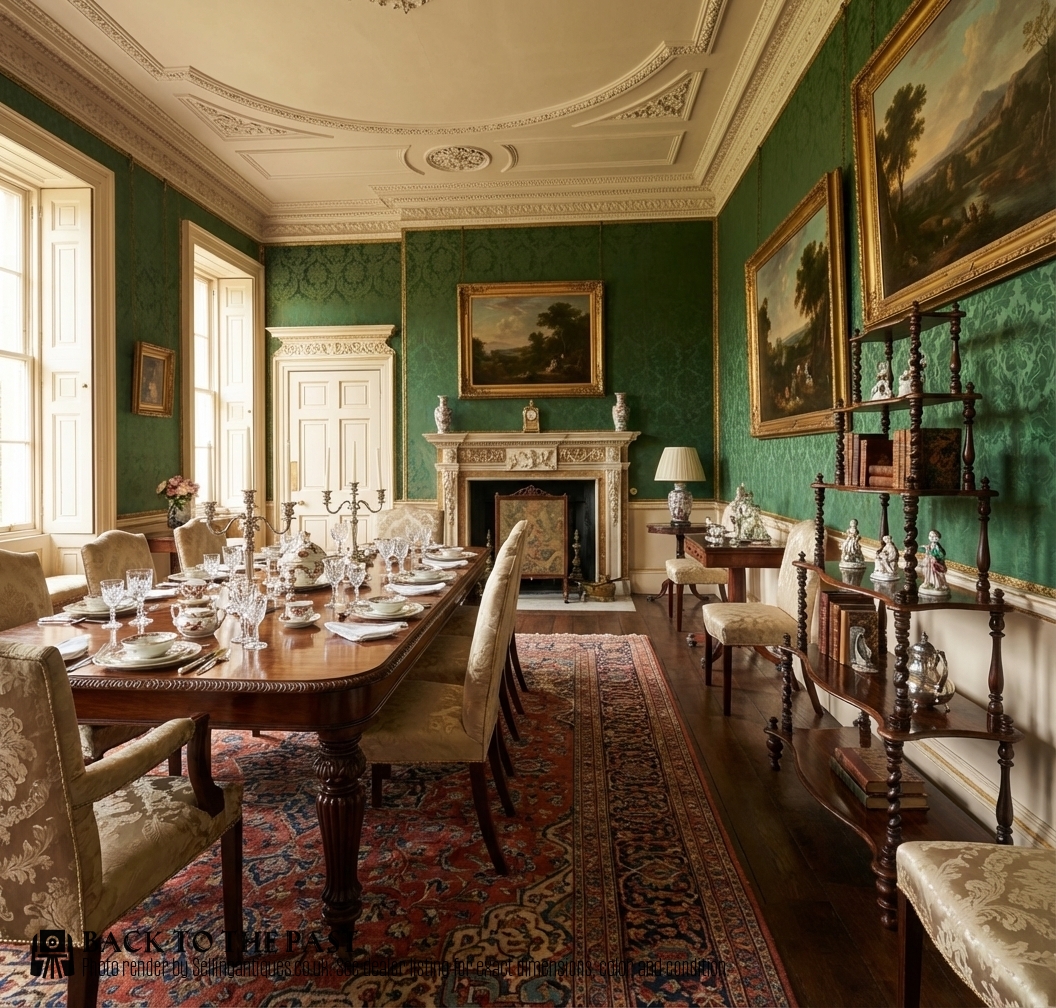
Rosewood Corner Shelves
When you search for rosewood corner shelves, you are looking at tiered display furniture designed to fit snugly into room angles. The pieces appearing here span the Victorian, Georgian and Edwardian eras, utilising the corner format to save floor space while displaying ornaments or books.
You will most commonly meet freestanding or hanging formats with multiple tiers, often styled as whatnots or etageres. These structures range from compact three-tier shelving units up to taller six-tier stands featuring brass or inlaid details.
How they were made
Cabinet makers constructed these units primarily from solid or veneered rosewood, sometimes incorporating mahogany into the underlying frames or backing. Shelves are supported by turned columns or uprights, reflecting the joinery standards of the nineteenth century.
Finer examples integrate contrasting satinwood inlay, mirrored panels, or castors for mobility on the freestanding variants. Brass fittings frequently secure the tiers and uprights together, adding structural rigour alongside decorative contrast.
The listings here span the Georgian, Victorian, and Edwardian periods, utilising rosewood alongside mahogany, brass, glass, and satinwood inlay.
What varies in quality
Quality rests upon the choice of timber figure and the crispness of the turning on the upright supports. Superior pieces display rich grain patterns across every tier, whereas lesser examples rely on plain timber surfaces with minimal decorative enhancement.
The presence of secondary woods, careful satinwood stringing, or fitted elements like glass doors and mirrors separate standard utility pieces from finer cabinet work. Proportion also dictates worth, with unusually small or exceptionally tall multi-tier formats commanding distinct interest.
The Rosewood Corner Shelves Glossary
- Whatnot
- An open-tiered piece of furniture designed for displaying ornaments, books, or curiosities. These typically feature three or more shelves held up by slender vertical supports.
- Etagere
- A French term for a hanging or freestanding display stand with multiple shelves. They share a similar purpose to whatnots but often lean towards lighter, decorative forms.
- Canterbury
- A low stand featuring partitions, originally designed for holding sheet music or folios. When combined with a whatnot, it provides both display tiers and divided storage below.
- Inlay
- A decorative technique where contrasting timbers such as satinwood are fitted into the surface of the rosewood. This creates geometric patterns or floral motifs that elevate the visual weight of the piece.
Rosewood Corner Shelves: Frequently Asked Questions
What are rosewood corner shelves used for?
These units serve primarily to display small decorative objects, porcelain, or books in domestic interiors. Their angular shape allows them to occupy neglected room corners without obstructing pathways.
Historically, they held decorative bric-a-brac in formal reception rooms and parlours. Today, they function well in modern spaces for exhibiting collections while maintaining an open floor plan.
How do I identify a Victorian whatnot?
Victorian examples typically display darker rosewood timbers, turned upright supports, and occasional satinwood stringing or mirror backs. They often incorporate multiple tiers built for sturdy display.
Comparing the joinery beneath the shelves and checking for period-typical turning helps confirm the era. Most date from the mid-nineteenth century onwards.
Are these shelves freestanding or hanging?
The selection includes both freestanding floor models and wall-mounted hanging variants. Freestanding versions often feature small brass castors on their feet.
Hanging pieces attach directly to wall studs using integrated brackets or rings. Checking the back edges reveals the intended mounting method.
How do I care for antique rosewood furniture?
Keep rosewood furniture away from direct sunlight and strong heat sources to prevent the timber from fading or splitting. Dust the tiers regularly with a soft, dry cloth.
Avoid silicone-based polishes that build up over time. Applying a traditional beeswax occasionally preserves the natural lustre of the wood.