
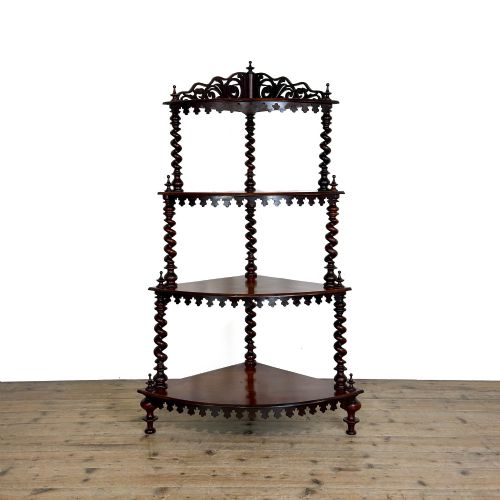
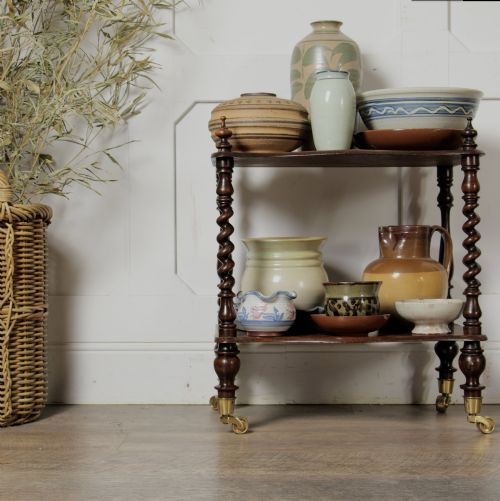


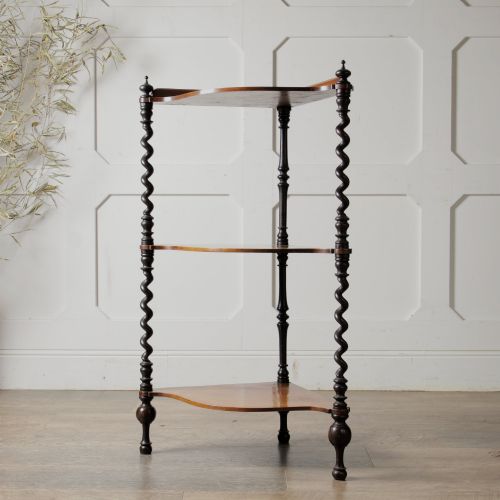
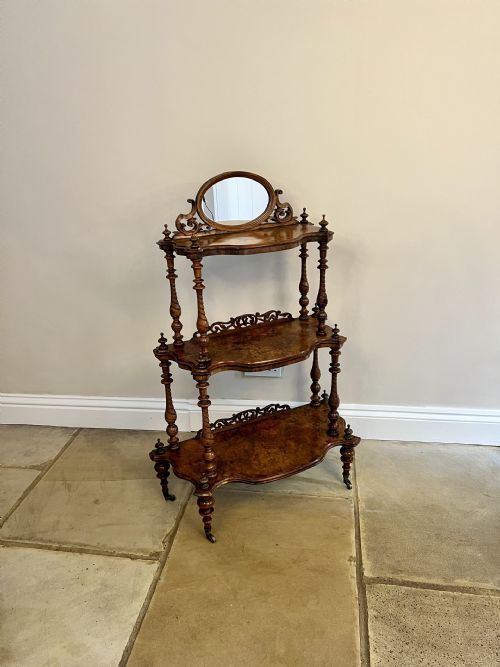
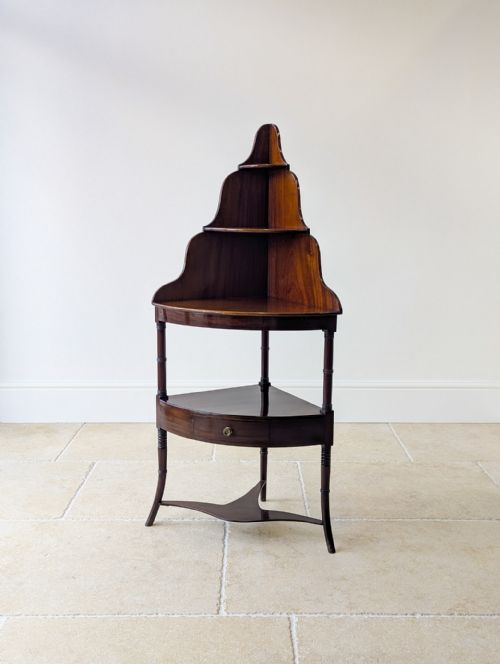
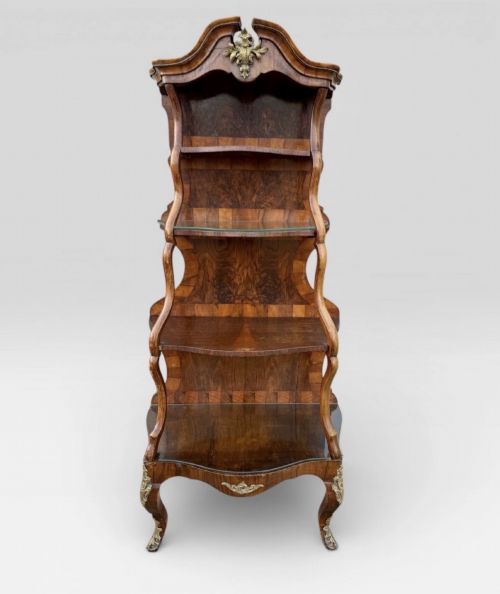
Tiered Corner Shelves
These tiered corner shelves bring height and display space to neglected room angles, drawing the eye upwards through stacked timber tiers.
Tiered Corner Shelves
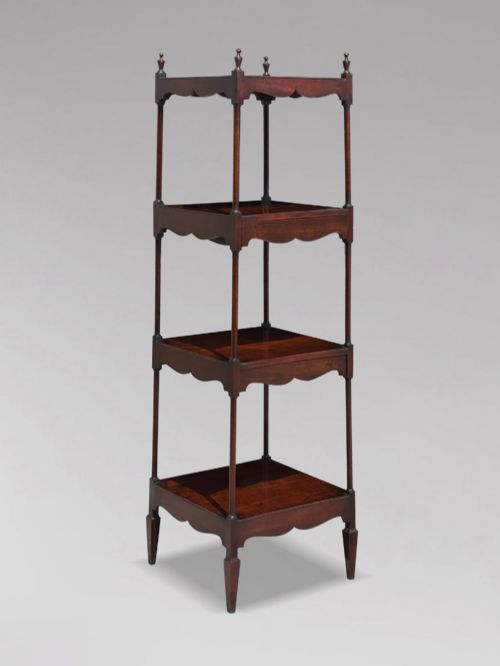
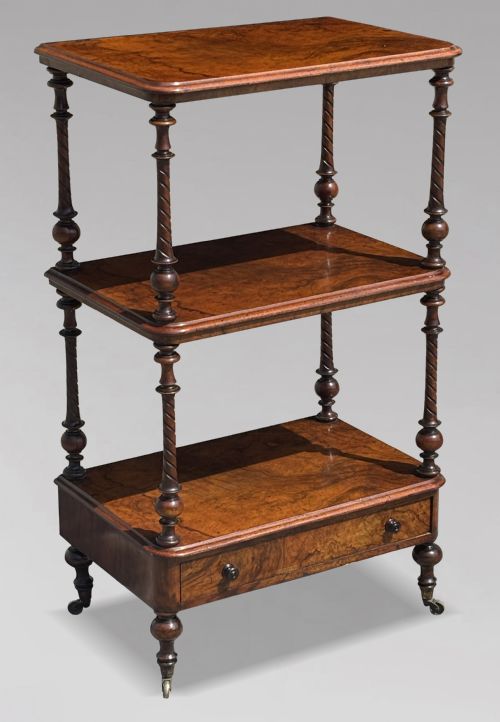
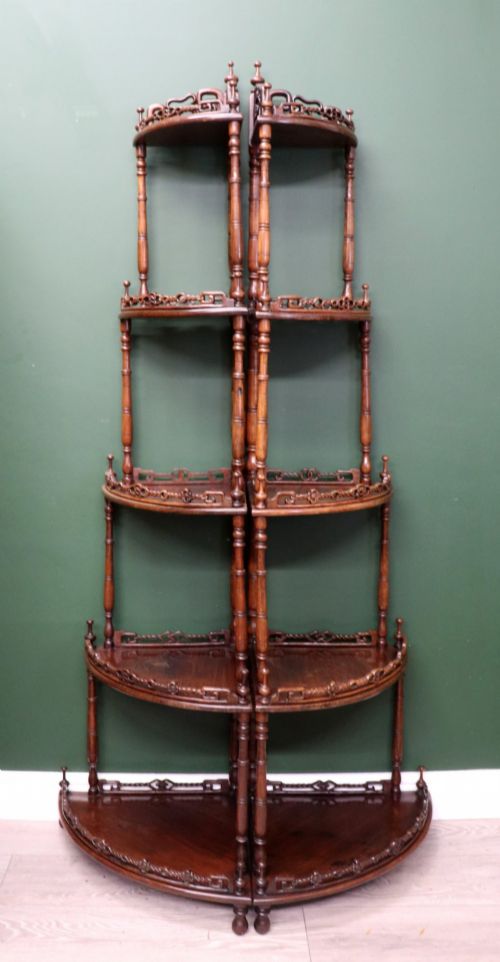
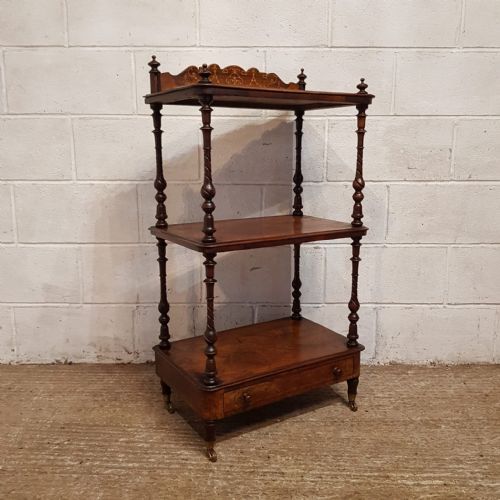
Tiered corner shelves comprise stacked display platforms designed to fit snugly into room angles, commonly known in the trade and records as whatnots, etageres, and corner stands. Buyers searching for tiered corner shelves will encounter pieces predominantly from the Victorian and 19th Century periods, alongside Georgian and Regency examples.
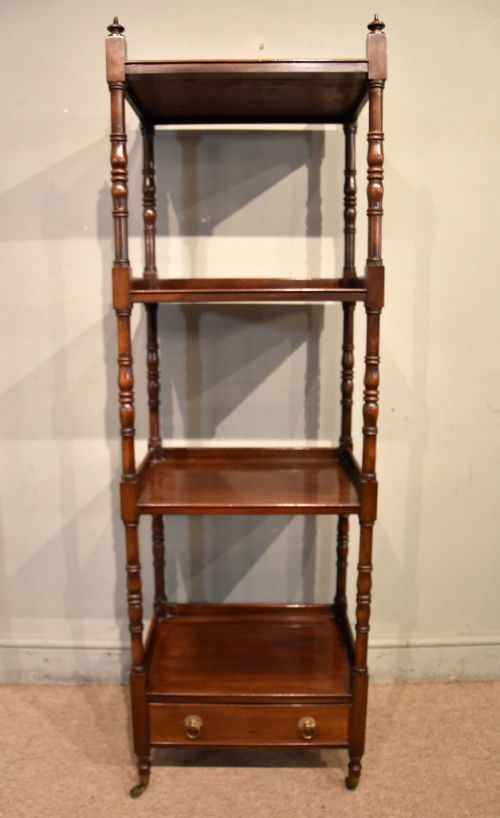
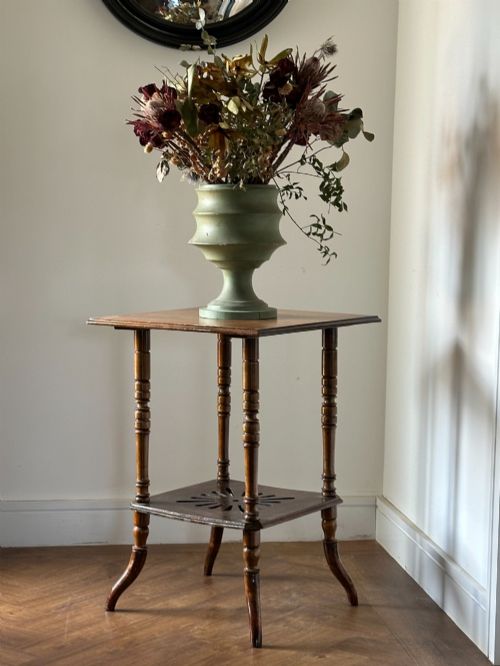
The forms span multi-tiered wooden stands with barley twist supports, open shelving units, and glazed corner cabinets, often utilising mahogany, walnut, and burr walnut. These pieces function primarily to display decorative objects or store books while making efficient use of interior corners.
What varies in quality
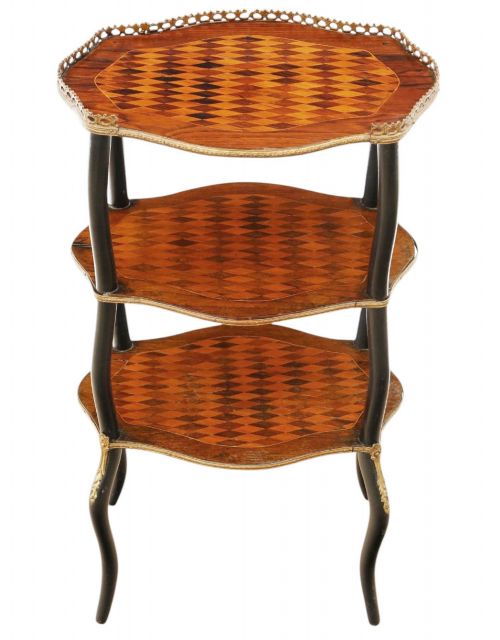
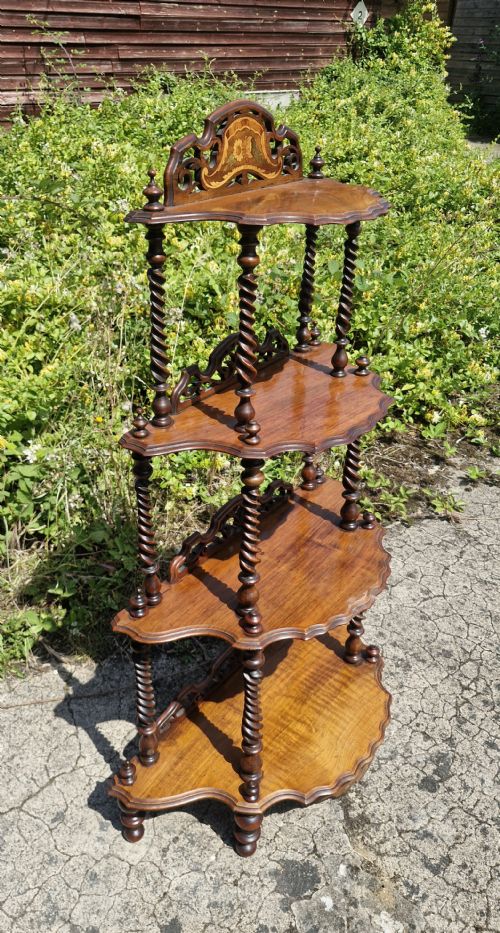
Quality in these pieces is dictated by the selection of timber veneers, such as richly figured burr walnut or dense mahogany, paired with refined turning on the supports. Finer examples display meticulous parquetry inlay and precise joinery across multiple tiers rather than plain construction.
The distinction between standard utility items and exhibition pieces rests on the presence of decorative carving, gilt metal details, and balanced proportions that maintain stability across four or five stacked levels.
Listings feature woods including mahogany, walnut, burr walnut, rosewood, and ebonised wood alongside brass, glass, wrought iron, and bamboo.
Gillows·E W Godwin
The Tiered Corner Shelves Glossary
- Whatnot
- A freestanding piece of furniture consisting of a set of shelves for displaying ornaments or books, developed in the late 18th century. They frequently feature three to six graduated tiers supported by turned columns.
- Etagere
- A piece of furniture consisting of a series of open shelves for displaying small objects or ornaments. The term is often used interchangeably with whatnot in period listings.
- Barley twist
- A type of pillar or turning shaped like a helix, resembling a twisted rope or loaf of bread. This decorative woodwork is characteristic of many Victorian stands.
- Parquetry
- A geometric mosaic of wood pieces used for decorative surfacing on floors and furniture. Makers applied this technique to create patterned tabletops and shelf surfaces.
- Burr walnut
- Timber taken from a walnut tree growth where the grain has grown in a deformed manner, producing intricate swirling patterns. It was highly prized for decorative veneering on Victorian cabinets.
Tiered Corner Shelves: Frequently Asked Questions
What are tiered corner shelves used for?
These pieces serve as practical display units designed to utilise empty room angles. They hold books, ceramics, and ornaments across multiple stacked levels without occupying excessive floor space.
Historically, they evolved to showcase prized possessions in drawing rooms and parlours. Today, they perform the same functional display role in domestic interiors.
How do I identify a Victorian corner whatnot?
Victorian examples typically feature dark timbers such as mahogany and burr walnut, often built with four or five graduated tiers. Turning details like barley twists frequently appear on the vertical supports.
Stylistic markers range from plain mahogany frames to heavily inlaid exhibition pieces with gilt metal mounts and serpentine shelves.
What is the difference between a whatnot and an etagere?
Both terms describe multi-tiered shelving units used for display, though etagere often leans towards lighter, French-influenced decorative stands. Whatnot is the more common British term found across 19th-century records.
In practice, makers and dealers used both names interchangeably for tiered wooden and metal stands.
Where should I place a corner shelf unit?
As the name suggests, these units fit directly into ninety-degree room corners, transforming dead space into a vertical feature. They anchor room layouts by drawing the eye upward.
Ensure the floor is level and that heavy items are distributed evenly across the lower tiers to maintain stability.