

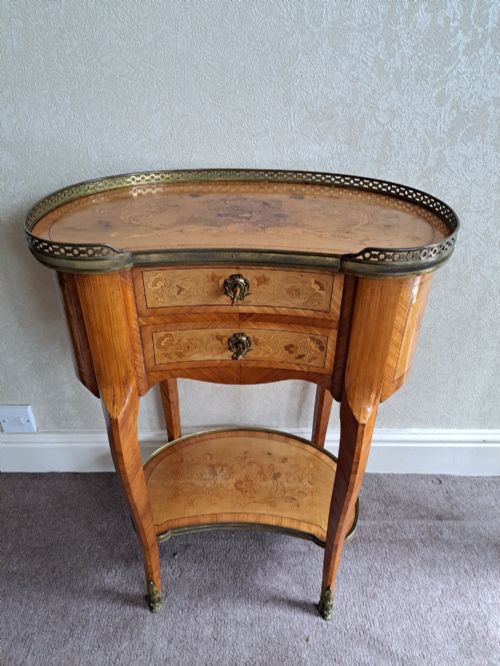
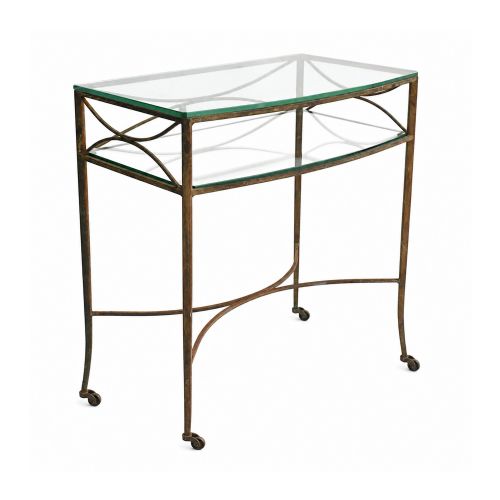


Tiered Console Table
A tiered console table provides layered display surface against a wall, combining practical storage with the presence of mahogany, walnut, oak, and rosewood.
Tiered Console Table
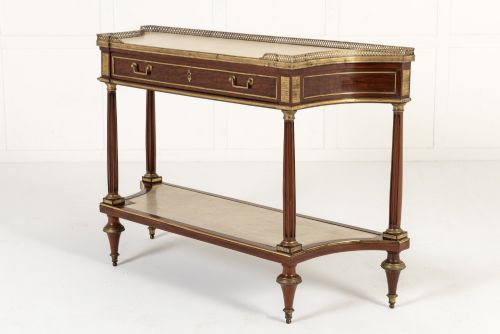
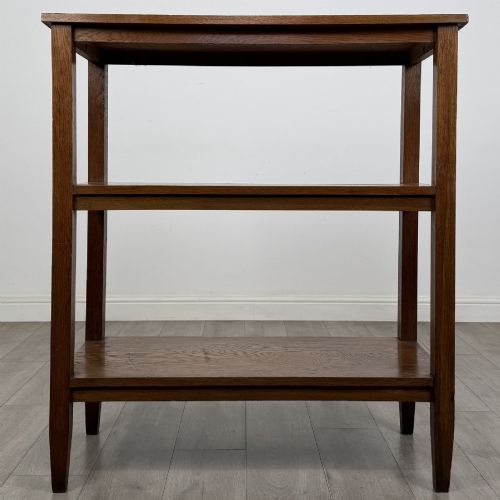
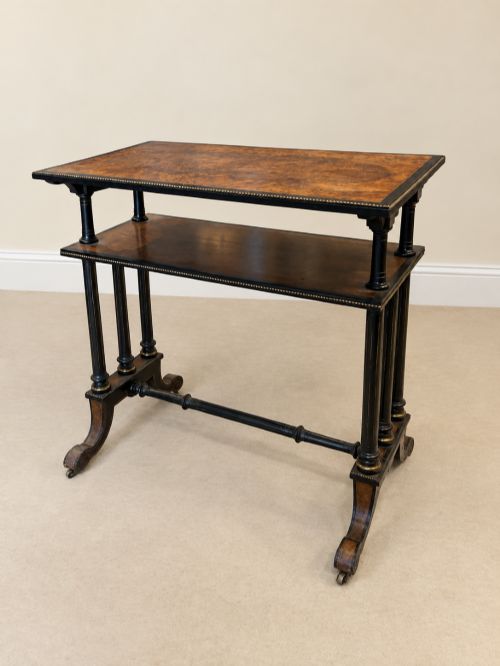
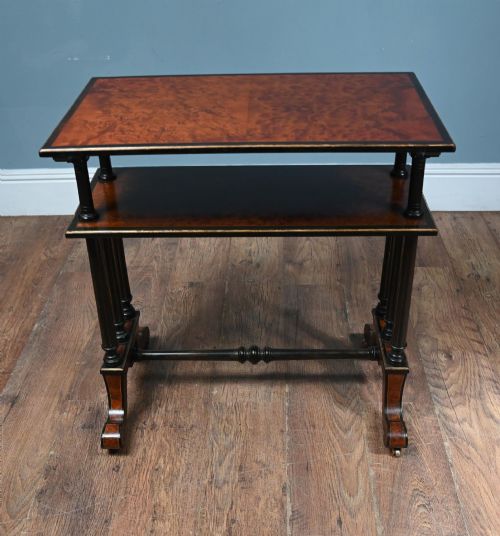
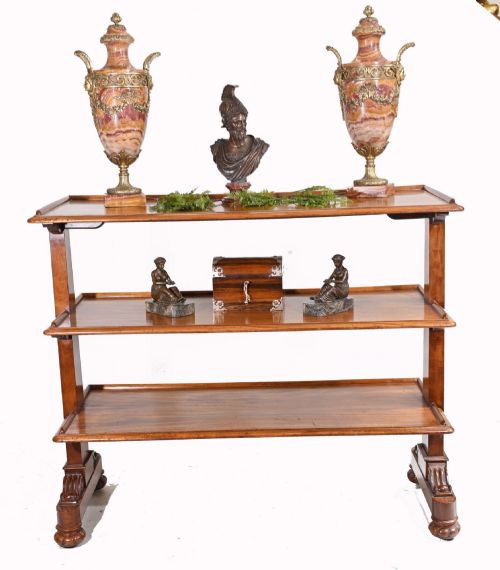
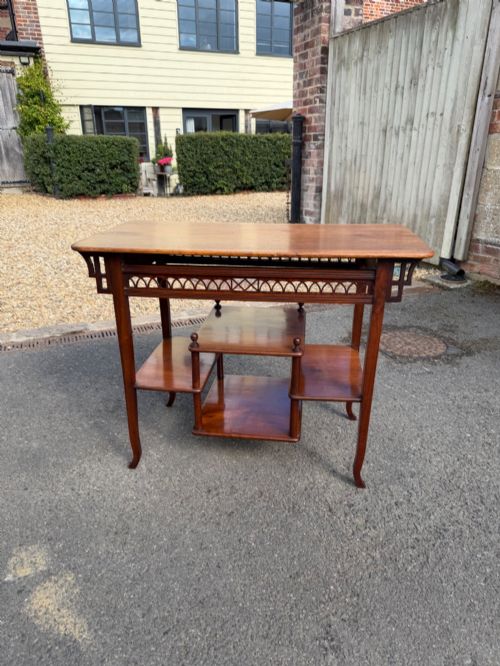
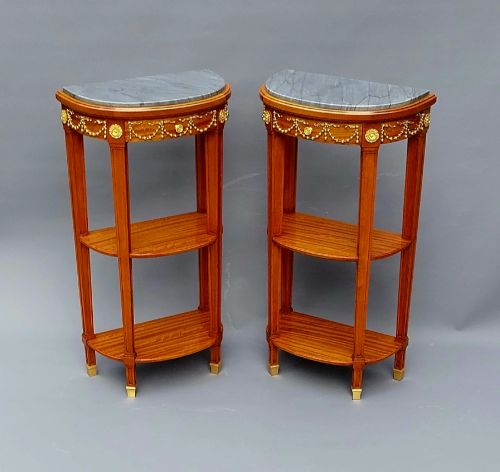
A tiered console table is an elevated surface designed to stand against a wall, frequently appearing in forms with multiple levels or shelves such as etageres, whatnots, and buffets. These pieces emerge across the nineteenth century and into the Edwardian period, drawing on Regency, Victorian, and Aesthetic Movement designs.
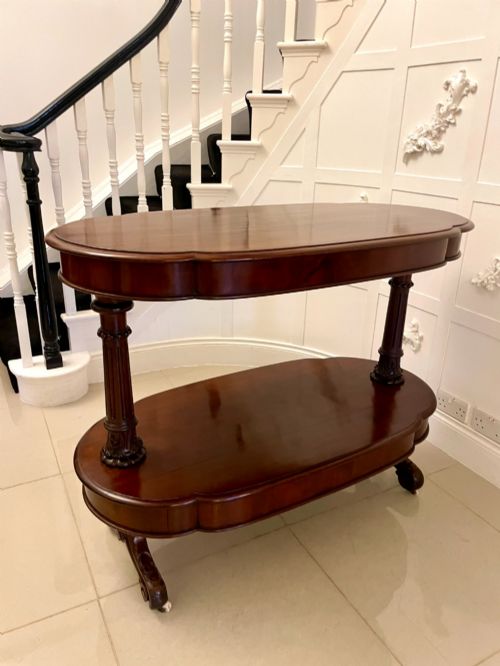
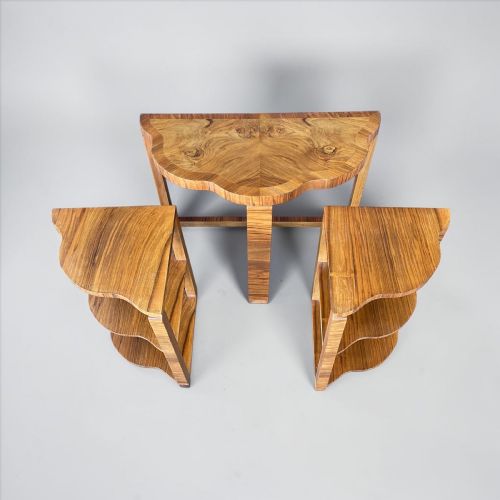
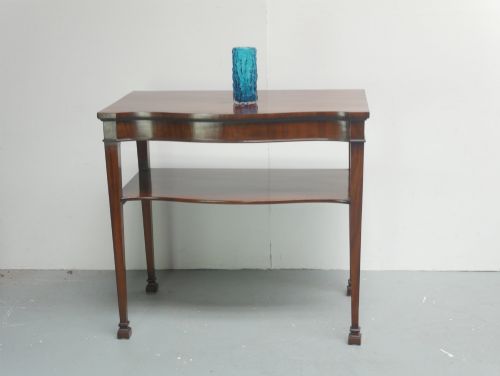
The most common examples on this page are mahogany and oak pieces with two or three tiers, alongside walnut and fruitwood variations. Makers utilised diverse formats, from rectangular side tables and demi-lune display consoles to serving tables and dumb waiters.
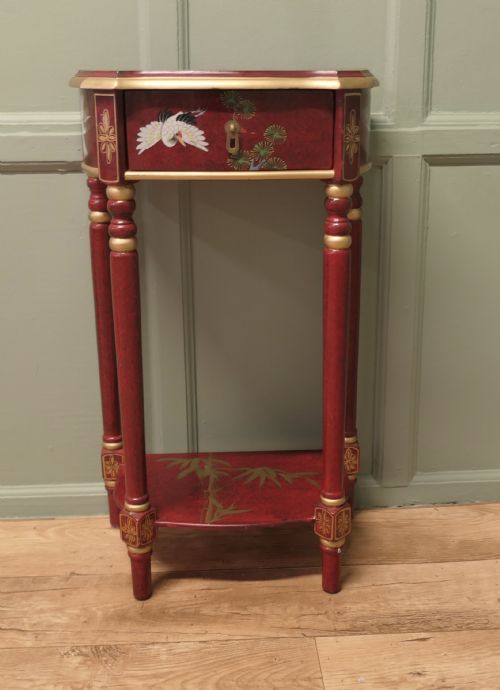
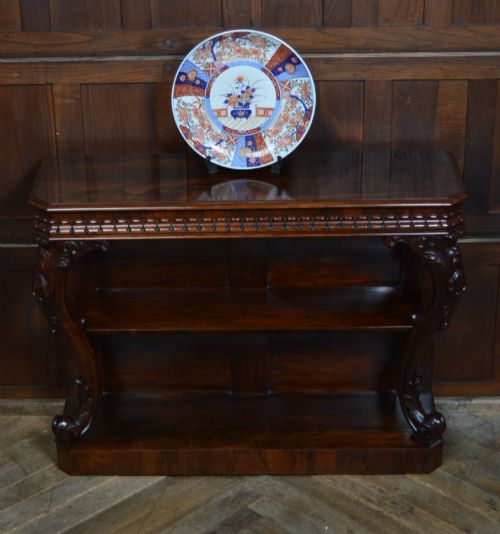
Origin influences form significantly, with French oak work tables and display stands appearing alongside traditional English mahogany and rosewood consoles. Buyers encounter everything from simple functional shop display tables to elaborately carved walnut and satinwood pieces.
Materials and construction
Cabinet makers constructed these tables from dense timbers including mahogany, walnut, oak, rosewood, and satinwood, frequently employing burr veneers and ebonised wood for decorative contrast. Inlaid details, carved oak motifs, and marble tops appear regularly across nineteenth and early twentieth century examples.
Structural integrity relies on traditional joinery supporting multiple tiers, shelves, and occasional drawers, with some industrial pieces incorporating cast-iron frames. Polished timber surfaces display the natural grain, while painted and gilded finishes provide alternative decorative treatments on specific French and Venetian items.
Tiered Console Table Retail Price Guide 2026
Typical asking prices for tiered console table among the pieces listed under this phrase on Sellingantiques today, from the lower quarter to the upper quarter. They describe what is for sale here now, not the wider market.
Materials across current and past inventory include mahogany, walnut, oak, rosewood, satinwood, marble, and cast-iron.
What determines quality
Quality rests upon the selection of timber, where burr walnut, figured mahogany, and rosewood demonstrate superior material choice compared to standard fruitwoods or plain oak. The crispness of carved details, such as Gothic revival motifs or inlaid satinwood stringing, separates standard production from finer workshop output.
Proportion and structural balance define the better pieces, ensuring that multiple tiers maintain stability and visual harmony. The sophistication of secondary materials, including inset marble tops and brass mounts, elevates specific side tables and consoles above utilitarian work tables.
Robert Strahan·Pauly et Cie·Gillows of Lancaster and London
The Tiered Console Table Glossary
- Console table
- A table designed to be fixed against a wall, frequently supported by brackets or console legs rather than four independent vertical posts.
- Etagere
- A piece of furniture consisting of a set of open shelves for displaying small objects or ornaments, common in nineteenth century interiors.
- Whatnot
- A freestanding piece of furniture with multiple tiers of shelves used for storage or display, closely related to the etagere.
- Buffet
- A side table or sideboard used for serving food or displaying plate, often featuring multiple tiers in nineteenth century iterations.
- Demi-lune
- Half-moon shaped, describing console tables and cabinets designed to fit flat against a wall with a curved front profile.
Tiered Console Table: Frequently Asked Questions
What is a tiered console table used for?
These tables provide elevated display space for decorative items, ceramics, and books while occupying minimal floor depth against a hallway or reception room wall. Multiple tiers allow items to be organised vertically without cluttering the main surface.
Historically, similar forms functioned as serving tables, dumb waiters, or work tables in dining rooms and drawing rooms. Today, they serve equally well as lamp tables or decorative focal points in entrance halls.
How do I distinguish Victorian from Regency examples?
Regency pieces, dating from the early nineteenth century, typically exhibit classical restraint, clean architectural lines, and dark mahogany veneers with subtle brass detailing. Victorian versions, spanning from eighteen thirty-seven onwards, often incorporate heavier carving, burr walnut, marquetry inlay, and more ornate tiered superstructures.
Examining the secondary timbers, construction methods, and hardware helps confirm the period. Regency work leans toward neoclassical symmetry, whereas Victorian design embraces revival styles including Gothic and Aesthetic Movement influences.
How do I care for antique timber tiers?
Maintain polished mahogany, walnut, and rosewood surfaces by dusting regularly with a dry, soft cloth to prevent particulate buildup. Avoid applying modern silicone sprays, relying instead on traditional beeswax applied sparingly to nourish the grain.
Keep wooden furniture away from direct heat sources and strong sunlight, which cause timber to warp and veneers to dry out. Marble tops require simple wiping with a damp cloth and mild soap to avoid staining from acidic liquids.