

Tiered Accent Table
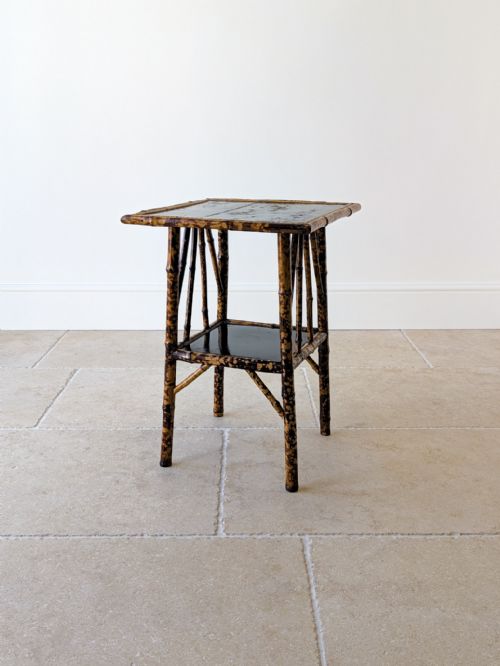
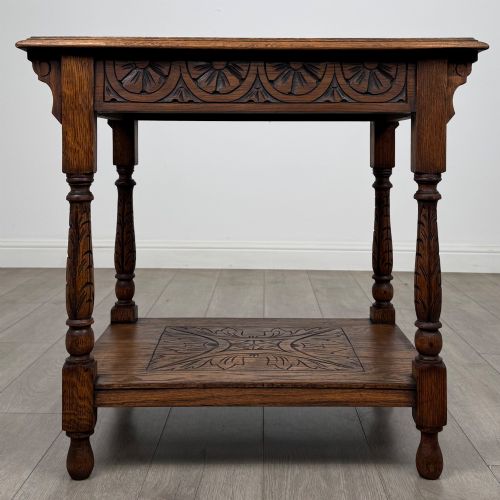
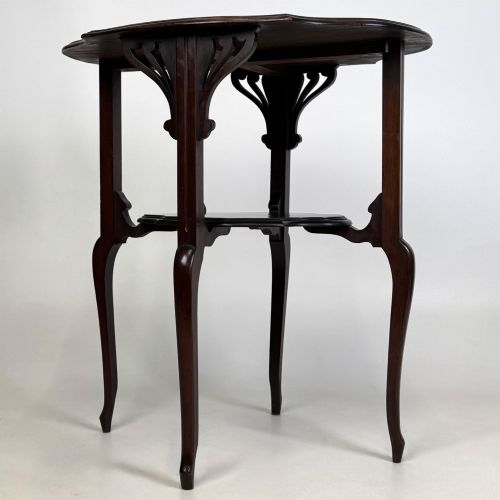
A tiered accent table brings multiple levels of surface space into a room, offering practical display areas in compact floor footprints.
Tiered Accent Table
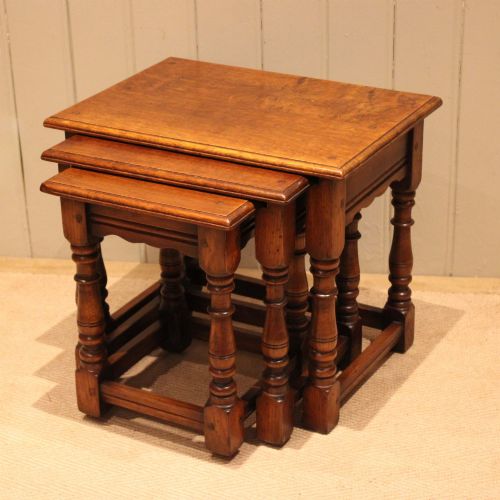
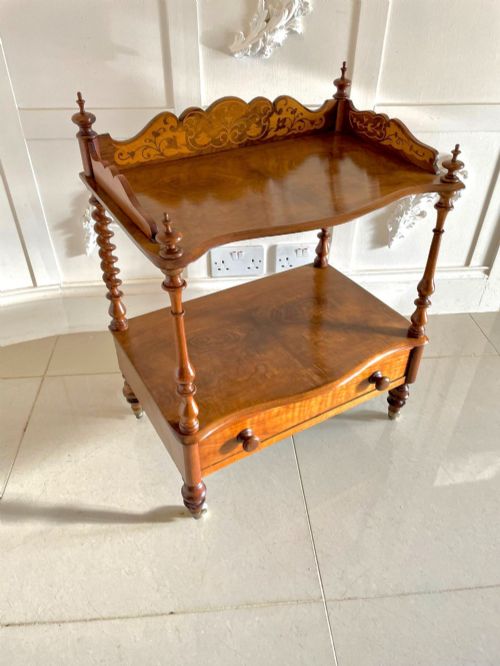
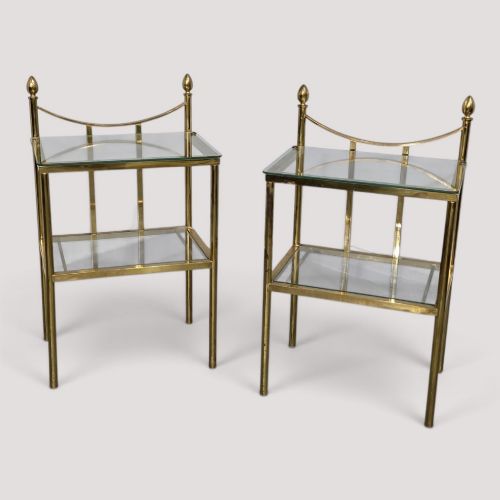
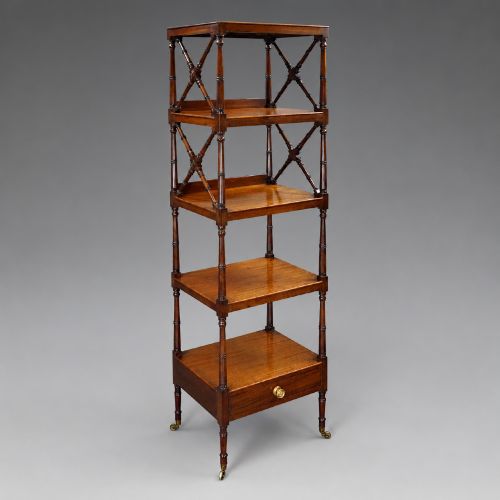
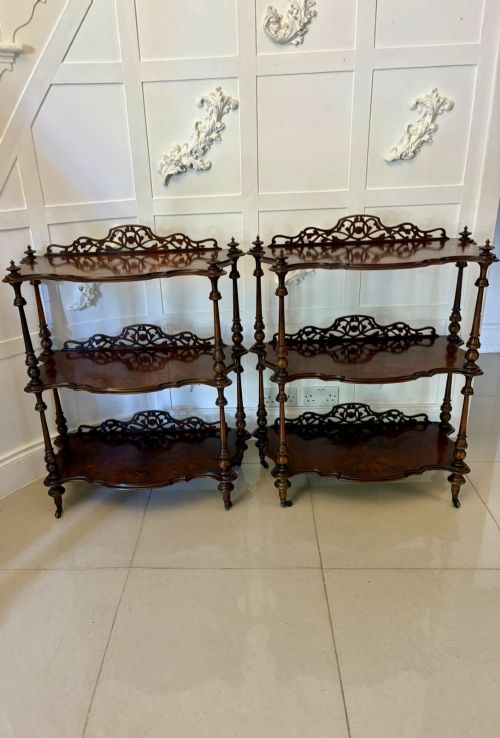
A tiered accent table groups multiple surfaces vertically, taking forms such as étagères, whatnots, lamp tables and nests of tables. These pieces emerge across the nineteenth and early twentieth centuries, spanning Victorian, Edwardian, and Art Deco periods.
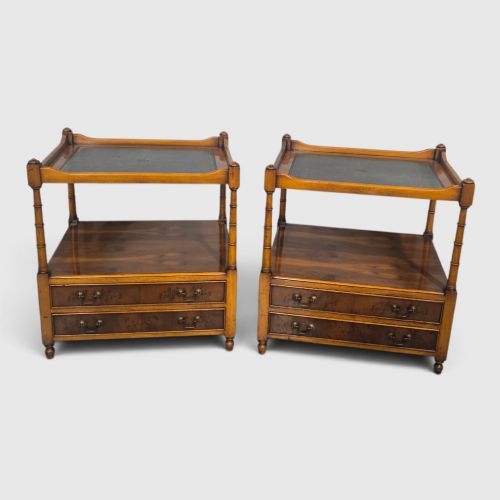
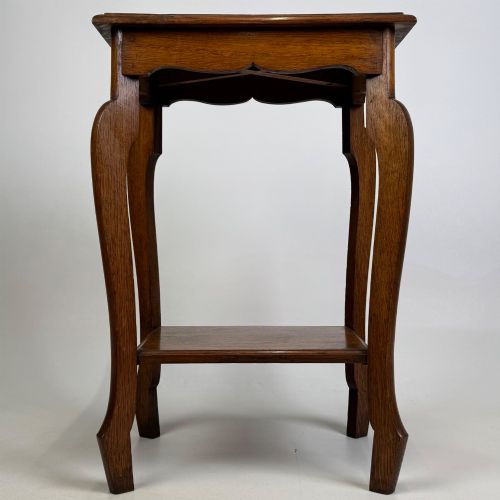
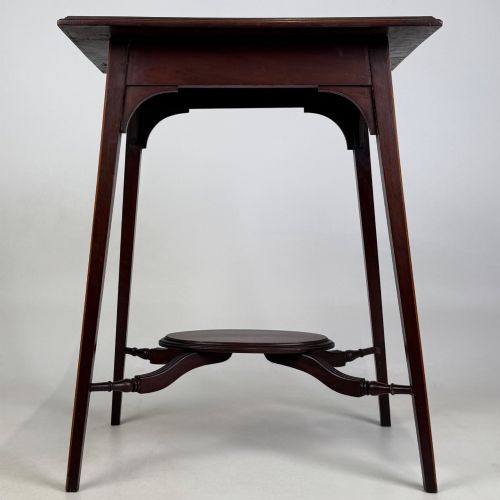
Edwardian mahogany and oak versions appear most frequently on this page, often built as oval or rectangular occasional tables with lower shelves for books and objects. Alongside these, buyers find walnut lamp tables and multi-tiered French models dating from around nineteen hundred.
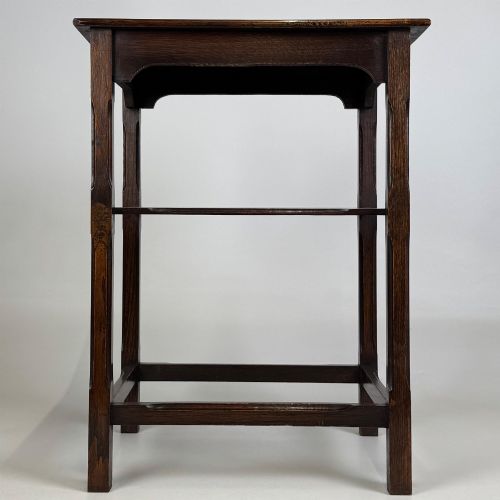
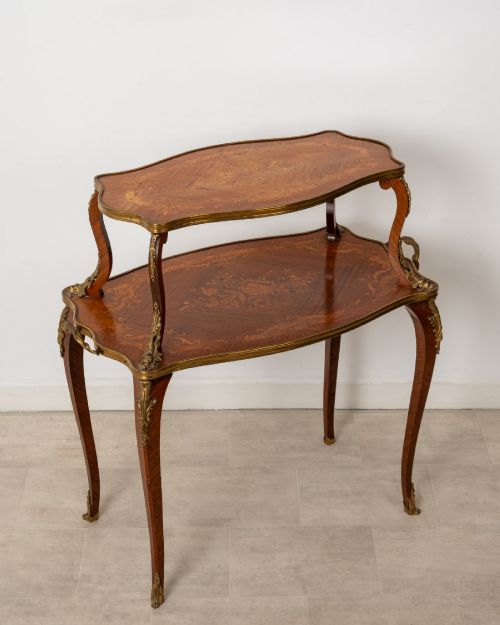
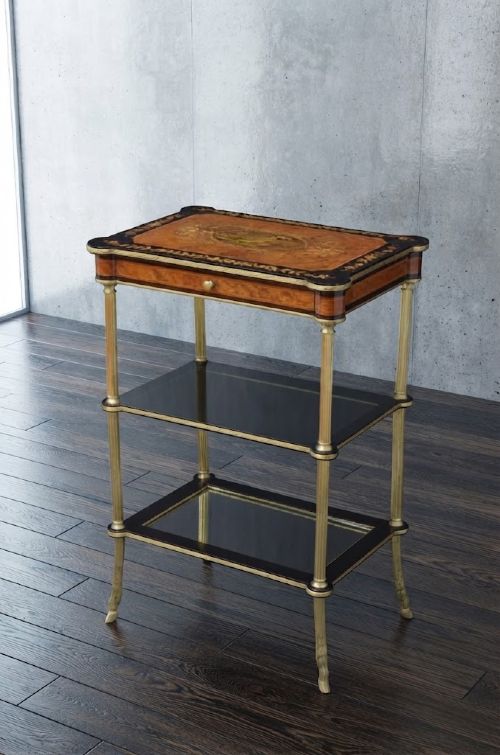
Styles range from straightforward Arts and Crafts oak designs to ornate Louis XV Revival kingwood marquetry and Aesthetic Movement ebonised pieces. Each variant uses vertical tiers to solve the problem of display without crowding a corner or hallway.
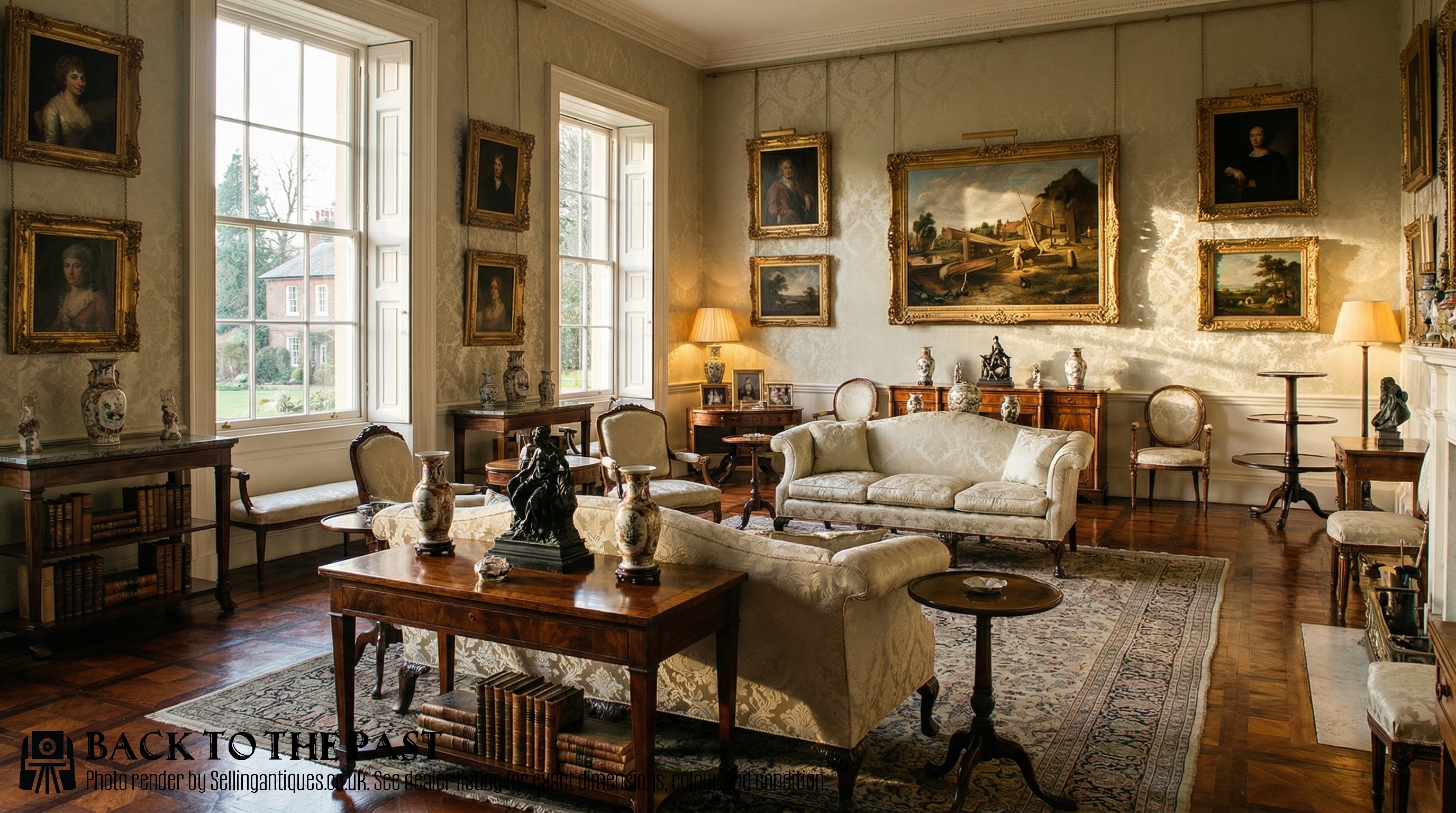
Materials and Construction
Cabinetmakers constructed these tables primarily in timbers like mahogany, walnut, oak, and kingwood, frequently applying decorative veneers to the primary display surfaces. Workshops utilised brass for castors and mounts, whilst specialised pieces incorporated glass, mirrored panels, or ormolu details.
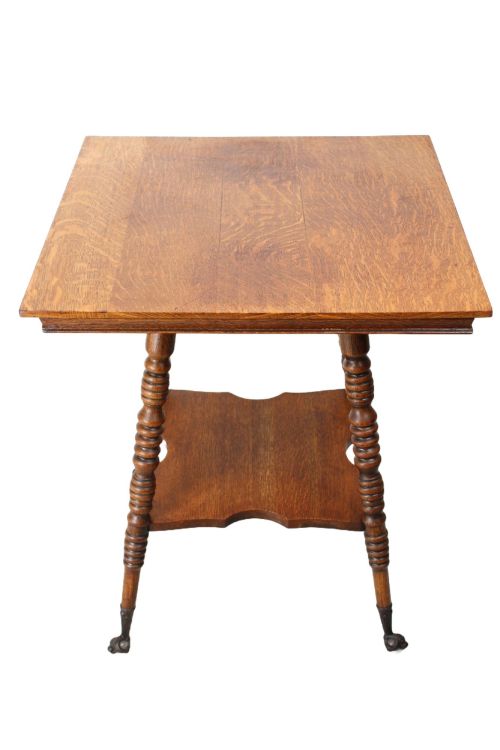
Joinery methods varied by period and style, from traditional mortise and tenon joints in Arts and Crafts oak pieces to intricate marquetry inlay on French étagères. Bobbin legs, turned supports, and bamboo framing provided structural stability to the multiple tiers while defining the aesthetic character of each piece.
Tiered Accent Table Retail Price Guide 2026
Typical asking prices for tiered accent table among the pieces listed under this phrase on Sellingantiques today, from the lower quarter to the upper quarter. They describe what is for sale here now, not the wider market.
Listings span from the eighteenth century to the art deco era, featuring woods like mahogany, walnut, and oak alongside brass, glass, and ormolu.
Execution and Detail
Quality reveals itself in the selection of timber figures, such as burr walnut or figured mahogany, and the precision of inlaid marquetry work. Superior examples demonstrate careful matching of veneers across multiple tiers and crisply carved details rather than pressed ornamentation.
Construction integrity separates standard production from finer workshop output, evident in how firmly the vertical supports anchor each shelf and tier. The choice of secondary timbers and the subtlety of finish work further distinguish workshop pieces from mass-produced items.
Gregory and Co·Gillows·Liberty of London·William Birch
The Tiered Accent Table Glossary
- Étagere
- A piece of furniture consisting of a set of open shelves for displaying small objects. These multi-tiered stands gained popularity in France during the eighteenth century and persisted through later revival periods.
- Whatnot
- An open set of shelves used for holding ornaments, books, or bric-a-brac. Victorian examples frequently feature multiple tiers supported by turned columns.
- Marquetry
- Decorative woodwork where pieces of veneer are fitted into a ground material to form geometric or pictorial designs. Cabinetmakers used contrasting timbers to create complex patterns on table tops.
- Cricket table
- A small, lightweight wooden table typically featuring three legs and a circular top. Earlier versions often incorporate a lower tier or undertier for extra storage.
Tiered Accent Table: Frequently Asked Questions
What is a tiered accent table used for?
These tables serve as versatile surfaces for lamps, books, and decorative objects in living spaces. The additional shelves provide display room without expanding the table footprint.
They work particularly well beside armchairs or in hallways where single-surface tables offer insufficient space.
How do I identify an Edwardian tiered table?
Edwardian examples typically feature lighter timbers such as mahogany or satinwood, often with inlaid stringing or satinwood banding. Their proportions tend to be slender and refined compared to heavier Victorian predecessors.
Look for spade feet, tapered legs, and subtle carved motifs that characterise furniture from the early twentieth century.
Where were étagères placed in period homes?
In nineteenth-century interiors, these multi-level pieces stood in drawing rooms and parlours to display ceramics, silver, and small collections. Their open construction allowed owners to exhibit decorative items from multiple angles.
Today, they function similarly as lamp tables or corner display units in domestic settings.
Are Arts and Crafts tiered tables different?
Arts and Crafts pieces emphasise solid construction in oak, often displaying exposed joinery and hand-finished surfaces rather than veneered decoration. They prioritize structural honesty and utilitarian form over applied ornament.
These tables present a heavier, more robust appearance than contemporary Edwardian or French revival models.