



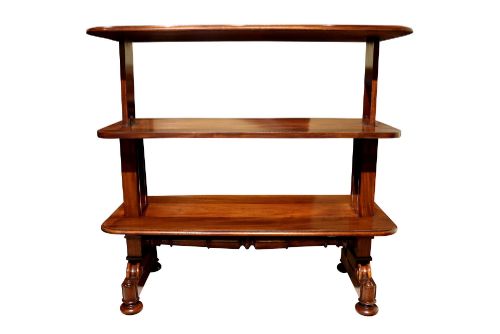
Three Tier Table
When you search for a three tier table, you enter a lineage of stacked display and service furniture spanning multiple centuries.
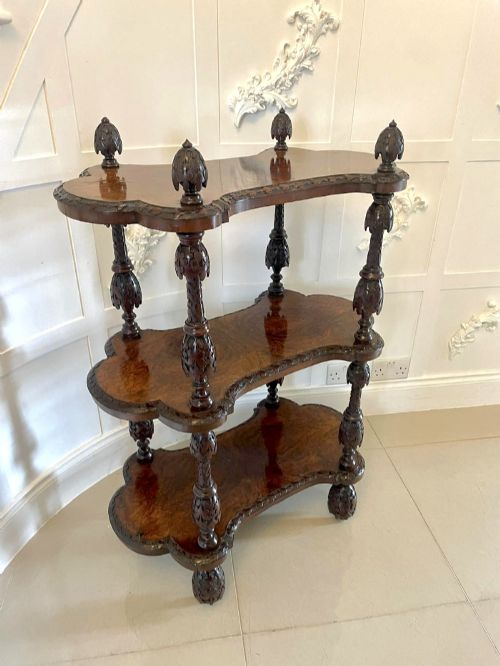
Three Tier Table
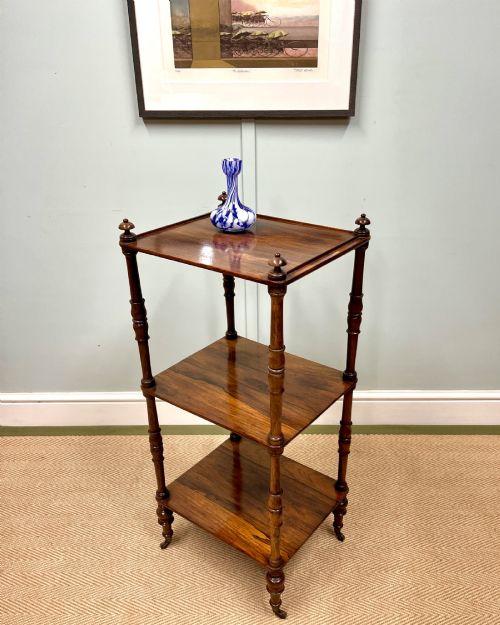
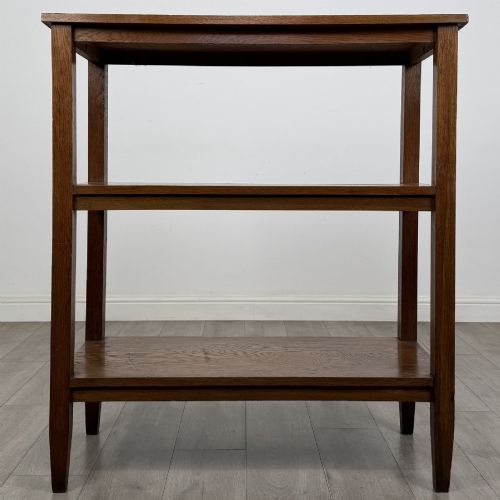
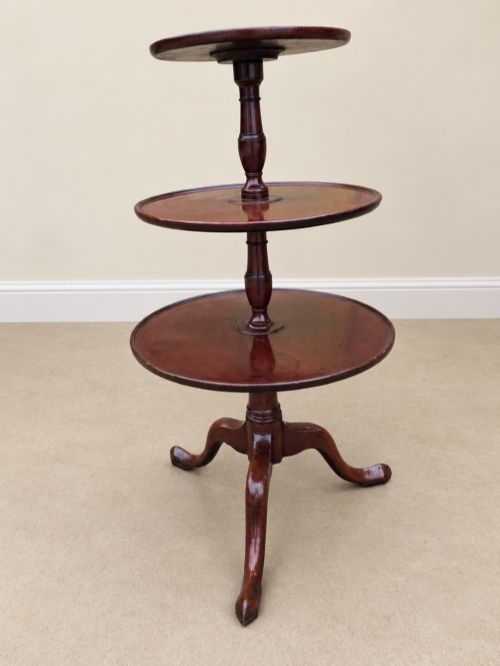
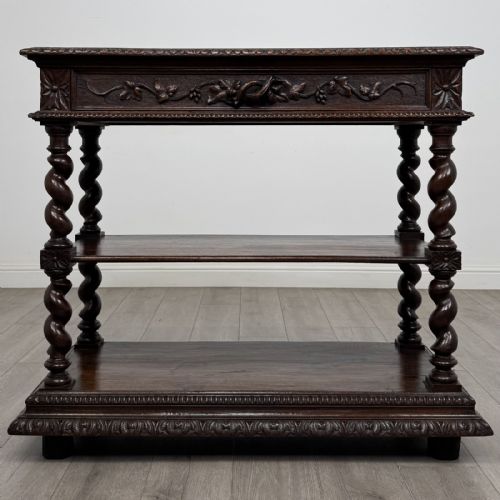
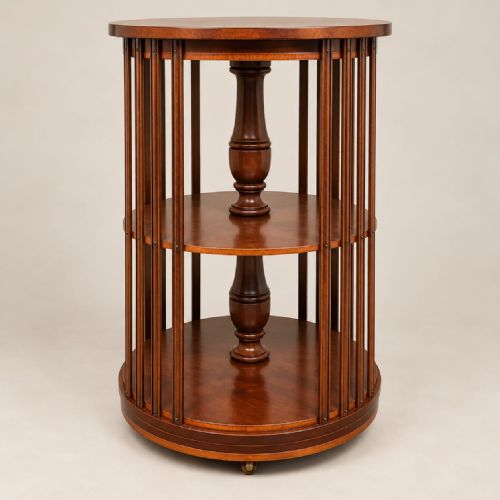
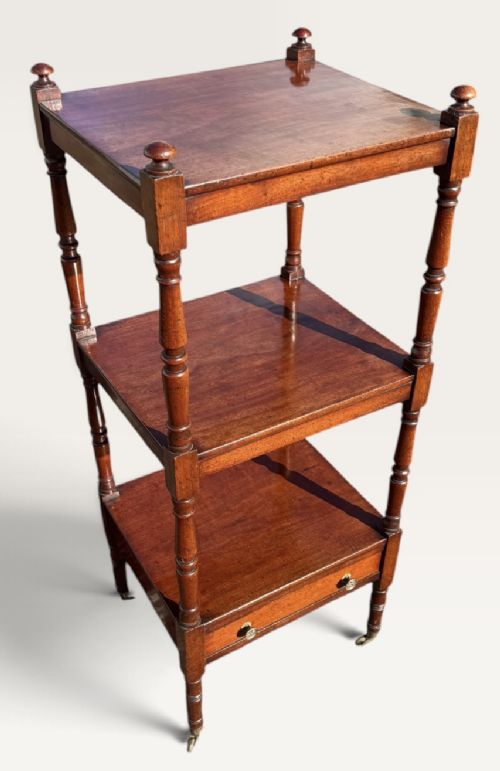
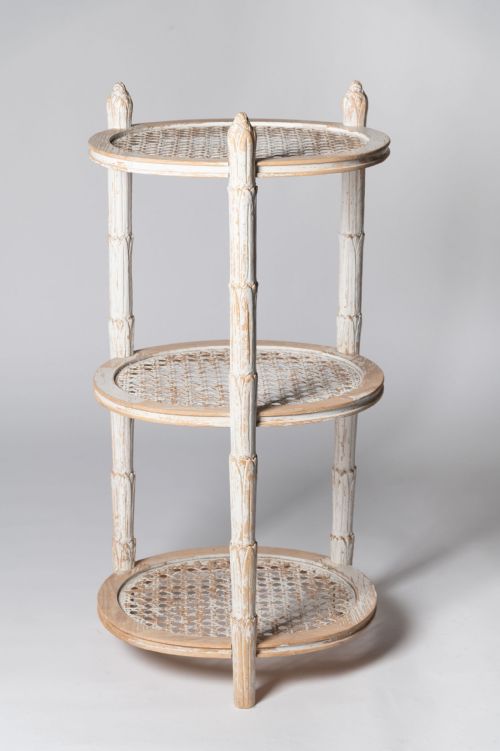
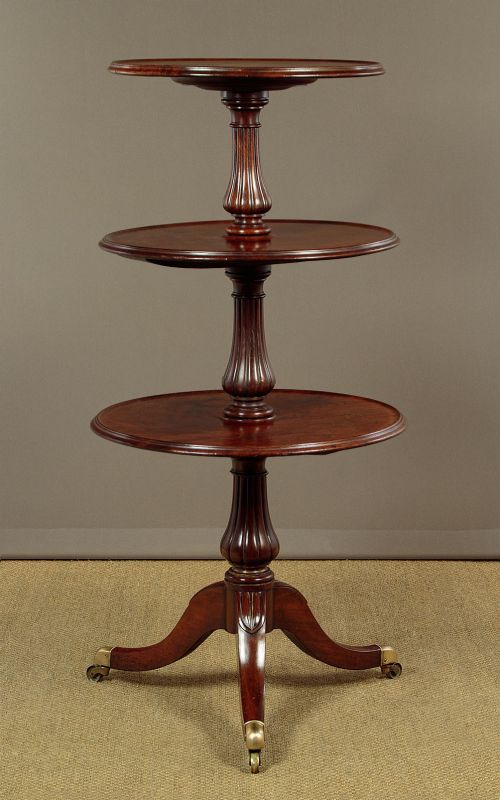
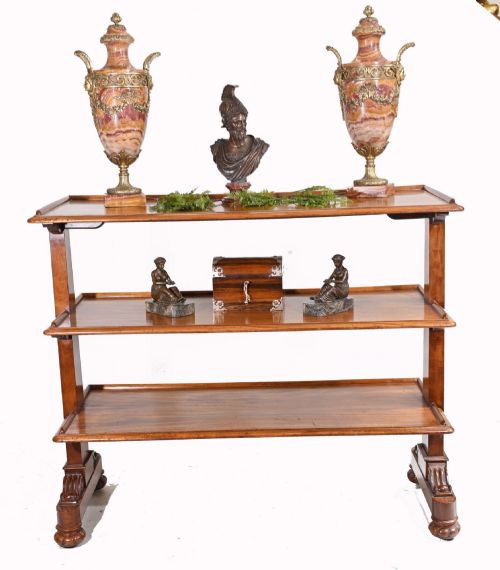
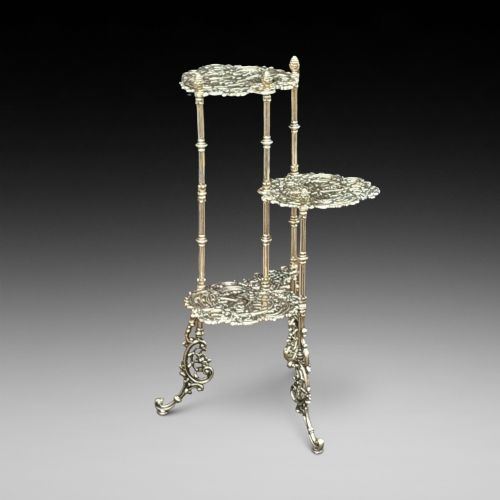
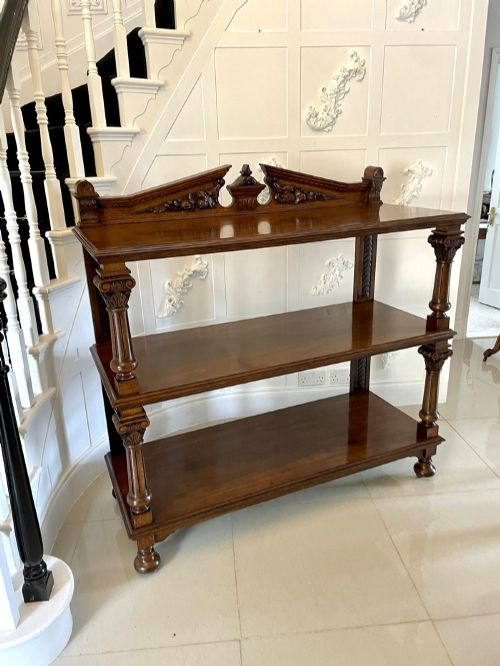
A three tier table presents stacked surfaces in various forms such as dumbwaiters, etageres, whatnots, and side tables. These multi-decked pieces emerge across the eighteenth, nineteenth, and twentieth centuries to serve dining rooms, parlours, and drawing rooms.
The Victorian and Edwardian eras contribute heavily to the selection, alongside Georgian examples and Art Deco walnut designs. Buyers frequently encounter smaller occasional tables and larger serving pieces sharing the characteristic stacked arrangement.
Origins stretch from English workshops to French makers, encompassing styles from Regency and Arts and Crafts to straightforward country oak. The core utility remains the provision of tiered storage or display within a compact footprint.
Materials and Construction
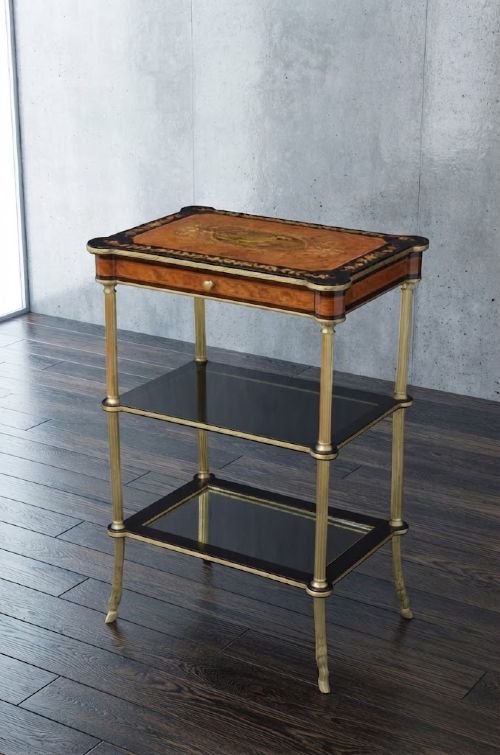
Construction techniques involve secure column supports, turned legs, and graduated shelves fixed securely to central pillars or corner posts. Inlaid marquetry, parquetry, and carved detailing appear on finer examples from the Georgian period onward.
Three Tier Table Retail Price Guide 2026
Typical asking prices for three tier table among the pieces listed under this phrase on Sellingantiques today, from the lower quarter to the upper quarter. They describe what is for sale here now, not the wider market.
Monoplane folding tea tables and bamboo stands prove that Victorians loved novelty engineering just as much as flat-pack assembly.
Evaluating the Build
Quality reveals itself in the selection of timber grain, such as heavily figured walnut or rich mahogany, and the precision of inlaid details. Superior pieces maintain rigid tiered platforms without wobble, utilising robust internal joints or substantial turned uprights.
The refinement of brass mounts, the crispness of carved wooden elements, and the overall balance of the stacked tiers separate standard utility items from finer decorative examples.
EW Godwin·Gillows
The Three Tier Table Glossary
- Dumbwaiter
- A multi-tiered freestanding piece traditionally used in dining rooms for holding dishes or wine without servant intervention. These often feature graduated circular trays on a central pedestal.
- Etagere
- A set of open shelves or tiers designed for displaying ornaments, books, or small objects. French examples frequently incorporate mirrored backs or gilt metal mounts.
- Whatnot
- A piece of furniture consisting of shelves for books or ornaments, popular throughout the nineteenth century. They appear in corner and freestanding formats with three or more levels.
- Marquetry
- Decorative veneer work formed by fitting together small pieces of wood, bone, or shell to create pictorial or geometric patterns on table surfaces.
Three Tier Table: Frequently Asked Questions
What is a three tier table used for?
These tiered pieces serve primarily as functional display surfaces or serving stations in living spaces and dining rooms. Historically, formats like dumbwaiters held food and drink, while etageres displayed decorative objects.
Today, they adapt easily to modern interiors as side tables, book stands, or plant holders where vertical space is utilised efficiently.
How do I date a three tier table?
Dating relies on identifying the prevailing style, timber choices, and construction methods associated with specific eras. Georgian and Regency pieces often show hand-turned mahogany pedestals, while Victorian examples lean toward burr walnut or ebonised finishes.
Twentieth-century items introduce Art Deco walnut veneers, oak, or modernist lines typical of the 1920s and 1930s.
Are these tables sturdy enough for daily use?
Most solid hardwood and pedestal designs offer substantial stability for everyday items like lamps, books, and decorative ceramics. Heavier pieces with central columns require careful handling when moving.
Checking the tightness of joints and upright supports ensures safe everyday placement in busy rooms.
What is the difference between an etagere and a whatnot?
An etagere generally emphasises display with open shelving, often associated with French decorative arts and delicate brass or inlaid frames. A whatnot tends toward utilitarian shelving for books and general household objects within Victorian interiors.
Both share the fundamental characteristic of multiple stacked tiers.