


Three Tier Revolving Table
A three tier revolving table is a tiered serving or display piece that spins on a central axis, offering both mobility and layered storage.
Three Tier Revolving Table
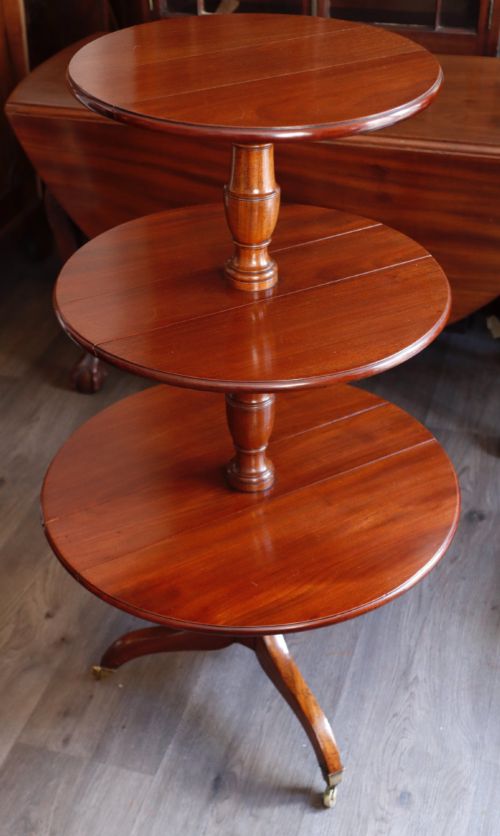
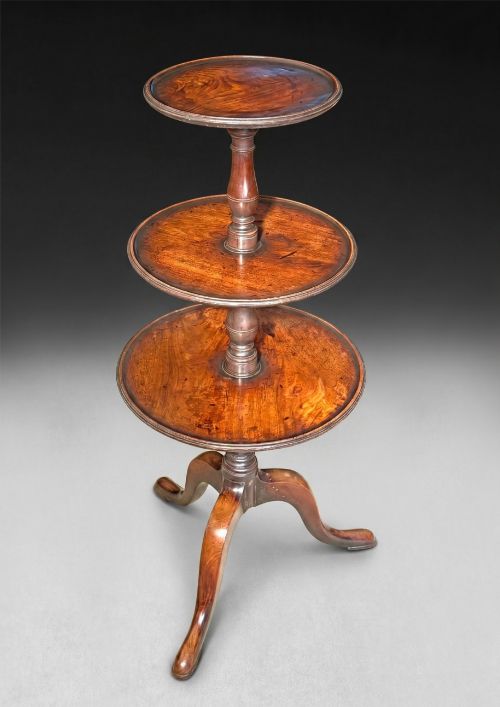
A three tier revolving table combines multiple circular surfaces stacked vertically, designed to rotate for easy access to dishes or books. When exploring a three tier revolving table, the most common form met is the mahogany dumb waiter dating from the Georgian and Regency periods.
The selection ranges from traditional dining room servers with graduated tiers and tripod legs to occasional tables and later twentieth-century Art Deco skyscraper book tables. These pieces serve practical functions in dining rooms and studies, providing generous surface area within a compact floor footprint.
Construction and materials
Timbers such as mahogany, walnut, rosewood, and macassar ebony form the primary structure of these tiered pieces, frequently enhanced with marquetry inlay or wood veneer. Cabinet makers turned central columns from solid timber and joined them to graduated circular trays using precise pivots for smooth rotation.
Earlier Georgian and Regency examples rely on tripod base supports fitted with brass hardware, while later twentieth-century iterations employ stacked geometric tiers suited to book storage.
The selection includes traditional dumb waiters, occasional tables, and twentieth-century skyscraper revolving book tables.
Measures of quality
The distinction between tiers rests upon the choice of timber and the precision of the turning and pivot mechanism. Mahogany and walnut specimens with crisp marquetry inlay or balanced rosewood grain show superior cabinet work compared to standard utility pieces.
Proportion dictates the elegance of the profile, where graduated tier diameters and sturdy tripod base construction maintain stability during rotation.
The Three Tier Revolving Table Glossary
- Dumb waiter
- A tiered freestanding serving table designed to hold food or utensils without domestic staff present. These pieces rotate on a central spindle to allow access from all sides.
- Marquetry inlay
- Decorative patterns formed by fitting contrasting wood veneers into a prepared surface. This technique highlights the skill of the cabinet maker on tabletops and borders.
- Tripod base
- A three-legged support structure commonly found beneath circular tables of the Georgian and Regency eras. It provides stable floor contact on uneven historic floorboards.
- Metamorphic
- Describing furniture that transforms from one form or function into another through mechanical action. Such designs utilise clever hinges or pivots to alter the shape of the table.
- Skyscraper
- A stepped vertical architectural style adopted by Art Deco designers in the early twentieth century. This aesthetic influences the tiered arrangement of revolving book tables.
Three Tier Revolving Table: Frequently Asked Questions
What is a three tier revolving table used for?
Historically, these tiered pieces functioned as dumb waiters in dining rooms to hold dishes, wine bottles, and silverware near the table. Today, they serve as versatile occasional tables or book displays in living spaces.
Their rotating tiers allow users to access items kept on the various levels without moving the entire piece of furniture.
How do I identify a Georgian three tier table?
Georgian and Regency examples typically feature solid mahogany or walnut timber, graduated circular trays, and a central column supported by tripod legs. Brass castors or fittings frequently appear on the feet of these older pieces.
The turning work on the central pillar and the joinery of the tier supports offer clear clues to their eighteenth or early nineteenth-century origins.
Are all revolving tables made of mahogany?
While mahogany dominates the Georgian and Regency offerings on this page, other timbers appear across different eras. Walnut, rosewood, and macassar ebony are also utilised, sometimes featuring marquetry inlay or wood veneer.
Twentieth-century Art Deco versions introduce distinct aesthetic choices while maintaining the tiered revolving format.
How do I care for a historic revolving table?
Protect the polished wood surfaces by avoiding direct sunlight and excessive moisture, using coasters or mats for any items placed upon the tiers. Regular dusting with a soft, dry cloth preserves the finish of the timber.
Keep the central rotation mechanism clean and avoid overloading individual tiers to maintain smooth movement on the pivot.