


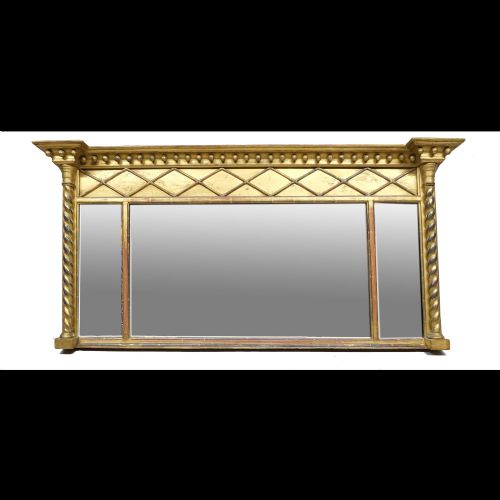


Three Plate Gilt Mirror
A three plate gilt mirror brings architectural presence and reflected light to a room, most frequently encountered here in grand overmantel forms.
Three Plate Gilt Mirror
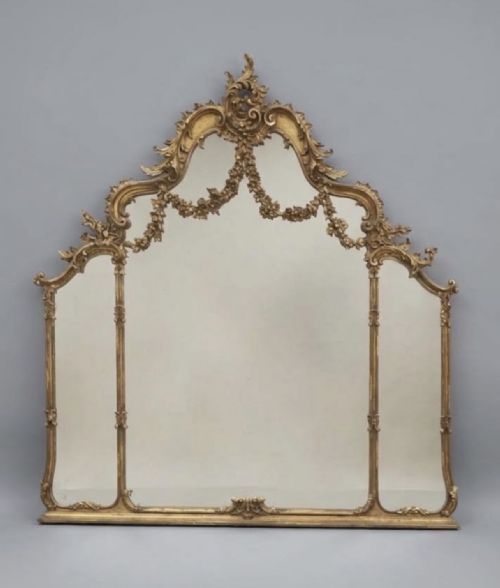
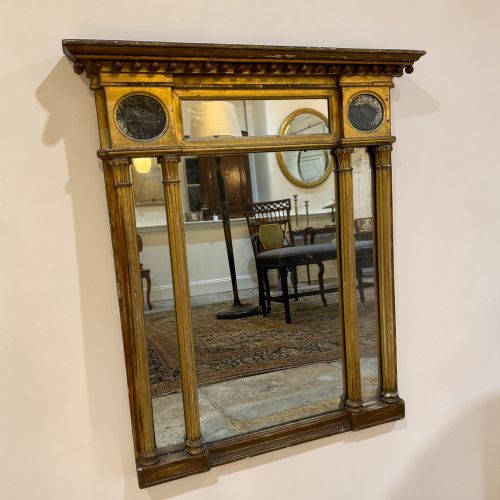
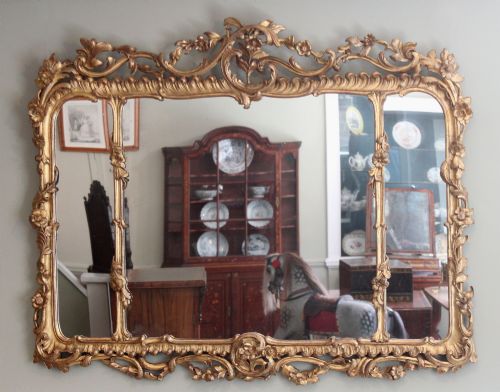
When searching for a three plate gilt mirror, buyers encounter a specific type of horizontal wall hanging designed predominantly as an overmantel or chimney piece mirror. These pieces span multiple eras including the Georgian, Regency, and Victorian periods, with the Regency period appearing most frequently.
The primary forms on this page include large overmantel mirrors and architectural trumeau mirrors featuring partitioned glass panels. Originating in the eighteenth and nineteenth centuries, they were built to sit above fireplaces to amplify daylight and artificial illumination in principal rooms.
How they were made
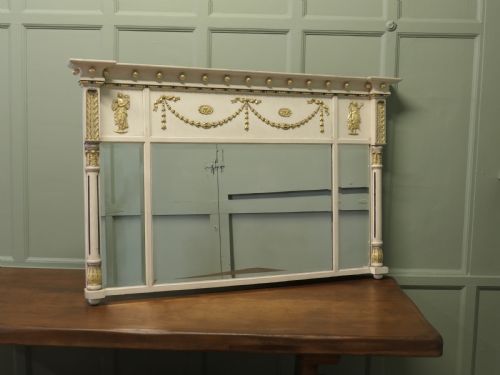
Frames are constructed from wood such as mahogany or walnut, then coated in gesso and giltwood to achieve a rich metallic surface. Composition material is often moulded into decorative details like laurel wreaths and friezes.
Mirrors utilise multiple individual plates of glass divided by moulded bars or muntins within the frame. Gilding is applied over prepared grounds to create the characteristic reflective or parcel gilt finishes.
Three Plate Gilt Mirror Retail Price Guide 2026
Typical asking prices for three plate gilt mirror among the pieces listed under this phrase on Sellingantiques today, from the lower quarter to the upper quarter. They describe what is for sale here now, not the wider market.
Listings feature eighteenth-century Georgian pieces through to early twentieth-century examples, constructed in giltwood, mahogany, and ebonised wood.
What varies in quality
The fineness of the carved ornamentation on the giltwood and gesso frames dictates the visual hierarchy of these mirrors. Crisp detailing on motifs like griffins or cornucopiae separates ambitious workshop pieces from simpler domestic examples.
The depth of the gilding and the clarity of the original mirror glass plates influence the overall character of the piece. Superior examples maintain integrated proportions across their triple plate divisions.
Ciceri & Co.
The Three Plate Gilt Mirror Glossary
- Overmantel mirror
- A large horizontal mirror specifically designed to be hung above a fireplace mantelpiece. These pieces often feature divided plates to fit the architectural scale of chimney breasts.
- Giltwood
- Timber carved and coated with gold leaf applied over a prepared gesso ground. This material provides the brilliant metallic finish characteristic of these frames.
- Gesso
- A plaster-like mixture applied to wood frames and carved or moulded into intricate decorative reliefs before gilding. It allows for sharp architectural and organic ornamentation.
- Triptych
- A mirror divided into three distinct vertical or horizontal panels of glass within a single frame. This configuration is typical of nineteenth-century overmantel designs.
- Trumeau mirror
- An architectural mirror incorporating a painted or carved panel above the glass plate. These grand pieces were often built into the wood panelling of eighteenth-century rooms.
Three Plate Gilt Mirror: Frequently Asked Questions
Where should I hang a three plate gilt mirror?
These mirrors were traditionally constructed to sit directly above a fireplace mantelpiece, where their length complements the proportions of a chimney breast. They also function effectively along principal reception room walls to bounce light across the space.
Ensure the wall structure can support the substantial weight of these timber and glass pieces, securing them safely with appropriate fixings.
How do I identify a Regency period mirror?
Regency mirrors often display classical motifs such as laurel wreaths, reeded columns, and figurative friezes like griffins. The gilding and gesso work reflect the neoclassical tastes popular during the early nineteenth century.
Inspect the construction methods at the back of the frame and the quality of the plate glass to help confirm the manufacturing era.
Why are there multiple glass plates in one frame?
Early glass-making technology limited the size of flawless flat mirror plates that could be produced. Using three separate plates divided by frame bars allowed makers to achieve a grand horizontal span.
This compartmentalised design became a distinct aesthetic style that persisted even as larger glass sheets became available.
How do I clean a giltwood frame?
Dust the carved gesso and giltwood surface gently with a very soft, dry brush to remove particles. Avoid using any liquid cleaners, moisture, or chemical polishes, which can strip the delicate gold leaf.
Keep the mirror out of direct, harsh sunlight to protect the aged gilding and prevent the underlying wooden frame from drying out.