
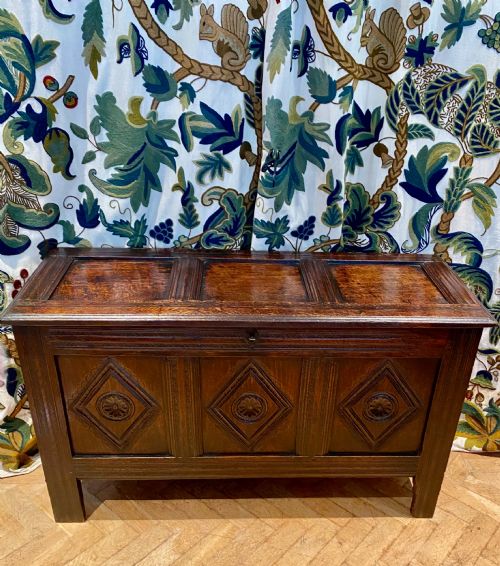

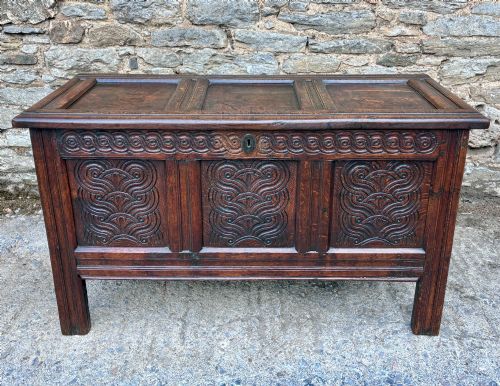
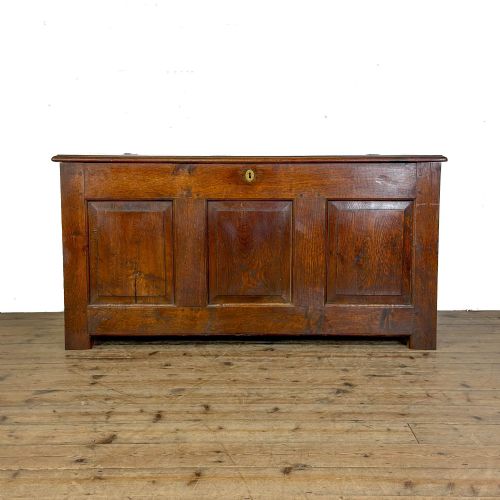


Three Panel Coffer
A three panel coffer provides robust domestic storage through sturdy timber construction spanning from the seventeenth century to the nineteenth century.
Three Panel Coffer
A three panel coffer presents a sturdy storage box constructed with a tripartite front elevation, forming a traditional form seen across the seventeenth century, eighteenth century, and nineteenth century. Buyers encounter examples originating from English regions such as Yorkshire and Wales, alongside generalized traditional country pieces.
The primary structural format divides the front facade into three distinct wooden sections, frequently accompanied by internal storage additions like candle boxes or lower drawer arrangements in mule chest variants. Surviving pieces range from plain utilitarian furniture to carved specimens dating back to the Jacobean and Charles II eras.
Materials and Construction
Makers utilised solid oak as the principal timber, framing panels within joined wooden frameworks that accommodated seasonal wood movement. Iron and brass hardware, including hinges and lock plates, secured the lids and operational compartments.
Joinery techniques relied on pegged mortise and tenon joints to assemble the structural frame around the central panels. Surface decoration frequently involved hand carving applied directly to the timber fronts.
Several pieces include hidden internal candle boxes, perfect for keeping tallow safe from midnight snackers.
Assessing Quality and Proportion
Quality rests upon the crispness of period carving, the integrity of the original joined oak timbers, and the proportion of the panels. Finer examples retain their original internal candle boxes and undisturbed surface patination accumulated over centuries.
Lesser or altered examples display replaced boards, degraded hinges, or poorly executed later carving applied to plain surfaces. The thickness of the oak boards and the tightness of the joinery distinguish utilitarian regional work from higher status output.
The Three Panel Coffer Glossary
- Coffer
- A large wooden chest used for domestic storage, particularly for textiles, valuables, and documents. These pieces often feature hinged lids and sturdy joined construction.
- Mule chest
- A storage chest that incorporates one or more drawers beneath the main coffer compartment. This form emerged during the Georgian period.
- Joined chest
- Furniture constructed using mortise and tenon joints secured with wooden pegs rather than simple nailed boards. This method defines traditional oak cabinetry.
- Candle box
- A small internal compartment fitted inside a chest to store tallow candles securely away from other contents. It remains a desirable original interior feature.
- Panel
- A flat piece of wood fitted within a surrounding frame to prevent splitting as the timber expands and contracts. Three panel coffers divide the primary facade into three such sections.
Three Panel Coffer: Frequently Asked Questions
What were three panel coffers used for?
These chests served primarily for storing household textiles, blankets, clothing, and valuables in domestic interiors. Their robust construction allowed them to double as seating benches within the home.
Over centuries, they functioned as secure repositories for important household documents and dry goods, adapting to changing household storage needs across the seventeenth and eighteenth centuries.
How do I date a three panel coffer?
Dating relies on observing construction methods, timber patination, and stylistic carvings characteristic of specific reigns and periods. Seventeenth century pieces frequently display geometric or figural carved panels and pegged joinery.
Later eighteenth century and Georgian examples often incorporate lower storage drawers or simpler panel configurations reflecting evolving regional cabinetmaking traditions.
Where should I place a coffer at home?
A coffer fits well in hallways, living spaces, or bedrooms where its flat lid functions as a surface for display or seating. The internal compartment provides practical concealed storage for blankets and bulky items.
Placing the timber piece away from direct heat sources and strong sunlight protects the antique oak from drying out or splitting over time.
Are mule chests different from standard coffers?
Mule chests include one or more functional drawers positioned beneath the main lifting-lid compartment. This design variation bridges the traditional coffer and the chest of drawers.
Standard coffers offer open trunk storage accessed exclusively through the top lid, whereas mule chests provide easier access to frequently used items stored in the lower drawers.