

Three Legged Wood Table
These pieces known as a three legged wood table offer sturdy poise and compact utility, making them ideal for small spaces.
Three Legged Wood Table
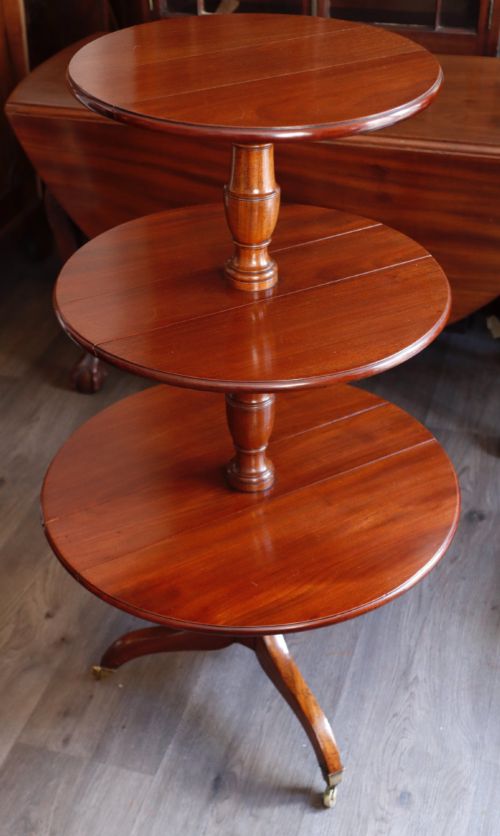
A three legged wood table appears in several utilitarian and formal guises, ranging from vernacular country pieces to refined parlour furniture. The search for a three legged wood table leads most frequently to round occasional tables, cricket tables, and tripod wine tables from the eighteenth and nineteenth centuries.
The material selection spans native hardwoods like oak, elm, and ash alongside imported timbers such as mahogany and walnut. These domestic and occasional forms serve as lamp stands, side supports, or small dining surfaces depending on their height and top diameter.
Materials and Construction
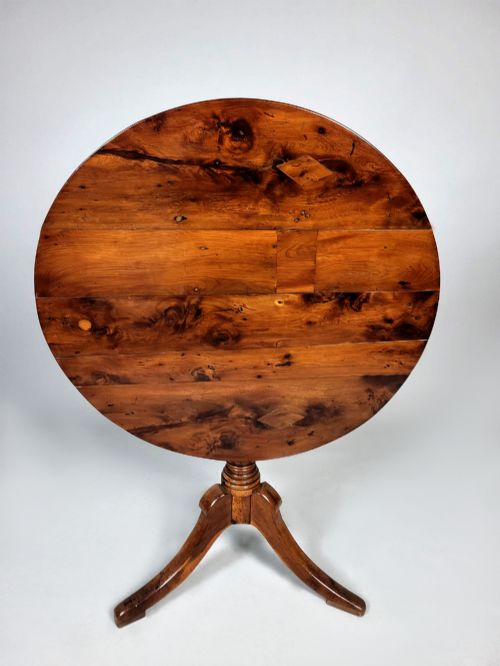
Makers constructed these tripod supports using solid timbers including oak, elm, ash, and mahogany, often pairing plank tops with turned or gnarled uprights. Joinery typically involves pegged tenons or central pillar mountings designed to distribute weight evenly across three ground points.
Surface treatments vary from polished mahogany and burr walnut veneers to waxed oak, scrubbed elm, and painted finishes. Structural integrity relies on the geometric stability of the three-legged base, which prevents rocking on uneven floors.
Current listings feature oak, elm, ash, mahogany, and walnut across eighteenth and nineteenth-century periods.
Distinctions in Quality
The refinement of the timber selection and the grace of the leg turnings separate standard utility pieces from higher examples. Figured mahogany, burr walnut, and well-proportioned pad feet indicate greater workshop attention.
Originality of the structural components and timber patination determine the standing of an individual piece. Retaining the original tilt mechanism, unaltered block fittings, and unreplaced legs preserves the integrity of the object.
The Three Legged Wood Table Glossary
- Cricket table
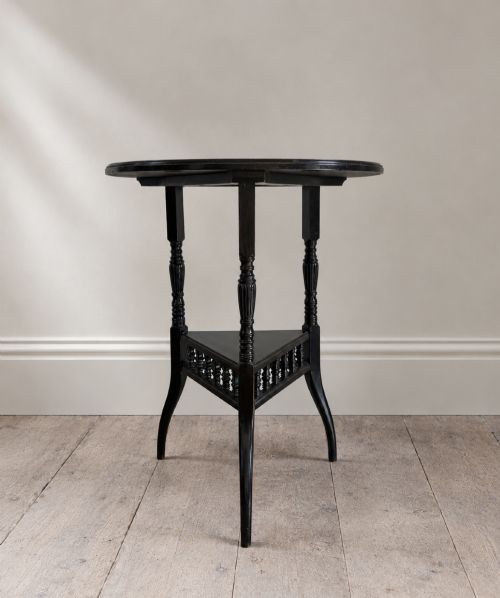
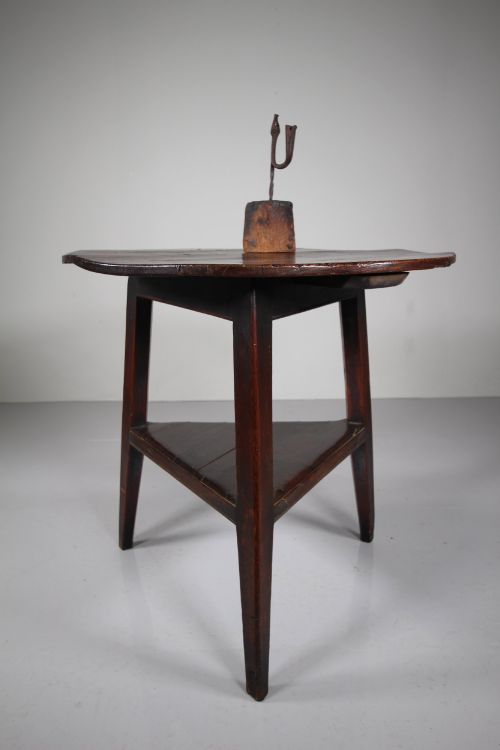
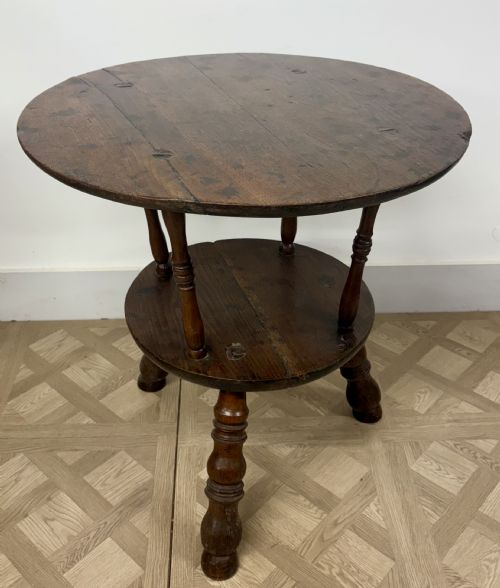
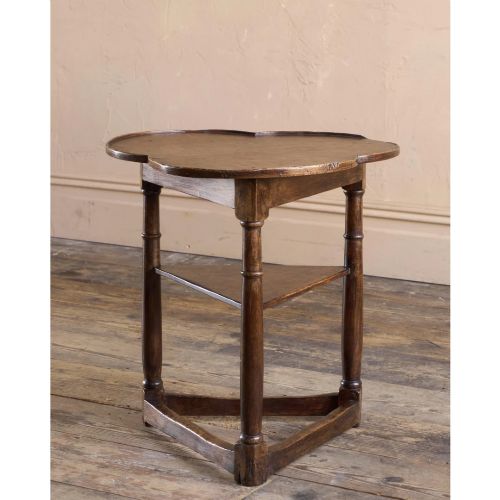
- A small round wooden table with three splayed legs, traditionally associated with English vernacular use. These pieces often feature an undershelf or plain plank top supported by pegged joints.
- Tilt top
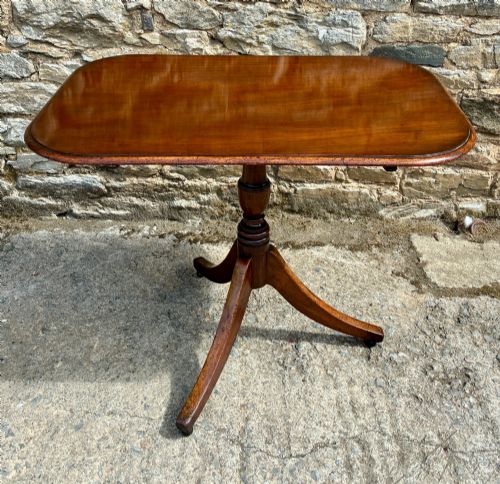
- A tabletop mounted on a catch mechanism that allows the surface to pivot to a vertical position when not in use. This clever design saved floor space in compact historic rooms.
- Tripod table
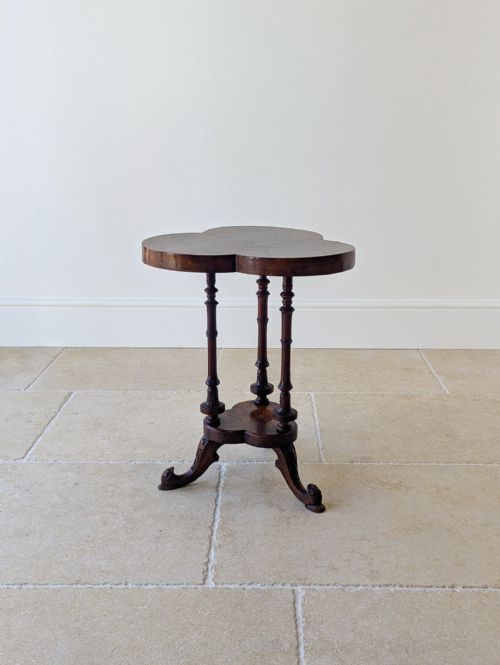
- Any small table supported by a central pillar resting on three separate feet or legs. The configuration provides inherent stability on uneven historic floorboards.
- Vernacular style
- Furniture made by local country joiners using regional timbers for everyday domestic utility rather than following strict metropolitan fashion. The construction prioritises sturdy function over decorative carving.
Three Legged Wood Table: Frequently Asked Questions
What were three legged wood tables used for?
These tables served various domestic purposes including holding candles, wine glasses, or small lamps beside seating areas. Country variants functioned as general utility surfaces in kitchens and parlours.
Their compact footprint allowed them to sit easily in corners or beside beds without obstructing movement in smaller rooms.
How do I tell an 18th-century table from a later copy?
Examination of the timber shrinkage, joinery marks, and underside construction reveals the age of the piece. Hand-cut pegs, pegged tenons, and natural wear patterns point to historic manufacture.
Later reproductions often display uniform machine tooling and lack the characteristic patination built up through centuries of handling.
Are three legged tables stable on carpets?
Three points of contact naturally adjust to uneven floors without rocking, unlike four-legged furniture. Thick modern carpets can sometimes muffle this inherent stability if the legs sink unevenly.
Placing the feet directly on firm flooring or low-pile rugs ensures the balanced support intended by the maker.
What is the difference between a cricket table and a wine table?
Cricket tables typically feature three splayed legs joined by stretchers and an oak or elm plank top for sturdy domestic use. Wine tables usually employ a turned pillar stem with a slender tripod base and a mahogany top.
Both share the three-legged format but serve different stylistic traditions within country and formal rooms.