



Three Legged Oak Stool
A three legged oak stool offers simple domestic utility and honest construction, prized for its organic form and practical rustic charm.
Three Legged Oak Stool
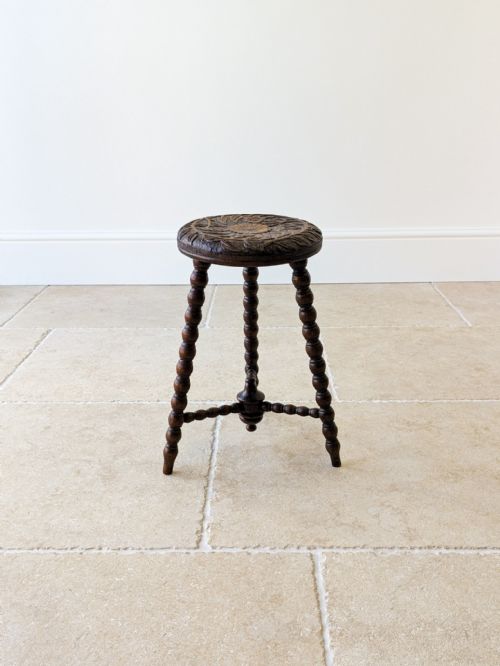
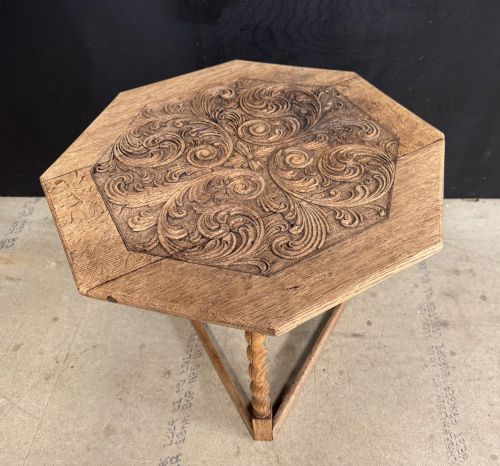
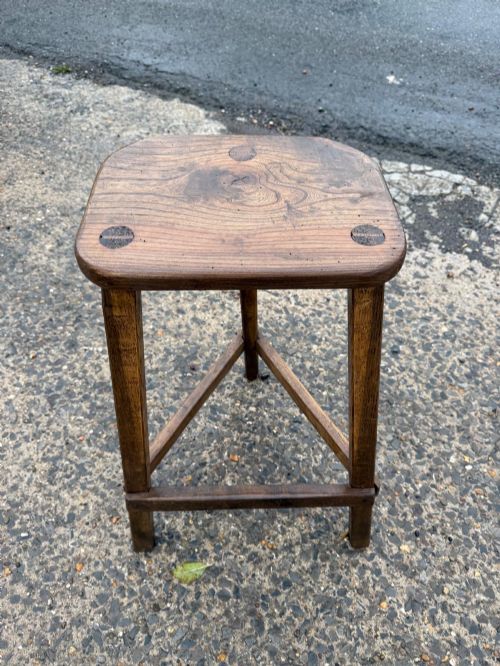
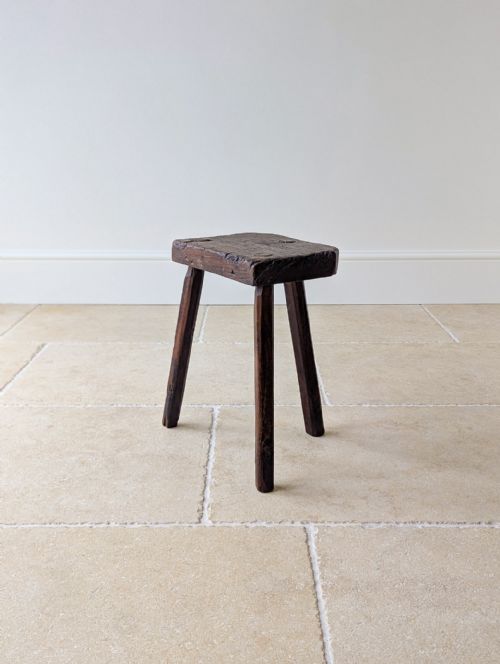
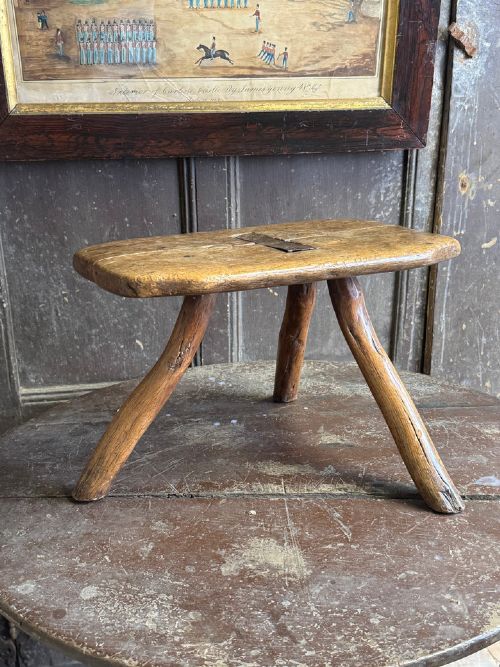
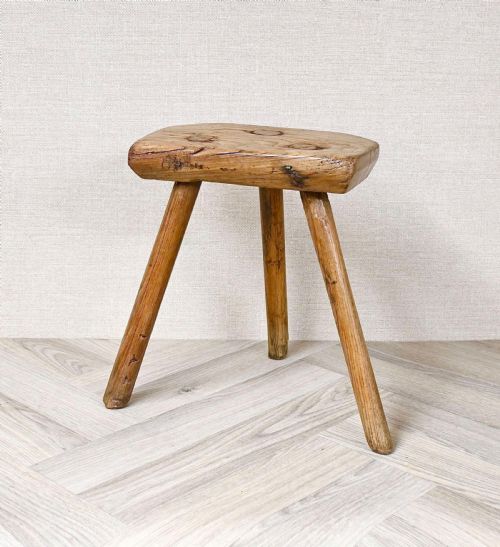
A three legged oak stool represents a fundamental form of domestic and utilitarian seating found across country houses and workshops. These pieces appear in various configurations, including primitive milking designs, artisan work seats, and vernacular examples featuring splayed legs.
Buyers are most likely to encounter nineteenth-century rural variants alongside Georgian and Victorian workshop pieces. These utilitarian objects often combine oak with elm, ash, or pine, maintaining simple circular or shaped tops supported by three sturdy tenoned legs.
Materials and construction
Makers utilised native hardwoods, pairing oak tops with elm, ash, or pollard oak for added durability and grain contrast. Legs were typically turned or cleft from green timber and wedged firmly into through-mortises on the underside of the seat.
Blacksmith iron repairs and structural braces frequently appear on pieces subjected to heavy workshop or farm usage. Surface finishes rely on natural patination, occasional pokerwork decoration, or simple bobbin turnings rather than elaborate polish.
The listings show oak combined with elm, ash, and pine across various rustic vernacular and Arts and Crafts styles.
Judging quality in early seating
Quality rests in the integrity of the timber selection and the proportional balance of the splayed legs. Pieces retaining their original surface patination and honest blacksmith repairs hold greater character than those with over-cleaned timber.
The sophistication of the turning work and the integration of secondary woods like ash or elm dictate the distinction between vernacular farm furniture and refined stylistic revivals.
The Three Legged Oak Stool Glossary
- Splayed legs
- Legs angled outwards from the underside of the seat to provide enhanced stability on uneven floors. This technique is common in milking and workshop stools.
- Vernacular
- Everyday objects made by local craftspeople using regional materials without high stylistic pretension. These pieces reflect practical local traditions.
- Pollard oak
- Timber harvested from trees that were cut close to the trunk to encourage dense, highly figured branch growth. It yields striking decorative grain patterns on table and stool tops.
- Bobbin turned
- Formed on a lathe to create a series of rounded, spool-like shapes along the length of a leg or stretcher. This decorative turning style appears on late nineteenth-century pieces.
Three Legged Oak Stool: Frequently Asked Questions
What were three legged oak stools used for?
These low seats served practical functions in dairies, workshops, and farms where an uneven floor demanded a stable three-point contact.
Craftspeople such as cutlers, jewellers, and machinists also relied on them for close-range bench work.
How do I date a country stool?
Dating relies on examining tool marks, timber shrinkage, and the method by which the legs penetrate the seat top.
Earlier examples often display hand-cleft undercarriages and blacksmith repairs, whereas later Victorian pieces show machine turning.
Are three-legged stools stable on carpets?
A three-legged base naturally rests firmly on any surface without wobbling, unlike four-legged furniture that requires a level floor.
This makes them highly adaptable for modern living spaces and narrow corners.
What is the difference between milking and workshop stools?
Milking stools generally feature primitive, unadorned seats with simple splayed legs designed for outdoor farm environments.
Workshop variants, such as those for jewellers or cutlers, often incorporate shaped wooden saddles or artisan adjustments for long hours of seated labour.