
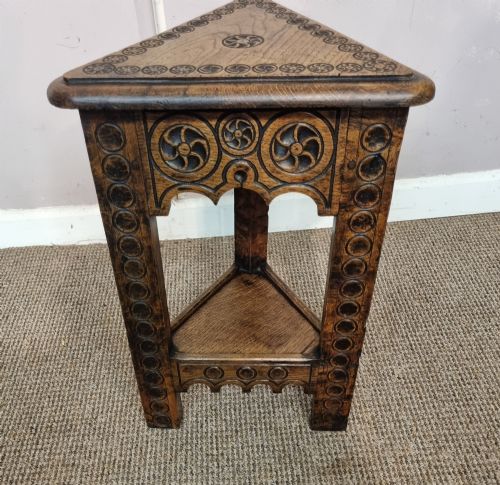
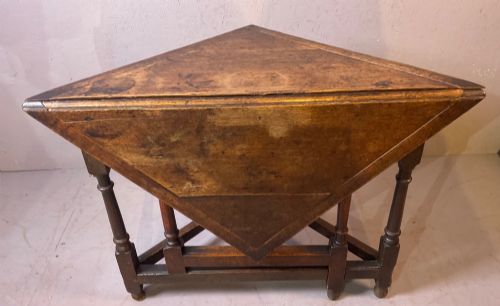
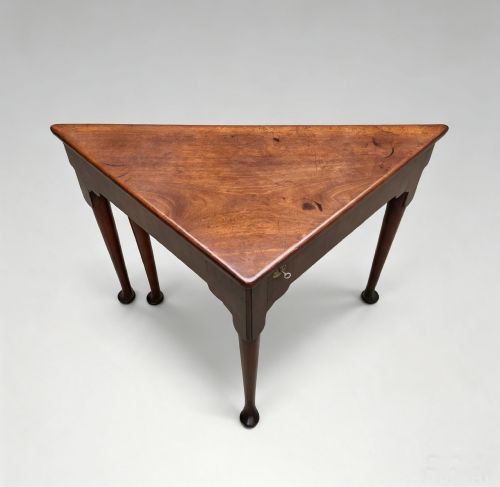


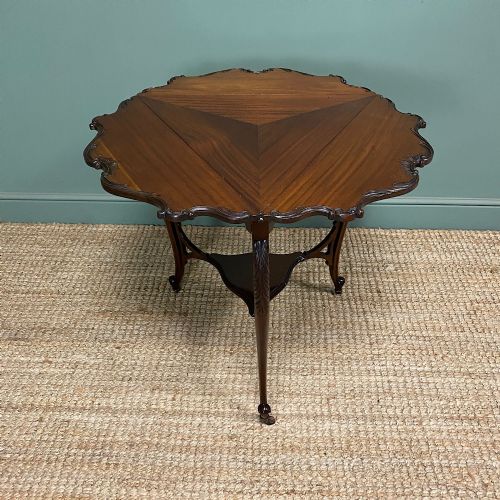


Triangular Corner Table
These triangular corner tables save space efficiently while bringing mahogany, oak and rosewood surfaces into neglected room angles.
Triangular Corner Table
A triangular corner table occupies the dead space where two walls meet, making clever use of angles that standard rectangular furniture ignores. You will find these pieces spanning several distinct periods, including Georgian, Victorian and Edwardian iterations.
The most common formats on this page include drop-leaf tea tables, folding variants and occasional tables designed to fit snugly into a room boundary. Makers shaped these items from solid hardwoods like mahogany and oak, frequently adding hinged leaves to expand the surface area when required.
Earlier examples from the eighteenth century lean towards formal tea and card functions with drop leaves, while later nineteenth-century pieces often serve as display surfaces or lamp stands. The form adapts naturally to domestic layouts, shifting from practical dining uses to decorative hallway placement.
How they were made
Cabinetmakers constructed these tables primarily using dense hardwoods such as mahogany, oak and rosewood, selecting timber for strength and grain pattern. Secondary woods often reinforced interior framing and hidden structural supports.
Surface decoration frequently involved intricate satinwood inlay, boxwood stringing and marquetry work, particularly on Edwardian and Dutch-influenced pieces. Carved details appeared on structural elements like legs and aprons, while brass hinges and swing legs supported folding leaves.
Listings feature mahogany, oak and rosewood surfaces spanning the seventeenth century through the Edwardian period.
What varies in quality
Quality rests upon the selection of timber and the precision of the joinery where the three corner legs meet the frieze. Superior examples display tightly fitted hinges, stable drop-leaf mechanisms and unwarped solid wood tops that remain flat across the span.
The refinement of the decorative inlay and carved elements distinguishes finer workshop production from simpler utilitarian pieces. Crisp boxwood stringing and balanced marquetry indicate careful execution by skilled hands.
The Triangular Corner Table Glossary
- Drop-leaf table
- A table with hinged flaps on the sides that fold down to save space or lift up to enlarge the surface. These flaps are typically supported by swing legs or folding brackets.
- Marquetry
- Decorative patterns formed by the insertion of different woods, veneers or shell into a solid wood surface. This technique creates pictorial or geometric designs.
- Pad foot
- A type of furniture foot where the leg terminates in a flattened, circular pad resting directly on the floor. It appears frequently on eighteenth-century furniture.
- Satinwood
- A pale, durable tropical timber known for its lustrous sheen, often utilised for contrasting inlay work and banding on mahogany furniture.
- Frieze
- The horizontal band running beneath the upper edge of a table top, which often houses drawers or receives decorative carving and inlay.
Triangular Corner Table: Frequently Asked Questions
What is a triangular corner table used for?
These pieces function primarily as space-saving surfaces positioned in room corners where standard tables do not fit. Historic uses included serving tea, playing cards or displaying decorative items.
Today, owners utilise them as lamp stands, hall tables or occasional surfaces in bedrooms and living areas. Their folding leaves allow the top to expand when extra space is needed.
How do I identify a Georgian corner table?
Georgian pieces typically employ solid mahogany, walnut or oak construction, often featuring drop leaves designed for tea or card games. Look for period joinery methods and traditional foot styles such as pad feet.
Cabinetmakers of this era focused on functional folding mechanisms and clean structural lines rather than heavy surface marquetry.
Are Edwardian corner tables different?
Edwardian versions often incorporate lighter timbers like rosewood alongside decorative satinwood inlay, boxwood stringing and painted details. They frequently served as occasional lamp or display tables.
The aesthetic leans towards refined surface ornamentation rather than the heavier structural proportions of earlier centuries.
How do drop leaves work on these tables?
Hinges connect the folding flaps to the fixed central triangular top, allowing the leaves to drop vertically down. A swing leg or pivoting bracket pulls out from the frame to support the leaf when raised.
This mechanism enables the table to transform from a tight corner fit into a larger surface.
Will a corner table fit any room angle?
Most antique corner tables are constructed to fit a standard ninety-degree wall junction. Older houses sometimes feature irregular wall angles that require careful measurement before placing rigid furniture.
The triangular footprint relies on the corner being square for the back edges to sit flush against both walls.