

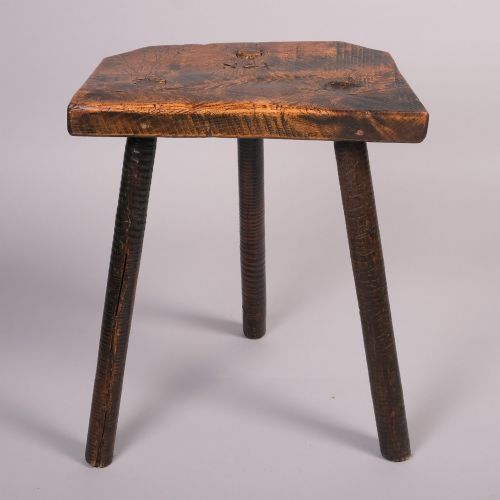
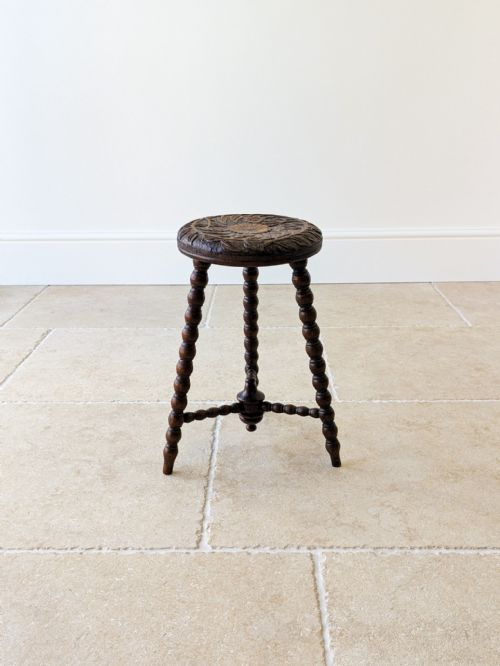
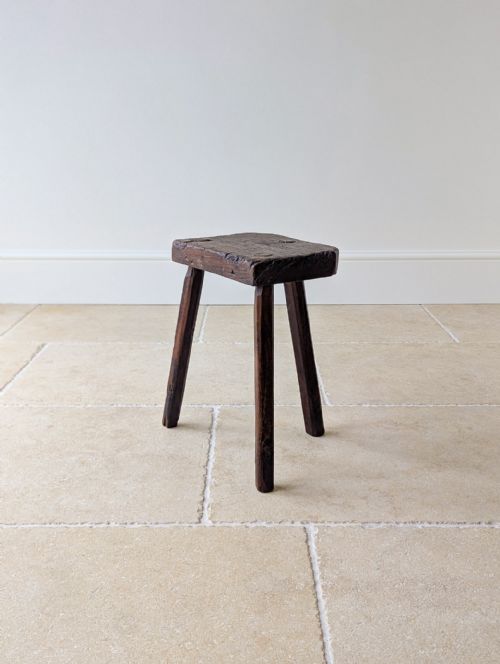


Brown Oak Tripod Stool
These brown oak tripod stool examples bring sturdy country character and honest vernacular design straight into a modern interior.
Brown Oak Tripod Stool
A brown oak tripod stool combines utilitarian function with traditional three-legged stability. These pieces emerge from periods spanning the eighteenth century through to the early twentieth century.
Makers shaped these items for practical rural and workshop tasks, resulting in forms like milking stools, cutter stools, and swivel designs. The inventory relies on sturdy woods and simple circular tops supported by splayed legs.
Vernacular country aesthetics dominate the selection, showing how everyday furniture developed distinct regional traits across England and beyond. Buyers encounter heavy timber construction designed to endure decades of hard use.
Materials and construction methods
Craftsmen built these supports primarily from solid oak, elm, and ash, selecting timber for strength and durability. They often paired dense hardwoods for the top with flexible matching or contrasting woods for the legs.
Joinery relied on traditional techniques such as through-wedged tenons and splayed pegging to ensure the three legs remained firm on uneven floors. Blacksmiths occasionally added iron repairs or braces to reinforce heavy structural wear.
Brown Oak Tripod Stool Retail Price Guide 2026
Typical asking prices for brown oak tripod stool among the pieces listed under this phrase on Sellingantiques today, from the lower quarter to the upper quarter. They describe what is for sale here now, not the wider market.
Distinctions in quality and character
The integrity of the timber and the honesty of past repairs dictate the standing of an individual piece. Original blacksmith bracing or untouched surface patination elevates the historical weight of the object.
Proportion and the balance of the splayed legs separate workshop utilitarian items from more decorative country examples. Subtle details like bobbin turning or pokerwork decoration reveal the care invested by the original maker.
The Brown Oak Tripod Stool Glossary
- Splayed legs
- Legs angled outwards from the centre to provide superior stability on uneven ground. This technique remains fundamental to the design of traditional three-legged seating.
- Vernacular country
- Furniture made by local tradesmen using regional materials and styles without high-style academic influence. These objects reflect practical utility rather than court fashions.
- Bobbin turned
- Turning wood on a lathe to create a series of rounded spheres resembling bobbins or spools. This decorative technique appears on legs and stretchers.
- Pokerwork
- The art of decorating wood by burning designs into the surface with heated metal points. Scottish examples sometimes feature traditional inscriptions or regional motifs.
- Hedgerow timber
- Wood sourced locally from rural boundaries and field margins for everyday construction. This material often displays natural irregularities and tight grain.
Brown Oak Tripod Stool: Frequently Asked Questions
What is a brown oak tripod stool used for?
These items served various practical roles in rural and trade environments, including milking, cutting, and workshop assembly tasks. Their three-legged design prevented rocking on uneven stone or earth floors.
Today, owners utilise them as compact side tables, plant stands, or occasional seating in rustic interiors.
How do I date a tripod stool?
Dating relies on examining tool marks, timber shrinkage, construction methods, and the wear patterns on the seat top. Eighteenth-century examples often feature hedgerow splayed legs with visible blacksmith repairs.
Victorian and later pieces introduce turned elements, adjustable mechanisms, or stylistic revivals like Liberty or Jacobean influences.
Are three-legged stools stable?
Three legs naturally rest firmly on any surface without wobbling, making them ideal for uneven floors in historic buildings. This geometric advantage explains their enduring popularity in rural workshops.
The splayed angle of the legs further widens the base to support heavy loads during daily work.
How should I care for old oak furniture?
Maintain the wood by applying traditional beeswax sparingly to nourish the dry timber and enhance the natural patina. Avoid placing the piece near direct heat sources or strong sunlight to prevent splitting.
Clean the surface gently with a soft, dry cloth rather than modern chemical polishes.