


Three Chair Back Settee
A three chair back settee offers connected seating with a shared backrest frame, bringing period proportion and timber craft into a room.
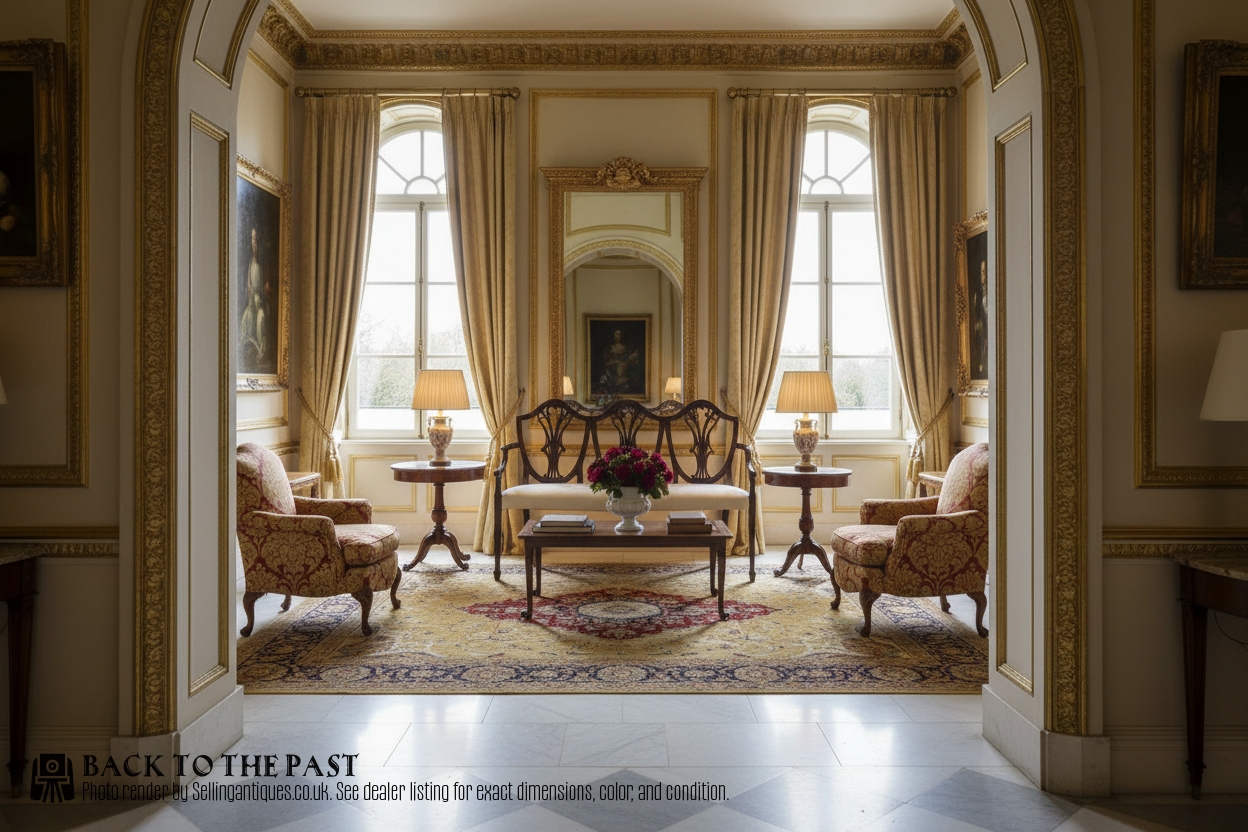
Three Chair Back Settee
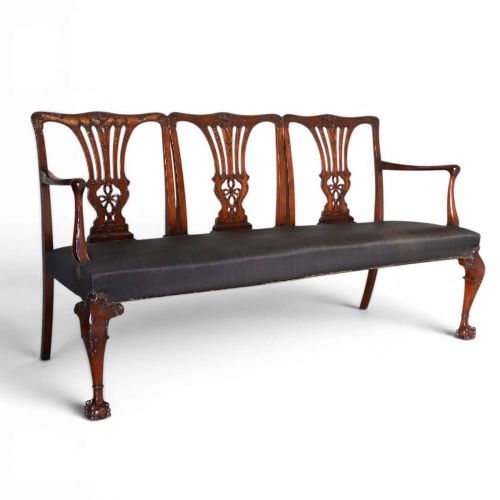
A three chair back settee combines multiple chair backs into a single extended seat, creating a linear bench form with distinct back divisions. Buyers searching for a three chair back settee encounter forms ranging from Edwardian revival designs to earlier nineteenth century walnut and mahogany interpretations.
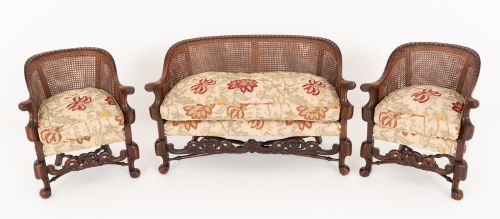
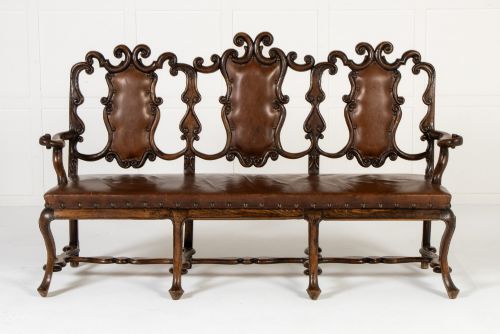
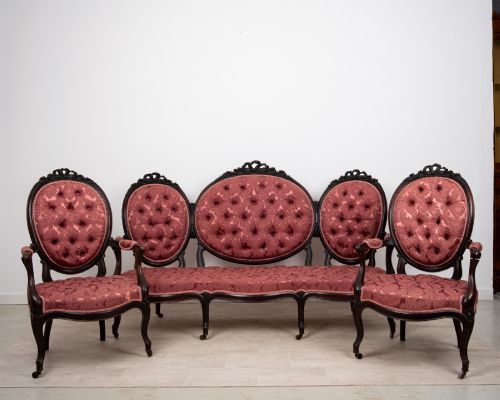
The listings on this page include styles spanning Hepplewhite and Chippendale revivals, Carolean designs, and Biedermeier maple pieces. These seating items appear as standalone settees or as parts of larger salon and lounge suites.
Makers and manufacturers adapted traditional single chair proportions to accommodate three contiguous back sections, often incorporating carved splats or shield backs. Examples range from structured bedroom end seats to deeply upholstered salon seating.
How they were made
Cabinet makers utilised dense hardwoods such as mahogany and walnut for the structural frames, carving the backs and legs in revival styles. Burr walnut and maple veneers also appear on specific frames, adding varied grain patterns to the timber surfaces.
Upholstery methods involved textile applications including fabric, damask, leather, and woven cane panels. Brass details occasionally complement the woodwork, while deep buttoned upholstery provides padding on nineteenth century variants.
One Edwardian mahogany seat was built specifically to rest at the foot of a bed.
What varies in quality
The distinction between tiers rests upon the crispness of the timber carving and the fidelity of the period revival style, such as Hepplewhite shield backs or Carolean scrollwork. Heavier timber selection and balanced proportions in the triple back frame elevate a piece.
Execution of secondary materials like woven cane panels or buttoned fabric upholstery alters the overall finish. Well-preserved joinery and coherent wood grain selection across the three connected sections define superior examples.
The Three Chair Back Settee Glossary
- Chair back settee
- A long seat whose backrest is constructed to resemble two or more individual chair backs joined together in a row. This design maintains distinct vertical divisions along the upper rail.
- Shield back
- A chair or settee back shaped in the outline of a heraldic shield, popularized by furniture designers in the eighteenth century. This form appears in revival pieces referencing Hepplewhite proportions.
- Bergere suite
- A matching set of seating furniture incorporating upholstered panels enclosed in exposed wooden frames. These suites often pair a settee with matching armchairs.
- Salon suite
- A matching collection of reception room seating including settees and chairs designed for formal hosting. They typically share uniform upholstery fabrics and carved timber frames.
Three Chair Back Settee: Frequently Asked Questions
Where were these settees used?
These settees were traditionally placed in formal drawing rooms, parlours, and large entryways to provide ample seating for guests. Edwardian variations also function as end of bed seats in domestic chambers.
Their decorative back designs meant they could sit away from walls where the carved woodwork remained visible from all angles.
How do I care for the upholstery?
Caring for the fabric or leather upholstery depends on the specific textile used, whether it is damask, woven cane, or deep buttoned material. Regular gentle dusting prevents particles from settling into the fibres and joints.
Exposed wooden frames require standard timber maintenance, avoiding direct sunlight to protect mahogany and walnut surfaces from fading.
How do I identify a revival style?
Revival styles borrow decorative motifs and structural proportions from earlier historical periods, such as the seventeenth-century Carolean era or eighteenth-century Hepplewhite designs. Makers in the nineteenth and twentieth centuries reinterpreted these historic forms using contemporary workshop methods.
Examining the timber ageing, joinery construction, and style characteristics helps distinguish the period of manufacture from the historical era being copied.