


Neoclassical Mahogany Settee
A neoclassical mahogany settee brings architectural proportion and rich timber into a room, offering a seat designed with classical restraint.
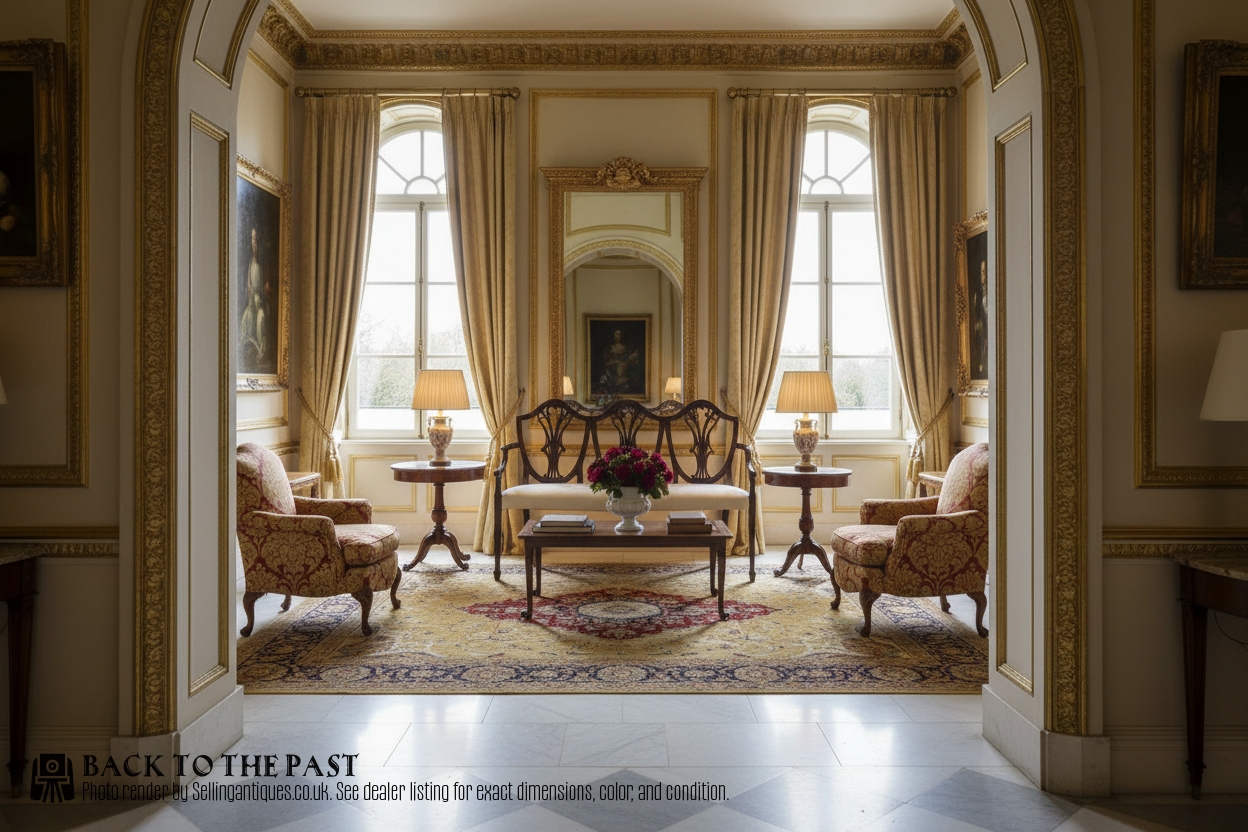
Neoclassical Mahogany Settee
When you search for a neoclassical mahogany settee, you are looking at substantial timber seating rooted in eighteenth and nineteenth century design traditions. These pieces draw upon classical forms, featuring restrained carving and balanced proportions that reflect the periods in which they were made.
On this page, the version you are most likely to meet originates from the Georgian or nineteenth century periods, often displaying stylistic links to George III, Hepplewhite, or French Empire traditions. They appear variously as two-seater sofas, serpentine settees, and larger salon seating framed in rich timber.
The materials span solid timbers paired with diverse upholstery fabrics, ranging from damask and silk to modern upholstery fabric. Some examples incorporate brass details or ormolu mounts, while others rely purely on the grain of the mahogany and satinwood inlay.
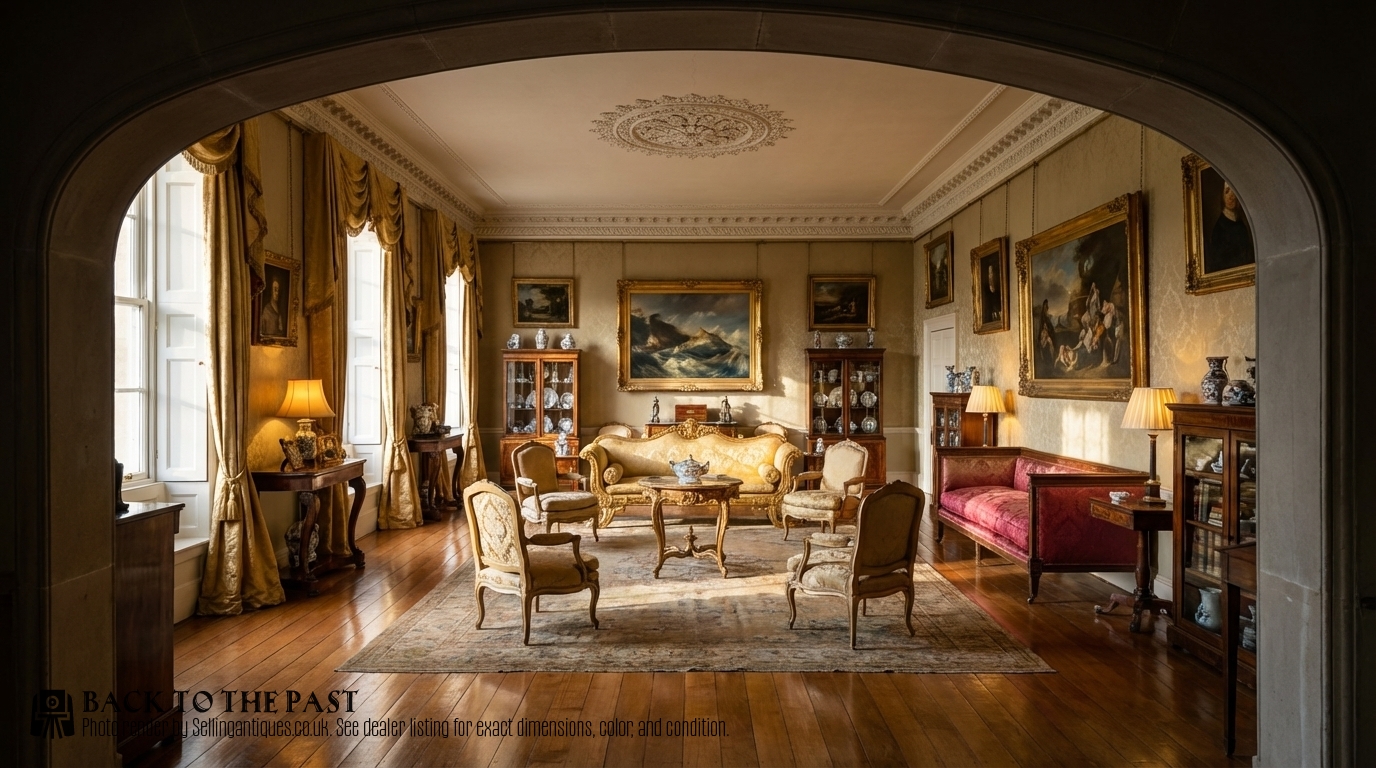
How they were made
Makers utilised dense mahogany and satinwood for the structural frames, often shaping the timber into shield backs or serpentine curves. The joinery relied on traditional techniques to support the load of long seating frames while maintaining delicate classical lines.
Decoration on these settees involved careful inlay work, hand carving, and the application of cast ormolu mounts and brass elements. Upholstered sections were built up using traditional stuffing methods beneath top layers of silk, damask, or standard upholstery fabric.
Listings feature mahogany, brass, ormolu, and various upholstery fabrics across eighteenth and nineteenth century periods.
What varies in quality
The refinement of the timber carving and the precision of the satinwood inlay set the finer examples apart from simpler country house pieces. Crisp detailing on ormolu mounts and brass accents indicates a higher standard of workshop production.
Proportion and structural integrity also define the grade of a settee, where balanced classical lines and tightly jointed mahogany frames retain their form better over centuries of use.
The Neoclassical Mahogany Settee Glossary
- Mahogany
- A durable, deep-toned timber prized for its stability and rich grain, frequently used in high-grade seating furniture.
- Ormolu
- Gilded bronze cast into decorative mounts and applied to furniture frames, common in French Empire styling.
- Serpentine
- A gently undulating curved line forming the front rail or back of a settee.
- Satinwood
- A pale, lustrous timber utilised for contrasting inlay work and decorative banding on darker wood surfaces.
- Damask
- A reversible figured fabric, often woven with patterns of flowers or classical motifs, used for traditional upholstery.
Neoclassical Mahogany Settee: Frequently Asked Questions
How do I distinguish George III pieces?
George III pieces often display precise carving, straight or slightly tapered legs, and restrained classical proportions typical of the late eighteenth century. Their construction relies heavily on solid mahogany with traditional joinery.
Later revival pieces from the nineteenth century frequently copy these motifs but can show heavier framing or distinct machine-assisted details upon closer inspection of the timber.
Where should I place a settee?
A settee works well in a drawing room, hallway, or large bedroom where its architectural lines can be appreciated from multiple angles. Because many examples feature finished backs or interesting frame profiles, they do not strictly require placement against a wall.
Consider the traffic flow around the room, as nineteenth century salon sofas and serpentine settees often have generous widths that dictate their surrounding space.
How do French and English styles differ?
French Empire pieces lean towards bolder mounts, ormolu decoration, and heavier classical symmetry inspired by antiquity. English Georgian and Hepplewhite designs generally favour lighter timber frames, shield backs, and subtle satinwood inlay.
Both traditions utilise mahogany as a primary material, but the decorative vocabulary and overall silhouette reveal the distinct regional origins of the workshop.
How do I care for the timber?
Maintain mahogany frames by keeping them away from direct heat sources and sudden humidity changes that can cause timber to split. Dust regularly with a dry cloth and avoid harsh chemical polishes.
Upholstery requires gentle vacuuming with a soft brush attachment, depending on whether the covering fabric is delicate silk, damask, or standard textile.