

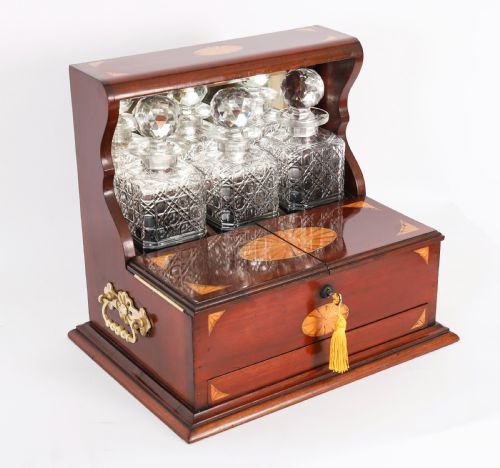


Three Bottle Decanter
A three bottle decanter setup holds spirits securely in matched vessels, bringing period charm and structured hospitality to a sideboard.
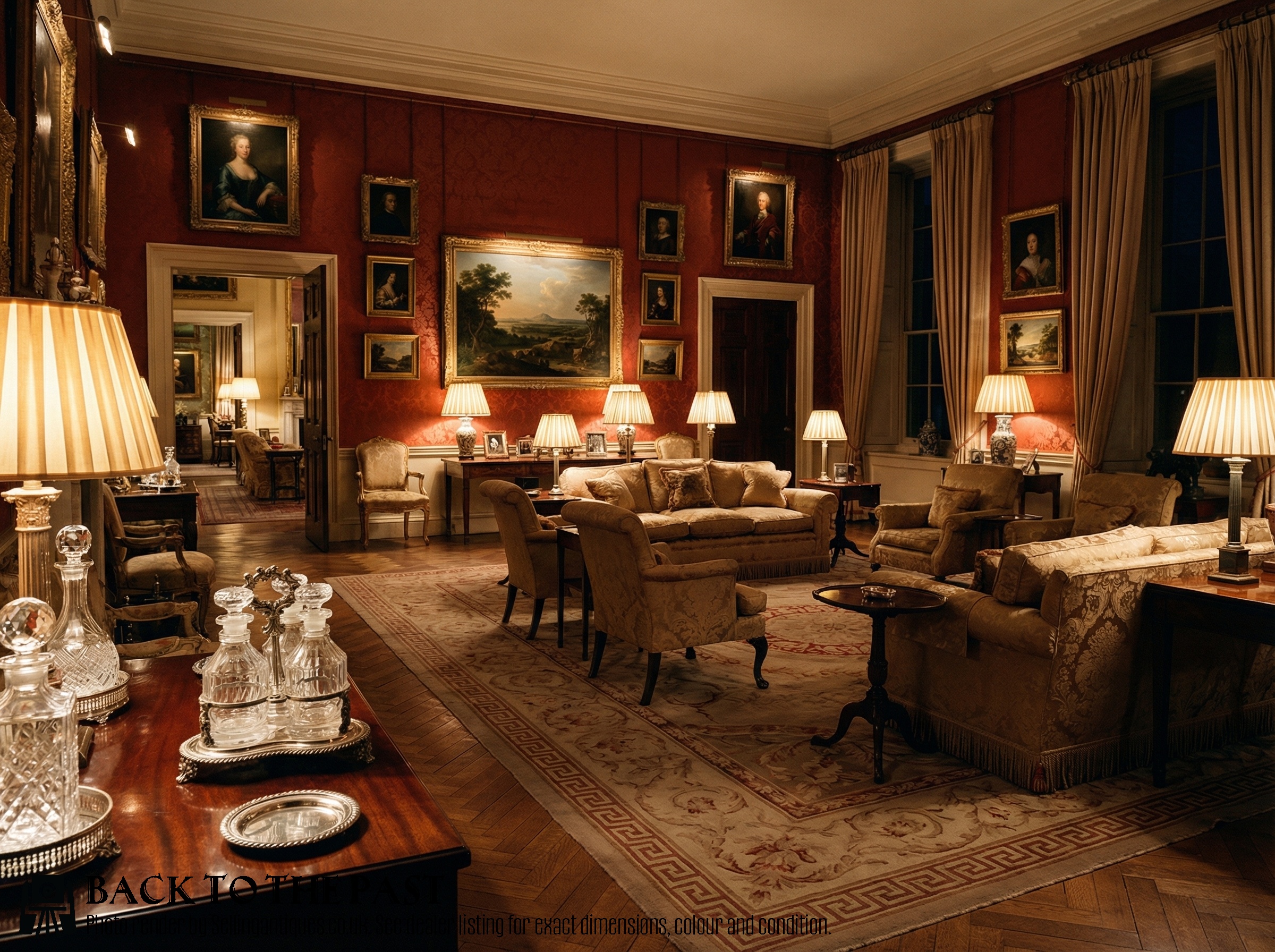
Three Bottle Decanter
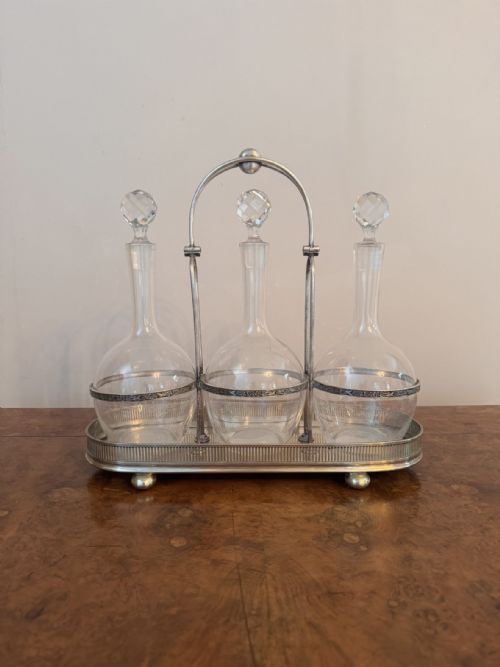
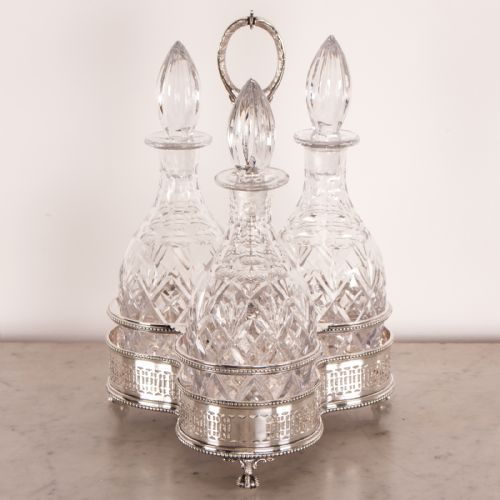
A three bottle decanter arrangement usually takes the form of a tantalus, a locking frame, or an open stand designed to hold three matching vessels together. These items serve after-dinner drinks and display cut crystal or glass containers housed in fitted wooden or metal frames.
The most common examples encountered on this page date from the Victorian and Edwardian eras, utilising sturdy woods like oak and coromandel alongside silver plate and brass mountings. Makers combined practicality with display value, housing three distinct bottles for different spirits in a single secure carrier.
How they were made
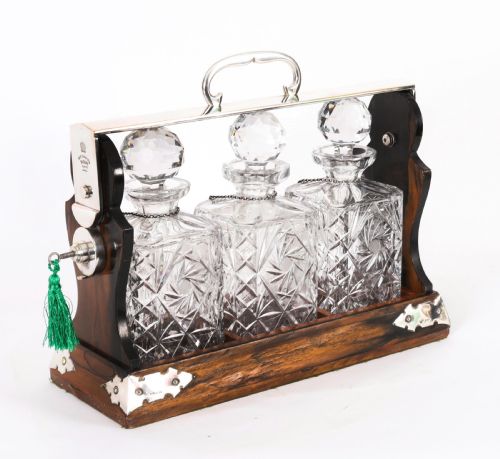
Makers constructed the frames using solid oak, satin wood, or coromandel, frequently incorporating marquetry stringing, brass mounts, and locking mechanisms operated by a key. These wooden cases required precise joinery to securely cradle three separate bottles without movement during transit.
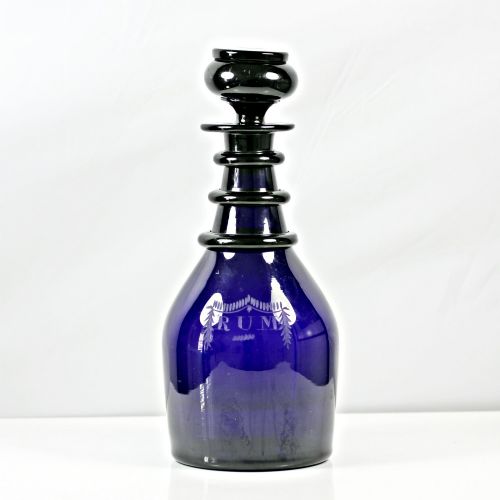
The bottles themselves utilise heavy lead crystal, cut glass, or coloured glass shaped with rings or hobnail cutting. Workshops paired these glass vessels with silver plated stands, Old Sheffield Plate frames, or sterling silver hallmarks to complete the set.
Listings feature oak, coromandel, and satin wood frames paired with cut crystal, glass, and silver plate.
What varies in quality
Quality depends upon the integration of the locking mechanism and the complexity of the cabinetwork, such as marquetry stringing and solid wood selection. Finer examples feature fully operational locks with original keys, substantial silver plating or solid silver hallmarks, and undamaged wood without warping.
The accompanying glass bottles dictate the overall merit of the set, separating basic stands from superior pieces through depth of cut crystal, matching stoppers, and unblemished rims. Sets retaining three original, matching bottles command greater interest than assembled groups.
Walker and Hall·Betjemann·Elkington·Philip Ashberry
The Three Bottle Decanter Glossary
- Tantalus
- A locking drink cabinet that secures three decanters within a metal and wood frame so the contents cannot be reached without a key.
- Old Sheffield Plate
- A composite material formed by fusing a sheet of silver to a copper base, utilised on earlier stands before electroplating became common.
- Coromandel
- A dense, heavily figured exotic timber from Asia used for luxury Victorian boxes and tantalus frames.
- Cut Crystal
- Glass containing lead oxide that is faceted by grinding and polishing, producing high refraction and weight.
- Ring Decanter
- A bottle featuring horizontal glass rings around the neck to ensure a secure grip when pouring.
Three Bottle Decanter: Frequently Asked Questions
What is a three bottle tantalus?
A three bottle tantalus is a locking wooden or metal frame designed to hold three decanters securely in place. The mechanism prevents guests or servants from accessing the spirits without the matching key.
These pieces typically sit on a sideboard or in a dining room, combining security with decorative display during the Victorian and Edwardian periods.
How do I date an oak tantalus?
Dating relies on the style of the hardware, the type of wood, and the construction methods used in the frame. Victorian examples often feature heavy brass mountings and oak or coromandel.
Later Edwardian versions can present lighter in proportion or use different plating techniques on the handles and lock plates.
Are the decanters usually original to the frame?
Many sets retain their original matching cut crystal or glass bottles, particularly when housed in a fitted locking tantalus. Replacement bottles do occur due to breakage over the decades.
Checking that all three bottles share the same glass tint, cutting pattern, and matching stoppers helps confirm their authenticity to the stand.
What drinks were kept in them?
These sets held three different spirits for after-dinner entertaining, such as whisky, brandy, or port. The trio allowed hosts to offer a choice of liquors directly from the sideboard.
Some specialist bottles feature ringed necks for a secure grip when pouring at the table.