
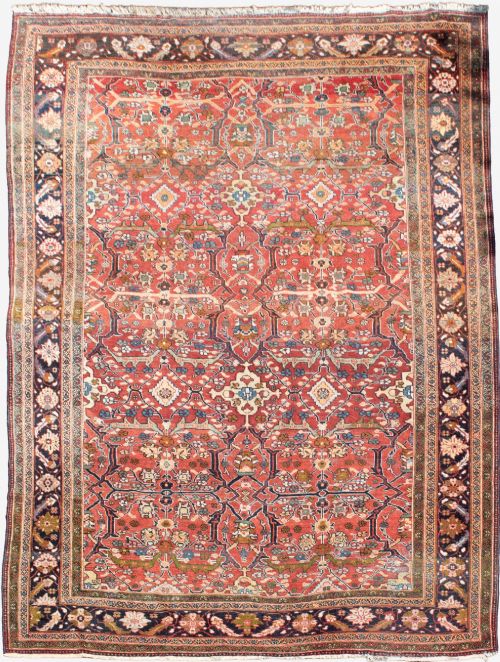


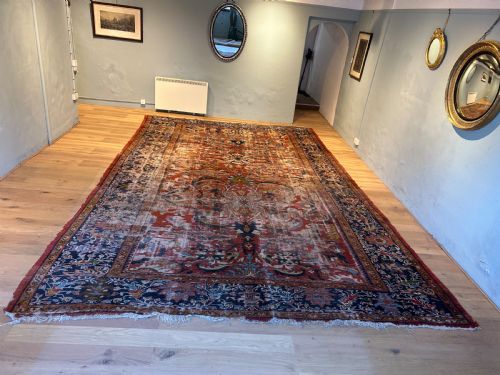


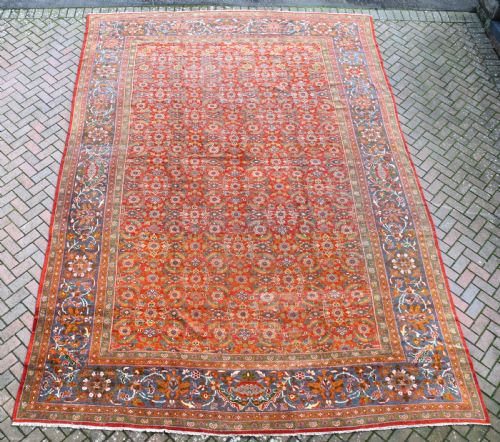


Terracotta Ziegler Carpet
These terracotta ziegler carpet examples bring grand Persian scale and rich earthy tones into a room.
Terracotta Ziegler Carpet
A terracotta ziegler carpet represents a distinct weaving tradition developed for Western tastes during the late nineteenth century. The pieces available here span the 1880 period, the 1890 period, and the 1900 period, encompassing rugs and large carpets.
Most items seen on this page fall under the Persian, Ziegler, Sultanabad, and Mahal styles. Buyers encounter both smaller rugs and massive palace size or country house formats designed for expansive floors.
What varies in quality
The fineness of the knotting and the complexity of the West Persian design distinguish different grades of these carpets. Palace size formats and specific workshop attributions like Ziegler and Co introduce notable variation in scale and visual impact.
Condition and completeness of the original wool pile determine the visual strength of the terracotta field. Surviving examples range from intimate domestic rugs to grand estate carpets.
Some of these nineteenth century floor coverings are large enough to comfortably host an entire dining table and its chairs.
Ziegler and Co
The Terracotta Ziegler Carpet Glossary
- Ziegler
- A nineteenth century firm that established workshop production in West Persia to supply European and American markets. These carpets typically feature oversized floral motifs and soft vegetable dye palettes.
- Sultanabad
- A regional Persian style known for large-scale patterns and muted earthy tones. Carpets from this origin often overlap with the Ziegler aesthetic.
- Mahal
- A West Persian weaving style producing robust carpets with spacious field designs. They share stylistic traits with Sultanabad and Ziegler productions.
- Pile
- The upright yarn surface of the carpet formed by individual knots. The quality of the wool directly affects how this surface wears over time.
Terracotta Ziegler Carpet: Frequently Asked Questions
What is a ziegler carpet?
A ziegler carpet is a nineteenth century West Persian weaving created for the Western market. These pieces are recognised by their expansive floral patterns and muted terracotta colour palettes.
They bridge traditional Persian craftsmanship with European interior design tastes of the period.
How do I care for a nineteenth century carpet?
Protect the wool pile by placing the rug in areas with moderate foot traffic and away from direct sunlight. Regular gentle vacuuming without a beater bar keeps the fibres clean.
Professional cleaning should be handled by specialists experienced in antique Persian textiles.
Where were Sultanabad carpets made?
Sultanabad carpets were produced in and around the city of Sultanabad, now known as Arak, in West Persia. This region became a major hub for commercial carpet production in the late nineteenth century.
Weavers here adapted traditional designs for international buyers.
How do Mahal and Ziegler carpets differ?
Mahal carpets generally feature slightly more rustic village or town weaving characteristics, while Ziegler pieces often reflect coordinated workshop designs intended for Western drawing rooms.
Both styles originate from the same broader West Persian weaving region during the nineteenth century.