


Vintage Sultanabad Rug
A vintage sultanabad rug brings large-scale Persian design into a room, offering muted palettes and grand floral patterns woven for Western tastes.
Vintage Sultanabad Rug
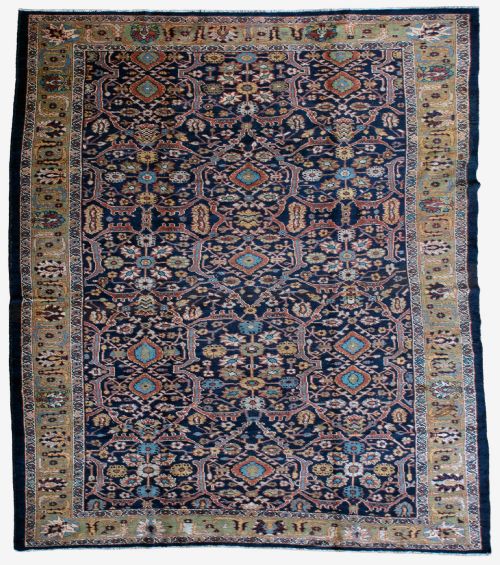
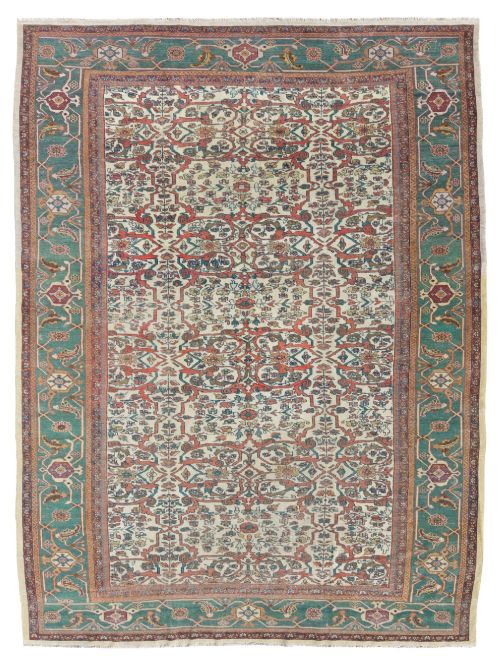
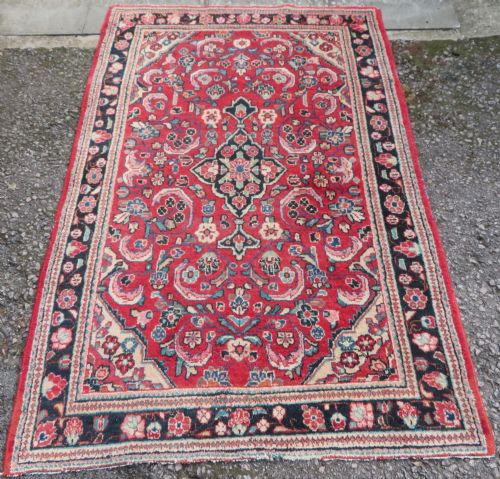
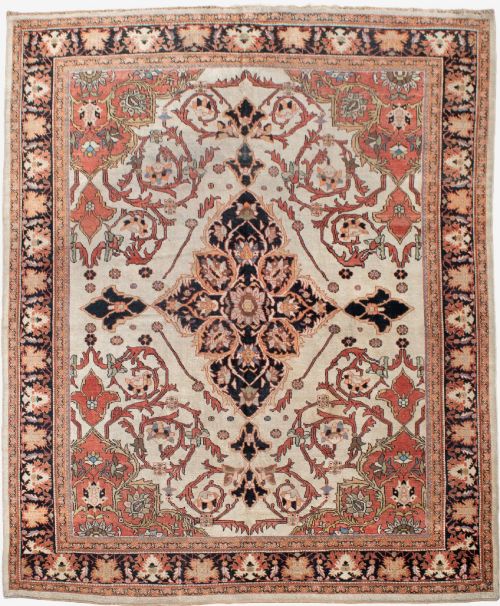
When searching for a vintage sultanabad rug, buyers encounter grand floor coverings originating from Western Persia during the nineteenth and early twentieth centuries. These pieces encompass related regional weaving styles such as Mahal and Ziegler, often produced for export markets to suit European and American interiors.
The pieces appearing on this page span several decades, stretching from the late nineteenth century through to the 1930s. Large room-size carpets and smaller area rugs both appear, featuring traditional Persian motifs scaled up for spacious Western drawing rooms.
How they were made
Weavers constructed these carpets using wool pile knotted onto cotton foundations, ensuring durability and structural stability for large formats. The materials were hand-spun and dyed using natural colourants, yielding nuanced tones that soften gracefully over time.
The production involved workshops in the Sultanabad region, where weavers adapted classical Persian designs with open fields and oversized floral motifs. This deliberate scaling distinguishes the output from tighter village or city carpets of the same era.
Nineteenth-century trade records show these Persian carpets were tailored in size specifically to fit high-ceilinged Victorian drawing rooms in Manchester and London.
What varies in quality
Quality in these carpets rests upon the balance of the design, the subtlety of the colour palette, and the fineness of the knotting. Better examples display harmonious proportions where large palmettes and scrolling vines command the field without appearing crowded.
The integrity of the wool and the evenness of the wear also dictate the standing of a piece. Examples retaining good pile depth and original edge finishes demonstrate superior preservation compared to heavily restored specimens.
The Vintage Sultanabad Rug Glossary
- Sultanabad
- A carpet-producing region in West Persia known for large-scale floral designs created for the Western market. Pieces from this area are prized for their decorative adaptability.
- Mahal
- A designation for rugs and carpets woven in the villages surrounding Sultanabad, often sharing similar aesthetic traits and robust wool construction. They frequently feature all-over botanical patterns.
- Ziegler
- A reference to the Manchester firm Ziegler and Co., which established commercial production in Persia during the nineteenth century. These carpets typically exhibit soft pastel or muted colour palettes.
- Pile
- The upright loops or cut ends of yarn that form the usable surface of a carpet. In antique rugs, the height and density of this layer influence the overall texture and durability.
Vintage Sultanabad Rug: Frequently Asked Questions
How do I clean a sultanabad rug?
Vacuum gently without a rotating brush to prevent pulling the wool fibres. Professional specialist cleaning remains essential for addressing deep-seated dirt.
Avoid chemical spot treatments or soaking the cotton foundation. Prompt attention to spills prevents permanent staining.
Can I place these rugs in high traffic areas?
These carpets tolerate normal foot traffic in living rooms and studies due to their sturdy wool construction. Placing a quality underlay beneath the carpet reduces friction and wear.
Keep them away from damp environments and prolonged direct sunlight to preserve the natural dyes.
How do I distinguish a Sultanabad from a Mahal?
Sultanabad and Mahal rugs share an origin in the same West Persian district, leading to overlapping stylistic traits. Distinctions often rely on finer knot density and more expansive floral compositions in pieces designated as Sultanabad.
Mahal carpets frequently display slightly more rustic village characteristics. Both categories offer the grand scale sought by interior designers.
What interior settings suit these carpets?
The muted palettes and oversized motifs allow these carpets to anchor both traditional and contemporary spaces. They complement wooden flooring and neutral walls without overwhelming the room.
Large formats work effectively in reception rooms, while smaller area rugs define seating zones within open-plan spaces.