




Terracotta Woven Kilim Carpet
A terracotta woven kilim carpet brings graphic tribal patterns and flat-woven warmth into a room.
Terracotta Woven Kilim Carpet
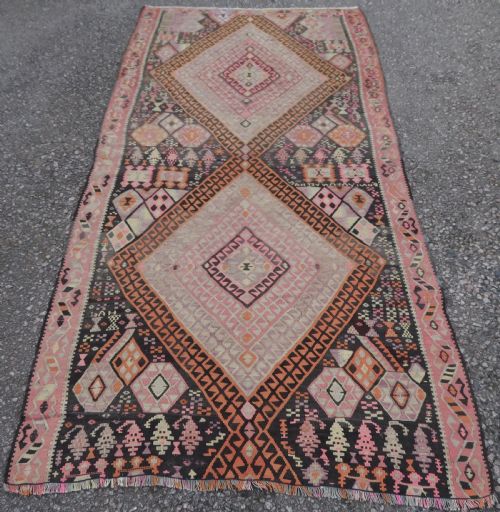
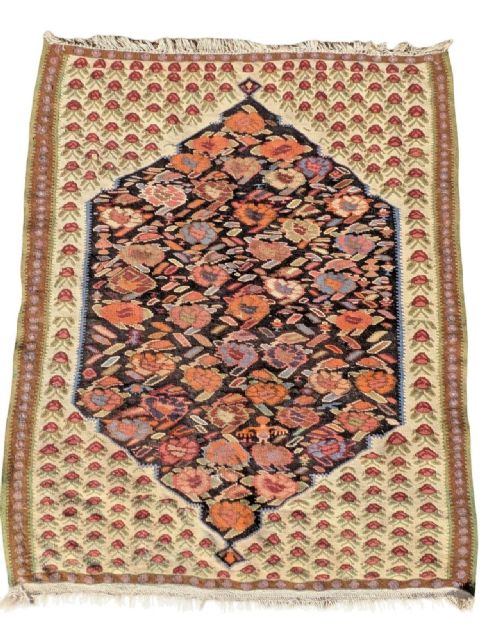
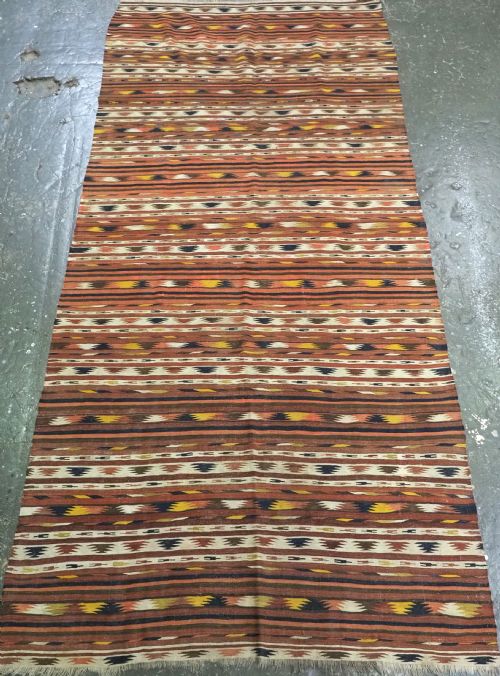
A terracotta woven kilim carpet encompasses flat-woven rugs and panels originating from Persian, Caucasian, Central Asian, and Balkan traditions. Buyers examine pieces ranging from nineteenth-century tribal panels to larger room-sized floor coverings produced into the twentieth century. The selections on this page highlight regional variations like Pirot, Shahsavan, and Yomut Turkmen flatweaves.
Most examples appear as runners, large room-sized carpets, or smaller storage bag panels and covers. These textiles utilise traditional banded, medallion, and repeat geometric layouts reflecting their specific regional heritage. Collectors encounter formats spanning from long corridor runners to square area rugs.
Materials and construction methods
These flat-woven textiles are constructed primarily from wool, cotton, and hand-spun wool fibres. Artisans interlaced warp and weft threads without pile to create durable, reversible floor coverings and storage panels. Certain pieces incorporate supplementary weftwork decoration and soumak techniques for added structural complexity.
Weavers utilised natural dyes to achieve soft pastel hues, banded colourways, and terracotta tones across various regional workshops. The tight tension of the weave determines the crispness of graphic motifs such as eye-dazzler patterns and lattice repeats.
Nomadic weavers occasionally incorporated protective symbols into their storage bags to safeguard household belongings from sudden desert sandstorms.
Assessing craftsmanship and condition
Quality rests in the precision of the flat weave and the integrity of the long kilim ends. Finer weaves display sharper geometric lines and tightly packed structural warps and wefts. Examples featuring intact original kilim finishes and complete storage panels command greater interest from experienced collectors.
Visual appeal relies heavily on the depth and condition of the soft pastel or terracotta colours. Pieces retaining harmonious dye palettes and balanced repeat or medallion layouts demonstrate superior workshop execution.
The Terracotta Woven Kilim Carpet Glossary
- Kilim
- A flat-woven rug or carpet produced without a pile by tightly interlocking warp and weft threads. These textiles serve as floor coverings, wall hangings, and functional storage panels across tribal regions.
- Soumak
- A brocaded flat-weave technique where decorative weft threads are wrapped around the warp threads. This method creates a textured surface that feels thicker and heavier than a standard plain-weave kilim.
- Mafrash
- A large tribal storage bag used historically for transporting household goods during nomadic migrations. Surviving panels and complete pieces are frequently utilised today as decorative flat-weaves.
- Palas
- A traditional flat-woven rug structure often associated with Turkmen weaving traditions. These textiles feature durable slit-tapestry or soumak constructions.
- Warp
- The stationary vertical threads stretched across a loom that form the foundational skeleton of the carpet. Weft threads are woven horizontally through these structural elements.
Terracotta Woven Kilim Carpet: Frequently Asked Questions
How do I clean a kilim carpet?
Gentle surface vacuuming without a beater bar removes loose dirt from the flat weave. Professional textile cleaning is recommended for addressing deeper maintenance needs.
Water and harsh chemical detergents can damage the hand-spun wool and natural dye colours. Spot cleaning requires mild soap applied with extreme caution by an experienced textile conservator.
Are these carpets suitable for heavy foot traffic?
The sturdy flat-woven construction of wool and cotton warps handles everyday walking well in domestic settings. Using a quality underlay prevents slipping and cushions the textile against hard flooring.
Placing these rugs in moderate traffic areas preserves the structural integrity of the flat weave. Hallways and living rooms accommodate runners and room-sized pieces effectively.
How do I identify a Pirot kilim?
Pirot flat-weaves originate from the Balkans and typically display intricate lattice, repeat, or large medallion designs. These pieces are recognised for their refined craftsmanship and large room sizes.
Soft pastel colourways and symmetrical geometric motifs distinguish these European flatweaves from Caucasian or Persian tribal counterparts.
What is the difference between a kilim and a soumak?
A kilim utilises a flat slit-tapestry weave where the weft threads are beaten down tightly to cover the warps. This creates a smooth, identical pattern on both sides of the textile.
Soumak weaving involves wrapping decorative weft threads over and under the warp threads in a herringbone pattern. This technique leaves floating threads on the reverse side and adds tactile texture to the face.