



Antique Qashqai Kilim
An antique qashqai kilim brings the bold geometric patterns of South-West Persia into a room through flat-woven wool textiles.
Antique Qashqai Kilim
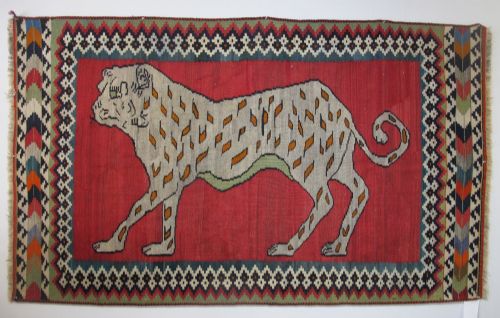
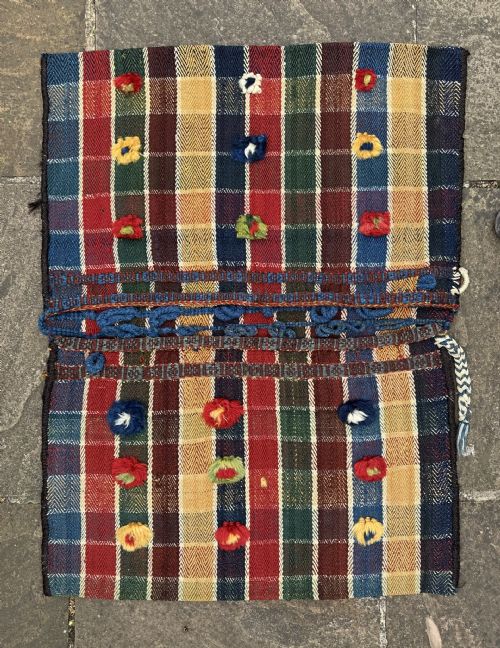
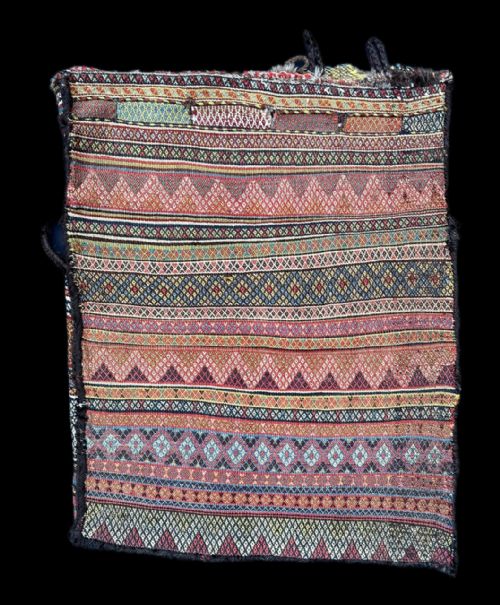
When you search for an antique qashqai kilim, you look at flat-woven tribal textiles originating from the Fars province of South-West Persia. These pieces include utilitarian items such as storage-bags, salt-bags, saddle-bags, eating cloths known as sofreh, and floor rugs.
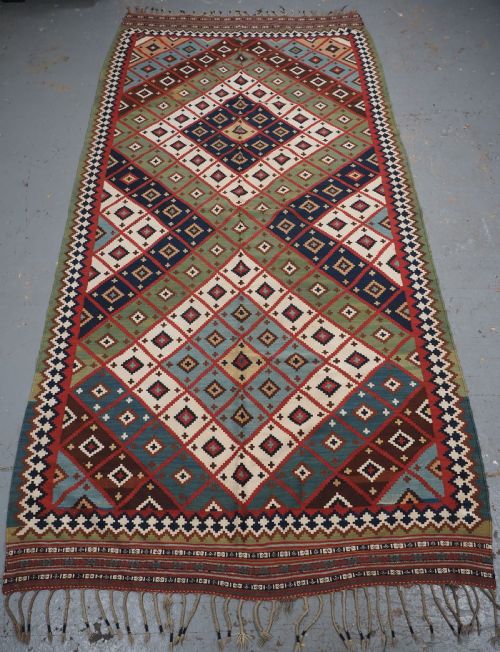
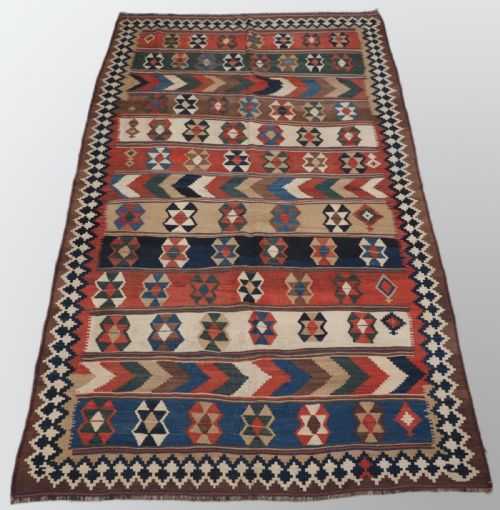
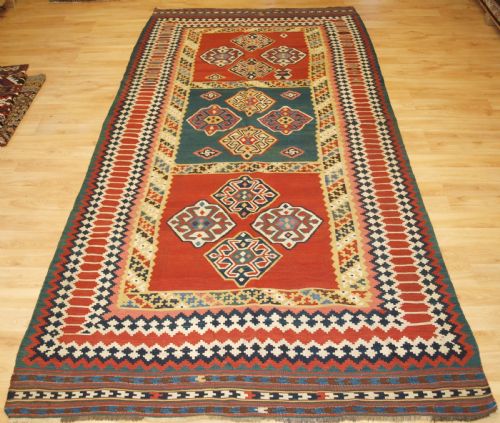
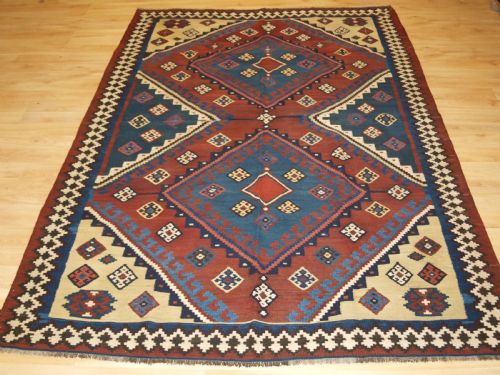
The version you are most likely to meet on this page is a flat-weave produced by nomadic and confederacy groups during the late nineteenth century and the early twentieth century. Examples often display distinct tribal patterns like banded designs, compartment layouts, eye dazzler motifs, and diamond medallions.
How they were made
Weavers constructed these flat-weaves using hand-spun wool and cotton, relying on slit-weaving techniques to create sharp geometric colour transitions without pile. Natural dyes provided the deep hues seen across the tribal output of the Fars province.
The integration of wool and natural dyes allowed nomadic makers to produce durable household items and portable containers that sustained daily utility while maintaining complex graphic compositions.
What varies in quality
Quality in these flat-weaves rests upon the precision of the slit-weave construction and the crispness of the graphic design. Tighter weaving and balanced proportions separate standard utility bags from more ambitious artistic panels.
The vibrancy and depth of the natural dyes dictate the visual strength of the piece. Saturation and harmony across the wool yarns elevate certain specimens above others from the same period.
The Antique Qashqai Kilim Glossary
- Kilim
- A flat-woven textile produced without a pile by interlocking horizontal weft threads over vertical warp threads. This technique creates a smooth, reversible surface.
- Sofreh
- A woven eating cloth or spread used by nomadic tribes for communal meals. These pieces often feature specific ritual or utilitarian layouts.
- Moj
- A type of tribal cover or blanket woven in characteristic banded or patterned sections. They represent the domestic textile output of South-West Persia.
- Tayefeh
- A subtribe or clan within the larger tribal confederacy. Specific groups such as the Shekarlu and Darrehshuri produced distinct regional variations.
Antique Qashqai Kilim: Frequently Asked Questions
How were antique qashqai kilims used?
These textiles served practical functions within nomadic daily life, acting as floor coverings, blankets, and storage containers for camp equipment.
Items like salt-bags and saddle-bags carried essential goods across the Fars province, while sofreh functioned as dedicated cloths for eating and food preparation.
Where do antique qashqai kilims come from?
The pieces originate from South-West Persia, specifically the Fars province and the territories inhabited by the Qashqa'i confederacy and its associated tayefeh.
Nomadic and village weavers within this region produced the flat-weaves using local materials and traditional tribal motifs.
How do I live with an antique qashqai kilim?
These flat-weaves suit low-traffic floor areas, or they can be hung on walls as decorative graphic panels to protect the weave from heavy wear.
Placing a breathable underlay beneath a rug prevents slipping and reduces friction between the wool and hard flooring.
How do I tell different designs apart?
Design variations include banded layouts, compartment grids, eye dazzler patterns, and central diamond medallions.
Specific functional pieces like saddle-bags and storage-bags display formats adapted to their original transport and holding purposes.