



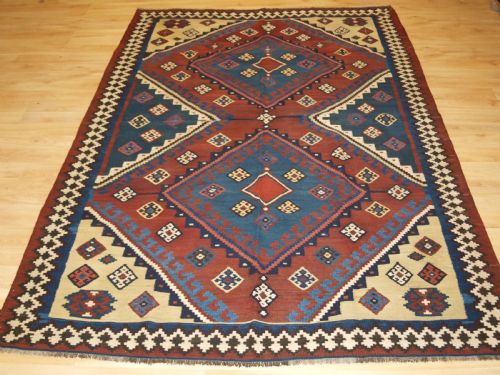
Handwoven Wool Qashqai Kilim
These handwoven wool qashqai kilim textiles bring vibrant South Persian tribal artistry into your home through flat-woven rugs and bags.
Handwoven Wool Qashqai Kilim
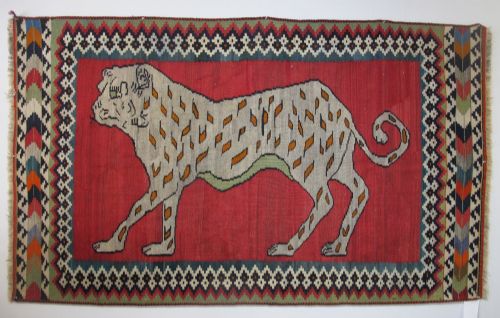
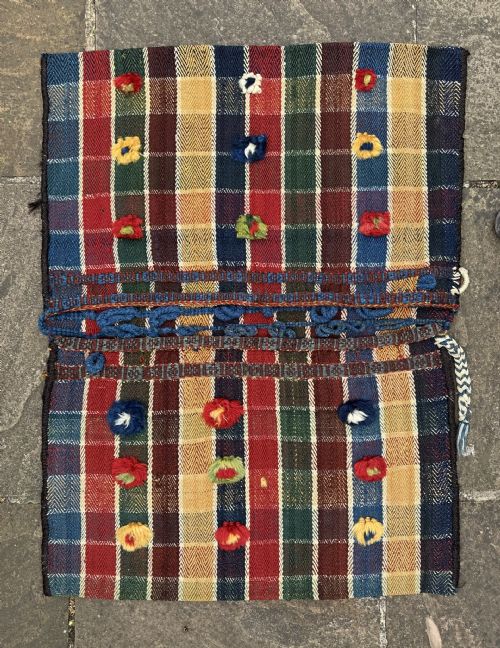
When you search for handwoven wool qashqai kilim pieces, you encounter flat-woven rugs, saddle-bags and salt-bags originating from the Fars province in South-West Persia. These textiles are produced by nomadic tribes such as the Shekarlu and Darrehshuri within the Qashqa'i Confederacy, showcasing traditional tribal aesthetics.
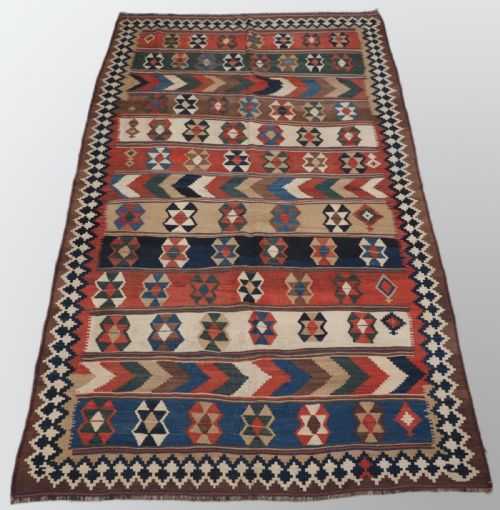
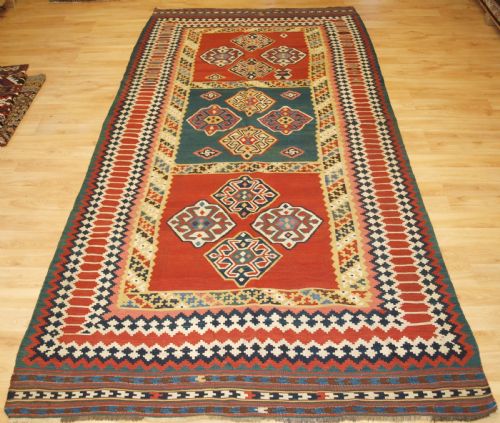
The most common formats on this page are antique kilim rugs featuring distinct banded, compartment, diamond medallion or eye dazzler designs, alongside utilitarian items like saddle-bags. Dating predominantly from the late nineteenth and early twentieth centuries, these works represent enduring nomadic weaving traditions.
How they were made
Makers construct these flat-weaves using hand-spun wool alongside cotton foundations, employing intricate slit-weave techniques to create sharp geometric patterns. The reliance on natural dyes provides the rich, variable colour palettes seen across the pieces from South Persia.
Nomadic weavers produce these textiles on portable ground looms without pile, resulting in a lightweight, durable fabric suited for both floor coverings and storage containers. The careful selection of wool and dyestuffs ensures the structural integrity of each kilim and bag.
Listings span the nineteenth and twentieth centuries, incorporating materials such as hand-spun wool, cotton, and natural dyes.
What varies in quality
The distinction between average and exceptional pieces rests upon the precision of the geometric layout and the depth achieved through natural dyes. Finer examples display meticulous control over complex motifs such as lion figures or intricate compartment designs.
The handling of the hand-spun wool and the tightness of the weave also dictate the calibre of a tribal textile. Superior specimens retain crisper pattern definition and more harmonious colour transitions across the field.
The Handwoven Wool Qashqai Kilim Glossary
- Kilim
- A flat-woven textile produced without a pile by tightly interweaving warp and weft strands. This technique creates a lightweight fabric utilised for rugs and decorative hangings.
- Warp
- The stationary vertical threads stretched upon the loom that form the structural foundation of the textile. The weft threads are passed horizontally through these foundational strands.
- Weft
- The horizontal threads passed through the warp to create the pattern and colour blocks of the flat-weave. In these pieces, weft threads are tightly packed to conceal the warp entirely.
- Natural Dyes
- Colourants derived from plant, insect or mineral sources rather than synthetic chemistry. These materials yield rich, complex tones that age gracefully over decades.
- Tayefeh
- A clan or subtribe within the Qashqa'i Confederacy. Identifying a specific tayefeh points to distinct regional weaving traditions in the Fars Province.
Handwoven Wool Qashqai Kilim: Frequently Asked Questions
What is a qashqai kilim?
A hand-woven flat rug produced by nomadic tribes in South-West Persia, characterised by geometric motifs and durable construction.
These textiles serve as functional floor coverings or decorative wall pieces, reflecting centuries of tribal heritage.
How were antique saddle-bags used?
Nomadic families utilised these woven pouches for transporting belongings and storing provisions during seasonal migrations across the Fars Province.
Mounted on animals, the paired compartments held personal items, grain or household goods securely on the journey.
How do I care for a wool kilim?
Protect the flat-weave by vacuuming gently without a rotating brush and avoiding direct, prolonged exposure to harsh sunlight.
Professional cleaning tailored to antique textiles helps preserve the natural dyes and wool fibres over the years.
How do I identify a tribal design?
Look for characteristic geometric layouts, including diamond medallions, banded borders, compartment grids and optical eye dazzler patterns.
These symbols originate from the artistic vocabulary of the Qashqa'i Confederacy and related subtribes.