


Terracotta Porcelain Vase
These terracotta porcelain vase listings bring together diverse Meiji period Japanese works and Victorian British pieces to anchor a room.
Terracotta Porcelain Vase
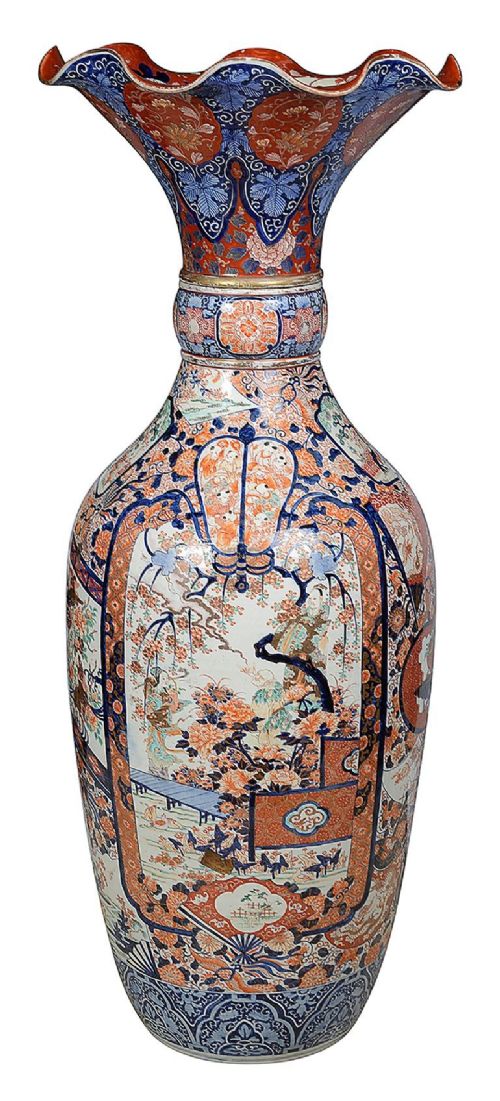
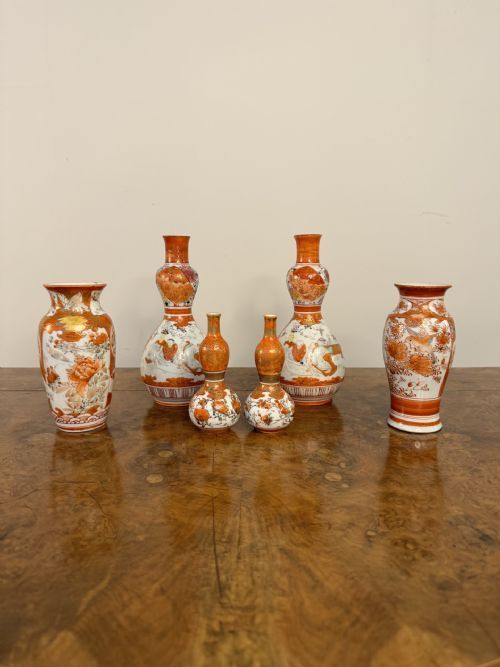
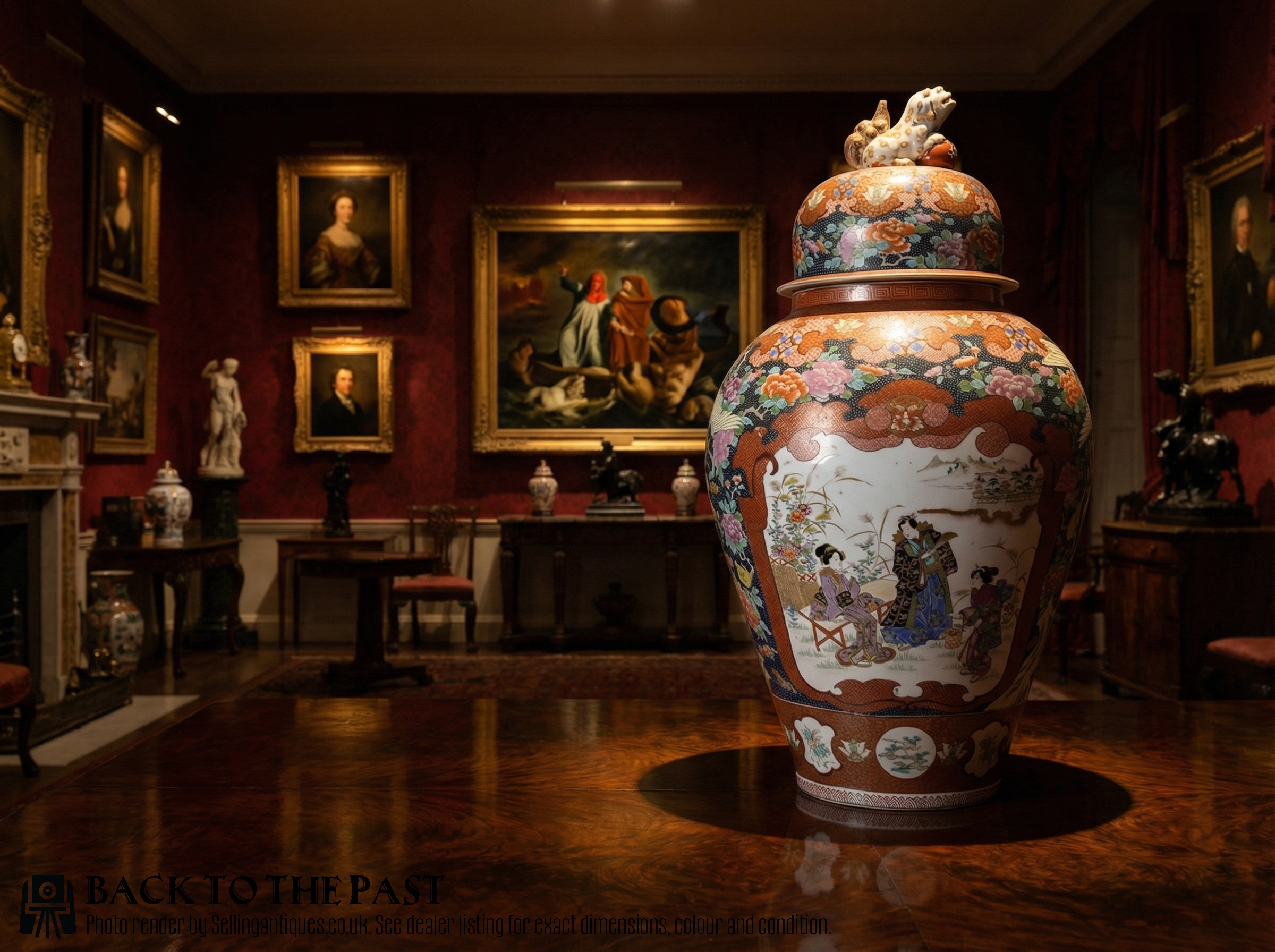
When searching for a terracotta porcelain vase, collectors encounter a selection spanning the eighteenth, nineteenth and early twentieth centuries. The pieces appear in forms such as large floor vases, bulbous vessels, lidded urns, decorative ewers and table lamps.
The objects originate primarily from Japanese traditions including Imari, Kutani, Satsuma, Arita and Fukagawa styles, alongside Victorian British works from makers such as Royal Crown Derby and Royal Dux. These vessels range from small hand-painted cabinet pieces to floor-standing examples measuring nearly five feet in height.
Many of these vessels have been adapted over time into lamp bases while retaining their original ceramic bodies and painted surfaces. Buyers find both single statement pieces and matched pairs featuring hexagonal shapes, geometric inset panels and dragon or phoenix motifs.
Materials and methods of construction
The physical foundation rests on porcelain and ceramic bodies shaped into vases, ewers and urns. Artisans applied glazes, hand-painted pigments and enamel detailing directly to the ceramic surfaces.
Decoration incorporates gold leaf, gilding and brass mounts to highlight specific architectural and figurative elements. Certain examples include lacquer over-paint and aesthetic raised gold decor applied over the glazed porcelain.
Firing techniques achieve the distinct colour palettes seen in Imari and Kutani wares, while larger floor vases utilise robust construction methods to support towering heights.
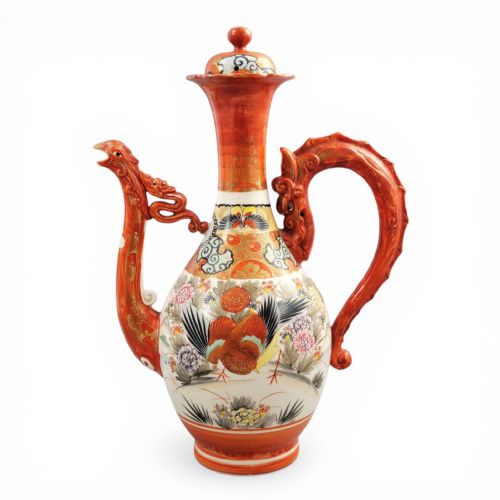
A dragon ewer breathes fire through its phoenix spout, proving that nineteenth-century ceramists took mythological cross-pollination very seriously indeed.
Distinctions in design and execution
The scale and ambition of the piece dictate its visual impact, as seen in the contrast between small cabinet vases and towering floor vessels or large lidded urns. Preservation of the original glaze, lacquer over-paint and gilding maintains the integrity of the work.
Royal Crown Derby·Royal Dux·Samuel Alcock·Fukagawa
The Terracotta Porcelain Vase Glossary
- Imari
- A style of Japanese porcelain decorated in underglaze blue, iron red, gold and additional colours. This aesthetic became popular in Europe during the export trade.
- Kutani
- A style of Japanese coloured porcelain known for bold palettes and detailed figurative or floral scenes. These wares often date from the Meiji period.
- Satsuma
- A type of Japanese pottery with a pale, ivory-crackled glaze decorated with polychrome enamels and gilding. Pieces often depict historical or natural subjects.
- Ewer
- A large jug with a wide spout used historically for water, adapted in these listings as a decorative vessel or lamp base.
- Aesthetic Movement
- A late nineteenth-century design current emphasising art for art's sake. It draws heavily on Japanese visual motifs.
Terracotta Porcelain Vase: Frequently Asked Questions
What periods do these vases come from?
The selection spans from the eighteenth century through the Victorian era and into the early twentieth century. Most examples cluster around the nineteenth century and the Japanese Meiji period.
Dates are established through stylistic markers, glaze types and historical production records associated with Japanese export wares and British manufacturers.
How were these vases used originally?
These vessels served as ornamental display pieces in grand interiors during the Victorian and Meiji periods. Ewers functioned as decorative tableware or ornamental water jugs.
Many pieces were later converted into table lamps during the nineteenth and twentieth centuries to suit changing domestic lighting needs.
Are these pieces painted by hand?
Many examples feature detailed hand-painted scenes, incorporating enamel colours, lacquer over-paint and raised gold decoration. Artisans applied these pigments directly over the glazed ceramic bodies.
Brushwork precision and the complexity of motifs such as dragons, phoenixes and geometric panels distinguish individual works.
How do I identify Japanese Imari and Kutani wares?
Imari porcelain typically displays a distinct palette of underglaze blue combined with iron red and gold details. Kutani wares often present bolder pictorial designs with rich enamel colours and detailed figures.
Both styles developed distinct regional characteristics during the Meiji period and earlier eras of Japanese ceramic production.