
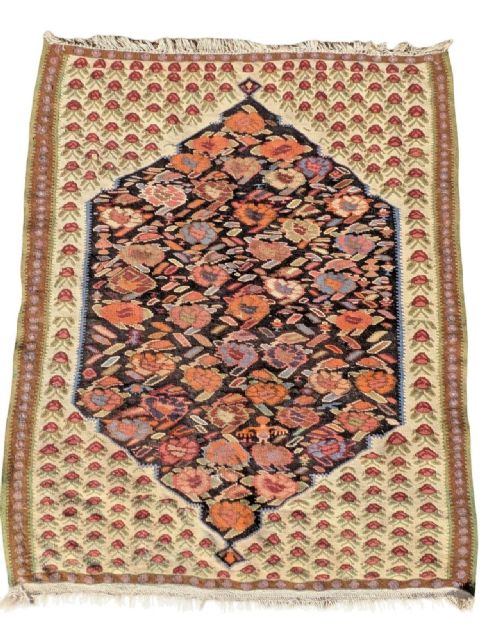
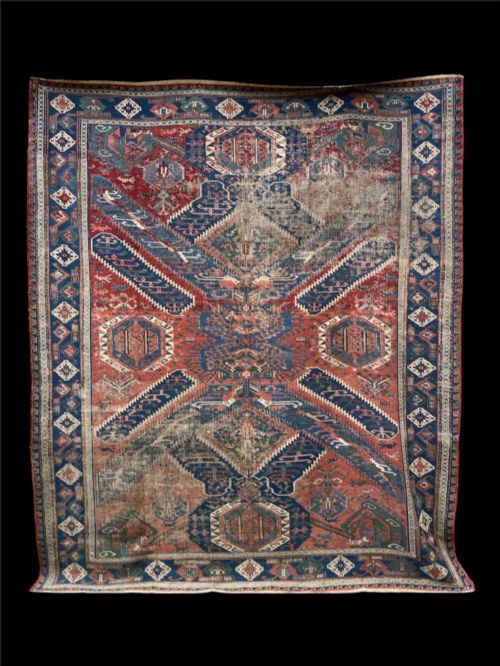


Terracotta Kilim Rug
When you search for a terracotta kilim rug, you are exploring flatwoven tribal textiles that bring rich warmth and geometric pattern to interiors.
Terracotta Kilim Rug
A terracotta kilim rug encompasses flatwoven floor coverings, cushions, and storage bags originating from nomadic and tribal weaving traditions. These pieces span from the mid-nineteenth century through the early twentieth century, showing influences from Persian, Caucasian, Anatolian, and Central Asian regions.
The selections available here rely heavily on regional styles such as Yomut Turkmen, Pirot, and Qashqai works. Buyers encounter items ranging from full room-size carpets down to small cushion covers and complete mafrash storage containers.
Many examples utilise banded designs, repeat medallions, or lattice patterns executed in flatweave or soumak techniques. Their earthy tones and graphic layouts suit both traditional spaces and modern minimalist rooms.
Materials and Weaving Techniques
These textiles rely on wool and hand-spun wool for their foundations and surface designs, often paired with cotton for structural integrity. Weavers created the flatweave structure by tightly interlocking weft threads over warp threads to build crisp geometric motifs without a pile.
Specialised techniques such as soumak wrapping and banded weft work add texture and durability to storage bags, tent bands, and long rugs. Natural dyeing methods yielded the soft colour palettes seen across Caucasian and Balkan folk art pieces.
Listings feature wool, hand-spun wool, and cotton materials across periods spanning the nineteenth and twentieth centuries.
Assessing Quality and Execution
Quality in these flatweaves rests upon the tightness of the weave and the precision of the geometric motifs. Finer weaves allow for sharper lines in complex medallions and lattice layouts, marking superior regional workshops.
The integrity of the original structure also defines the piece, particularly when items are constructed from assembled panels or retain original backs and tassels. Preservation of the soft colour palette and structural soundness elevate individual textiles.
The Terracotta Kilim Rug Glossary
- Kilim
- A flatwoven carpet or rug made without a pile by tightly interweaving warp and weft strands. This technique produces lightweight textiles with identical patterns visible on both sides.
- Mafrash
- A rectangular storage chest or bag used by nomadic tribes for bedding and household goods. Surviving panels are frequently converted into smaller rugs or cushions.
- Soumak
- A brocaded flatweaving technique where weft threads are wrapped around the warp threads in a diagonal pattern. This method adds considerable thickness and durability to the textile.
- Torba
- A small hanging bag traditionally used in nomadic tents for storage. They often feature banded designs and elaborate flatweave ends.
- Warp
- The stationary vertical threads stretched onto a loom before weaving begins. The weft threads pass over and under these foundational strands.
Terracotta Kilim Rug: Frequently Asked Questions
What is a kilim rug?
A kilim rug is a flatwoven textile produced without a pile by interworking coloured wefts and warps. These pieces were traditionally made by nomadic and village weavers across the Middle East, Caucasus, and Eastern Europe.
Unlike knotted pile carpets, kilims have a flat, tapestry-like surface that makes them lightweight and versatile. They served various practical purposes in nomadic life, from floor coverings to animal trappings and storage containers.
How were tribal rugs used?
Tribal rugs and flatweaves fulfilled essential functional roles within nomadic dwellings, serving as ground cover, blankets, and dividers. Smaller pieces were woven specifically as storage bags, saddle bags, and cushion faces.
Containers like mafrashes and torbas held household belongings inside tents during migrations. Today, these surviving bags and panels are appreciated as decorative interior textiles.
How do I care for an antique flatweave?
Care for antique flatweaves requires gentle handling, regular light vacuuming without a rotating brush, and the use of a quality underlay to prevent slipping. Keeping them out of direct sunlight preserves the natural dyes.
Professional cleaning designed for antique textiles ensures wool fibres remain strong without damaging the structure. Rotating the rug periodically promotes even wear in high-traffic areas.
How can I tell regional styles apart?
Regional styles differ through distinctive colour palettes, specific geometric motifs, and structural weaving variations. Caucasian and Balkan pieces often display crisp lattices and soft tones, while Turkmen and Baluch works feature dark reds and banded repeat patterns.
Examining the handling of the wool, the fineness of the flatweave, and the construction of the ends provides clues to the origin. Each weaving group passed down specific pattern vocabularies through generations.