


Terracotta Geometric Wool Rug
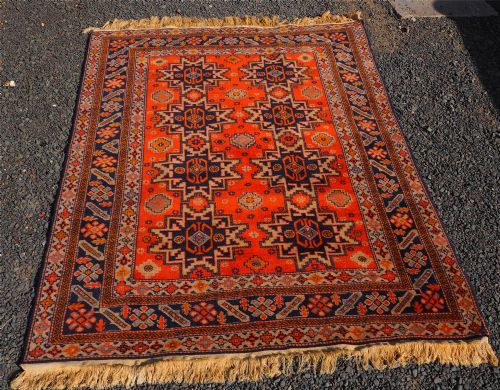
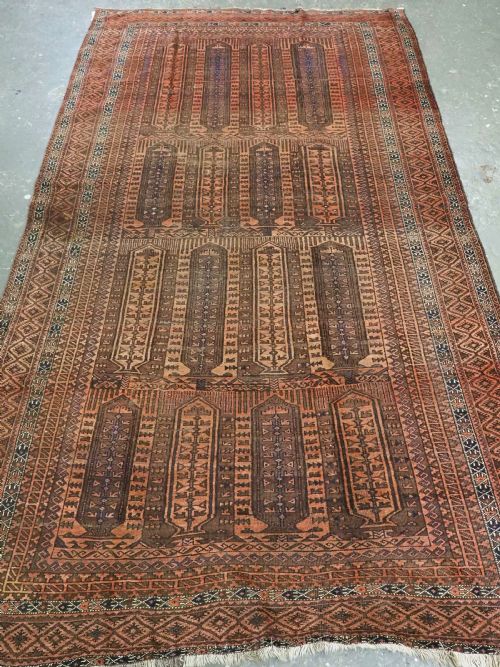
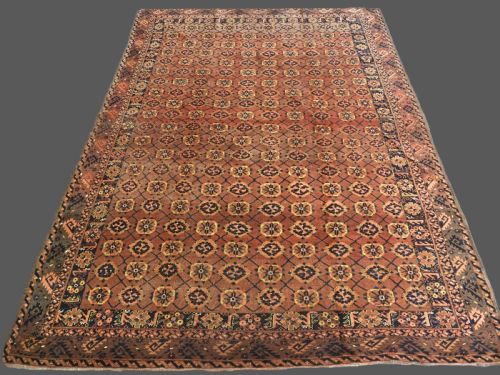
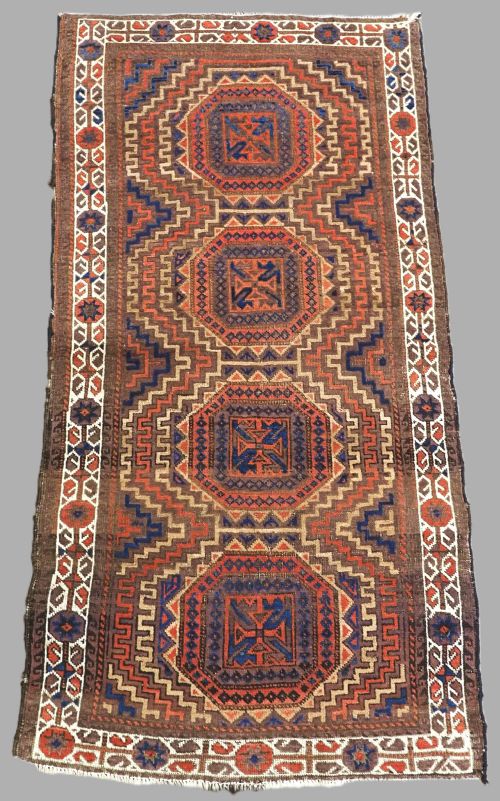
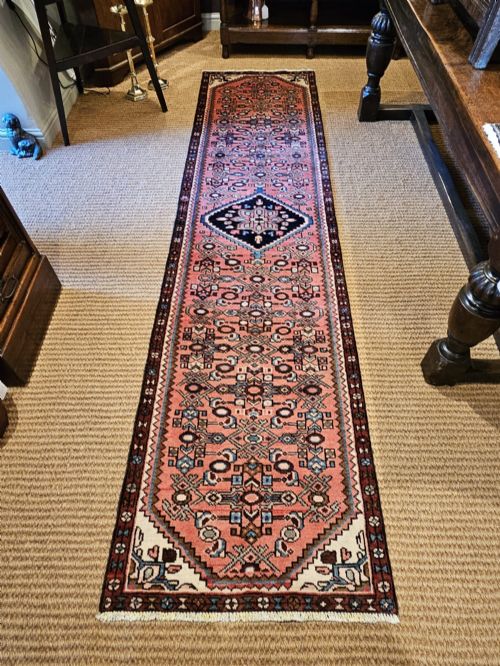
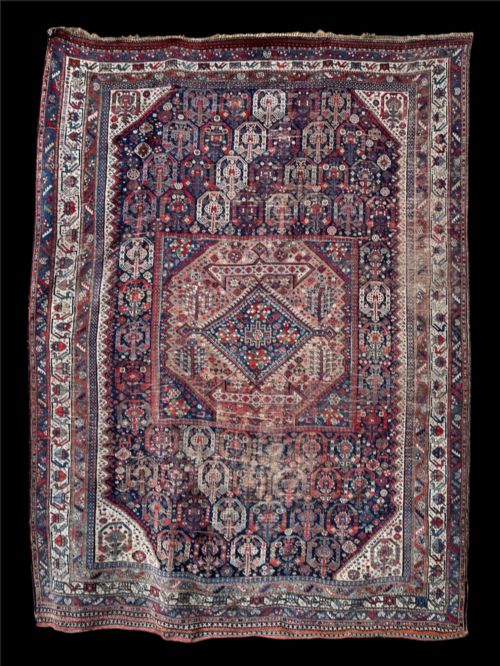
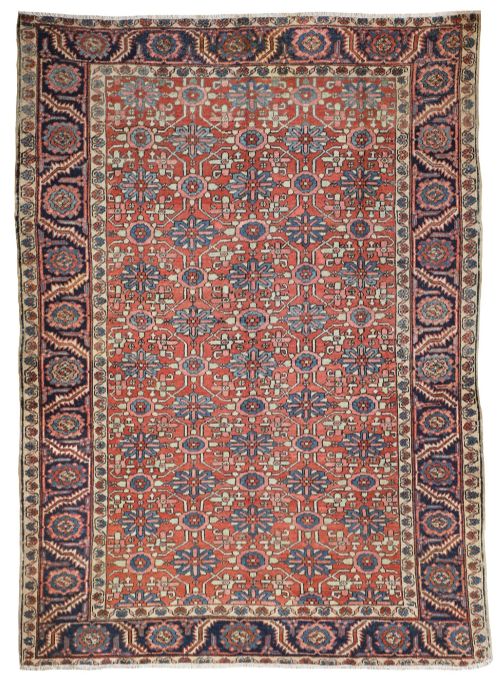
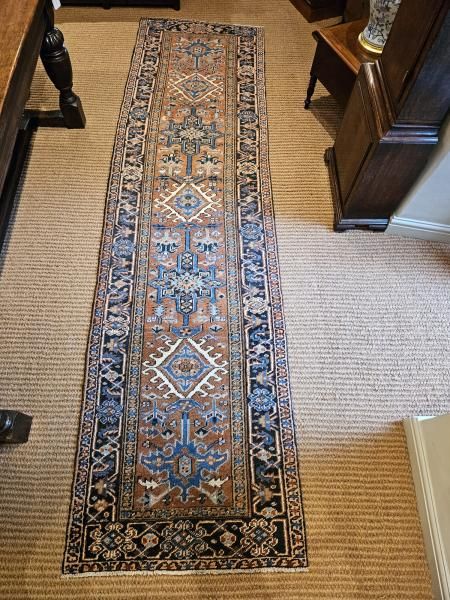
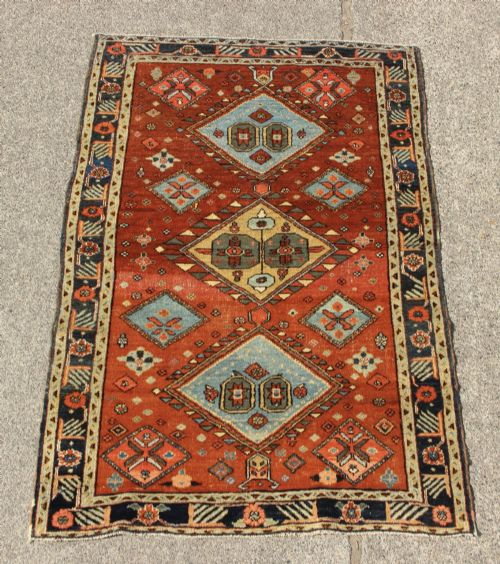
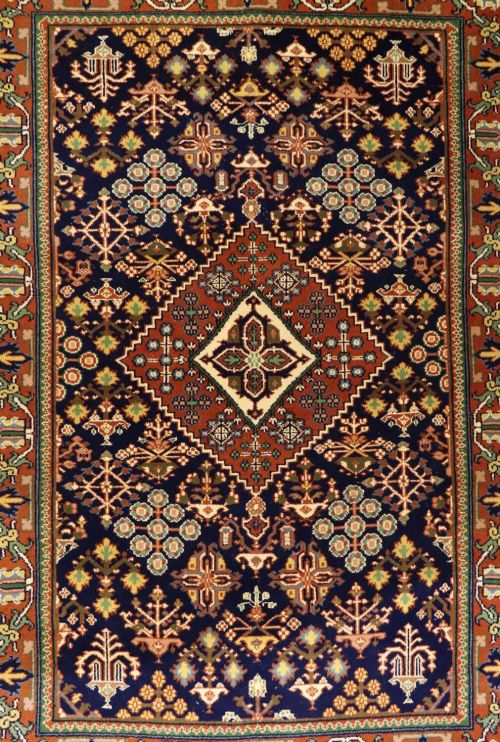
These terracotta geometric wool rug selections bring centuries of tribal weaving traditions into modern interiors through bold medallions and earthy tones.
Terracotta Geometric Wool Rug
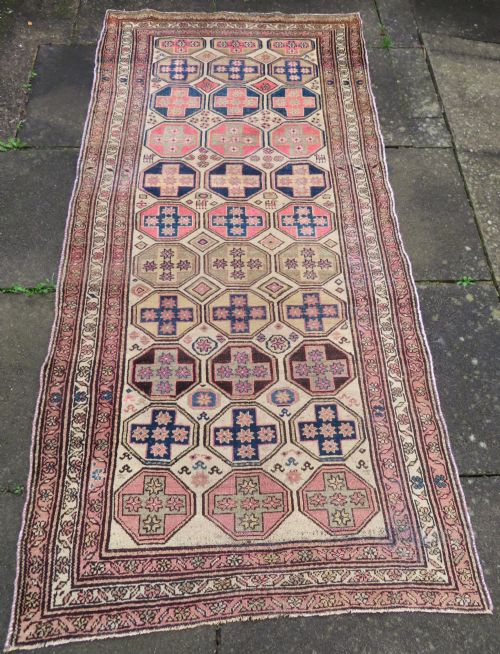
A terracotta geometric wool rug represents centuries of nomadic and village weaving traditions originating primarily across Persia, the Caucasus, and Central Asia. These floor coverings bridge utility and art, featuring characteristic rectilinear patterns, medallions, and tribal motifs woven by hand.
The selections available here span from the late nineteenth century through to the early decades of the twentieth century. Forms range from large room-sized carpets and square mats down to narrow runners, saddle-bags, and tent door rugs created by specific tribal confederacies and village communities.
Materials and construction
These textiles rely principally on wool foundations and piles, sometimes incorporating cotton or camel hair for structural contrast and durability. Artisans utilised natural dyes derived from plants and minerals to achieve deep terracotta, madder red, and indigo hues.
Weavers knotted the wool by hand onto vertical or horizontal looms, creating dense structures designed to withstand heavy daily use. Felt and embroidery techniques also appear in specific Central Asian pieces, diversifying the tactile qualities found within the tradition.
The listings span production dates from the 1870s through the 1930s, encompassing traditional Persian, Caucasian, and Afghan tribal styles.
Distinctions in quality
The finesse of a piece depends heavily on the density of the hand-knotting and the precision of the rectilinear layout. Tighter knots allow intricate geometric medallions and sharp lines to hold their definition across the field.
Material selection and dye consistency dictate the longevity and visual depth of the textile. Pieces employing resilient wool and rich natural dyes retain their structural integrity and colour saturation better over decades of wear.
The Terracotta Geometric Wool Rug Glossary
- Gul
- A repeating octagonal or medallion motif frequently used in Turkmen and Baluch tribal carpets. This design element often serves as a clan identifier.
- Medallion
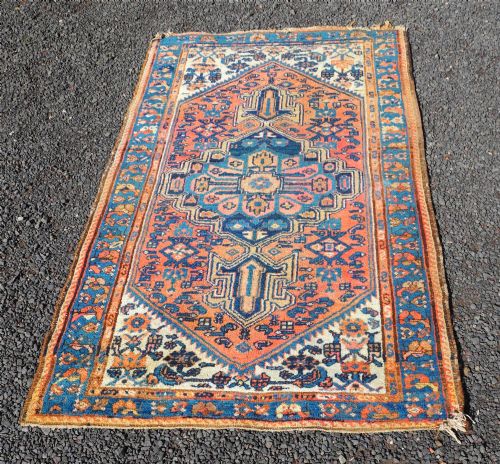
- A large central ornamental design set in the middle of the rug field. It forms the geometric focal point for many Persian village carpets.
- Warp
- The vertical threads stretched tightly on the loom before weaving begins. The pile knots are tied around these foundational strings.
- Weft
- The horizontal threads passed alternately over and under the warp threads to lock the rows of knots in place. They provide structural stability to the carpet.
- Prayer rug
- A small format textile featuring a mihrab or arch design indicating the direction of prayer. These pieces were traditionally utilised for personal devotion.
Terracotta Geometric Wool Rug: Frequently Asked Questions
Where were these tribal rugs made?
The pieces originate from diverse regions including Persia, Afghanistan, the Caucasus, and Central Asia. They were produced by nomadic tribes, village cooperatives, and regional confederacies.
Each weaving group utilised distinct regional palettes and geometric repertoires passed down through generations.
How do I care for an old wool rug?
Gentle, regular vacuuming without a rotating brush roll helps remove embedded dust and grit from the wool pile. Professional cleaning tailored for antique textiles preserves the natural lanolin and dyes.
Keeping the textile away from direct, harsh sunlight prevents premature fading of the terracotta and indigo tones.
What is a runner rug used for?
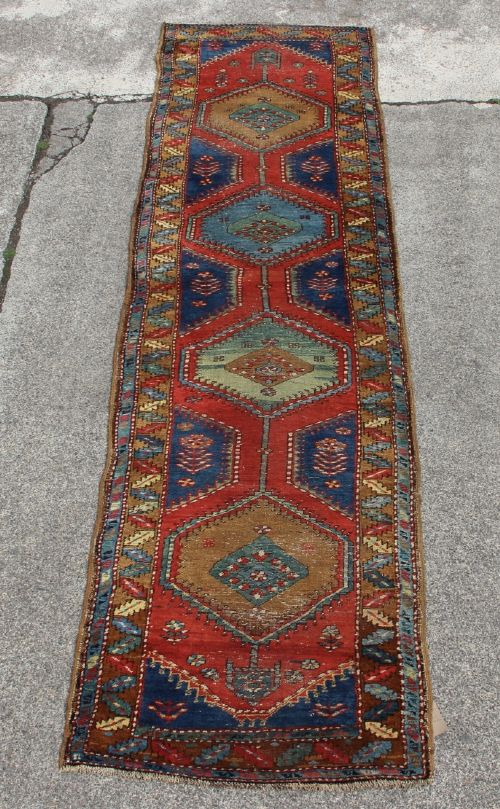
Runners provide narrow, elongated floor coverings suited for hallways, corridors, and staircases. Their proportions guide movement through domestic spaces while softening hard flooring.
They display repeating geometric fields that maintain visual interest along linear areas.
How can I tell the age of a carpet?
Dating relies on assessing the natural dye characteristics, wool quality, weave structure, and specific tribal motifs. Secondary elements such as side-cord finishes and end finishes offer further chronological clues.
Comparison with documented examples from nineteenth and early twentieth-century periods helps confirm the era of production.