




Terracotta Garden Planter
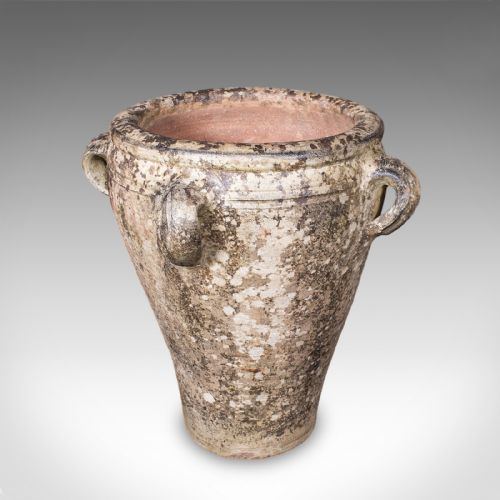
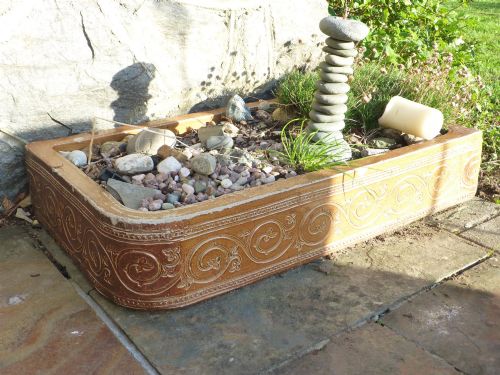
A terracotta garden planter brings immediate warmth to grounds and patios, taking the form of weathered urns, oil jars, and troughs.
Terracotta Garden Planter
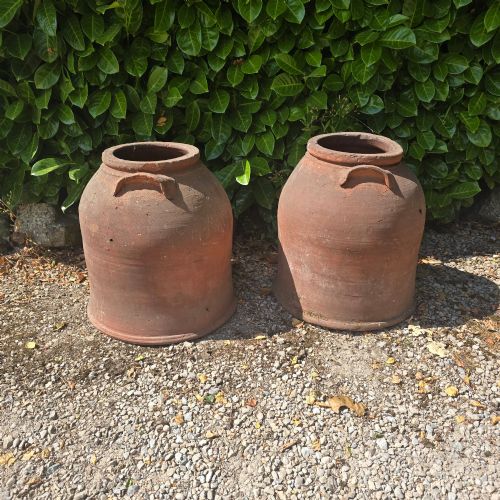
A terracotta garden planter is a durable vessel designed for outdoor flora, appearing in forms such as large oil jars, campana urns, and troughs. These pieces range from Victorian English examples to French provincial pots and Italian jardinieres.
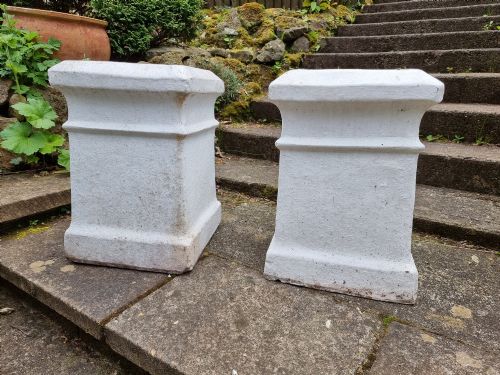
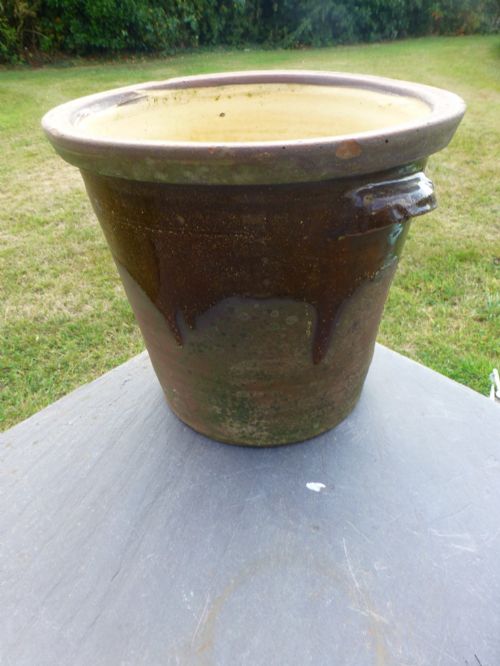
Buyers will most commonly encounter nineteenth-century terracotta pots, alongside salt-glazed stoneware pieces and specialised vessels like rhubarb forcers and strawberry planters. Many items serve double duty as garden pedestals, plinths, or decorative architectural elements.
Origins stretch across Britain, France, Italy, Portugal, and Turkey, reflecting distinct regional potting traditions. Simple garden pots sit alongside grander Grand Tour urns and utilitarian pancheons adapted for modern planting.
How They Were Made
Potters shaped these vessels from local clay, terracotta, and earthenware, utilising traditional throwing, moulding, and casting techniques. Kiln-firing transformed the raw earth into porous earthenware capable of weathering outdoor elements.
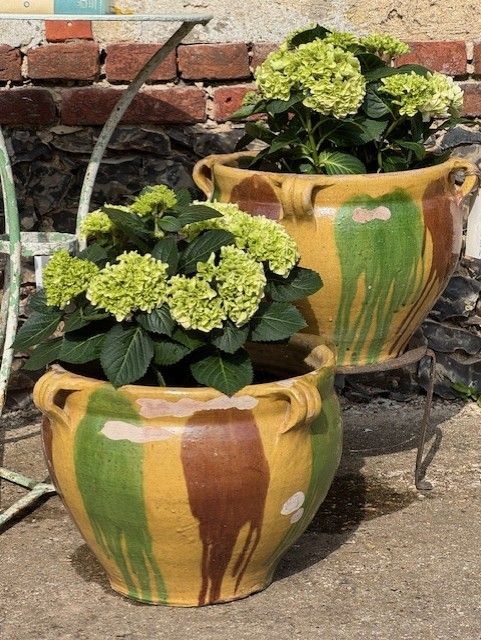
Surface treatments introduce variety, with makers applying salt glazes, slip, paint, and dribble glazes to seal or decorate the ceramic body. Many items achieve their characteristic appearance through natural ageing, weathering, and patination on porous clay.
Terracotta Garden Planter Retail Price Guide 2026
Typical asking prices for terracotta garden planter among the pieces listed under this phrase on Sellingantiques today, from the lower quarter to the upper quarter. They describe what is for sale here now, not the wider market.
Several chimney pots managed a second career holding geraniums.
What Varies in Quality
Quality rests in the crispness of moulded detail, such as carved handles, relief decoration, and the proportional balance of campana urns or oil jars. Finer pieces demonstrate superior clay preparation and even kiln-firing that limits warping.
The degree of historical surface patination and originality of the glaze also define the standing of a piece. Well-preserved maker marks, structural integrity in large oil jars, and honest weathering elevate certain examples above standard utilitarian vessels.
Dunfermline Clay Company·Guichard Carriès·Compton Pottery·Lipscombe and Co
The Terracotta Garden Planter Glossary
- Campana Urn
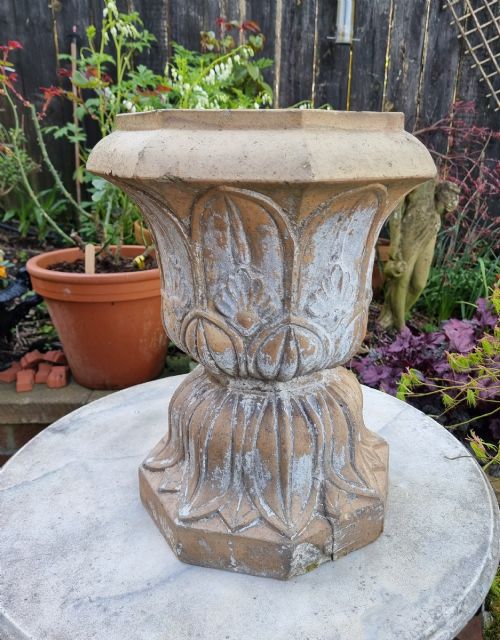
- A bell-shaped garden vessel with an everted rim, often raised on a pedestal base. This classic classical form remains a staple of formal garden design.
- Faux Bois
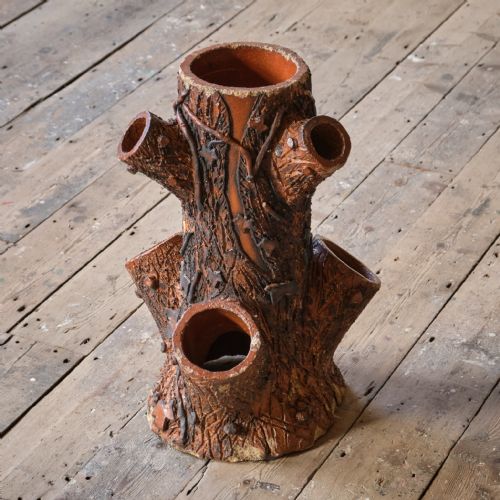
- A decorative technique mimicking wood grain on ceramic or stone surfaces. Nineteenth-century potters frequently applied this naturalistic style to strawberry planters.
- Jardiniere
- A large ornamental pot or stand designed to hold growing plants or flowers. These vessels often sit on dedicated pedestals or plinths in conservatories and gardens.
- Pancheon
- A wide, shallow earthenware vessel traditionally used in dairies but repurposed for modern planting. Their generous diameters suit shallow-rooting garden displays.
- Salt-Glazed Stoneware
- Ceramics fired at high temperatures with salt thrown into the kiln to produce a vitreous coating. This dense material offers superior frost resistance outdoors.
Terracotta Garden Planter: Frequently Asked Questions
Can terracotta planters stay outside in winter?
Most high-fired terracotta and salt-glazed stoneware tolerate winter weather, provided drainage holes remain clear and water does not pool inside to freeze and crack the clay.
Moving vulnerable earthenware indoors or elevating vessels on pot feet during freezing periods ensures long-term survival in harsher climates.
How do I clean an antique garden pot?
Gentle brushing with water removes loose soil and organic debris without disturbing the historic surface patination or aged terracotta skin.
Avoiding harsh chemical cleaners and pressure washers preserves the soft porosity of the clay and any remaining traces of old paint or glaze.
What is a faux bois planter?
Faux bois describes pottery modelled to replicate natural timber, featuring textured bark effects and simulated knots across the exterior.
Victorian makers favoured this rustic style for strawberry planters and garden troughs, blending horticultural utility with naturalistic ornament.
How do I identify a nineteenth-century urn?
Nineteenth-century pieces often display weightier proportions, hand-finished surfaces, and utilitarian marks from regional British, French, or Italian kilns.
Examining the base and interior reveals throwing rings, maker stamps, or historical wear patterns distinct from modern mass-produced gardenware.