


Tekke Turkmen Weaving
Tekke Turkmen weaving encompasses tribal textiles, rugs, and wall hangings rooted in Central Asian nomadic traditions.
Tekke Turkmen Weaving
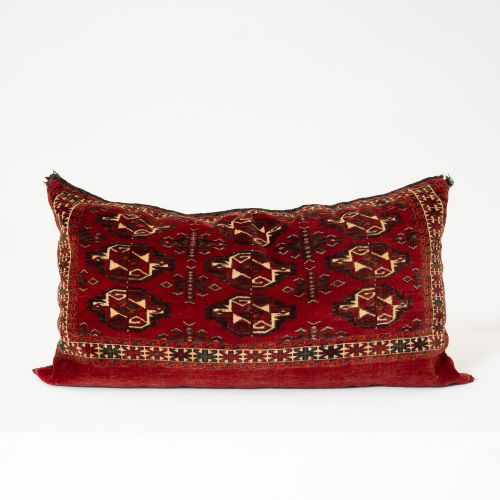
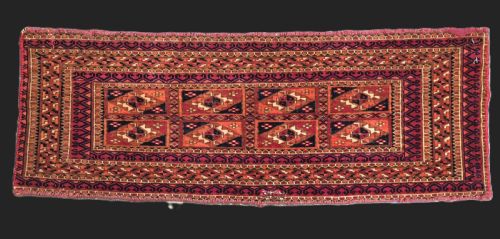
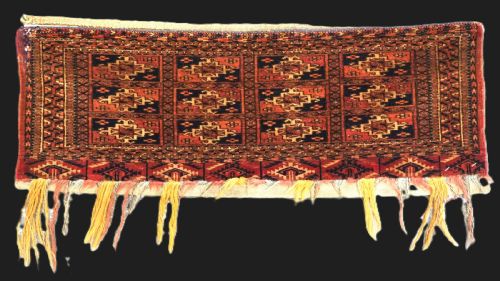
Tekke Turkmen weaving comprises utilitarian objects produced by nomadic and tribal groups across Central Asia during the nineteenth and early twentieth centuries. The selection centres heavily on domestic storage forms, including chuval cushion faces, torba bags, and mafrash fragments alongside larger carpets and tent bands.
Buyers will frequently encounter individual torba faces or complete bags featuring traditional guls, alongside larger dowry rugs and ensi tent door hangings. These pieces reflect the functional artistry of tribal life, often retaining original plain weave backs or hanging loops.
How they were made
Makers utilised wool and cotton foundations, incorporating silk highlights on specific dowry pieces to add contrast and texture. Natural dyes provide the characteristic palette across the tribal textiles.
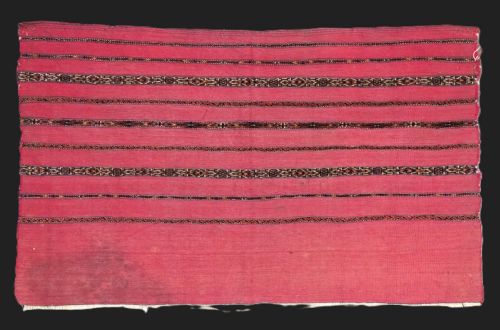
The construction relies on fine knotting techniques, producing dense pile surfaces on chuval and torba faces that withstand generations of use. Plain weave flatweaving supports the backs and structural elements of complete bags.
Listings span the eighteenth century to the early twentieth century, featuring wool, cotton, silk, and natural dye materials.
What varies in quality
Quality rests primarily on the density of the weave and the precision of the drawing within the principal guls. Examples exhibiting extremely fine knots and crisp geometric execution represent the upper tier of production.
The depth and vibrancy of the natural dyes, alongside the survival of original backs and hanging loops, elevate individual torba and chuval examples. Purity of ivory grounds and scarcity of specific gul arrangements further distinguish superior pieces.
The Tekke Turkmen Weaving Glossary
- Chuval
- A large storage bag used within nomadic tents for household belongings. These items are frequently encountered today as individual decorative faces.
- Torba
- A smaller storage bag traditionally hung on the lattice walls of a yurt. They display intricate geometric patterns and gul arrangements.
- Gul
- The primary repeating octagonal medallion motif characteristic of Turkmen tribal design. Different variations denote specific tribal lineages.
- Ensi
- A specialised tribal rug designed to hang over the doorway of a yurt. They feature distinct quartered field layouts.
- Mafrash
- A rectangular storage bale or box bag used during nomadic migration. Fragments and complete faces appear regularly in textile collections.
Tekke Turkmen Weaving: Frequently Asked Questions
How do you date these textiles?
Dating relies on assessing the wool quality, the chemical composition of the natural dyes, and the fineness of the weave. Pieces attributed to the nineteenth century often show softer wool texture and specific palette shifts.
Structural analysis helps separate mid-nineteenth-century examples from later work produced around nineteen hundred. Maker attribution remains broad, referencing tribal groups rather than individual artisans.
Where were these rugs made?
These textiles originate from Central Asia, produced by nomadic and tribal populations within the region. The Tekke tribe represents one of the primary groups associated with this weaving tradition.
Objects were created for use within traditional yurts and tents across the Turkmen lands. Surviving examples reflect the domestic culture of these nomadic communities.
Can these textiles be wall hung?
Many smaller pieces, such as torba faces and tent bands, lend themselves well to vertical display. Several surviving items retain original hanging loops attached by the makers.
Larger carpets and tent door hangings also transfer easily to domestic interiors as wall textiles. Proper mounting distributes the weight evenly across the wool foundation.