
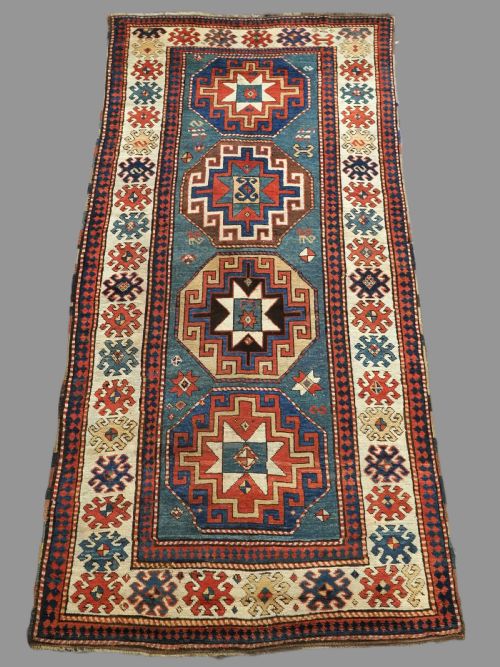
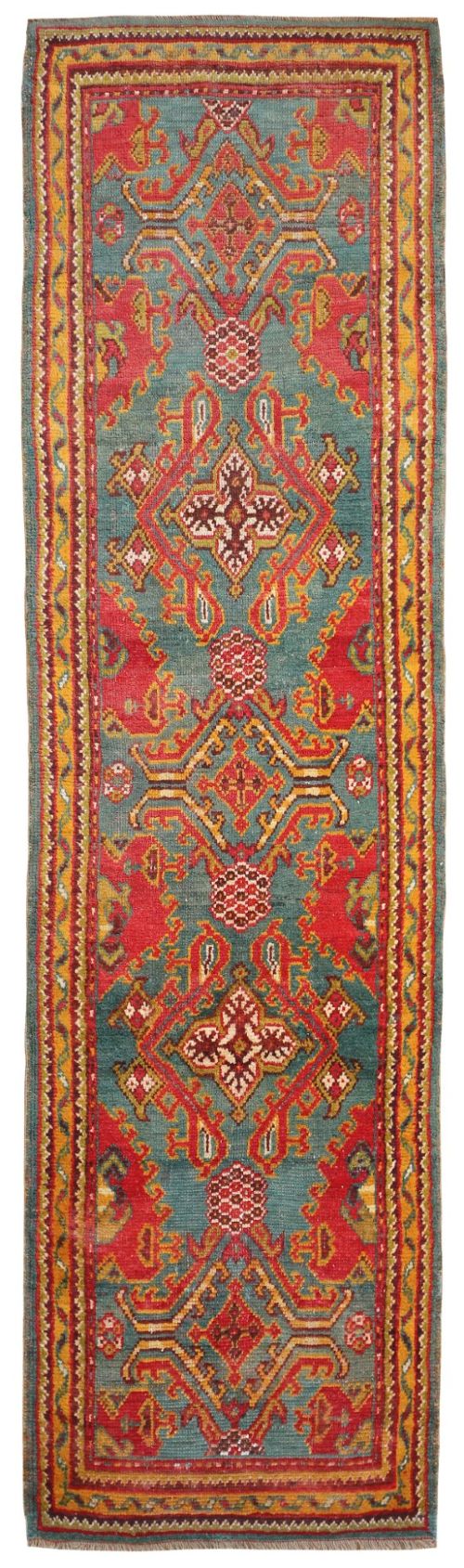


Teal Wool Carpet
A teal wool carpet brings deep colour and storied weave to a room, offering the warmth and character of older floor coverings.
Teal Wool Carpet
A teal wool carpet encompasses hand-knotted and flatwoven floor coverings that span various late nineteenth and early twentieth century traditions. These pieces include large carpets, room-size rugs, and narrow runners originating from distinct weaving centres.
Buyers searching for a teal wool carpet encounter traditional formats such as Ushak, Mahal, Caucasian, Bessarabian, and Donegal styles. These rugs feature varied regional designs executed in wool and cotton structures.
The selection ranges from large grand carpets dating to the Victorian era and the years around nineteen hundred down to room-sized rugs and smaller runners. Each piece represents a specific regional aesthetic from nineteenth century production up to the nineteen twenties.
How they were made
These carpets rely on natural wool for the pile and surface texture, often supported by cotton foundations in the weave. Artisans knotted or flatwove the materials by hand using traditional regional looms and dyeing methods.
Weavers constructed each textile with durable structural techniques appropriate to its origin, whether an Anatolian workshop or a European loom. The combination of wool and cotton ensured both flexibility and resilience under foot.
Every antique runner hides miles of patient hand-knotting behind its friendly greeting in the hallway.
What varies in quality
Quality rests in the precision of the weave and the depth of the wool pile, which dictate the crispness of the regional pattern. Finer knots and superior wool selection create a heavier, more stable textile that ages with grace.
The integrity of the structural foundation and the preservation of the original borders and edges distinguish finer examples. Superior pieces maintain their structural balance and visual clarity across the entire field.
The Teal Wool Carpet Glossary
- Pile
- The upright loops or cut ends of yarn that form the usable surface of a carpet. This layer absorbs wear and displays the primary design.
- Kilim
- A flatwoven textile produced without a raised pile, resulting in a thin and versatile rug. These pieces rely on interlocking weft threads to create geometric patterns.
- Runner
- A long and narrow carpet format specifically designed for hallways, corridors, or alongside furniture. They guide movement through domestic spaces.
- Foundation
- The underlying grid of warp and weft threads that supports the decorative pile or flatweave. Cotton is commonly utilised for this structural framework.
Teal Wool Carpet: Frequently Asked Questions
Where were these carpets made?
The pieces originate from diverse weaving regions including Anatolia, Persia, the Caucasus, and Europe. Each area developed distinct design vocabularies and knotting techniques.
Local traditions dictated the choice of motifs, dyes, and structural materials found in each rug.
How do I care for an old wool carpet?
Regular gentle vacuuming without a rotating brush helps remove grit from the wool pile. Professional cleaning suited to antique textiles preserves the fibres.
Keeping the carpet out of harsh direct sunlight prevents the wool from fading over time.
What rooms suit a runner?
Runners fit narrow spaces such as hallways, entryways, and galleys where standard rectangular rugs are too wide. They add warmth and texture to transitional areas.
Their elongated proportions also work effectively beside beds or along long corridors.
How can I tell the age of a rug?
Age is determined by stylistic indicators, structural characteristics, and material wear patterns typical of specific periods. Victorian and early twentieth century pieces show distinct regional traits.
Hand-spun wool characteristics and traditional dye palettes also offer clues to a carpet's era.