



Tapestry Vanity Seat
A tapestry vanity seat is a low stool or dressing stool topped with needlework, offering both comfort and decorative charm at a dressing table.
Tapestry Vanity Seat
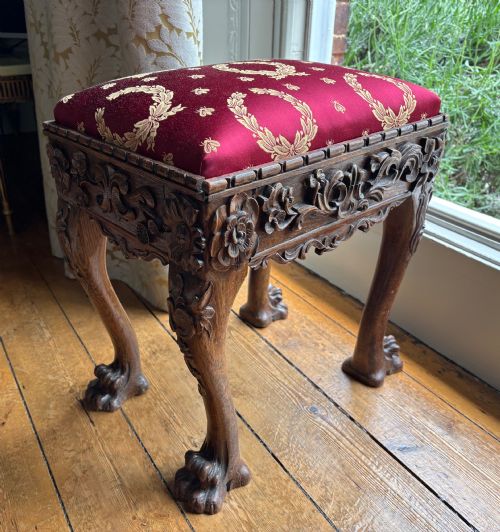
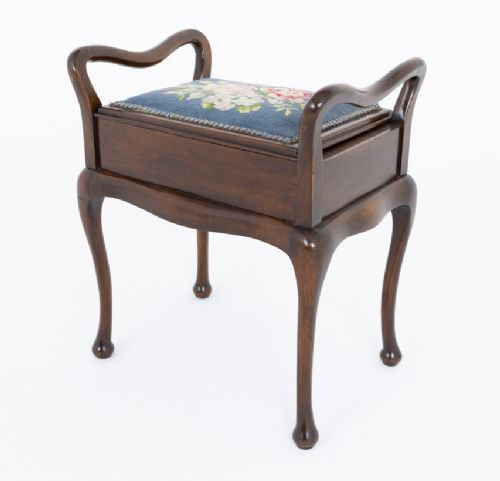
A tapestry vanity seat is typically encountered as a Victorian or Edwardian dressing table stool, often framed in walnut, mahogany, or rosewood. These pieces served practical domestic purposes in bedrooms and dressing rooms, designed to accompany vanity tables and pianos.
The selection ranges from mid nineteenth century examples to early twentieth century revivals. Buyers frequently find Victorian walnut and mahogany frames alongside Queen Anne style and Chippendale revival pieces.
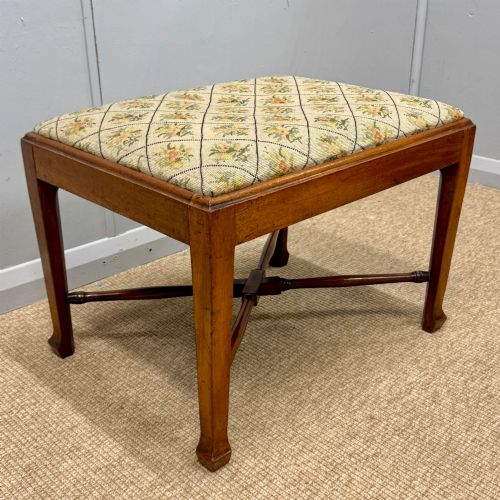
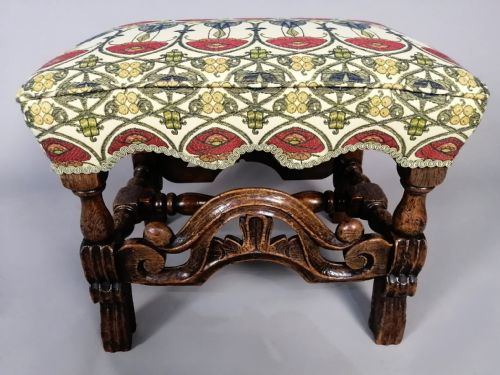
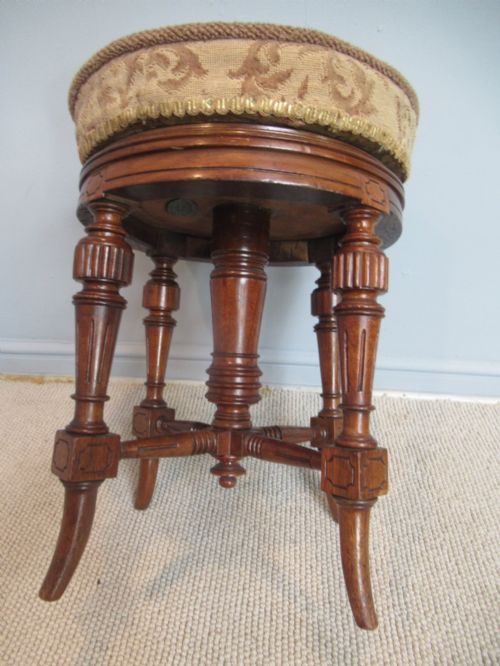
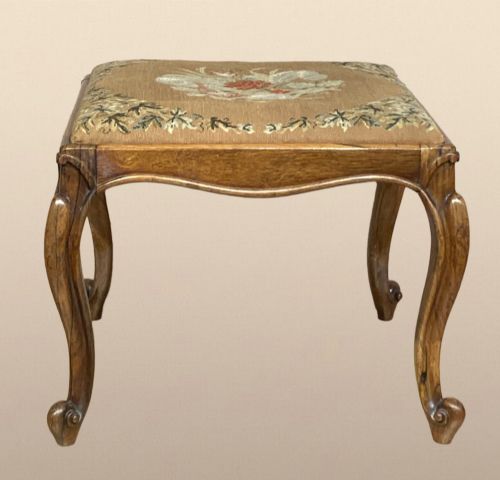
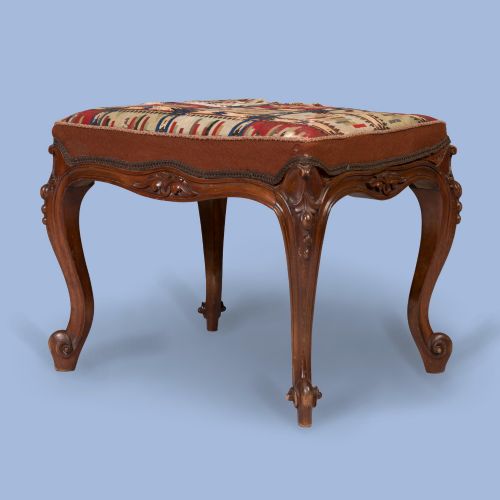
Forms include X frame bases, revolving piano stools, and four legged stools with carved or cabriole legs. Textile seats feature tapestry, needlepoint, and beadwork upholstery.
How they were made
Frames rely on sturdy timbers such as walnut, mahogany, rosewood, and oak, shaped through turning and carving. Joinery methods include mortise and tenon construction, supported by cross stretchers in certain designs.
Upholstery involves textile work, incorporating wool tapestry, needle point, and beadwork onto the wooden frames. Brass components appear in revolving mechanisms and fittings on specific piano stools.
Some Victorian dressing stools spin in circles, turning morning hairbrushing into an accidental fairground ride.
What varies in quality
Quality rests in the crispness of the timber carving and the choice of primary wood, with dense walnut and figured mahogany holding higher status than simpler pine or secondary timbers. The integrity of the frame construction and the subtlety of cabriole leg shaping distinguish finer work.
The execution of the textile seat defines the visual appeal. Finely worked needlepoint, tapestry, and beadwork demonstrate greater artisanal skill than plain commercial fabric upholstery.
Jas Shoolbred
The Tapestry Vanity Seat Glossary
- Tapestry
- A form of textile art woven on a loom or worked with needle point on canvas. It provides the decorative seat covering characteristic of these vanity stools.
- Cabriole leg
- A furniture leg that curves outward and then tapers inward, finishing in a pad or foot. This form frequently appears on Queen Anne style and mid nineteenth century frames.
- Needlepoint
- A type of embroidery stitched onto an open weave canvas mesh. It forms the detailed floral and geometric patterns seen on many antique stool seats.
- X frame
- A structural base formed by intersecting diagonal timbers that create an X shape when viewed from the side. This supportive design appears on several Victorian dressing stools.
- Revolving stool
- A seat featuring a mechanical screw or pivot allowing the top to turn. These were commonly used at pianos and dressing tables.
Tapestry Vanity Seat: Frequently Asked Questions
What is a tapestry vanity seat used for?
These seats are primarily designed for use at a dressing table or vanity mirror during grooming routines.
Their compact proportions also make them suitable as piano stools or small occasional footstools in a sitting room.
How do I date a wooden stool?
Dating relies on identifying timber choices, turning styles, and structural characteristics associated with specific periods like the Victorian era or Edwardian times.
Revival styles from later decades often imitate eighteenth century furniture forms, requiring close inspection of the wood and construction.
Are tapestry seats original?
Many pieces retain their original needlework or tapestry covers, while others have been reupholstered in period appropriate textiles.
Original needlepoint and beadwork show appropriate wear and material ageing consistent with the frame age.
Where should I place a vanity stool?
They fit naturally beneath a dressing table, in a bedroom corner, or beside a fireplace as a low seat.
Their small footprint allows them to move easily between rooms as extra seating when guests arrive.