
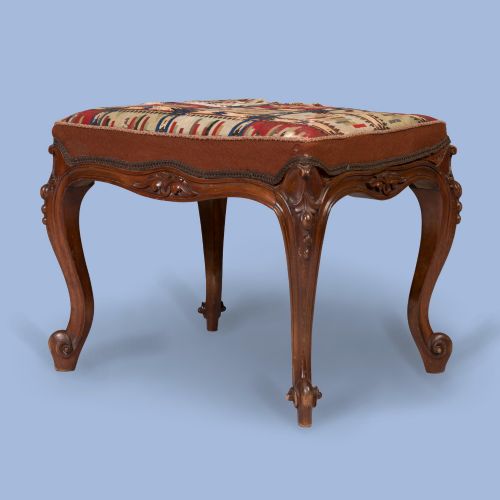
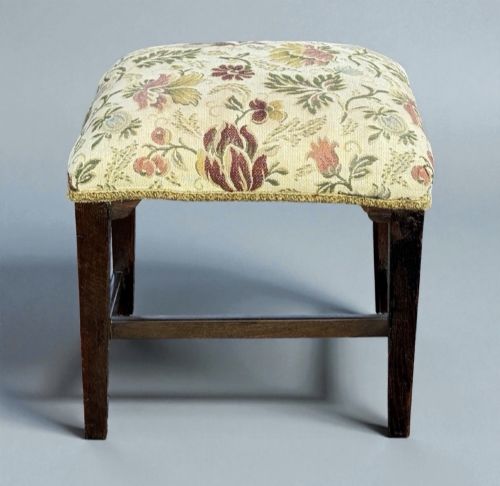


Tapestry Upholstered Ottoman
A tapestry upholstered ottoman brings tactile warmth and period character to a room, offering practical seating or a surface to rest feet.
Tapestry Upholstered Ottoman
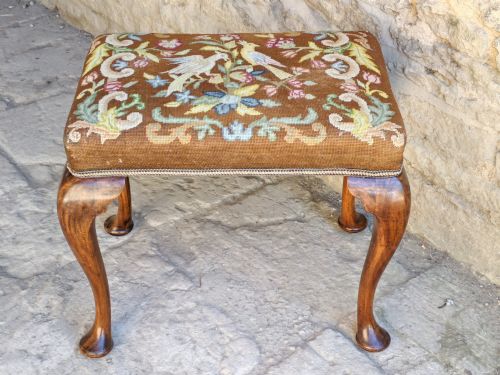
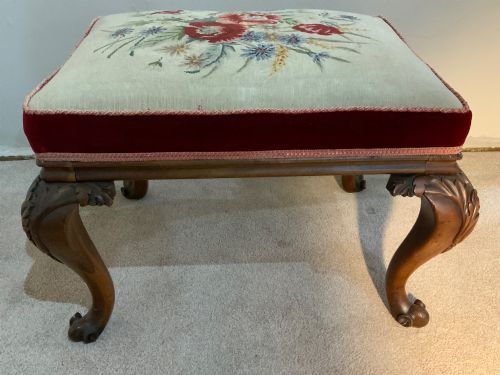
A tapestry upholstered ottoman encompasses footstools, window seats, and storage boxes clothed in needlework or textiles. Pieces span the Regency, Victorian, and Edwardian eras, reflecting revivals from Queen Anne to Chippendale styles.
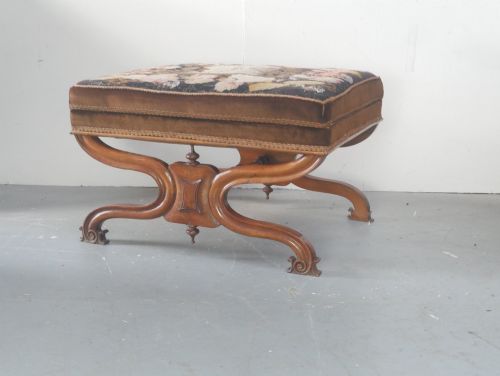
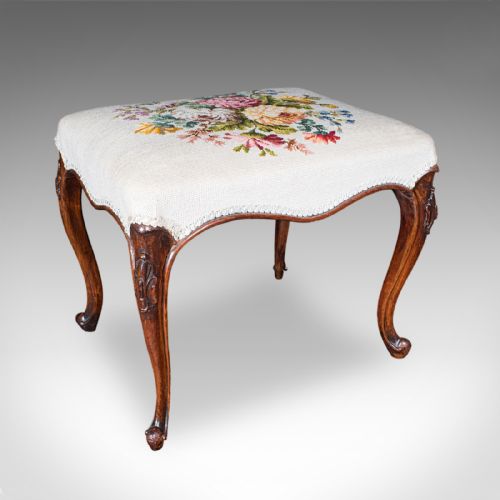
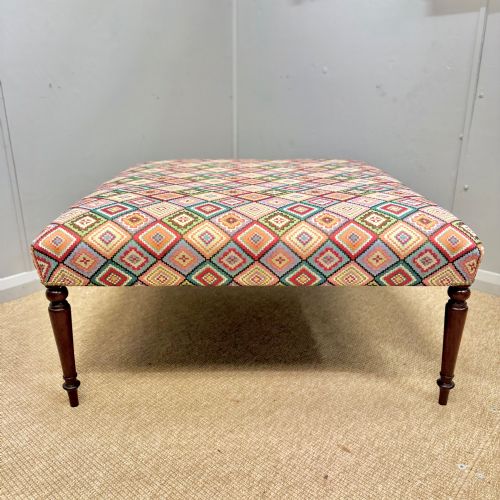
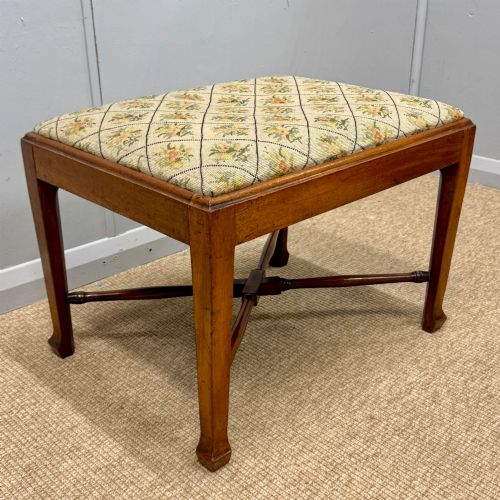
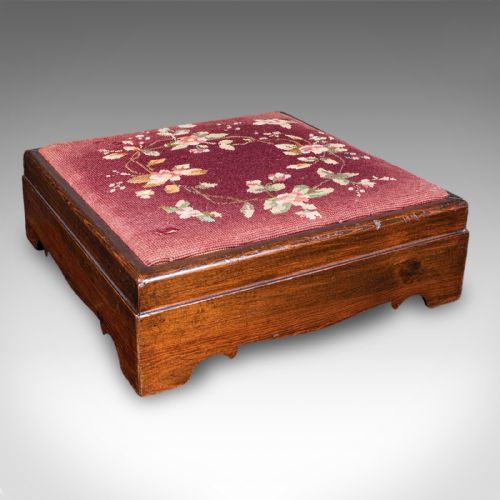
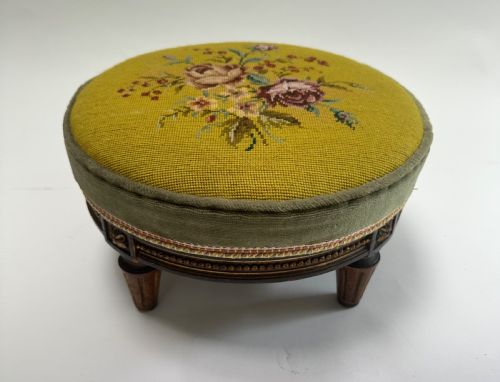
The Victorian period yields the highest concentration of examples, particularly walnut and mahogany stools featuring needlepoint and tapestry seats. Forms range from compact fireside footstools to large centre stools and x-frame designs.
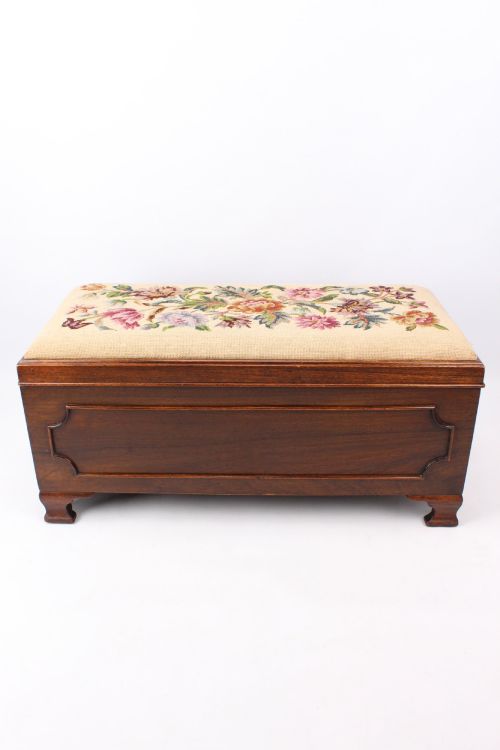
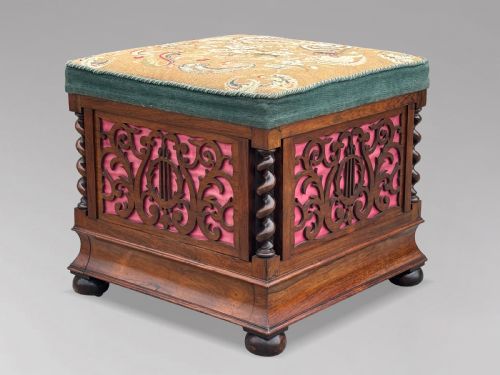
Storage variants appear as pine chests and box ottomans, combining upholstered lids with functional compartments. Regional variations include Scottish Baronial and Anglo-Indian constructions alongside French revival pieces.
Materials and construction
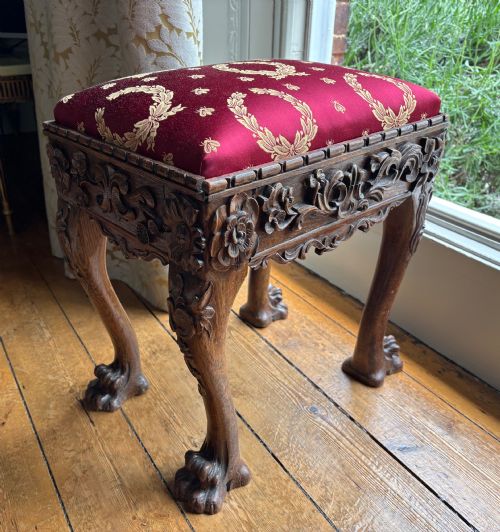
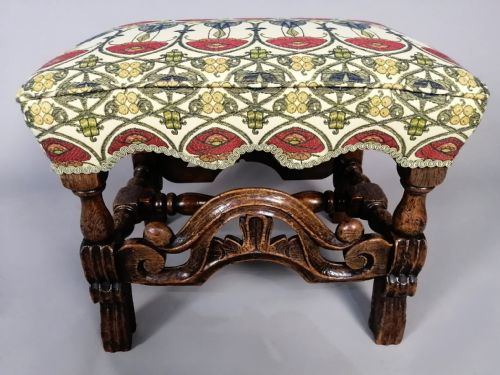
Carpentry relies on hardwoods such as mahogany, walnut, rosewood, and pitch pine, shaped into carved frames, cabriole legs, or cross stretchers. Joints utilise traditional construction methods appropriate to each period.
Upholstery combines wool needlepoint, tapestry, kilim, velvet, and textile coverings over sprung or padded seats. Brass elements occasionally accent footstools and hinge mechanisms on storage chests.
One robust pine storage chest doubles as a daybed, proving Victorian craftsmen took daytime resting very seriously indeed.
Craftsmanship and textile condition
Quality rests in the crispness of timber carving and the structural integrity of the frame, whether in robust mahogany or figured walnut. Finer examples display meticulous attention to detail in stylistic flourishes such as cabriole legs or x-frames.
The needlework or tapestry seat dictates much of the character and preservation state. Hand-worked needlepoint with tight stitching and rich wool colour holds greater visual weight than simpler textiles.
Hallett & Sons
The Tapestry Upholstered Ottoman Glossary
- Needlepoint
- Embroidery stitched on a canvas mesh, frequently forming the patterned top of a Victorian footstool. This technique allows for intricate geometric or floral designs.
- X-frame
- A structural support formed by two intersecting diagonal members resembling the letter X. It provides stability and appears on Regency and mid-century stools.
- Kilim
- A flatwoven textile originating from the Middle East or Eastern Europe, utilised as a durable and decorative upholstery cover. It brings distinct tribal patterns to nineteenth-century frames.
- Centre stool
- A large freestanding stool designed to sit in the middle of a room rather than against a wall. These pieces often feature substantial walnut or mahogany frames.
Tapestry Upholstered Ottoman: Frequently Asked Questions
Where should I place an ottoman in my home?
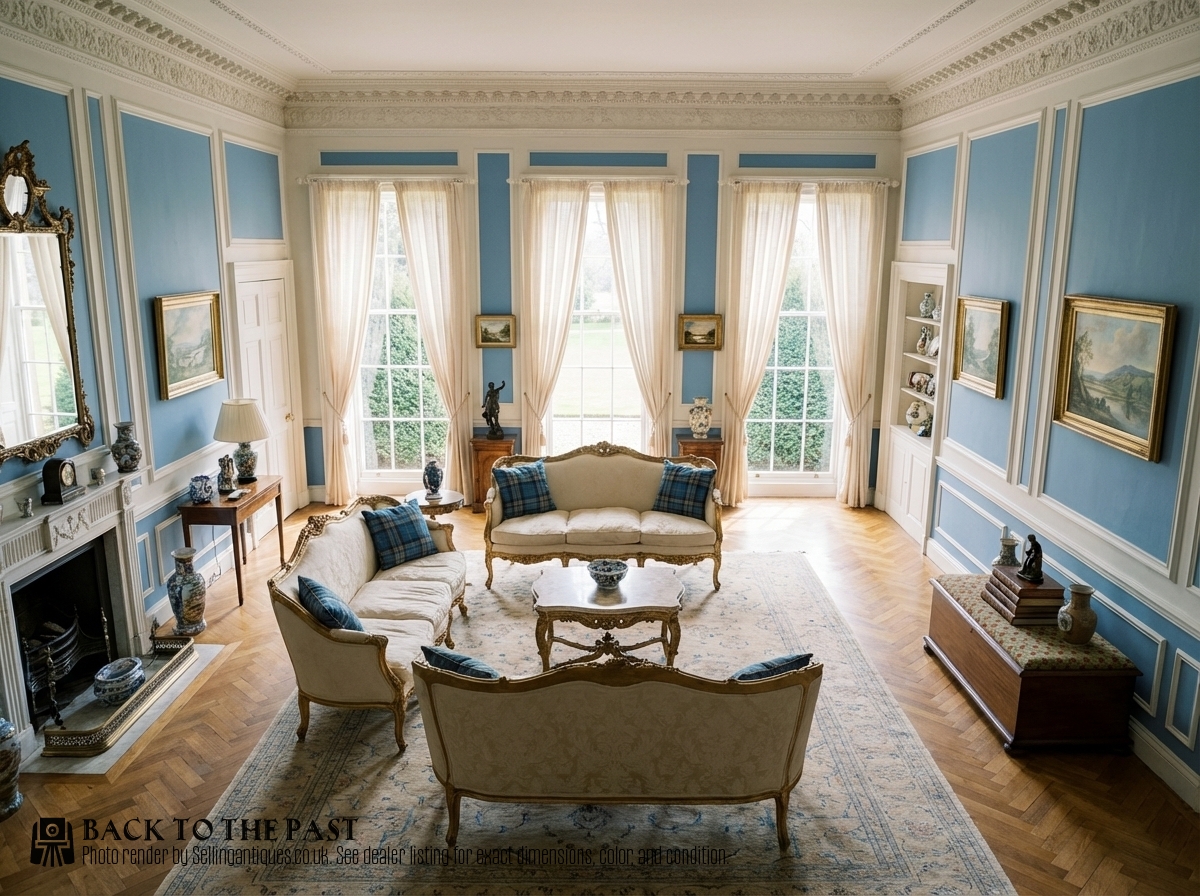
These pieces function effectively beside a fireside, at the end of a bed, or beneath a window as a low seat. Centre stools anchor larger rooms when placed amid surrounding furniture.
Storage variants offer a practical spot for blankets and textiles in a living room or hallway. Their modest footprint allows them to sit comfortably in both spacious and compact interiors.
Are the tapestry covers original?
Many nineteenth-century stools retain their original needlework or tapestry covers, often worked in wool with floral or geometric motifs. Hand-stitched textiles frequently show age-appropriate wear that matches the wooden frame.
When needlework has been replaced, the textile typically mirrors period-appropriate patterns. Inspecting the underside reveals the mounting method and the age of the underlying webbing.
What is the difference between an ottoman and a footstool?
Footstools are generally smaller, lower pieces designed primarily for resting feet by a fireside. They often feature simple upholstered tops supported by turned or carved legs.
Ottomans tend to be larger, sometimes incorporating hinged lids for storage or serving as daybeds and window seats. Box ottomans combine this internal capacity with fully upholstered frames.