





Tapestry Hall Chairs
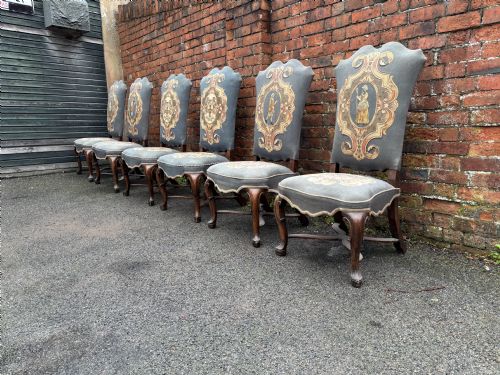
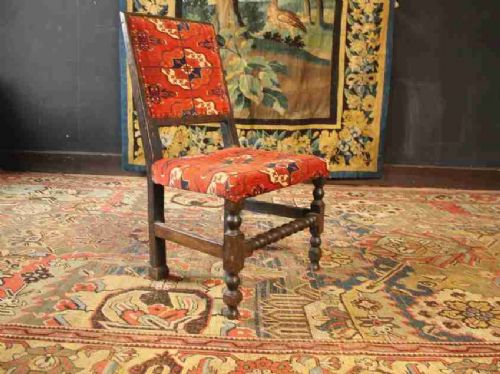
Tapestry hall chairs combine sturdy timber frames with embroidered textile seats, offering a practical seat for an entrance passage.
Tapestry Hall Chairs
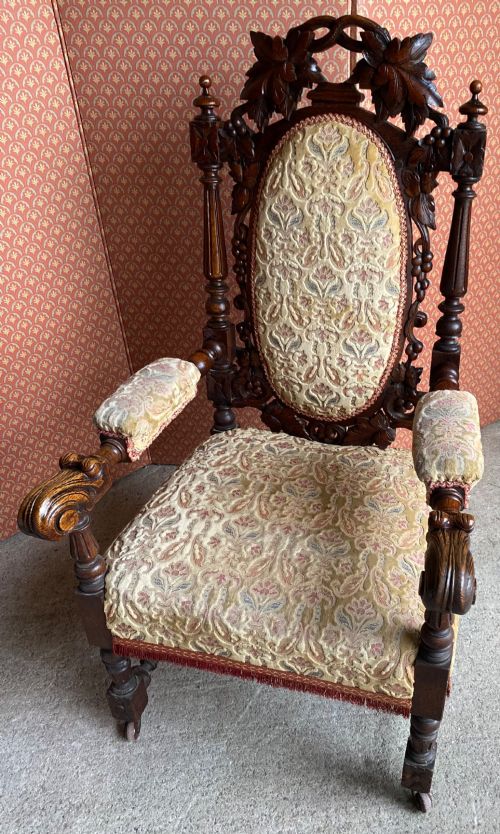
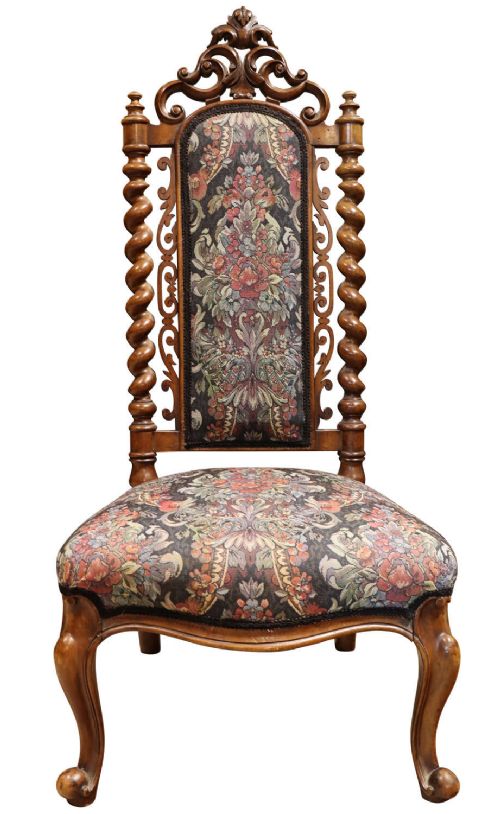
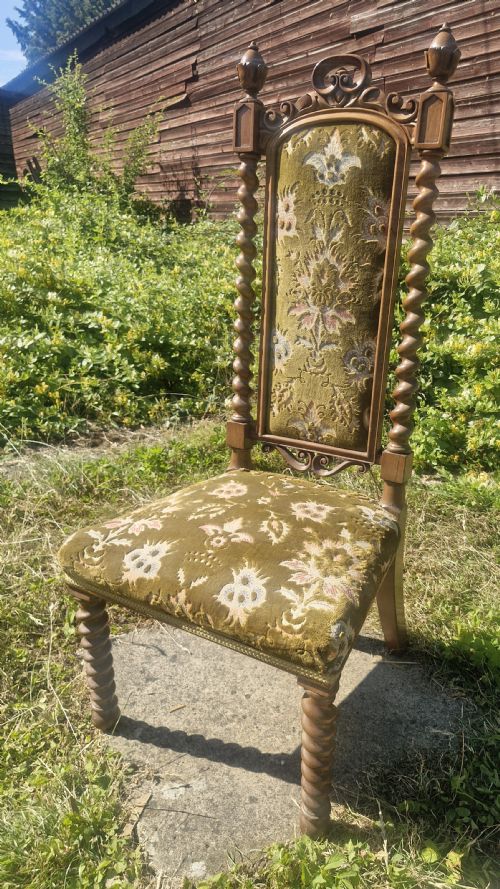
When buyers search for tapestry hall chairs, they encounter sturdy wooden seating designed for passage areas, reception rooms, and hallways. The listings show forms ranging from 18th century walnut and Georgian mahogany frames to Victorian Gothic revival oak examples.
The versions most commonly met on this page span the 19th century and Victorian periods, often constructed from mahogany or walnut. Makers utilised textile, needlepoint, and tapestry inserts for the seat pads and back panels within these rigid timber structures.
How they were made
The framework relies on dense hardwoods such as mahogany, walnut, rosewood, and oak, shaped through carving and joinery. Artisans applied brass fixings and structural supports to secure the heavy timber components.
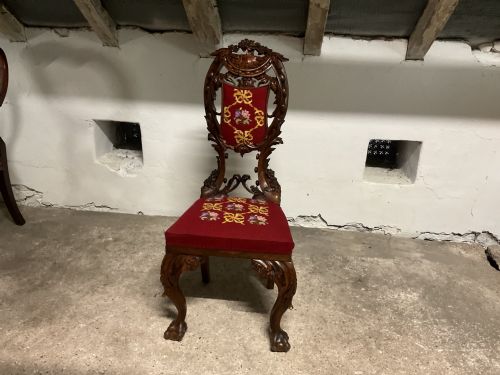
Upholstery involves hand-stitched tapestry, needlepoint, and fabric panels set directly into the wooden frames. These textiles were stretched over the seat bases or backrests to withstand regular passage use.
Tapestry Hall Chairs Retail Price Guide 2026
Typical asking prices for tapestry hall chairs among the pieces listed under this phrase on Sellingantiques today, from the lower quarter to the upper quarter. They describe what is for sale here now, not the wider market.
Several chairs double as gossip seats and armorial thrones, proving ancestors had strong opinions on hallway comfort.
What varies in quality
Quality rests upon the selection of timber and the precision of the carved detailing across the frame. Dense hardwoods like rosewood and early walnut distinguish finer examples from standard utility seating.
The integrity and execution of the hand-stitched tapestry or needlepoint panels elevate the standard of the piece. Intricate pictorial needlework demonstrates superior craftsmanship compared to plain fabric upholstery.
Liberty & Co·White, Allom & Co·Wheeler
The Tapestry Hall Chairs Glossary
- Hall chair
- A rigid wooden seat intended for an entrance hall or passage. These pieces typically feature solid timber seats or upholstered tapestry pads.
- Needlepoint
- A type of counted thread embroidery stitched onto canvas. It forms the decorative tapestry surface seen on many chair seats and backs.
- Gothic Revival
- A 19th-century design style emulating medieval architecture. Pieces feature pointed arches, tracery, and heavy carved oak.
- Padouk
- A dense tropical hardwood with reddish tones utilised in colonial furniture production. It provides exceptional weight and durability.
Tapestry Hall Chairs: Frequently Asked Questions
What is a tapestry hall chair used for?
These chairs provide practical seating in entrance passages, hallways, and reception rooms. They were historically placed in grand halls for visitors waiting to be announced.
Today, they serve both functional seating needs and decorative roles in traditional interiors, combining sturdy timber construction with upholstered textile panels.
How do I identify a Victorian hall chair?
Victorian examples frequently utilise mahogany, walnut, or rosewood with heavy carved ornamentation. Stylistic influences often include Gothic revival motifs, heavy backs, and tapestry upholstery.
They generally date from the mid to late 19th century, displaying characteristic machine-assisted or hand-carved detailing common to the period.
What woods are used in these chairs?
The evidence shows frames constructed primarily from mahogany, walnut, rosewood, and oak. Solid satinwood and exotic timbers like padouk also appear in specific regional pieces.
These durable hardwoods provided the structural strength required for chairs subjected to frequent daily use in busy entranceways.
Are tapestry seats original to the chairs?
Needlepoint and hand-stitched tapestry upholstery vary in age relative to the wooden frames. Many 19th-century and Edwardian pieces retain period stitchwork or traditional needlepoint replacements.
Evaluating the textile involves looking at the density of the stitching, the wear patterns, and how the fabric secures to the timber rebate.