


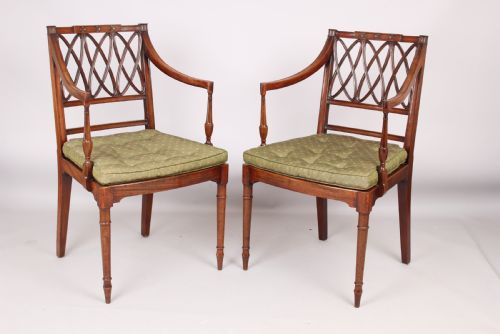


Lattice Back Chairs
Lattice back chairs bring structured openwork frames and historical design into modern dining rooms and hallways.
Lattice Back Chairs
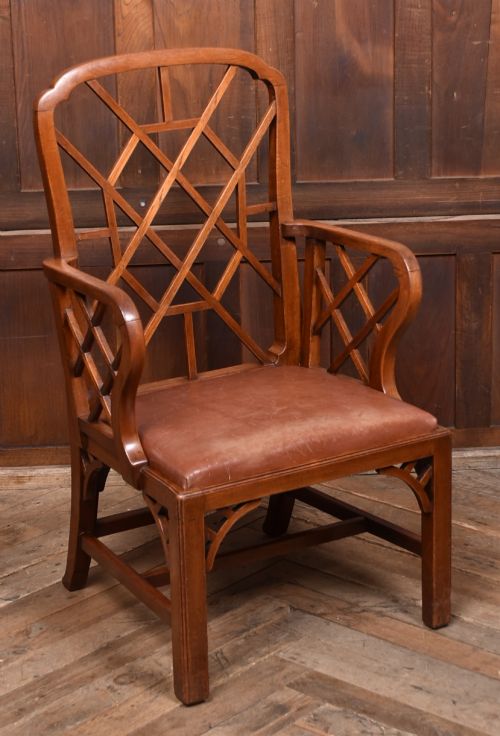
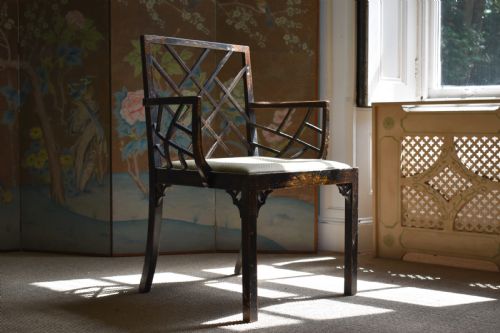
When buyers search for lattice back chairs, they encounter timber seating defined by pierced splats and intersecting wooden slats. These pieces range from formal George III mahogany dining sets to Edwardian armchairs and Arts and Crafts oak designs.
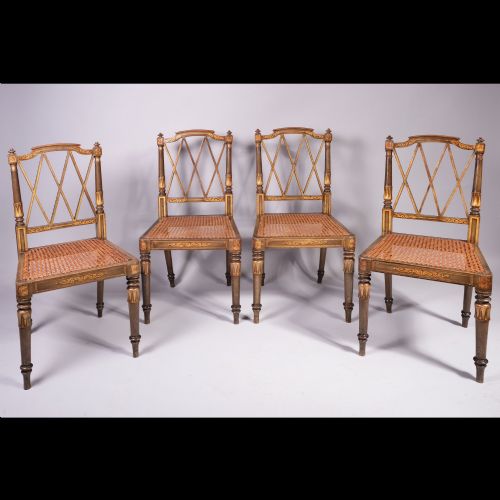
The version most commonly met on this page is the 19th century mahogany dining chair, often following Chippendale or Regency styles. Sets appear alongside single armchairs, side chairs, and occasional garden benches.
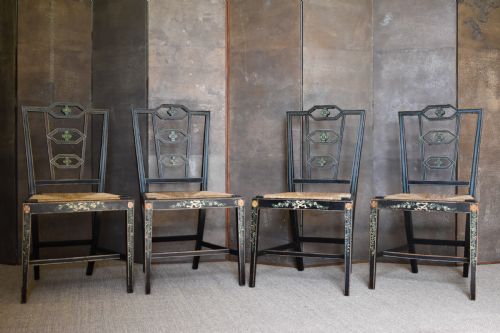
Origins stretch from Georgian workshops to early twentieth century makers like Heal's, utilising oak, mahogany, and elm across various formal and vernacular forms.
What varies in quality
The refinement of the pierced fretwork and the crispness of the carved details separate the finest examples from standard production. Superior sets maintain matching timber grains and robust structural integrity across every chair in the group.
The choice of primary wood and the execution of secondary elements, such as reeded legs or inlaid decoration, determine the overall distinction of the piece.
Listings feature oak, mahogany, elm, and walnut frames alongside cane, fabric, and painted finishes across multiple centuries.
Liberty & Co·Collier and Plucknett·Thomas Chippendale·Brights of Nettlebed
The Lattice Back Chairs Glossary
- Cockpen
- A Chinese-inspired lattice design featuring intersecting wooden bars, frequently found on eighteenth and nineteenth-century armchairs.
- Splat
- The vertical central strip of wood in the back of a chair, pierced and shaped to form the lattice pattern.
- Reeded
- Decorated with parallel convex mouldings carved into the timber leg or frame, typical of the Regency period.
- Carver
- An armchair designed to match a set of dining side chairs, usually placed at the head of the table.
- Chippendale
- A style originating from the mid-eighteenth century known for intricate fretwork and ribbon-back or lattice designs.
Lattice Back Chairs: Frequently Asked Questions
How do I identify a true Georgian lattice back chair?
Authentic Georgian examples display period timber patination, hand-cut joinery, and timber species consistent with eighteenth-century workshops.
Look closely at the construction beneath the seat frame for traditional pegging and hand-shaped components.
Can I mix these chairs with a modern table?
Their architectural pierced backs provide enough visual lightness to pair successfully with contemporary timber or glass dining tables.
Matching the wood tone of the chair legs to your existing furniture helps anchor the seating within the room.
Were these chairs originally used for dining?
Many sets were built specifically as formal dining chairs, while heavier armchairs and hall chairs served entrance spaces and parlours.
Sets often included a mix of side chairs and larger carvers for the heads of the table.
How should I care for antique oak and mahogany frames?
Maintain the timber by applying traditional beeswax sparingly and buffing gently with a soft cloth to preserve the finish.
Keep the seating away from direct heat sources and dramatic humidity shifts to prevent timber movement.