

Vintage Hall Chairs
These vintage hall chairs bring rigid architectural forms and solid timber into domestic corridors.
Vintage Hall Chairs
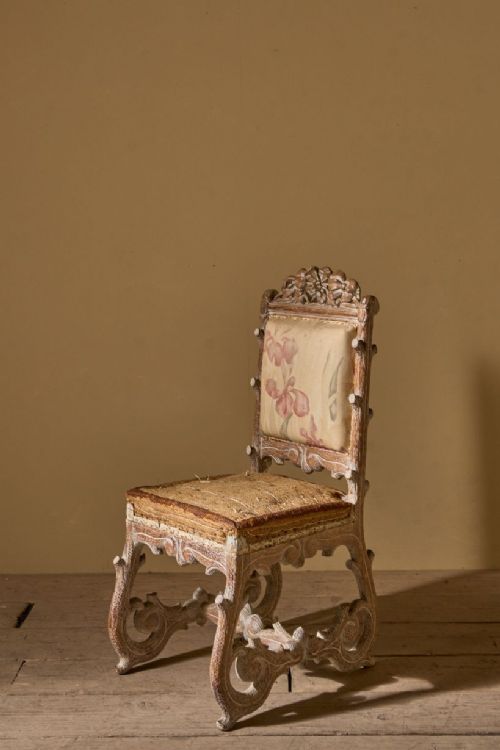
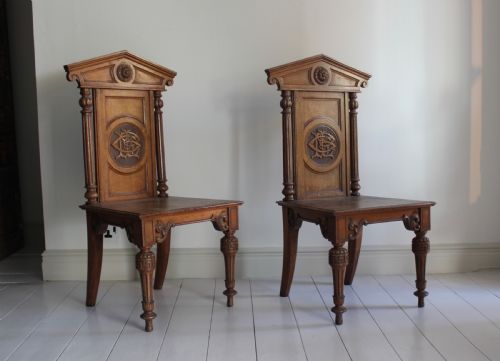
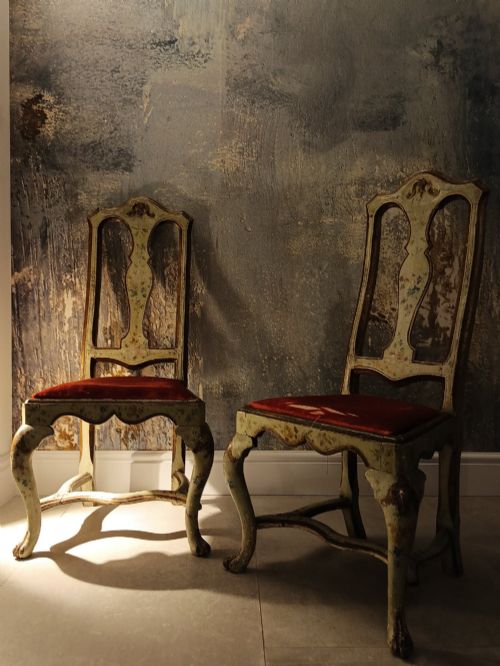
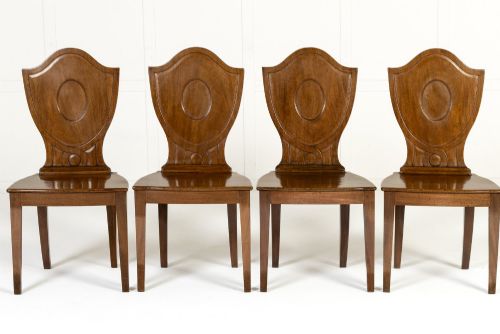
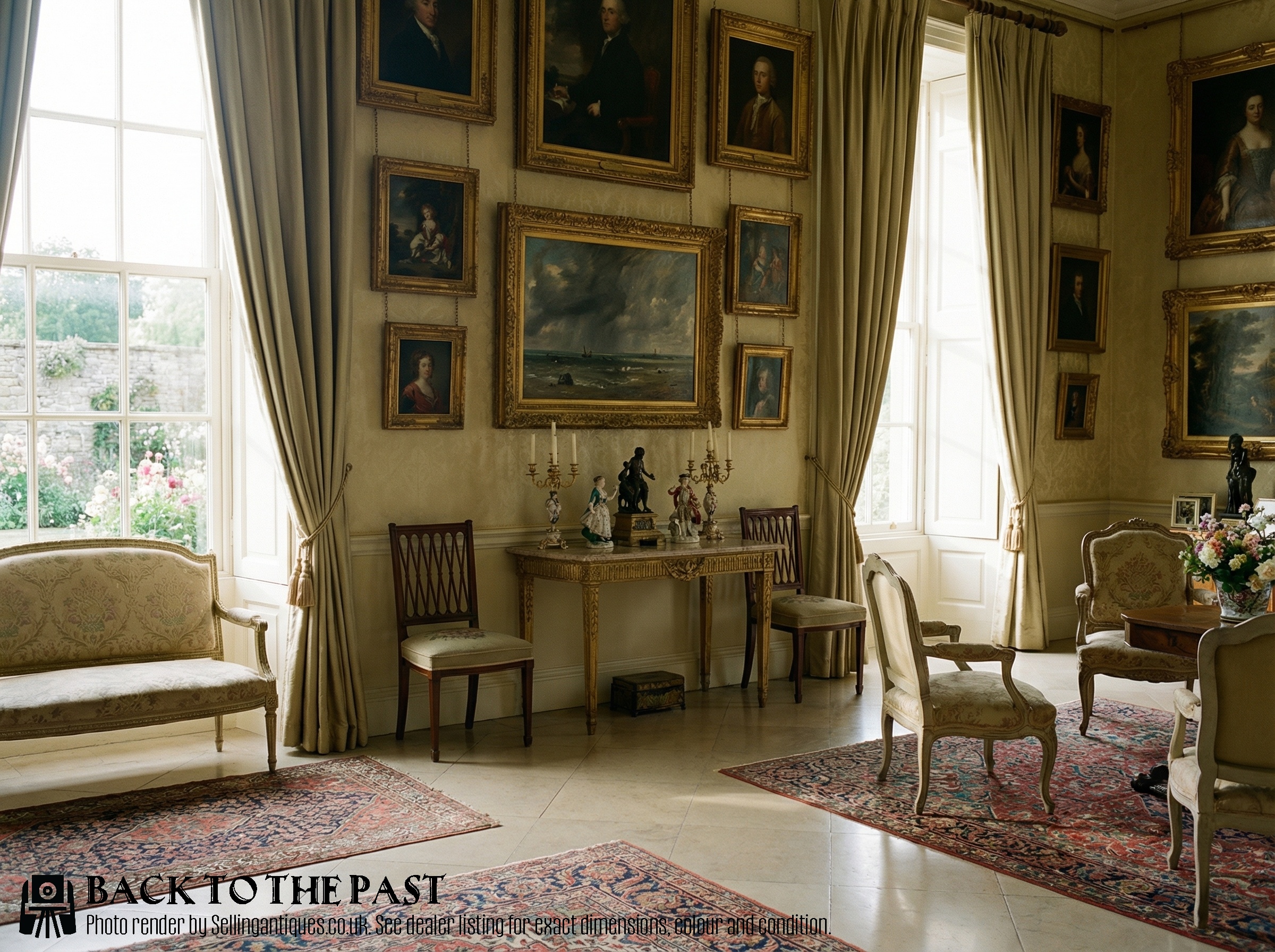
Vintage hall chairs occupy entranceways and reception spaces, designed primarily for brief seating rather than long-term comfort. The pieces available here draw on 18th century, Regency, and Victorian periods, alongside later Edwardian iterations.
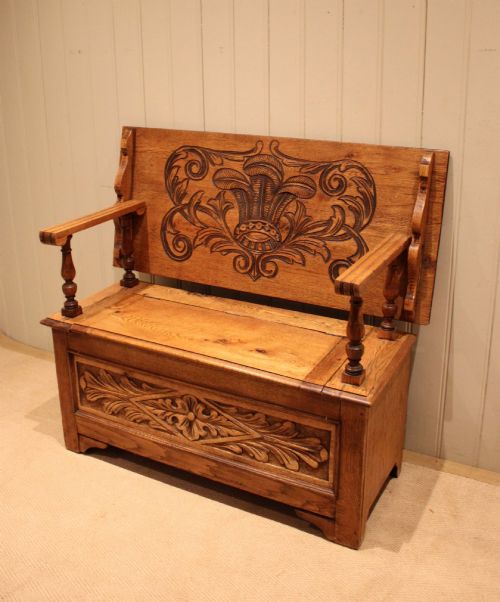
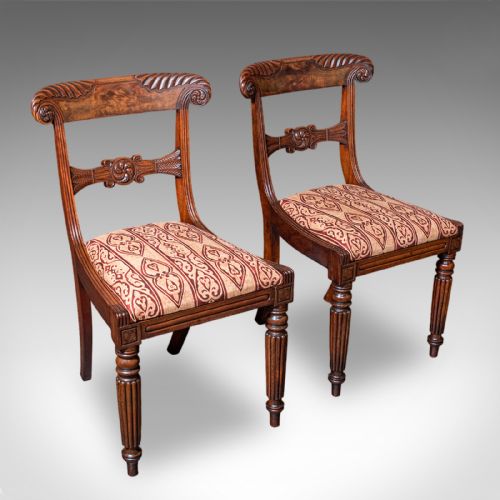
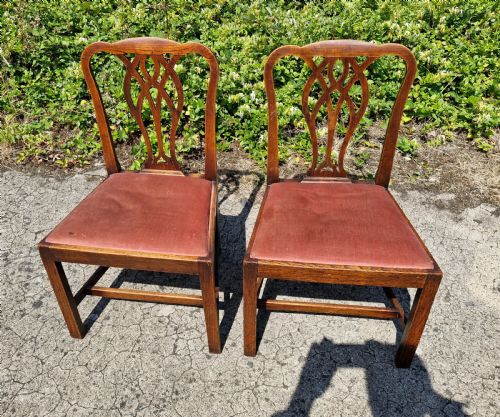
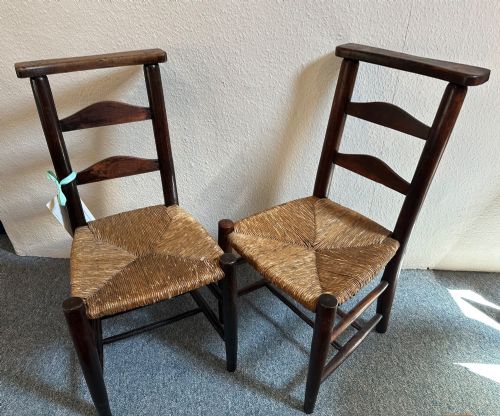
Forms span sturdy English oak examples with carved backs, mahogany side chairs, and occasional benches or settles. Many items appear in pairs or sets, reflecting their original purpose of furnishing grand hallways symmetrically.
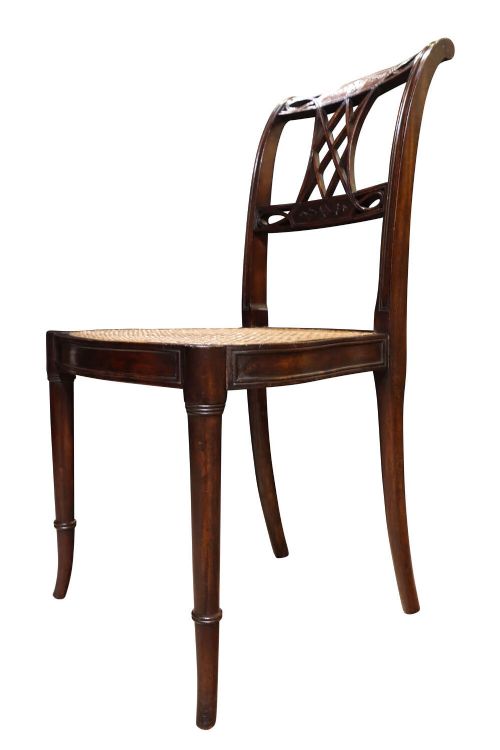
While the phrase suggests purely utilitarian seating, the selection includes related regional variations like faux bois finishes, cane seats, and folding bench combinations.
Materials and construction
Makers relied heavily on dense hardwoods, predominantly oak and mahogany, supplemented by walnut, satinwood, and elm. These timbers were joined using traditional methods to withstand the heavy wear expected in busy entrance passages.
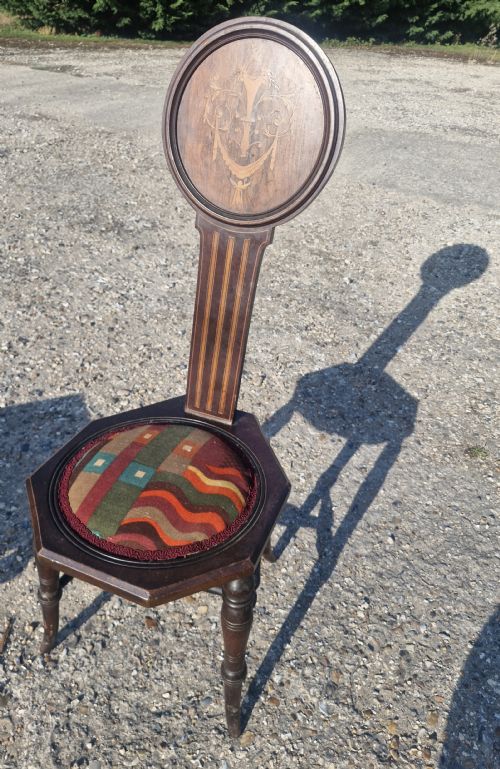
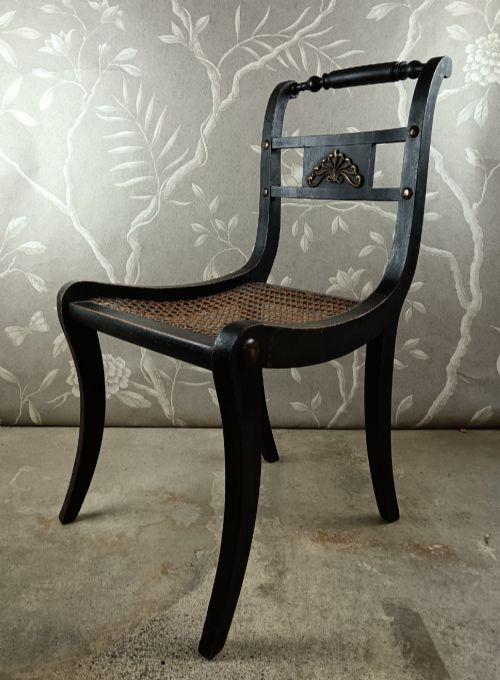
Decoration often involved carving directly into the wood, incorporating motifs from Gothic Revival, Jacobean Revival, and Renaissance Revival styles. Alternative techniques included ebonising, brass detailing, cane weaving, and applied painted leather.
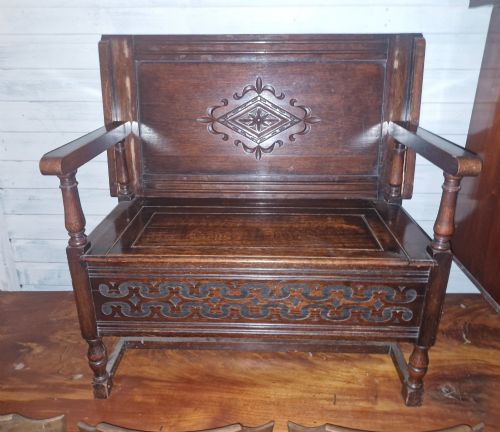
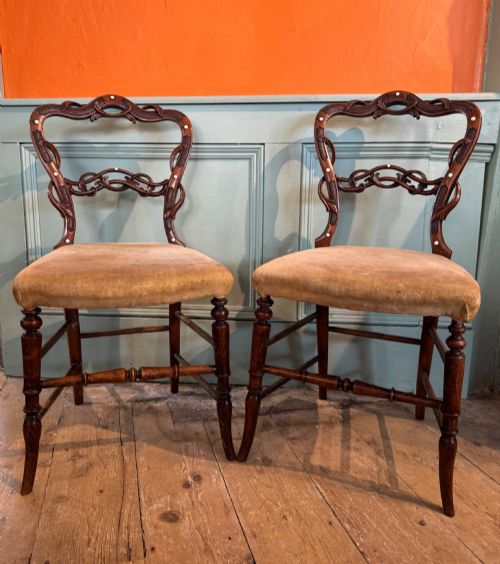
Specialised items integrate movable elements, such as lift-up seats, fold-over tops, and bobbin turning, demonstrating timber manipulation beyond standard chair frames.
One extraordinary shop advertising chair encouraged nineteenth-century passers-by to buy matches.
Assessing quality in construction and material
Quality rests in the selection of the timber and the depth of the carving. Dense, well-figured oak and Cuban mahogany denote superior craftsmanship compared to plain utility woods.
The integrity of the structural joints and the crispness of applied stylistic details, such as trefoil carvings or inlaid satinwood, distinguish master workshops from standard regional production.
Original components dictate the standing of a piece, where surviving cane seats, brass mounts, and untouched surface patination elevate the work.
The Vintage Hall Chairs Glossary
- Hall chair
- A rigid wooden seat traditionally placed in an entrance hallway, often featuring a solid timber back carved with a crest or shield. These items prioritised upright posture and display over cushioned comfort.
- Side chair
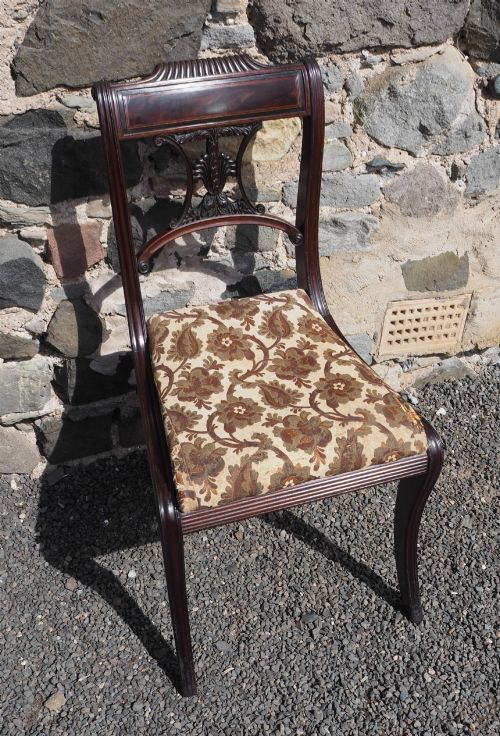
- An un-armed chair designed for dining rooms, halls, or bedrooms. They offer compact footprints and straightforward wooden or cane bases.
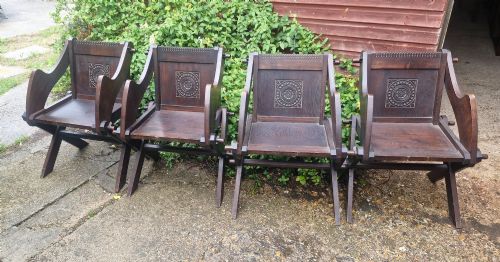
- Glastonbury chair
- A distinctive low-slung armchair with a folding X-frame and sloping panel back. This form draws on medieval church furniture designs revived during the Gothic period.
- Bobbin turning
- A form of woodturning that produces a series of rounded, spherical shapes resembling spools or bobbins threaded along a stretch of furniture leg or rail.
- Satinwood
- A pale, hard timber harvested from tropical trees, prized for its natural golden sheen and smooth grain. It frequently appears as fine inlay veneer on late furniture.
- Faux bois
- A decorative technique where artisans paint or sculpt non-wooden materials to imitate the natural texture and grain of timber.
Vintage Hall Chairs: Frequently Asked Questions
Where did people put hall chairs?
These seats stood strictly in entrance halls, corridors, and reception rooms rather than main living spaces. They served visitors waiting briefly before being received into the household.
Because they occupied transition zones, makers built them to be narrow and upright, discouraging lounging and saving floor space.
Are these chairs comfortable for daily sitting?
Traditional hall seating offers very little comfort, as they were constructed with rigid wooden backs and firm timber or cane seats. They were designed for short durations.
Living with them today suits entryways or hallways where you need a quick surface for putting on shoes rather than a relaxing lounge chair.
How do I identify a Regency hall chair?
Regency examples typically feature dark timbers like Cuban mahogany or ebonised finishes, often incorporating classical motifs, sabre legs, or shield-shaped backs. They reflect early nineteenth-century neoclassical tastes.
Look for crisp turning, brass accents, and a distinct architectural severity that separates them from the heavier, carved revival pieces of later decades.
What is a monks bench?
A monks bench is a dual-purpose hall seat featuring a solid wooden top that folds down to convert the backrest into a table. This clever space-saving mechanism suited smaller entrance spaces.
They combine storage boxes beneath the lift-up seat with sturdy oak construction, representing the heavier vernacular styles seen around the turn of the twentieth century.
How should I care for antique oak furniture?
Maintain antique oak by keeping it away from direct sunlight and sudden radiator heat, which causes timber to dry out and split. Apply natural wax sparingly to nourish the grain.
Avoid modern liquid polishes that build up silicones, and simply dust the carved details regularly with a dry, soft cloth.