
Tapestry Accent Chair
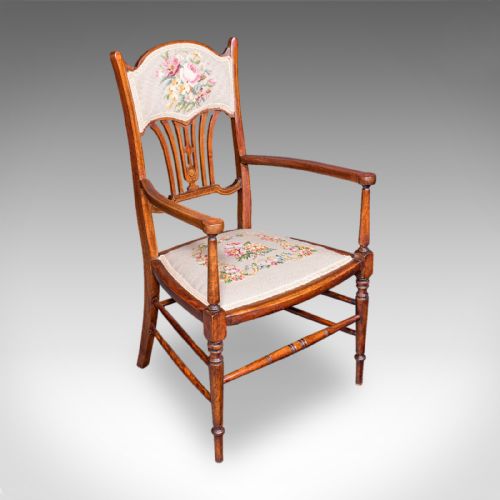
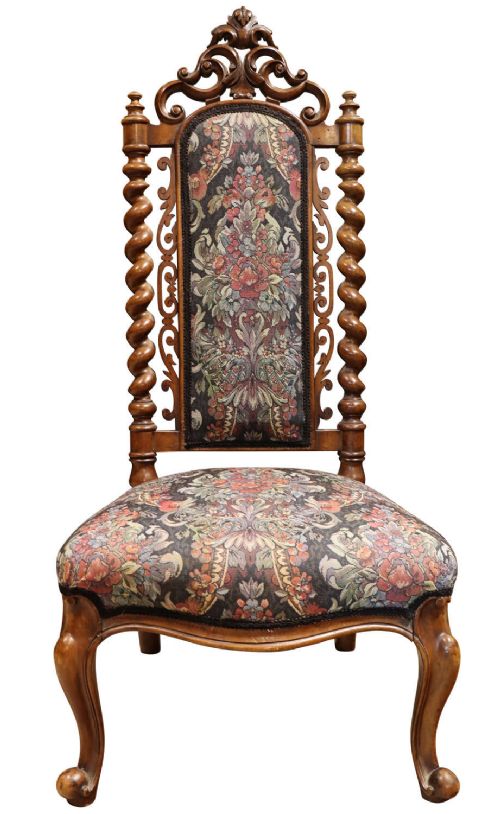
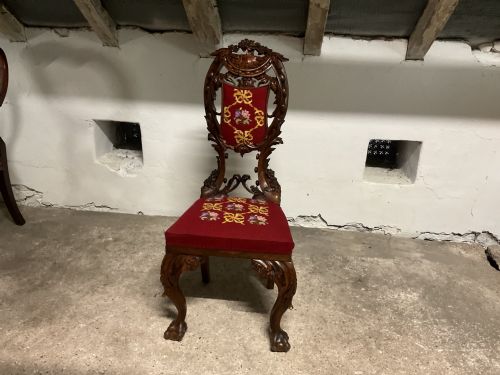
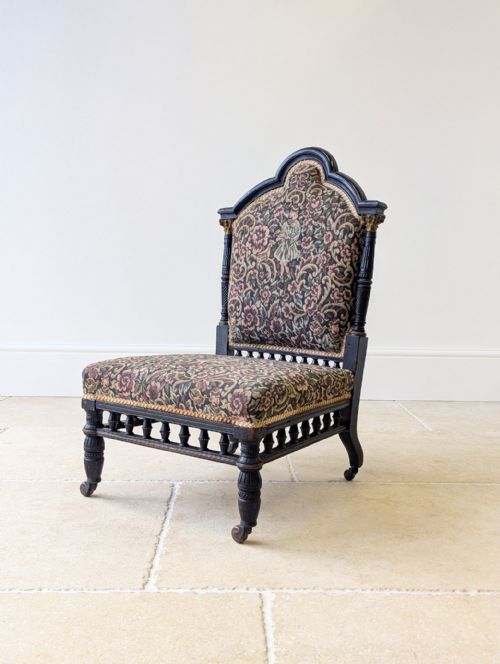
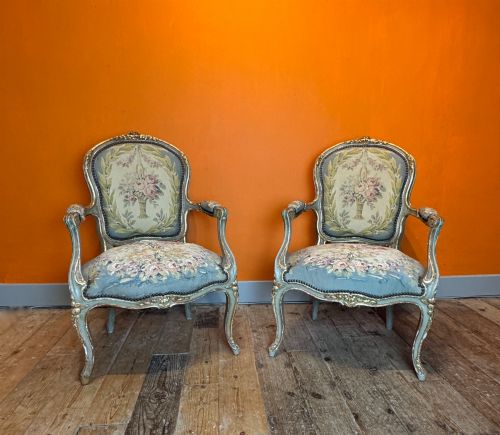
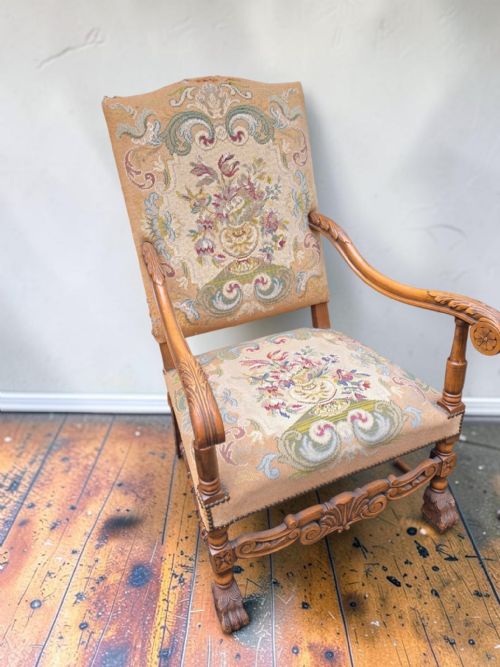
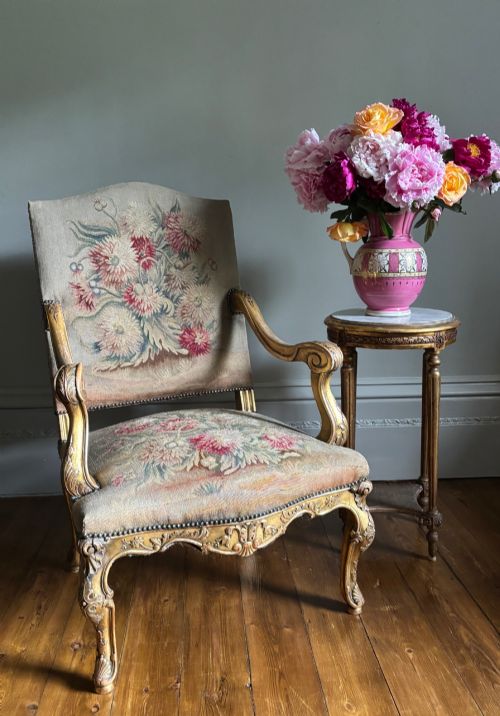
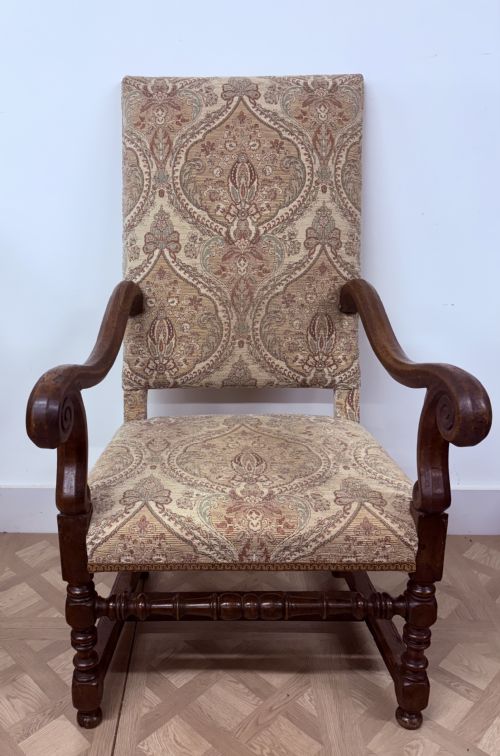
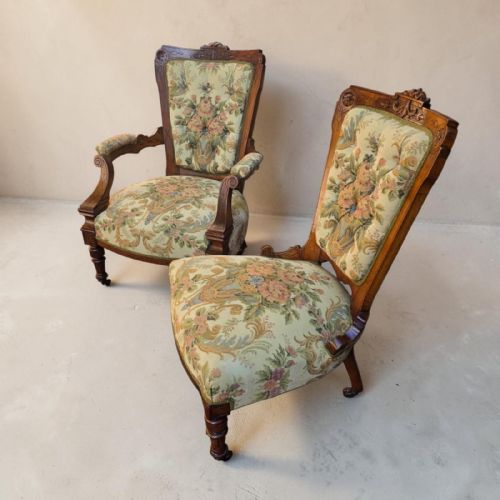
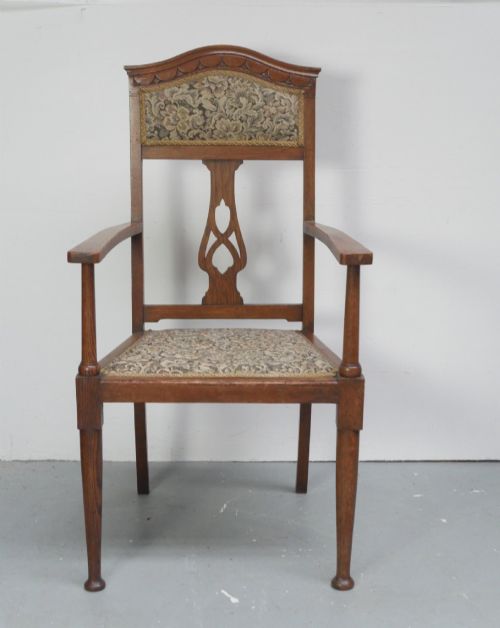
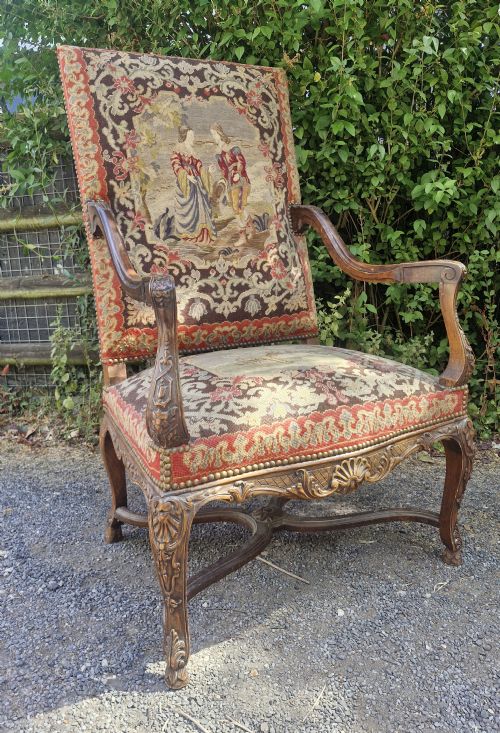
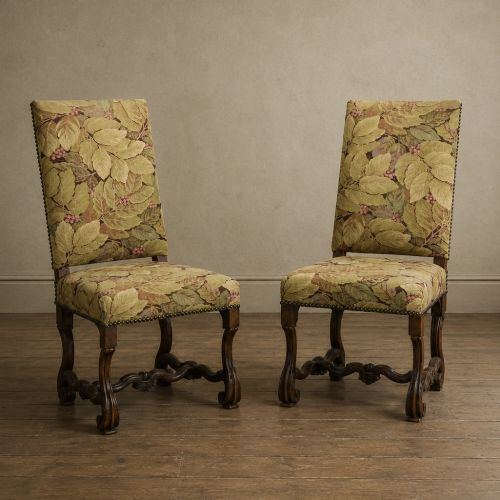
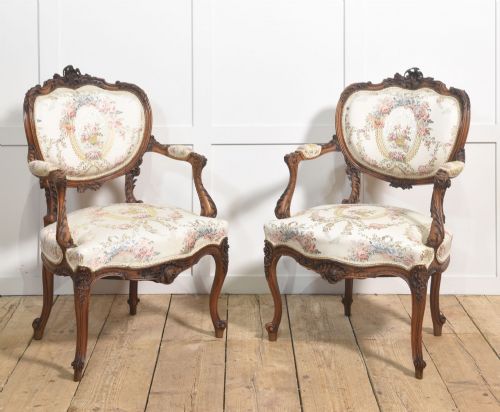
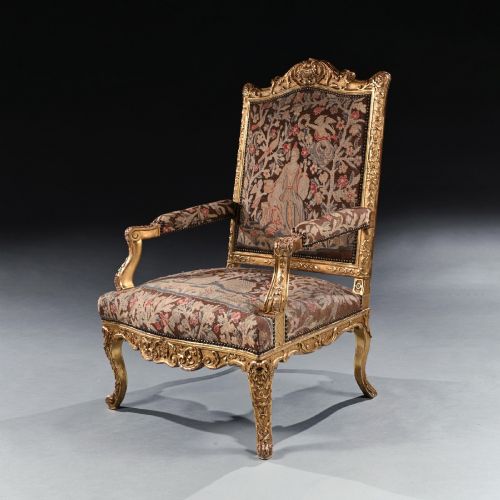
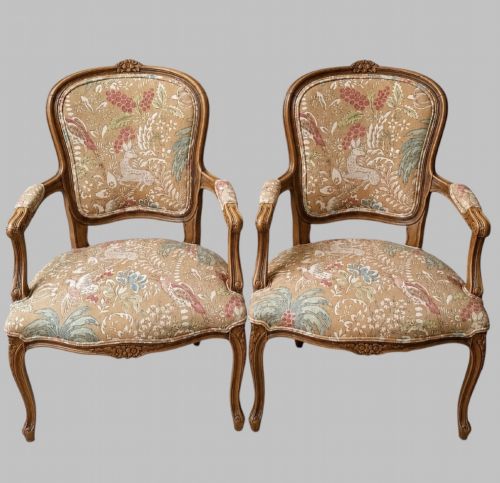
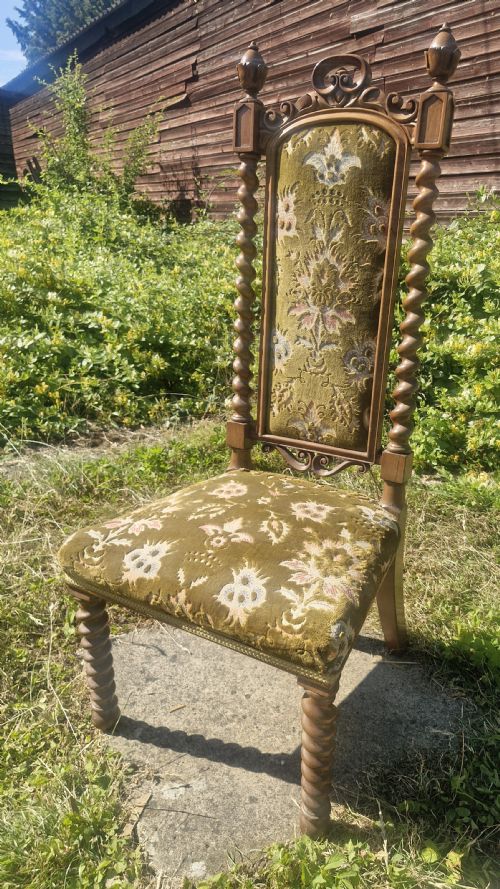
These tapestry accent chair examples combine period woodwork with textile upholstery to anchor a room.
Tapestry Accent Chair
A tapestry accent chair brings a patterned textile surface into a seating form, merging decorative needlework with structural timber. When searching for a tapestry accent chair, buyers encounter varied seating types including low salon chairs, elbow chairs, open armchairs, and side chairs.
The pieces span multiple centuries, with Victorian and nineteenth-century examples appearing alongside earlier eighteenth-century forms and later revival pieces. Oak, walnut, mahogany, and beech frames provide the support for needlepoint and tapestry fabric panels.
How They Were Made
Frames rely on carved and joined hardwoods such as walnut, mahogany, oak, and beech, sometimes finished with parcel gilt, paint, or ebonisation. Cabinetmakers shaped arms, legs, and backs in styles ranging from Georgian and Regency to Victorian revival periods.
Upholstery involves needlework and tapestry fabric stretched over the seat and back panels, secured to the timber frame with traditional stuffing and tacks. Needlepoint panels frequently feature floral or figurative designs worked in wool and silk threads.
Tapestry Accent Chair Retail Price Guide 2026
Typical asking prices for tapestry accent chair among the pieces listed under this phrase on Sellingantiques today, from the lower quarter to the upper quarter. They describe what is for sale here now, not the wider market.
Listings feature eighteenth-century and nineteenth-century periods, utilising walnut, mahogany, oak, beech, and tapestry fabric.
What Varies in Quality
Quality rests in the harmony between the timber frame and the textile cover, where crisp hand-carving on walnut or mahogany elevates the piece. The tightness of the joinery and the fineness of the needlework stitches distinguish standard production from exceptional examples.
Proportion and stylistic consistency also define the upper tier, particularly in revival pieces that emulate French Louis periods or Victorian Gothic forms with precision.
Heals
The Tapestry Accent Chair Glossary
- Fauteuil
- An open-framed armchair with upholstered armrests, originating in France during the seventeenth and eighteenth centuries. These chairs typically feature exposed wooden frames in walnut, giltwood, or painted finishes.
- Needlepoint
- A type of canvas work embroidery used for upholstery panels. Stitches are worked over a grid mesh to form dense pictorial or floral patterns.
- Salon chair
- A smaller seated piece designed for entertaining guests in a formal reception room. They often showcase decorative woodwork, ebonisation, or inlaid details.
- Carver chair
- An armchair with wooden arms, traditionally positioned at the head of a dining table or used as an occasional seat.
- Parcel gilt
- A decorative technique where specific carved details on a wooden frame are partially gilded with gold leaf.
Tapestry Accent Chair: Frequently Asked Questions
What periods do these chairs date from?
The selection spans from the seventeenth century through the Georgian and Victorian eras up to the nineteen-thirties. Walnut and mahogany frames often reflect eighteenth-century French or English cabinetmaking.
Later nineteenth-century pieces incorporate revival styles, including Louis XV and Gothic motifs, executed in beech, oak, and ebonised wood.
How do I distinguish French styles from English ones?
French armchairs, such as fauteuils, frequently display carved giltwood, painted finishes, and curvilinear frames associated with Regence and Louis periods. English examples tend to utilise solid mahogany, walnut, or oak with simpler joinery.
Upholstery also differs, with French chairs often featuring needlepoint panels framed by exposed carved woodwork.
Where should I place an accent chair in a room?
These chairs function well in corners, reading nooks, or beside fireplaces where their patterned textiles provide visual contrast. Low salon chairs and slipper chairs suit smaller spaces where high backs might overwhelm the room.
Pairing matching armchairs opposite a sofa creates a balanced seating arrangement in a morning room or drawing room.
What is the difference between tapestry and needlepoint?
Tapestry generally refers to woven textiles produced on a loom, whereas needlepoint is stitched by hand onto a canvas grid. Both terms describe the decorative textile panels found on nineteenth-century and earlier chair upholstery.
Needlepoint covers frequently display intricate floral or figural woolwork.