


Tambour Front Cupboard
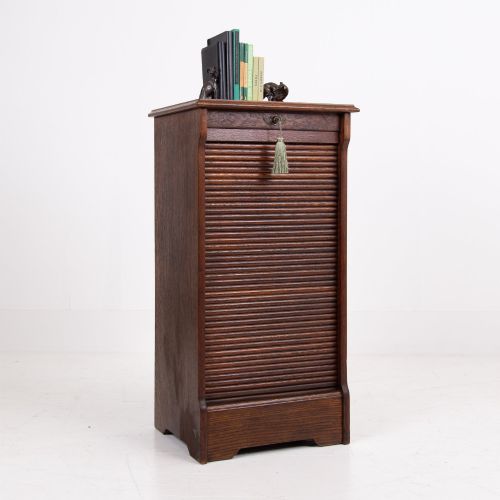
A tambour front cupboard provides a discreet and elegant solution for concealing storage within compact furniture, utilising flexible wooden slats that slide smoothly around a curved track.
Tambour Front Cupboard
When you search for a tambour front cupboard, you encounter a refined group of storage furniture defined by slatted sliding doors rather than hinged panels. The pieces on this page span Georgian, Regency, and Edwardian periods, stretching through the nineteenth and twentieth centuries.
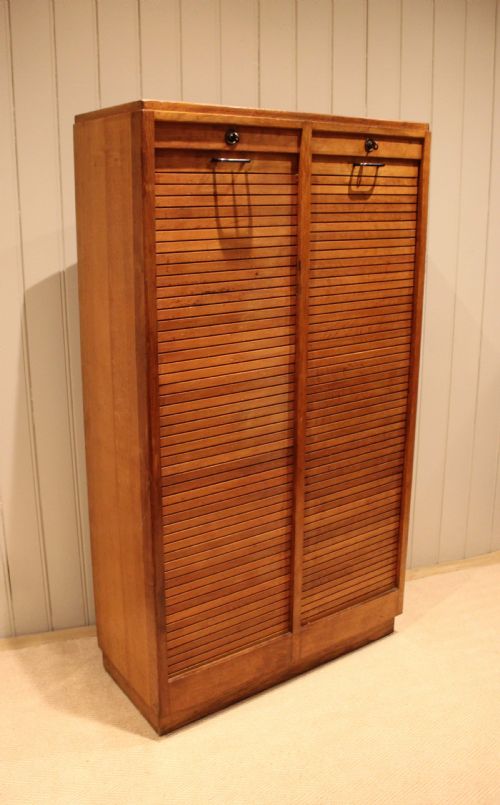
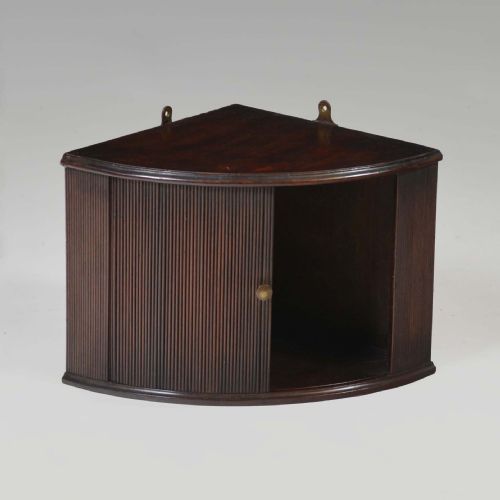
You are most likely to meet bedside tables, commodes, and night stands from the eighteenth and nineteenth centuries, alongside twentieth-century office filing cabinets. Forms range from bow-front and serpentine bedside cabinets to corner cupboards and Dutch demi-lune pieces.
Materials include mahogany, oak, walnut, and pine, frequently enhanced with boxwood inlay, brass fittings, and marble tops. Origins stretch across English workshops, French ateliers, and Dutch cabinet makers.
How they were made
Cabinet makers constructed tambour doors by gluing narrow strips of timber onto a strong fabric canvas or leather backing, creating a flexible sheet that slides within routed wooden tracks. This meticulous method required exceptional precision to ensure the slats travel silently and evenly around tight radii without binding.
Solid timbers such as mahogany, oak, and walnut form the structural frames and carcases, often paired with boxwood stringing and inlay for decorative contrast. Brass handles, feet, and hinges provide functional accents, while selected French and English pieces incorporate marble surfaces.
Tambour Front Cupboard Retail Price Guide 2026
Typical asking prices for tambour front cupboard among the pieces listed under this phrase on Sellingantiques today, from the lower quarter to the upper quarter. They describe what is for sale here now, not the wider market.
Listings feature Georgian, Regency, and Edwardian periods, spanning mahogany, oak, walnut, pine, and marble.
What varies in quality
Quality rests upon the smooth operation of the slatted track and the integrity of the underlying canvas or backing. Superior examples glide effortlessly along their curved grooves without sagging or catching.
The choice of timber and the fineness of the joinery set the top of the range apart from simpler utility pieces. George III and Regency master craftsmen selected richly figured mahogany and executed precise boxwood inlay, whereas later office filing cabinets prioritise utilitarian strength using oak or pine.
The Tambour Front Cupboard Glossary
- Tambour
- Flexible sliding door formed of narrow wooden slats attached to a fabric backing. It allows access to narrow compartments where a swinging door would prove impractical.
- Commode
- A decorative low cabinet or chest of drawers developed in the eighteenth century. In this selection, tambour commodes often serve as bedside night stands.
- Serpentine front
- A curved furniture front featuring a convex centre flanked by concave ends. This contour demands high skill from the cabinet maker.
- Tray top
- A raised rim surrounding the upper surface of a bedside table or cabinet. It prevents items from rolling off the edge.
- Demi-lune
- A half-moon or semicircular shape utilised in the design of tabletops and cabinet carcases. Dutch cabinet makers frequently applied this profile.
Tambour Front Cupboard: Frequently Asked Questions
What is a tambour front cupboard?
A tambour front cupboard is a storage piece featuring flexible wooden slats that slide along a track to conceal the interior. This clever mechanism allows the door to curve around the sides of the cabinet.
Craftsmen favoured this design for bedside tables, desks, and office furniture where space was restricted. It keeps contents hidden while requiring no clearance for swinging doors.
How do I care for a tambour door?
Operating a tambour door requires gentle guidance along its track without applying sudden force. Keeping the grooves clean prevents dust from obstructing the movement of the slats.
Applying appropriate wax or polish preserves the timber of both the slats and the carcase. Avoid excess moisture, which can cause the fabric backing or wooden slats to warp.
Where were tambour cupboards used?
These cabinets served primarily as bedside tables, night stands, and commodes in domestic bedrooms throughout the Georgian and Victorian periods. Their discreet fronts kept chamber items neatly out of sight.
By the twentieth century, the design transitioned into office environments as filing cabinets and roll-top cupboards. This versatility suited both elegant domestic interiors and busy administrative workspaces.
How do I date a tambour cabinet?
Dating relies upon the timber selection, secondary woods, hardware, and prevailing furniture styles of the period. Georgian and Regency pieces typically feature finely figured mahogany, boxwood inlay, and tapered legs.
Twentieth-century examples often utilise oak or pine with a focus on practical office use. Examining the construction methods inside the carcase reveals clues about the era of manufacture.