


Tambour Front Bureau
A tambour front bureau offers a sliding slatted shutter that conceals fitted interior compartments, combining a compact workspace with clever mechanism.
Tambour Front Bureau
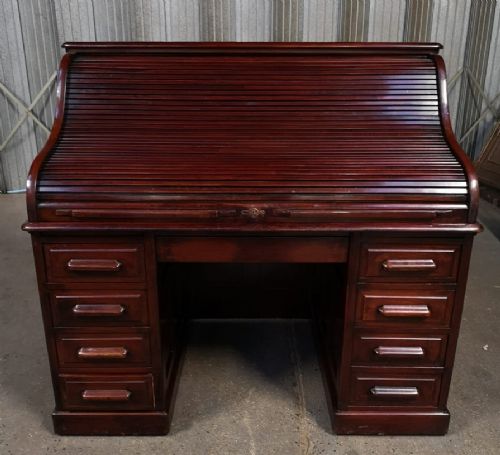
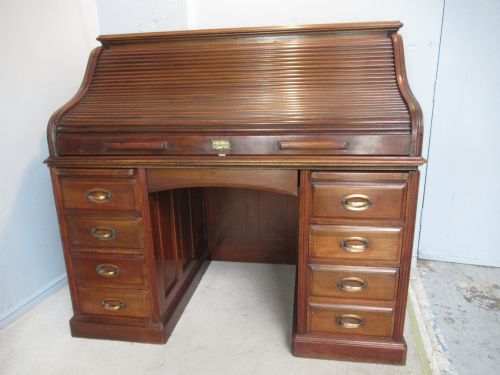
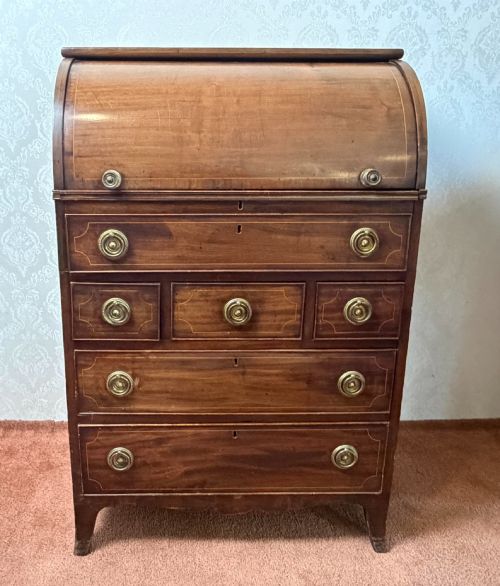
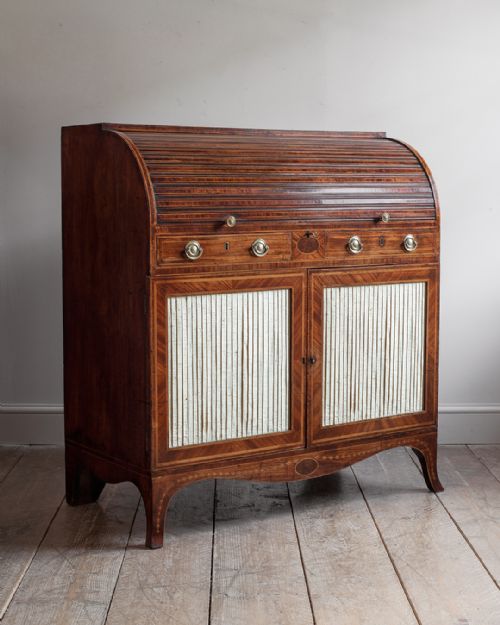
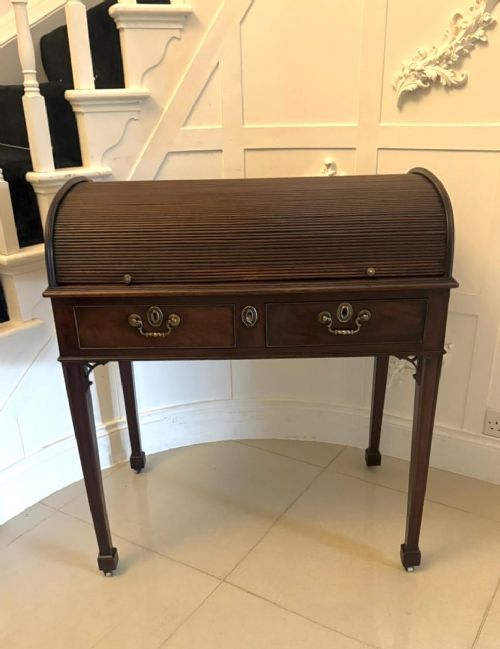
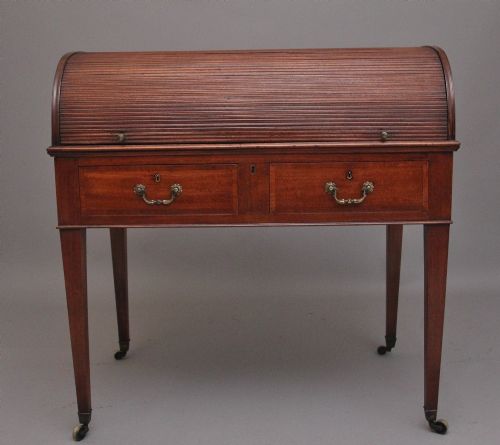
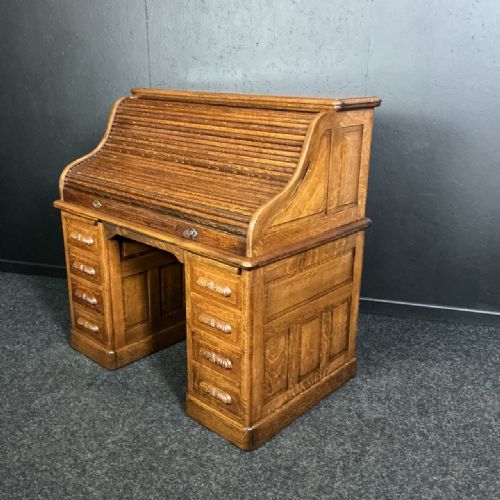
A tambour front bureau is a writing desk featuring a slatted wooden shutter that slides in tracks to conceal the writing surface and interior pigeonholes. These pieces appear across Georgian, Victorian, Edwardian, and early twentieth-century periods, showing forms from large pedestal desks to small ladies writing cabinets. Mahogany and oak dominate the selection, often enriched with satinwood or walnut veneers.
The version most commonly met on this page is the Edwardian or late Victorian oak or mahogany roll top desk, alongside fine George III examples. Buyers encounter everything from substantial estate desks to petite writing cabinets fitted with pull-out slides and internal drawers. The common thread is the flexible tambour curtain replacing a rigid drop-leaf or hinged lid.
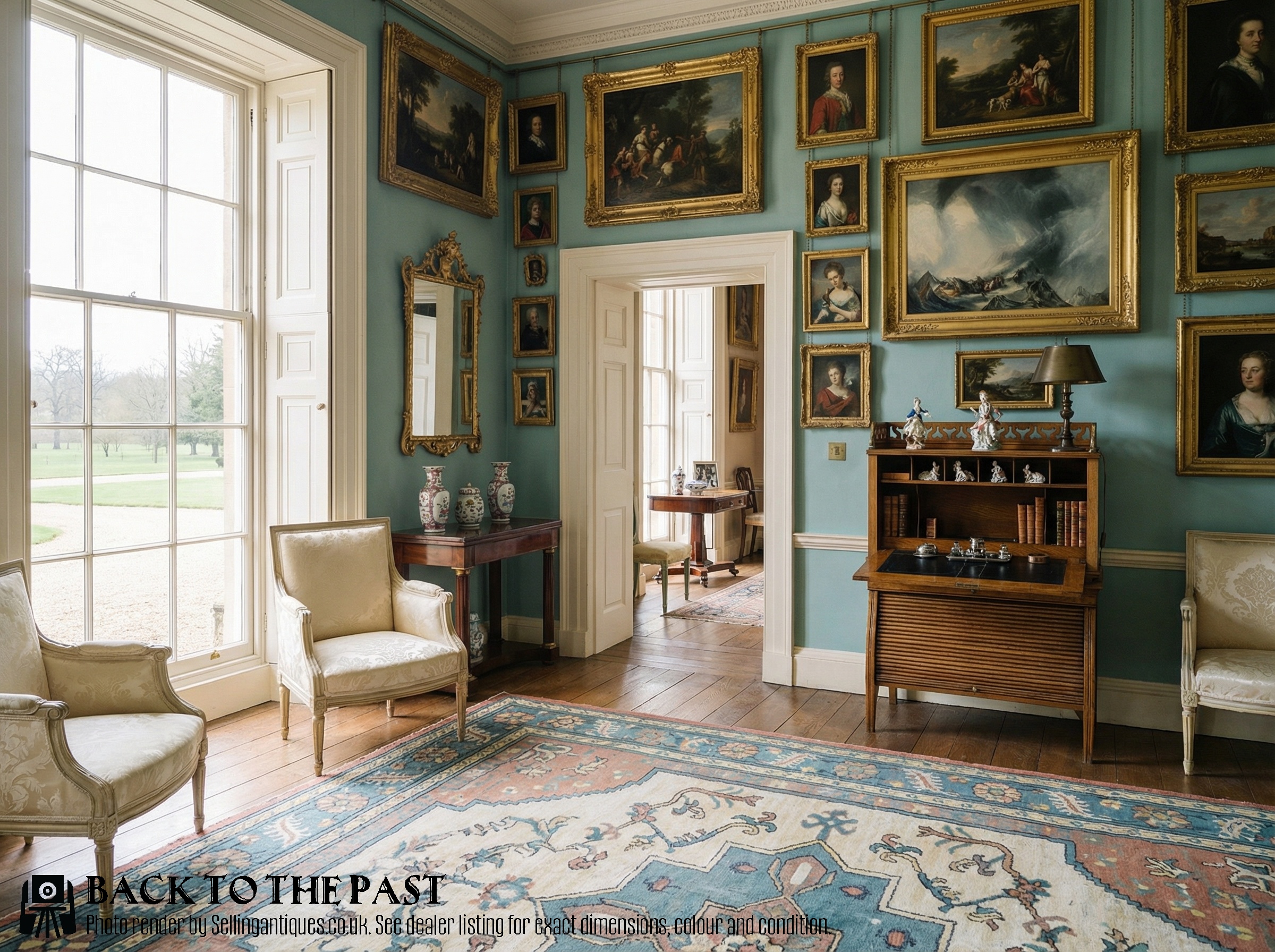
How they were made
Makers constructed the flexible tambour shutter by gluing narrow vertical strips of wood onto a sturdy linen or canvas backing. This allowed the shutter to curve smoothly around internal tracks without jamming. Solid woods like mahogany, oak, and walnut formed the primary carcass and desktop frames.
Craftsmen applied contrasting veneers such as satinwood and utilised fine brass hardware for pulls and escutcheons. Leather inserts often lined the pull-out writing slides, while interior compartments featured delicate pigeonholes and small drawers.
Tambour Front Bureau Retail Price Guide 2026
Typical asking prices for tambour front bureau among the pieces listed under this phrase on Sellingantiques today, from the lower quarter to the upper quarter. They describe what is for sale here now, not the wider market.
Listings span eight distinct periods from the eighteenth century to the early twentieth century, with oak and mahogany appearing most frequently.
What varies in quality
Quality rests in the precision of the tambour track mechanism and the uniformity of the individual wooden slats. Superior pieces operate with a smooth, silent glide along concealed grooves, whereas lesser examples bind or rattle during movement. The choice of primary timber and the delicacy of any inlay work further distinguish standard utility office desks from refined drawing-room pieces.
The integrity of the internal joinery and the selection of figured veneers indicate the maker's hand. Well-executed secondary woods and thoughtful interior arrangement separate standard commercial production from accomplished cabinet work.
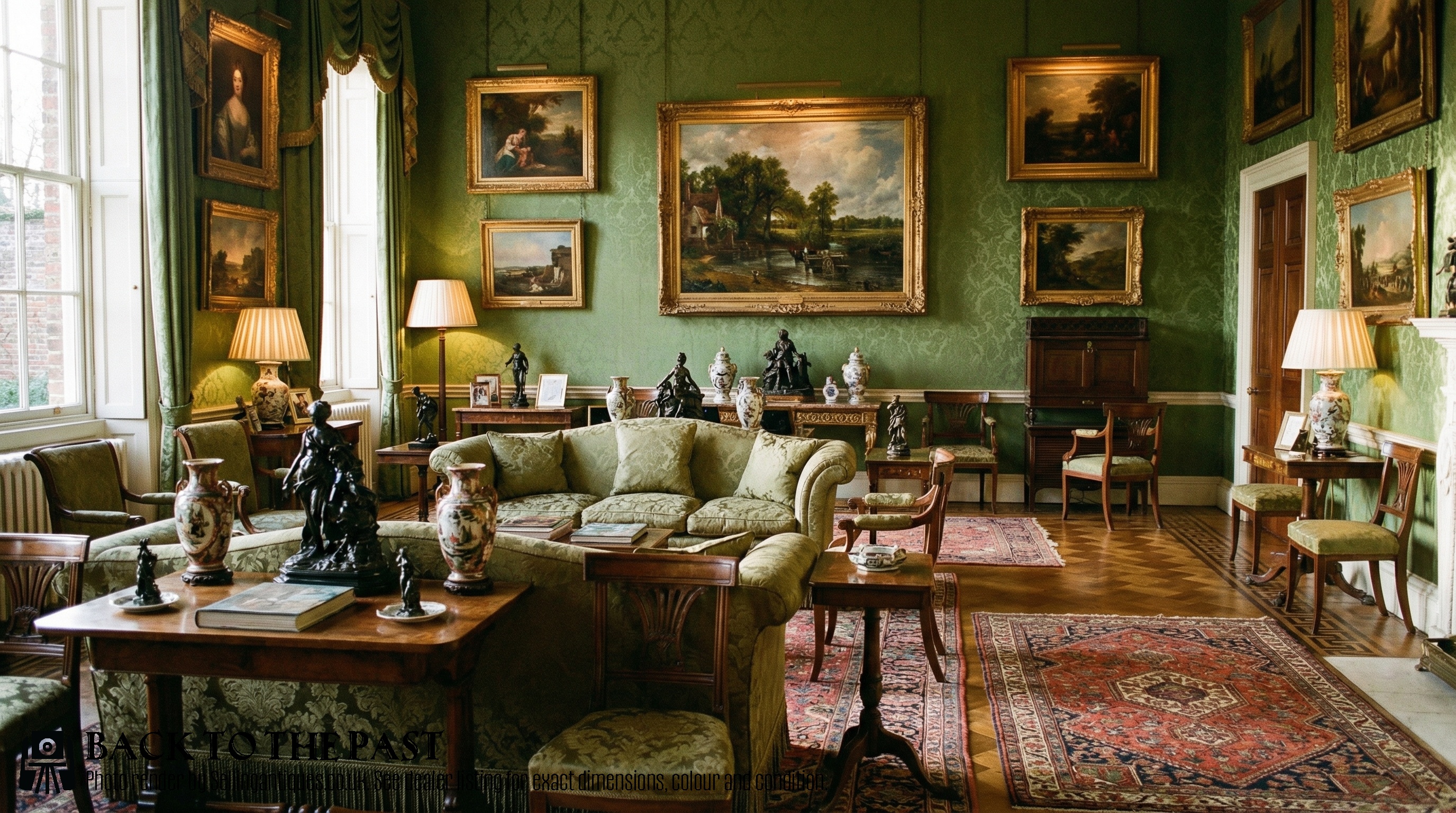
Maples of London and Paris·James Shoolbred and Co·Boston Chair Company
The Tambour Front Bureau Glossary
- Tambour
- A flexible shutter made of narrow wooden strips glued to canvas, allowing it to slide around a curved track. It conceals the pigeonholes and writing surface when closed.
- Cylinder desk
- A writing desk featuring a quarter-circle solid wooden cylinder that rolls back rather than a slatted tambour shutter. These appeared frequently in Georgian and Regency periods.
- Bonheur du jour
- A light lady's writing desk popular in the eighteenth century, often fitted with a small cabinet, shelves, or tambour doors above the writing surface.
- Pedestal desk
- A heavy desk comprising two box-like pedestals of drawers supporting a top writing surface, frequently fitted with a roll top or tambour enclosure.
- Pigeonhole
- A small, open compartment within the desk interior used for sorting letters and papers. These sit behind the tambour shutter.
Tambour Front Bureau: Frequently Asked Questions
How do tambour shutters operate?
The narrow wooden strips slide horizontally or vertically along concealed grooves cut into the desk carcass. The canvas backing keeps each slat aligned as the shutter curves around the interior mechanism.
Regular use keeps the tracks clear, though older shutters benefit from careful cleaning to maintain a smooth glide.
What is the difference between a cylinder desk and a tambour desk?
A cylinder desk uses a rigid, solid curved piece of wood that rotates on pivots to open. A tambour desk uses many small slats joined together, allowing the shutter to follow a tighter curve.
Both serve the same purpose of concealing the desk interior, but the construction methods differ entirely.
Where were these desks used?
Earlier examples stood in grand libraries and drawing rooms of Georgian estates for managing correspondence. Later Victorian and Edwardian versions served busy home offices and commercial counting houses.
Their compact footprints made them adaptable for smaller residential rooms.
How do I care for the leather writing surface?
Leather inserts require gentle cleaning with a damp cloth and occasional treatment with specialist leather balm to prevent drying. Avoid harsh chemical cleaners that strip the original tone.
Keeping the surface free from abrasive objects preserves the finish.