


Tall Wooden Floor Lamp
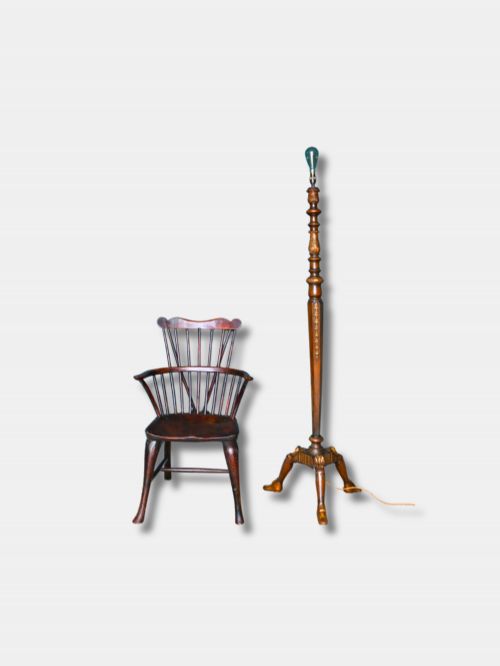
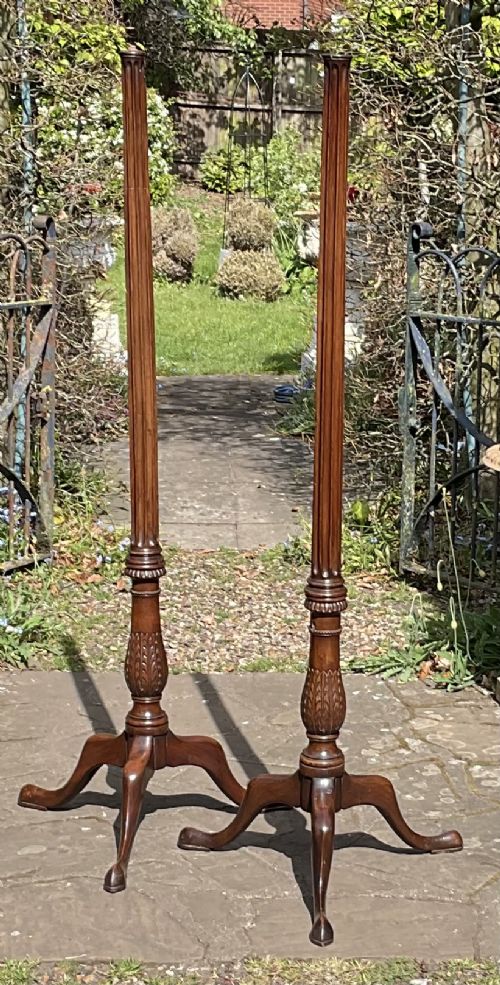
A tall wooden floor lamp brings architectural height and warm illumination to a room, drawing the eye upwards through turned timber and carved detail.
Tall Wooden Floor Lamp
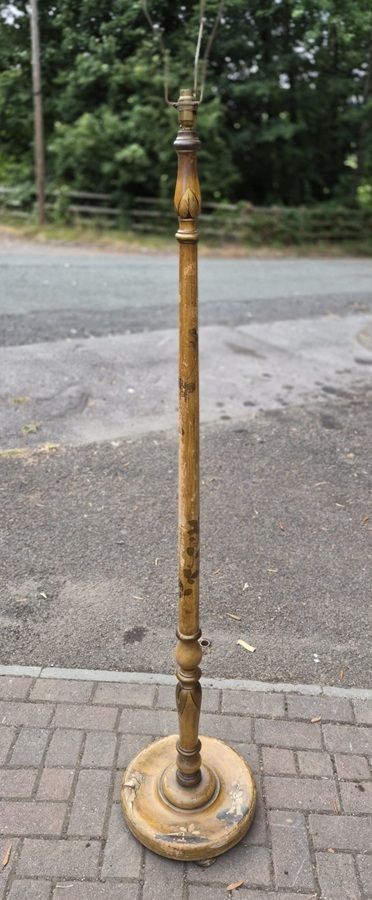
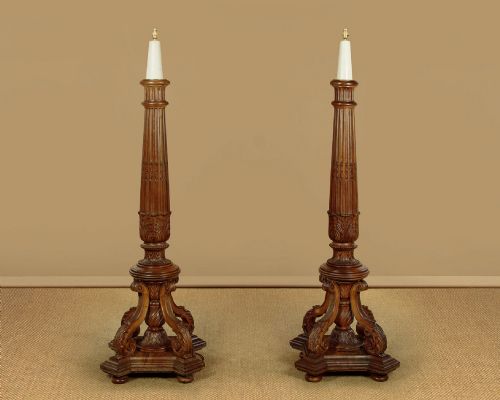
A tall wooden floor lamp, often designated in older records as a standard lamp, lantern stand, pedestal, or torchiere, serves to elevate a light source above furniture level. Buyers searching for a tall wooden floor lamp encounter upright timber shafts supported by tripod bases, circular platforms, or heavy plights.
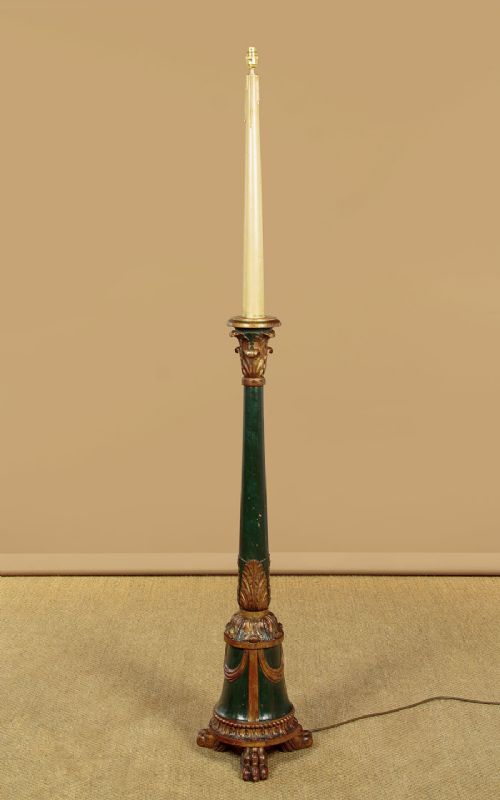
The pieces appearing on this page span the Georgian era through to the 1930s, encompassing revival styles such as Regency and Georgian Revival alongside Art Deco, Edwardian, and Italian Florentine designs. Walnut, mahogany, beech, oak, and pine form the primary structural timbers, frequently augmented by painted finishes, parcel gilt, or gesso.
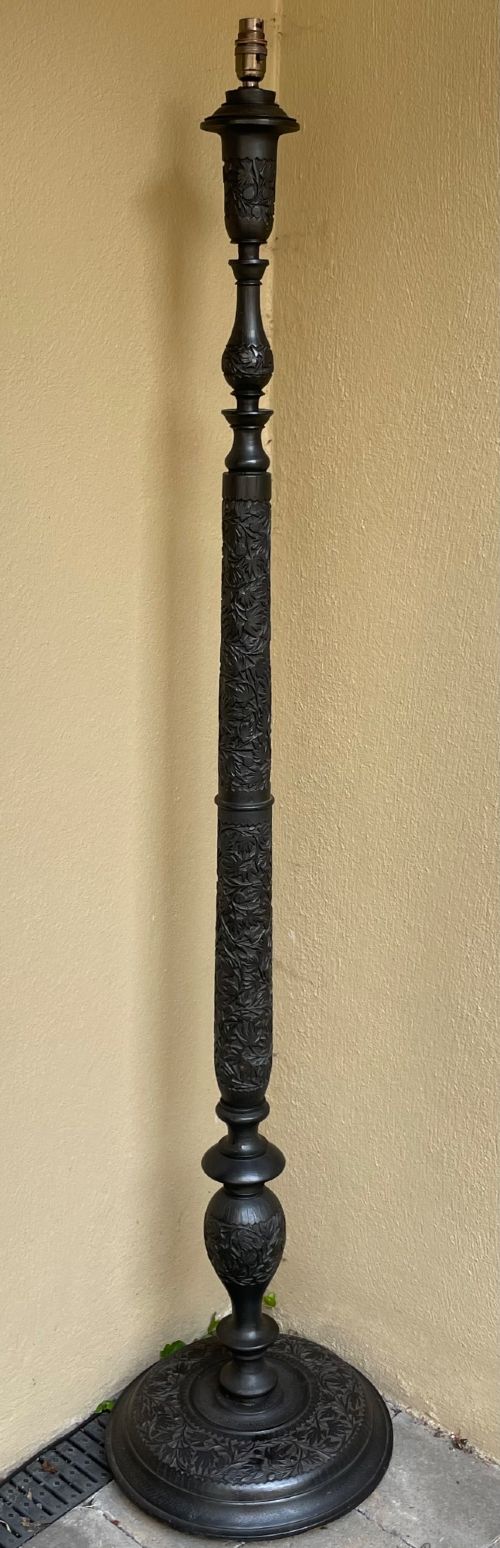
Standard lamps and torchieres adapt historical furniture forms for domestic electric illumination, sometimes evolving from earlier pole screen conversions or lantern stands. Formats range from carved Chinese hardwood dragon stands and Anglo-Indian creations to sleek golden oak and ebony Art Deco shafts.
Materials and construction methods
Turners and cabinetmakers shaped dense hardwoods such as mahogany and walnut on lathes to produce slender, columnar shafts and decorative reeding. Joinery relied on sturdy tenons and weighted bases to ensure stability for tall upright furniture.
Surface ornamentation involved intricate hand-carving, gesso application, and gilding with gold leaf or paint finishes. Gildwood standards often incorporated intricate relief work, while Chinoiserie and painted examples utilised applied decoration over prepared timber grounds.
Several dragon stands in the collection ensure your room is illuminated under the watchful gaze of mythical beasts.
Distinguishing quality in standard lamps
Quality rests in the crispness of the timber carving and the architectural proportion of the shaft relative to its base. Superior examples demonstrate thoughtful balance, utilising heavy indigenous or exotic hardwoods that prevent tipping.
The integrity of the original surface finish, whether patinated mahogany, undisturbed parcel gilt, or period paintwork, dictates the character of the piece. Fine joinery and subtle turning distinguish bespoke workshop production from simpler utility pieces.
Whytock and Reid·Heals and Sons
The Tall Wooden Floor Lamp Glossary
- Torchiere
- A tall ornamental stand originally designed to carry a torch or candle, later adapted for electricity. These pieces provide vertical emphasis in a room.
- Standard lamp
- The traditional British term for a floor lamp, describing an upright timber post fitted for electric lighting. They frequently feature weighted circular or tripod bases.
- Gesso
- A plaster-like mixture applied to wood as a base for painting or gilding. Skilled artisans carved intricate relief patterns directly into this hardened layer.
- Parcel gilt
- A finishing technique where portions of an object are highlighted with gold leaf while other areas show the underlying wood or paint. It accentuates carved details on revival pieces.
- Pole screen conversion
- An antique standing screen adapted to hold a light fitting instead of a textile panel. This reuse retains historical brass fittings and turned wooden stems.
Tall Wooden Floor Lamp: Frequently Asked Questions
What is a standard lamp?
A standard lamp is the traditional British term for a tall floor lamp designed to stand independently on the floor. These pieces use a weighted base to support an upright wooden shaft.
They generally feature a fitting at the top to hold a fabric shade, bringing ambient light to corners and seating areas without requiring table space.
How do I identify an Edwardian standard lamp?
Edwardian standard lamps often display lighter proportions and draw upon Chinoiserie, neoclassical, or simpler turned wooden designs. They reflect the decorative tastes of the early twentieth century.
Makers of this era favoured mahogany, walnut, and painted finishes, frequently incorporating slender columns and subtle reeding.
Where should I place a torchiere?
A torchiere works best in corners or beside large pieces of furniture where its height can fill vertical space. Because these pieces direct light upwards, they create soft, indirect illumination.
Ensure the base rests on a level surface and avoid placing them in high-traffic corridors where the tall wooden shaft might be disturbed.
How do I care for antique wood?
Dust antique wooden floor lamps regularly with a soft, dry cloth to prevent dirt accumulation on carved surfaces and gilt details. Avoid using modern silicone sprays that can damage historic finishes.
Keep the timber away from direct heat sources and strong sunlight to prevent the wood from drying out or the finish from fading over time.