
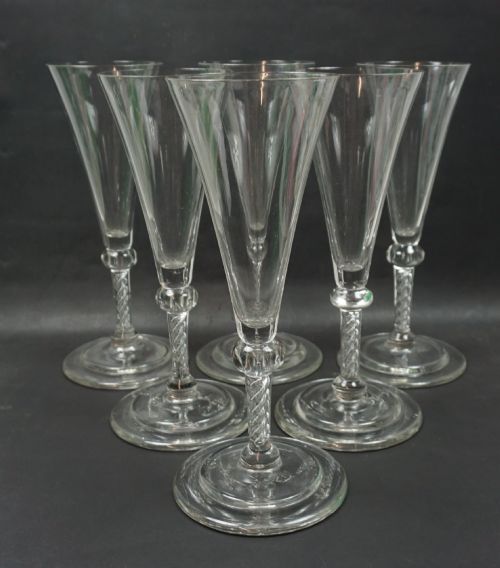


Tall Stem Wine Glasses
Tall stem wine glasses bring height and elegance to the table, offering collectors a striking silhouette from Georgian, Victorian, and later periods.
Tall Stem Wine Glasses
When you search for tall stem wine glasses, you encounter drinking vessels designed with elongated stems spanning multiple eras from the eighteenth century to the early twentieth century. These pieces range from eighteenth-century English air twist flutes and George II drawn trumpet glasses to Victorian green goblets and Edwardian turquoise examples.
The selection also includes continental European pieces such as Bohemian pale green roemers, Theresienthal crystal hock glasses featuring enamel decoration, and Secessionist drinking glasses attributed to designers like Otto Prutscher. Forms vary from champagne flutes and hock glasses to traditional wine goblets, reflecting the drinking habits of different decades.
Georgian items often showcase folded feet, air tears, and mixed twists, while later nineteenth and twentieth-century examples embrace vibrant colours, enamelling, and stylistic movements like Art Nouveau and Jugendstil. Buyers meet both matched sets and individual statement pieces across these diverse periods.
How they were made
The manufacture of these drinking vessels relies heavily on blown glass and lead crystal, shaped by hand to create the characteristic elongated stems. Makers utilised techniques such as forming internal air tears and air twists within the molten metal during the eighteenth century.
Decoration on continental and later pieces incorporates applied gold leaf and detailed enamel work fired onto the surface of the glass. Distinctive hues in green, turquoise, and pale shades result from mineral oxides added during the glassmaking process.
Listings span several materials including lead glass, clear glass, gold leaf, and enamel across Georgian, Victorian, and Edwardian periods.
What varies in quality
Quality in these drinking vessels rests upon the clarity of the crystal, the precision of the stem formation, and the crispness of any applied decoration. Eighteenth-century examples depend on the fineness of the air twist and the stability of the folded foot, whereas later pieces are judged by the hand-painting on enamel and the purity of the coloured glass.
Condition and completeness also separate items, particularly with sets of wine flutes or hock glasses where uniform height and matching bowls elevate the desirability. The skill evident in blown glass manipulation distinguishes standard production items from masterworks attributed to notable workshops.
Theresienthal·Meyr s Neffe·Otto Prutscher
The Tall Stem Wine Glasses Glossary
- Air twist
- A decorative stem formation containing elongated spiral bubbles created by drawing air through hot glass. This technique is typical of eighteenth-century English drinking vessels.
- Hock glass
- A tall-stemmed vessel originally designed for German white wine, often featuring coloured bowls and elaborate enamel or gilt decoration. They frequently date from the Edwardian era.
- Drawn trumpet
- A glass form where the bowl and stem are pulled from a single gather of molten metal rather than joined separately. This method creates a continuous, elegant profile found in mid-eighteenth-century pieces.
- Folded foot
- A rim turned underneath the base of a glass to add weight and stability. This feature is a hallmark of quality eighteenth-century manufacturing.
Tall Stem Wine Glasses: Frequently Asked Questions
How do I clean antique tall stem wine glasses?
Wash these delicate vessels by hand in warm, soapy water without soaking them, particularly if they feature enamel or gold leaf decoration. Avoid modern dishwashers entirely to protect the fragile stems and historic glass surfaces.
Dry them immediately with a lint-free cloth to prevent water spots. Store them upright on a stable surface where the tall stems will not suffer accidental knocks.
Can I still use these glasses for wine?
Many collectors enjoy using eighteenth-century and Victorian stemware for special occasions, provided the glass is handled with care. The lighter weight and different bowl shapes offer a tactile connection to historical dining traditions.
Take care with temperature changes, as old glass can crack under sudden heat or cold. Hand washing after use ensures these historical pieces survive for future generations.
How do I identify an eighteenth-century glass?
Examine the stem and foot for manufacturing traits such as pontil marks, air twists, and folded bases. Eighteenth-century vessels often feel lighter and display slight irregularities indicative of hand-blowing.
Compare the silhouette against documented examples from the Georgian period. Weight, metal clarity, and wear marks on the underside of the foot provide further clues to age.
What is the difference between lead glass and crystal?
Lead glass contains a proportion of lead oxide which increases the weight, brilliance, and refractive index of the material. This composition allows artisans to form delicate air twists and thin walls.
Crystal is a term historically applied to high-clarity lead glass that rings when struck gently. Both materials require careful handling to avoid chipping the slender stems.