



Hand Painted Crystal Glasses
These hand painted crystal glasses and matching display pieces combine heavy lead crystal with intricate enamel and gold leaf decoration.
Hand Painted Crystal Glasses
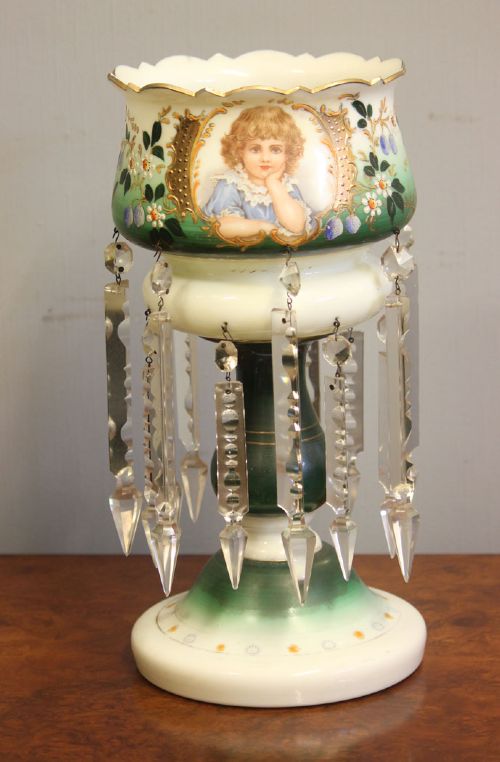
When searching for hand painted crystal glasses, collectors encounter delicate wine hocks, hock glasses, and punch bowl sets alongside larger decorative table and mantle lustres. These items span the nineteenth century and the early twentieth century, showing distinct influences from Victorian, Art Nouveau, and Bohemian traditions.
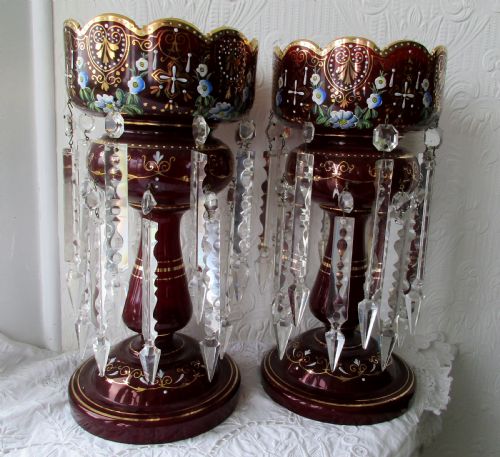
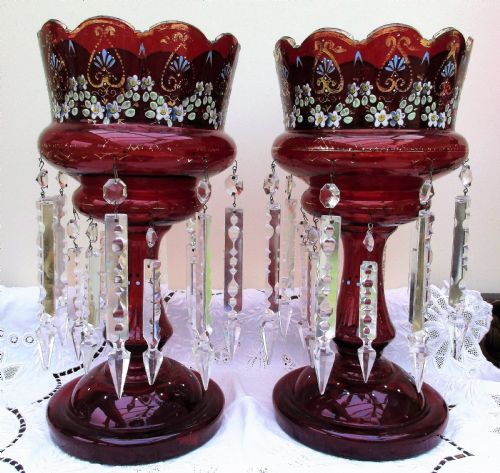
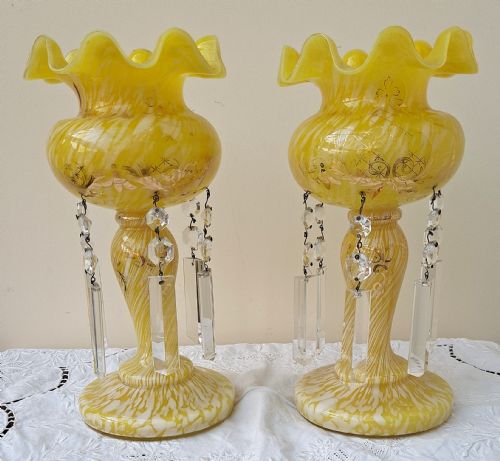
The glassware ranges from small drinking vessels with floral enamel decoration to substantial ruby, green, and yellow glass lustres fitted with hanging prisms. English and continental workshops produced these pieces, with German makers such as Theresienthal supplying fine crystal hock glasses.
Buyers frequently find pairs of lustres or individual inkwells alongside drinking sets. The forms lean towards ornate table centrepieces and oil lamps rather than simple utilitarian glassware.
Judging quality and execution
Quality rests upon the crispness of the glass cutting and the precision of the hand-painted enamel work. Superior examples display finely rendered floral motifs with raised enamel dots and intact, bright gilding.
The weight of the lead crystal and the clarity of the coloured glass layers separate standard production from exceptional work. Complete sets of matching hock glasses or pairs of lustres with all original crystal prisms intact command greater interest.
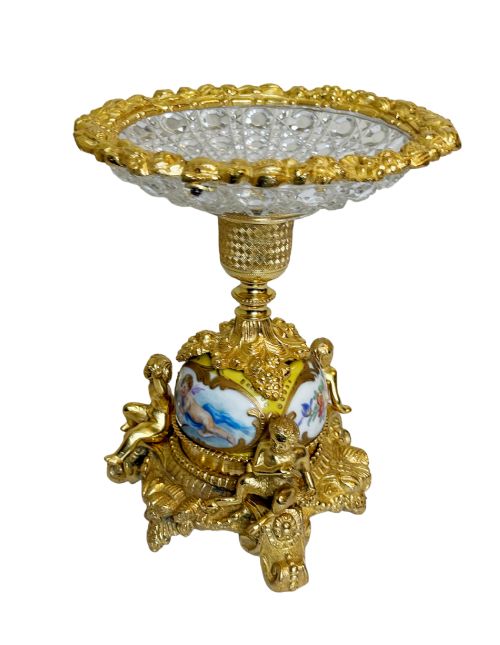
Materials documented across the inventory include lead crystal, ruby glass, enamel, gold leaf, and gilt bronze.
Theresienthal
The Hand Painted Crystal Glasses Glossary
- Lead crystal
- Glass containing lead oxide to increase weight, brilliance, and clarity. This material allows for deeper and sharper cutting.
- Lustre
- A decorative table ornament featuring a central stem and bowl hung with cut glass prisms. These pieces reflect candlelight and daylight.
- Hock glass
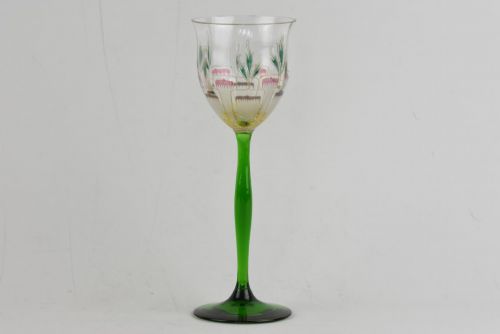
- A tall-stemmed wine glass, often featuring coloured crystal and enamelled decoration. They were traditionally used for German white wines.
- Overlay glass
- A technique involving layers of different coloured glass fused together, where the outer layer is partially cut away to create patterns. This method produces high-contrast designs.
- Guilloche enamel
- A decorative technique where enamel is applied over metal engraved with a precise geometric pattern. It appears on small decorative accessories like inkwells.
Hand Painted Crystal Glasses: Frequently Asked Questions
What are mantle lustres?
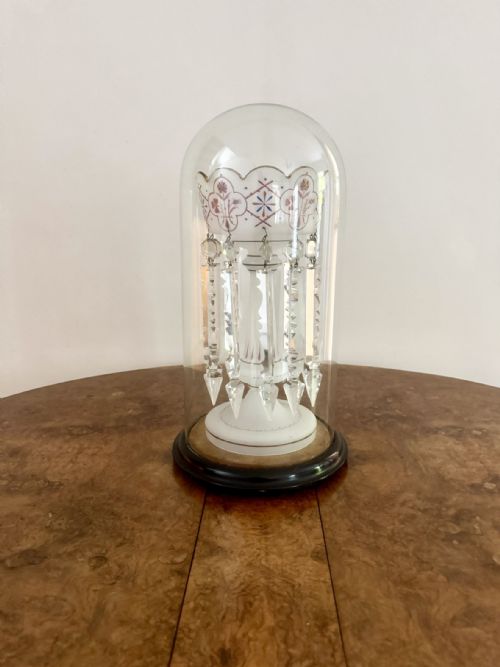
Mantle lustres are decorative glass table ornaments designed to sit on a fireplace mantelpiece. They consist of a central vase or pedestal fitted with glass pendants that catch the light.
These pieces were popular during the Victorian period and often featured hand-painted floral enamel and gilt decoration against ruby, green, or white glass.
How do I clean enamelled crystal?
Enamelled and gilt crystal requires careful hand washing in lukewarm water with mild soap. Avoid soaking the pieces, as moisture can damage old gold leaf and enamel.
Dry the glass immediately with a soft lint-free cloth to protect the painted surfaces and any applied metallic details.
Are these glasses safe for daily use?
Antique crystal glasses with hand-painted enamel and gold leaf are generally intended for display or careful occasional use. The historic paints and gilding can wear away with frequent washing.
Hand-washing is essential, and these vessels should be kept away from dishwashers and harsh detergents.
What is a hock glass?
A hock glass is a traditional European wine glass with a long stem and an elongated bowl designed for white wine. Enamelled versions from makers like Theresienthal often feature delicate floral motifs.
These glasses were produced in clear, green, or ruby crystal with detailed painted decoration.