



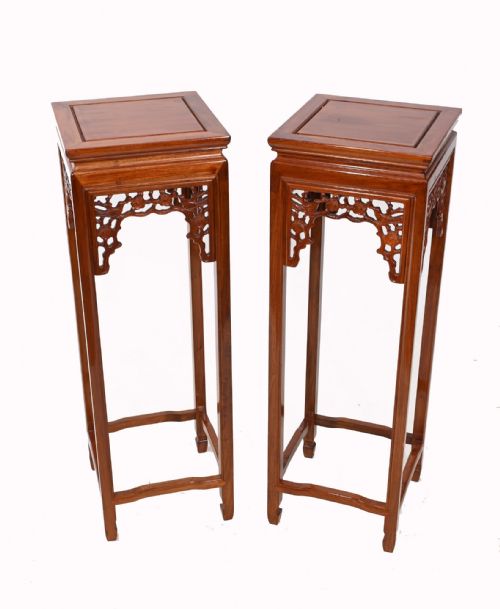



Tall Oriental Display Table
A tall oriental display table elevates heavy pottery and bronze, bringing structure and rich timber grain to high-ceilinged rooms.
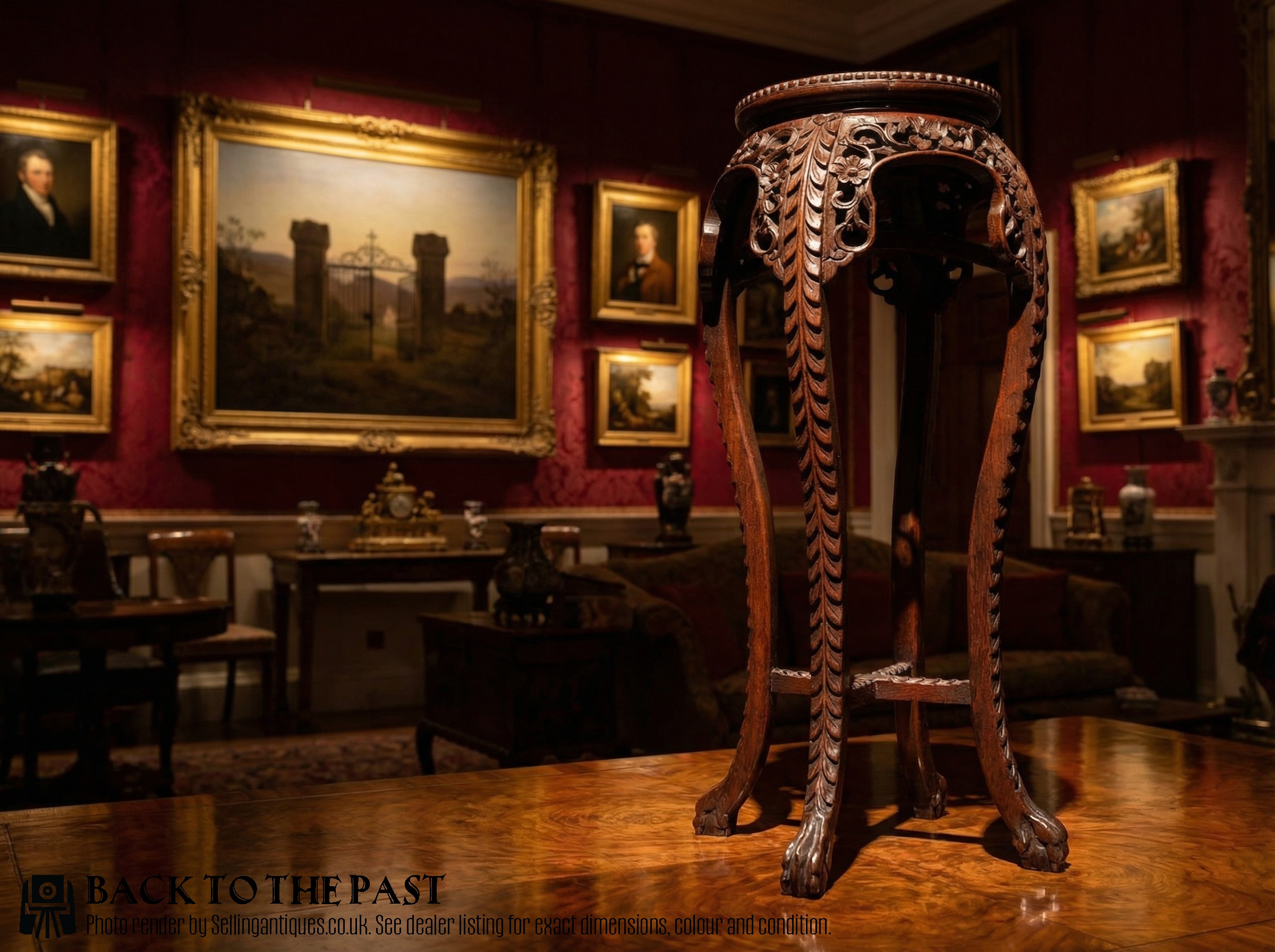
Tall Oriental Display Table
A tall oriental display table acts as a sturdy platform for porcelain vessels, bronze vases and large indoor plants, raising them to eye level. These functional stands serve as plant stands, pedestal tables and jardiniere supports within domestic interiors.
The pieces seen on this page primarily date from the nineteenth century, including Victorian periods and the nineteen-twenties, incorporating Chinese export, Chinese traditional and Arts and Crafts styles. They arrive in forms such as plant stands and pedestal tables, often associated with Qing Dynasty aesthetics.
Buyers encounter sturdy frames designed to hold heavy objects without tipping. Each piece balances sculptural carving with a flat, stable surface intended to display prized decorative arts.
How they were made
Craftsmen built these tables using dense hardwood, ebonised wood and carved hardwood, selecting timbers capable of supporting substantial weight. These durable materials provide the structural integrity required for tall, slender furniture forms.
Many examples incorporate fitted marble tops inset into the timber frame, offering a cool, smooth surface that resists moisture from plant pots. Hand-carved detailing decorates the aprons, legs and stretchers with traditional motifs.
Joinery techniques secure the uprights and platforms, ensuring stability despite the narrow footprint of the tall stands. Artisans shaped the wood using manual hand tools to achieve detailed pierced carving and curved cabriole or straight legs.
Tall Oriental Display Table Retail Price Guide 2026
Typical asking prices for tall oriental display table among the pieces listed under this phrase on Sellingantiques today, from the lower quarter to the upper quarter. They describe what is for sale here now, not the wider market.
Listings incorporate nineteenth-century production dates alongside Victorian and early twentieth-century examples, utilising materials such as marble and carved hardwood.
What varies in quality
Quality depends upon the depth and crispness of the hand carving, where deeply undercut foliage and figures demonstrate superior artisanal skill. Shallower, mechanical carving lacks the dimensional sharpness found in finer workshops.
The integration of the marble insert dictates the refinement of the piece, with tightly fitted, unblemished stone showing superior craftsmanship. Loose fits or replacement panels alter the original integrity of the table.
Timber selection and weight distribution separate standard utility stands from exceptional examples. Dense, heavy hardwoods with rich, natural grain patination command greater appreciation than lighter, plain-grained substitutes.
Liberty of London
The Tall Oriental Display Table Glossary
- Hardwood
- Dense timber derived from broad-leaved deciduous trees, providing the structural strength needed for carved furniture. This material resists denting and supports heavy decorative objects securely.
- Jardiniere
- An ornamental pot or stand for holding plants and flowers, often placed on the floor or a low pedestal. These vessels complement the height of tall display tables.
- Qing Dynasty
- The final imperial dynasty of China, lasting from sixteen forty-four to nineteen twelve. Furniture from this era heavily influences the traditional carved styles seen on this page.
- Ebonised wood
- Timber treated with a dark finish to imitate expensive ebony. This technique creates a uniform, deep black surface that highlights carved details.
- Chinese Export
- Goods manufactured in China specifically for Western markets, blending Eastern construction methods with European taste. These items often feature distinctive decorative motifs tailored for foreign buyers.
Tall Oriental Display Table: Frequently Asked Questions
How do I care for a marble top stand?
Clean the marble insert using a soft cloth dampened with mild soapy water, avoiding harsh chemical cleaners that can etch the polished surface. Wipe away moisture promptly to prevent water marks from settling into the stone.
Apply a neutral stone sealer periodically to protect the marble from stains caused by plant pots or condensation. Treat the surrounding hardwood with appropriate furniture wax to nourish the timber grain.
How do I distinguish nineteenth-century pieces?
Nineteenth-century examples display dense, heavy hardwoods and hand-carved joinery that reflects traditional craftsmanship without modern power tools. Look for natural patination in the timber and signs of age-appropriate wear around the foot rails and corners.
Construction methods often rely on traditional pegged joints rather than modern metal screws. The presence of nineteenth-century export styles further clarifies the age and origin of the stand.
Where should I place a display table?
Position these tables in corners, beside seating areas or against blank walls where their vertical height can add architectural interest. Ensure they stand on level flooring to maintain stability, especially when supporting heavy ceramic vases or large plants.
Keep them away from direct heat sources and strong sunlight to protect the hardwood finish from drying out or fading. Their narrow footprint allows them to occupy small floor spaces effectively.