






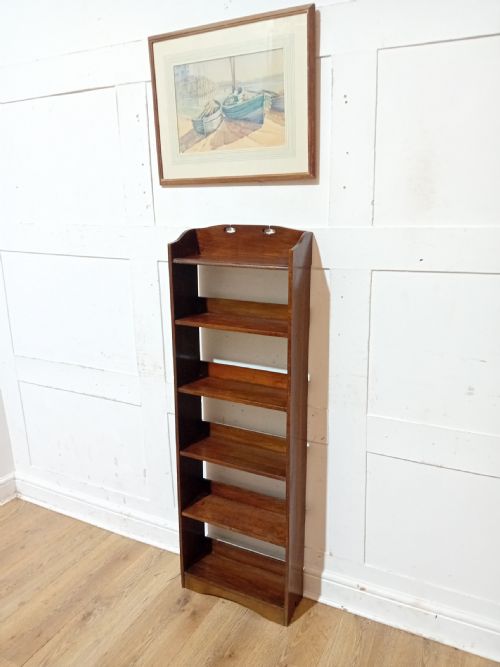


Tall Open Book Stand
A tall open book stand provides accessible vertical storage for libraries and studies, combining practicality with period character.
Tall Open Book Stand
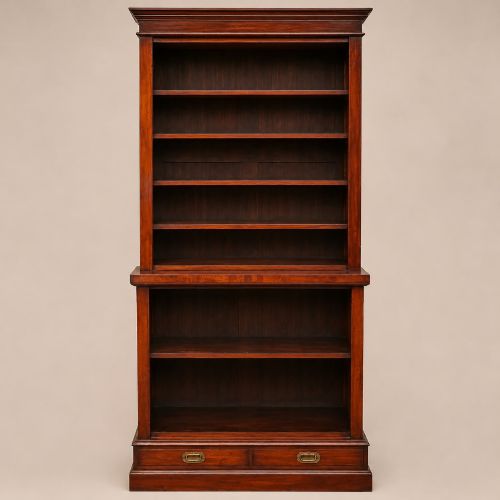
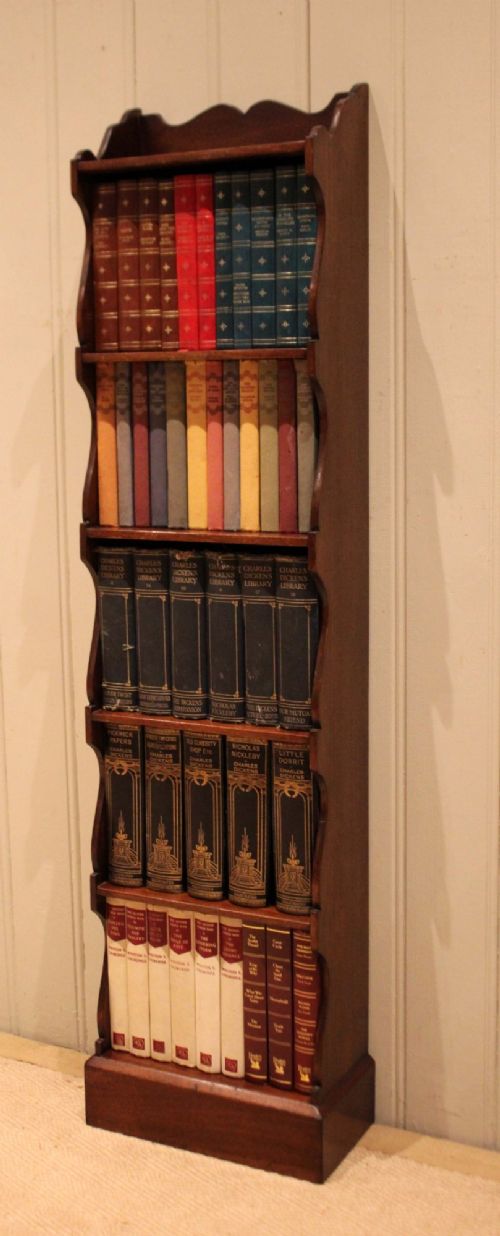
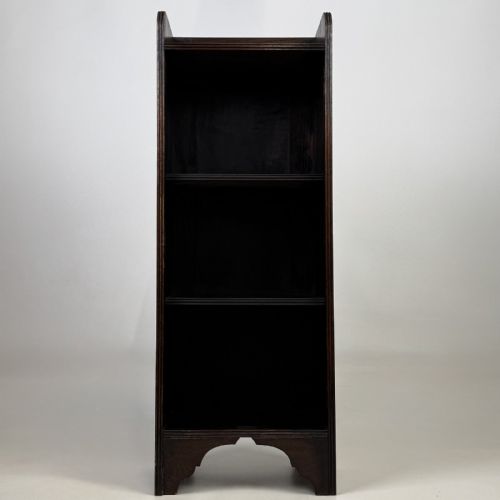
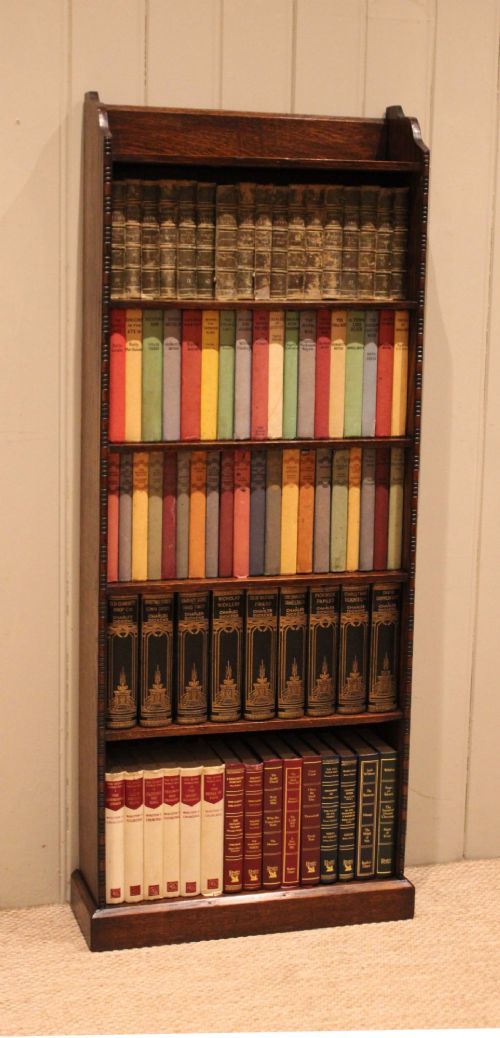
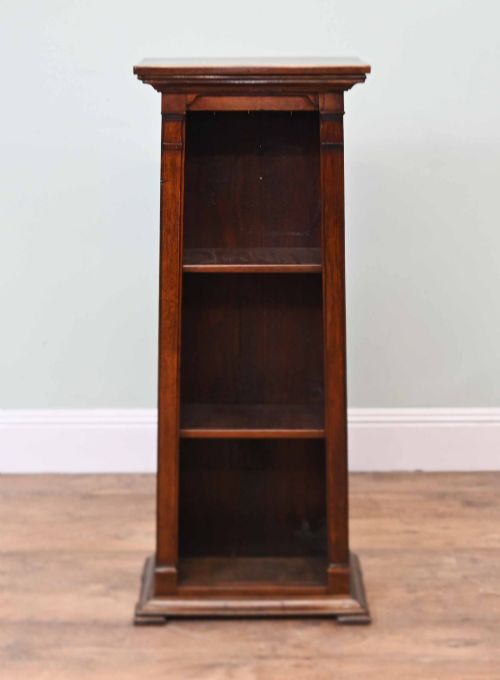
A tall open book stand, often recorded as an open bookcase or library shelving, offers accessible vertical storage for volumes across a room. These pieces appear frequently in oak and mahogany, spanning the Victorian, Edwardian, Arts and Crafts, and Art Deco periods.
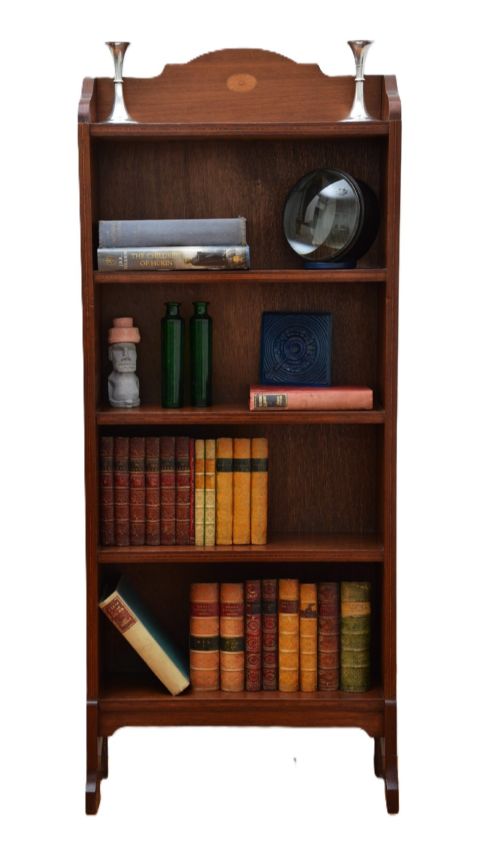
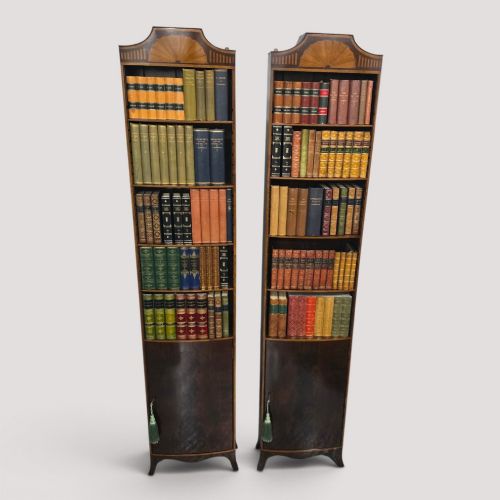
The selections on this page range from narrow formats and double-width designs to pairs with adjustable shelves, raised galleries, and arched tops. Simpler variations sit alongside pieces featuring satinwood inlay, slender pillars, and brass or ormolu mounts.
Earlier 19th-century examples sit alongside early 20th-century traditional forms, alongside distinct whatnots and corner cabinets. Structural detailing includes beaded edges, front mouldings, and cupboard lower sections supporting open upper tiers.
Materials and construction
Makers utilised solid hardwoods such as oak and mahogany, alongside teak, pine, elm, and satinwood for inlay work. Metal elements including brass and ormolu appear on select mounts and decorative fixtures.
Joinery techniques support sturdy vertical frames, housing fixed or adjustable shelving systems alongside raised gallery tops and arched surrounds. Exterior surfaces display beaded edges, decorative mouldings, and inlaid wood patterns.
Tall Open Book Stand Retail Price Guide 2026
Typical asking prices for tall open book stand among the pieces listed under this phrase on Sellingantiques today, from the lower quarter to the upper quarter. They describe what is for sale here now, not the wider market.
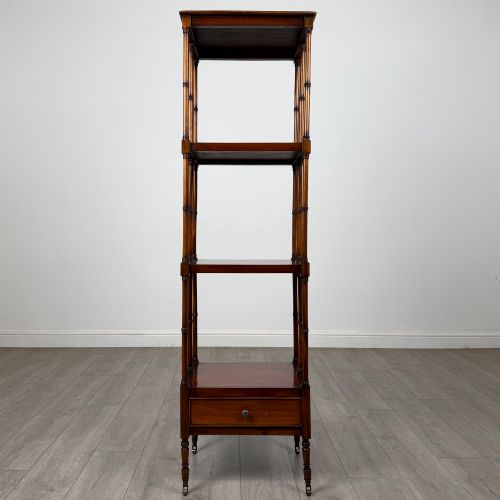
Even ships required tidy reading habits, as proved by the sturdy teak four-tier whatnot built for life on the waves.
Craftsmanship and proportion
Quality rests in the selection of timber grain and the precision of structural joints across narrow or double-width frames. Finer examples integrate thoughtful proportions, clean moulding work, and durable adjustable shelf mechanisms.
Decorative restraint separates standard utility pieces from works carrying refined stylistic details like satinwood inlay, slender pillars, or carved galleries. The integrity of the timber finish and the balance of the overall silhouette dictate the lasting appeal of each piece.
WYLIE LOCHHEAD of GLASGOW·E.A. TAYLOR
The Tall Open Book Stand Glossary
- Gallery
- A raised ornamental border along the top edge of a bookcase or cabinet. It typically prevents items from sliding off the surface.
- Whatnot
- An open set of multiple tiers or shelves designed for displaying books and objects. These pieces often feature slender supporting uprights.
- Ormolu
- Gilt bronze mounts applied for decorative effect on furniture pieces. This technique adds metallic detail to the timber framework.
- Inlay
- Contrasting wood or material fitted into the surface of a piece to create decorative patterns. Satinwood is frequently used for this purpose.
- Adjustable shelves
- Shelves that can be moved to different heights within the bookcase interior. This mechanism accommodates books of varying sizes.
Tall Open Book Stand: Frequently Asked Questions
What periods do these bookcases represent?
The pieces span the nineteenth century, the Edwardian era, and the early twentieth century. Styles include Victorian, Arts and Crafts, and Art Deco.
Craftsmen built these items using timbers such as oak, mahogany, teak, and elm.
How do I adjust the shelves?
Many examples feature adjustable shelving supported by internal tracks or pin systems. This allows you to alter shelf heights for different book sizes.
Simpler period variations utilise fixed wooden shelves secured directly into the vertical panels.
Are narrow models stable?
Narrow and slim formats are constructed with solid timber frames designed to support vertical weight. Taller units benefit from placement against flat walls for added stability.
Heavier hardwood construction provides natural balance despite slender proportions.
What is a gallery top?
A gallery top is a raised wooden border or railing fitted to the uppermost surface of the bookcase. It frames the top and provides a finished architectural edge.
Some galleries feature arched or pierced designs typical of Arts and Crafts and Edwardian pieces.