


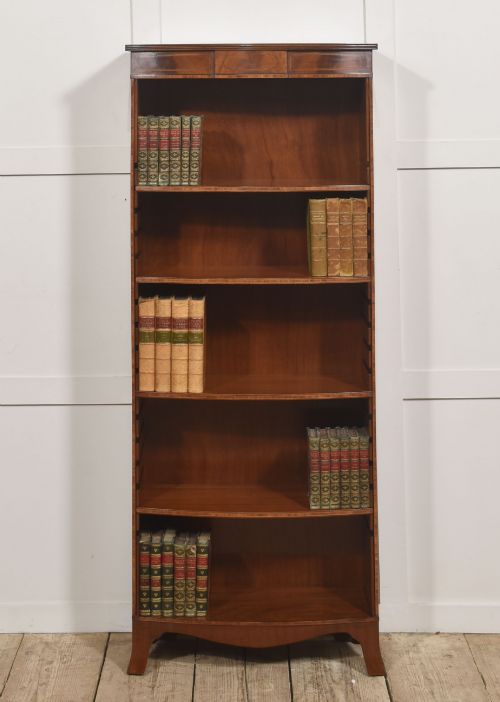
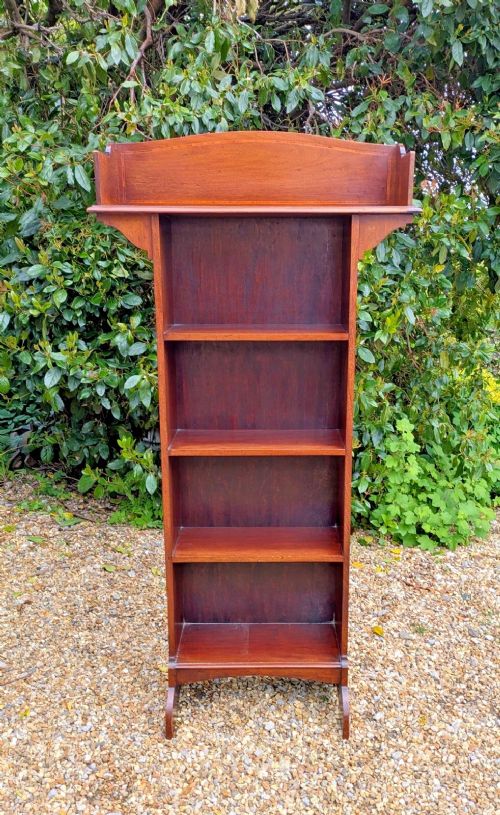
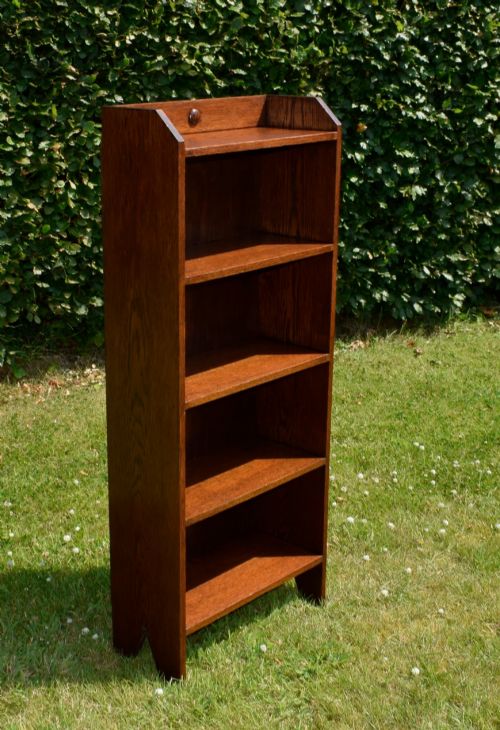
Tall Narrow Open Shelf
A tall narrow open shelf gives you vertical storage without swallowing the room.
Tall Narrow Open Shelf
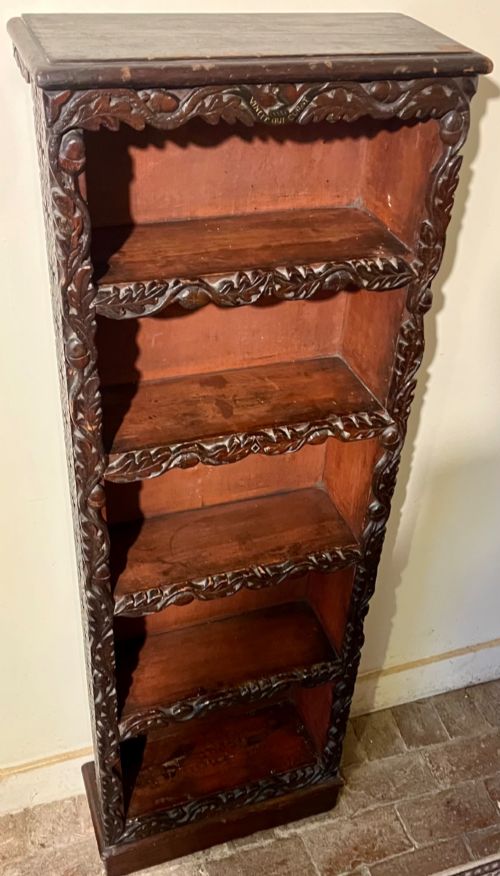
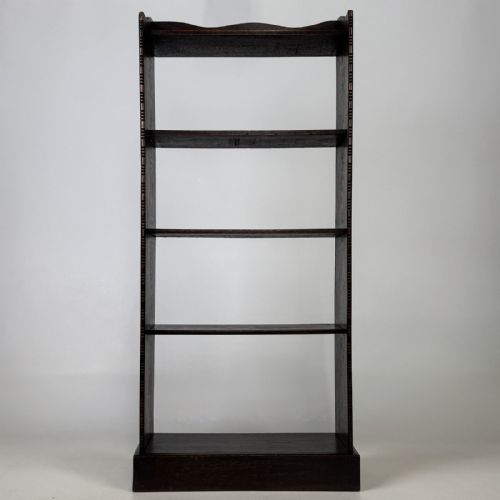
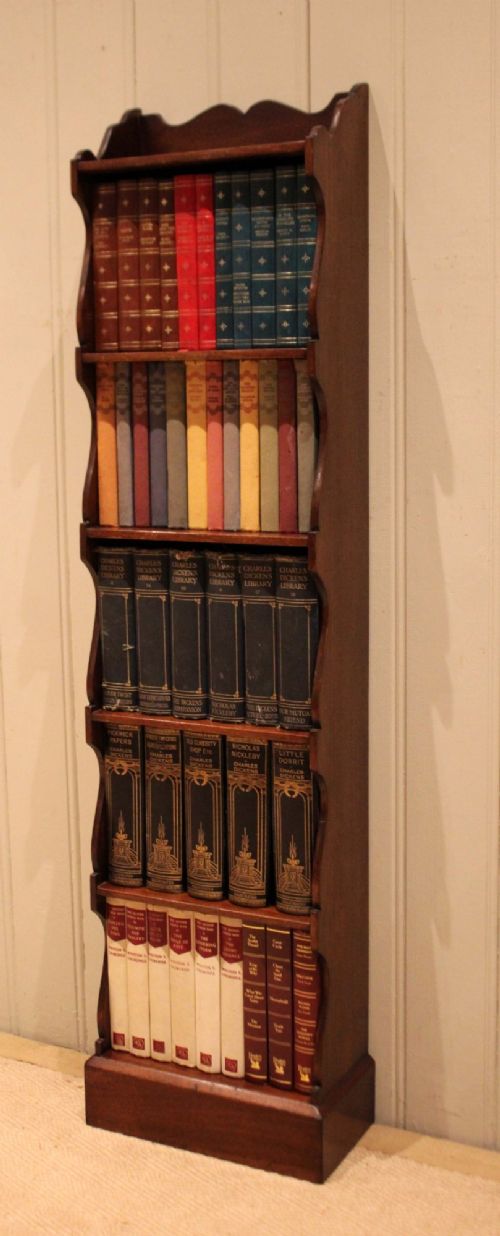
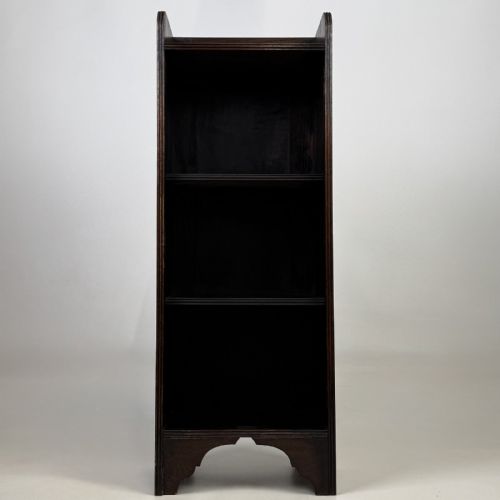
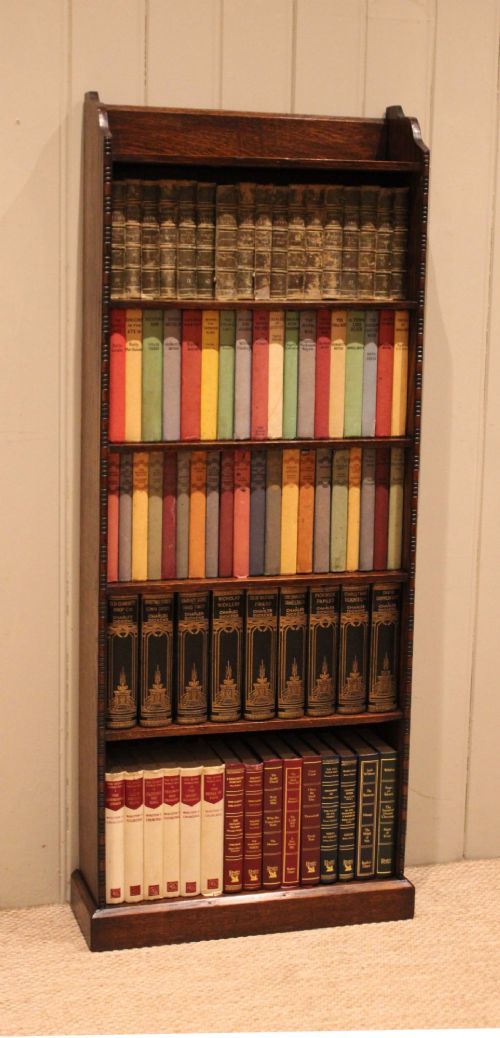
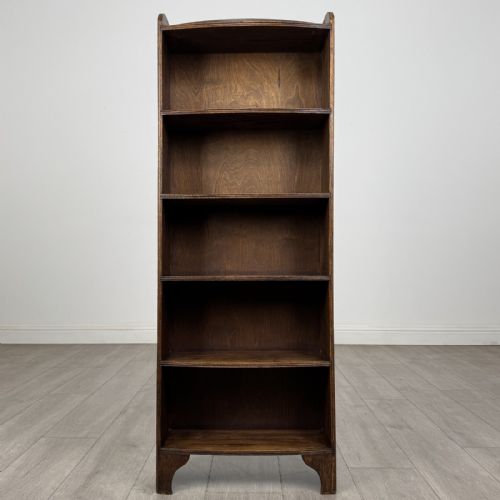
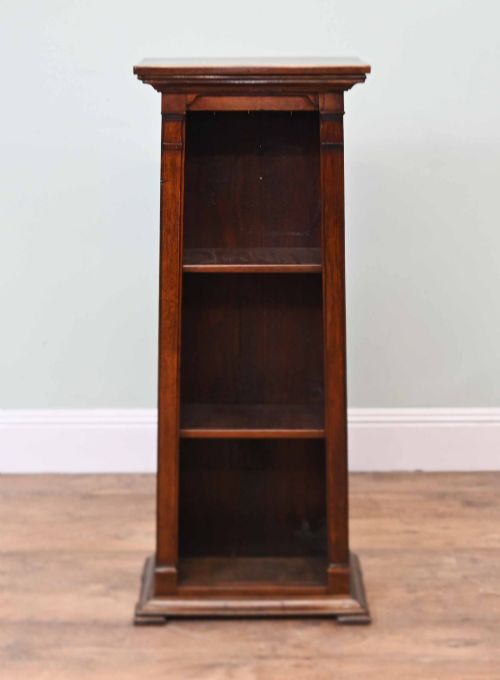
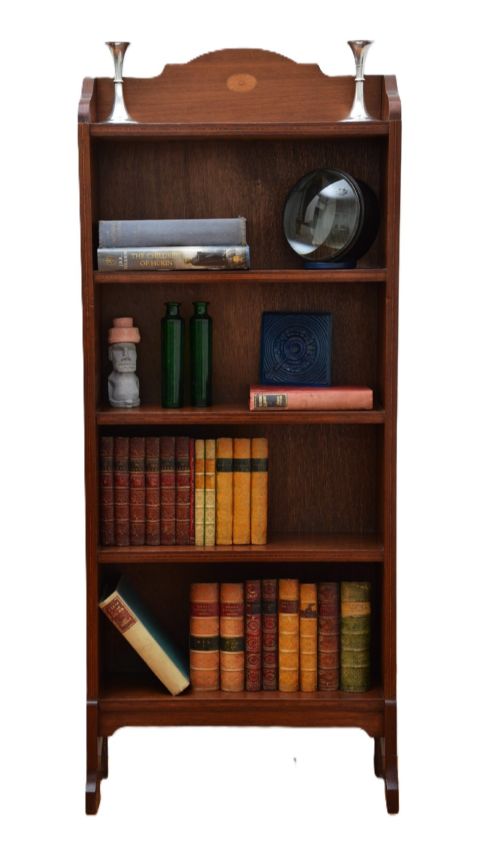
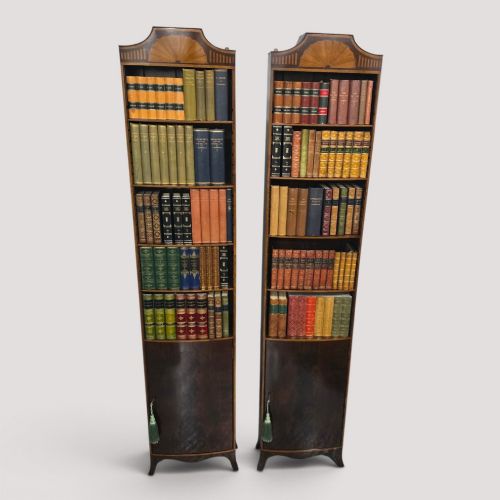
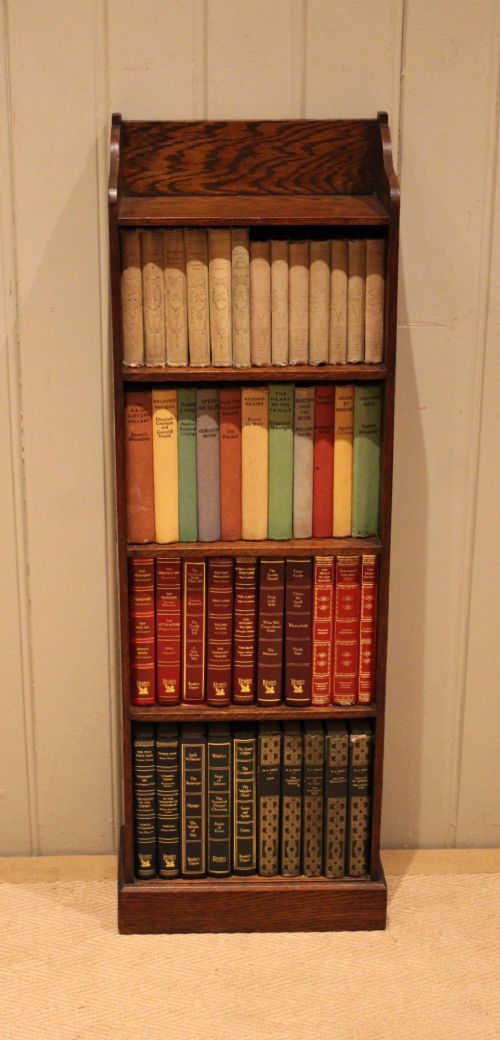
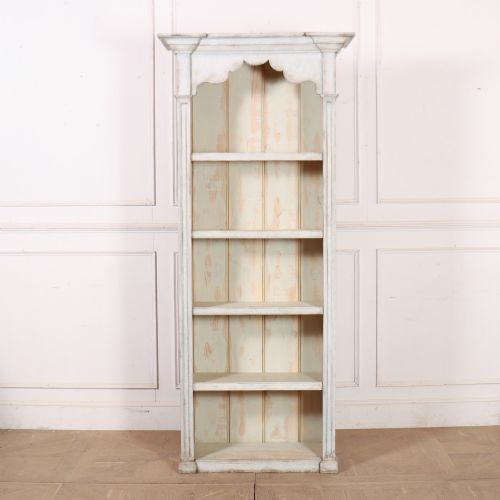
When you search for a tall narrow open shelf, you encounter upright storage pieces designed to fit tight spaces while holding a substantial volume of books or display items. The versions most commonly met on this page date from the nineteenth century through the early twentieth century, spanning Edwardian, Victorian, and Arts and Crafts styles.
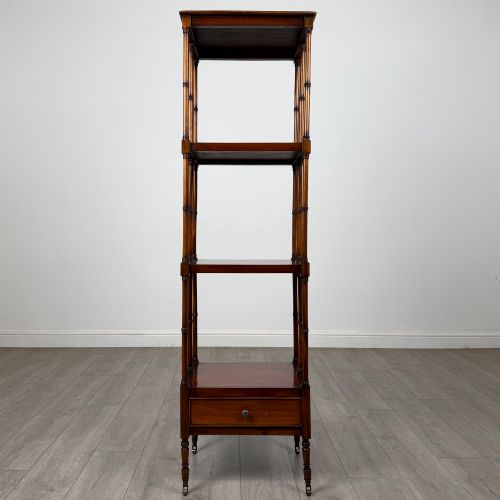
Makers constructed these pieces primarily as bookcases, whatnots, and display shelves, often utilising oak or mahogany. Proportions remain slender, featuring upright pillars, raised galleries, or dentil cornices that accentuate the vertical line of the furniture.
Materials and construction methods
Cabinetmakers built these pieces using solid timbers like oak and mahogany, occasionally incorporating contrasting satinwood inlay or brass and ormolu mounts for decorative effect. Surfaces might display a natural wood finish, beaded edges, or historical paint.
Construction techniques focus on vertical stability, utilising adjustable shelving systems, slender pillars, and moulded cornices. Pieces range from plain standing open bookcases to those with bow front shelves or raised galleries.
Tall Narrow Open Shelf Retail Price Guide 2026
Typical asking prices for tall narrow open shelf among the pieces listed under this phrase on Sellingantiques today, from the lower quarter to the upper quarter. They describe what is for sale here now, not the wider market.
Some nineteenth-century makers evidently believed books deserved to stand behind ormolu mounts.
Judging quality in upright open shelving
The distinction between standard examples and superior pieces rests on the choice of timber and the restraint of the ornamentation. Finer items exhibit carefully selected mahogany or quarter-sawn oak, sometimes enhanced by subtle satinwood inlay or well-executed dentil cornices rather than heavy, distracting mouldings.
Proportion and joinery dictate the overall success of the piece. Top-tier examples maintain a slender, balanced frame with cleanly fitted adjustable shelves and crisp mouldings that honour the period aesthetic, whether Edwardian or Arts and Crafts.
WYLIE LOCHHEAD of GLASGOW·E.A. TAYLOR
The Tall Narrow Open Shelf Glossary
- Gallery
- A small raised rail or decorative border running along the top edge of a shelf or bookcase to prevent items from sliding off. It often appears on Edwardian and Arts and Crafts examples.
- Dentil cornice
- A moulding decorated with a series of small, evenly spaced rectangular blocks that resemble teeth. This architectural feature frequently tops Georgian style and later mahogany bookcases.
- Whatnot
- A piece of freestanding furniture consisting of several open shelves placed one above the other, used for displaying ornaments or books. They share a tall, slender profile with narrow open shelving.
- Satinwood inlay
- A decorative technique where contrasting light-coloured satinwood is inserted into recesses cut into a darker wood surface, such as mahogany. It defines finer Edwardian and revival pieces.
- Adjustable shelving
- A functional system allowing shelf heights to be altered using pegs, ratchets, or side grooves. This feature appears in nineteenth-century and early twentieth-century libraries.
Tall Narrow Open Shelf: Frequently Asked Questions
Where should I place a tall narrow open shelf?
These pieces excel in alcoves, narrow hallways, or beside fireplaces where floor space is at a premium. Their vertical orientation draws the eye upward while keeping a minimal footprint.
Because the shelves are open, position them away from direct, harsh sunlight to protect bindings and stored objects from fading over time.
How do I distinguish Edwardian pieces from Victorian ones?
Edwardian examples tend to display lighter timber tones, slender pillars, and delicate satinwood inlay reflecting a brighter aesthetic. Victorian pieces often lean towards denser, darker oaks and richer mahoganies with heavier mouldings.
Examining the backboards, fixings, and overall weight helps clarify the transition between these nineteenth and early twentieth-century periods.
Can these shelves hold heavy books?
Many period examples feature sturdy solid oak or mahogany construction capable of supporting substantial volumes, particularly those equipped with adjustable shelving. Inspecting the thickness of the timber and the strength of the shelf supports provides reassurance.
Distributing heavier books across lower shelves maintains stability in tall, slender furniture.
What is the difference between a bookcase and a whatnot?
A bookcase focuses primarily on storing books upright between enclosed sides, whereas a whatnot is traditionally lighter and designed specifically for displaying ornaments and curiosities across multiple open tiers. In practice, makers often blurred these lines.
Both share the tall and narrow proportions sought after for compact rooms.